
Founding and Early Development
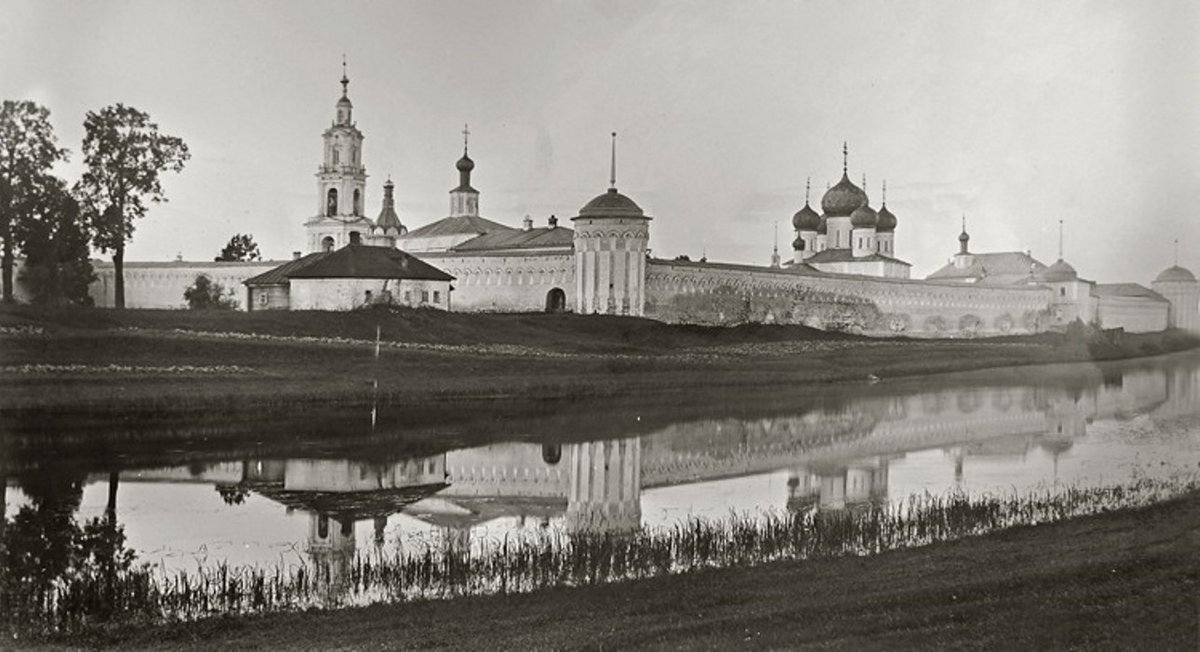
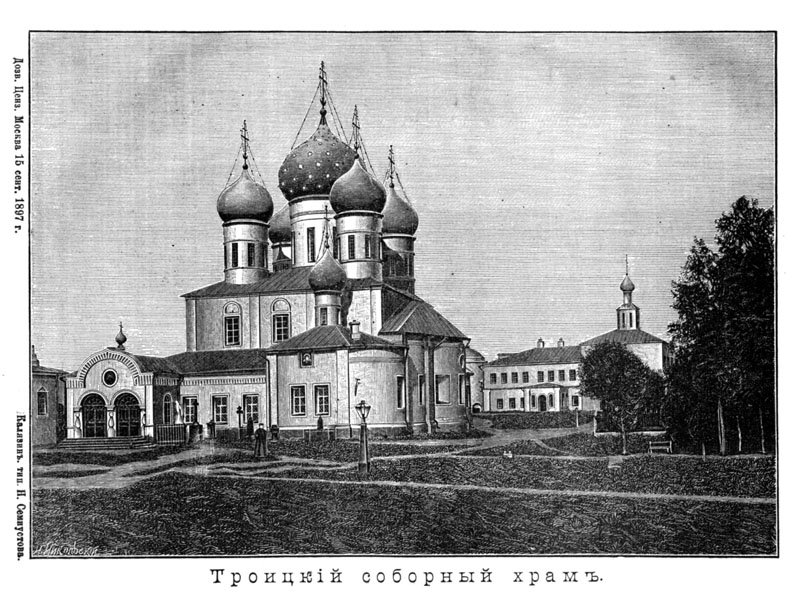
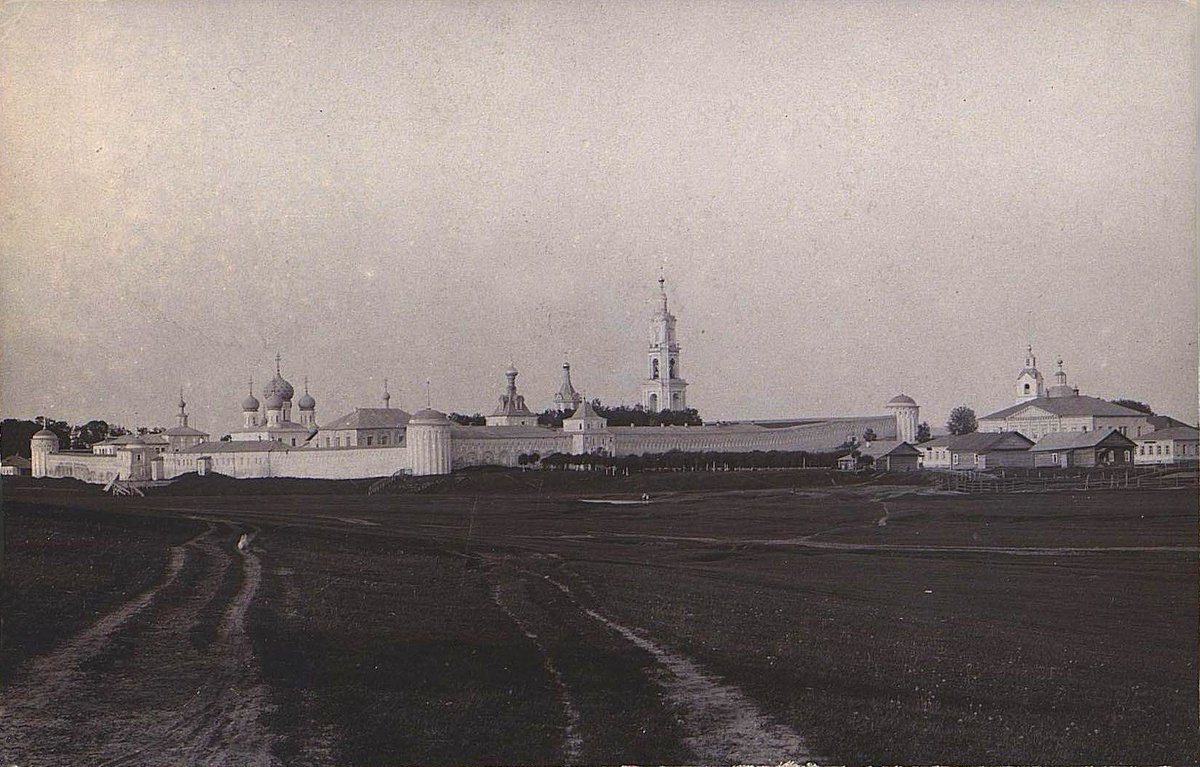
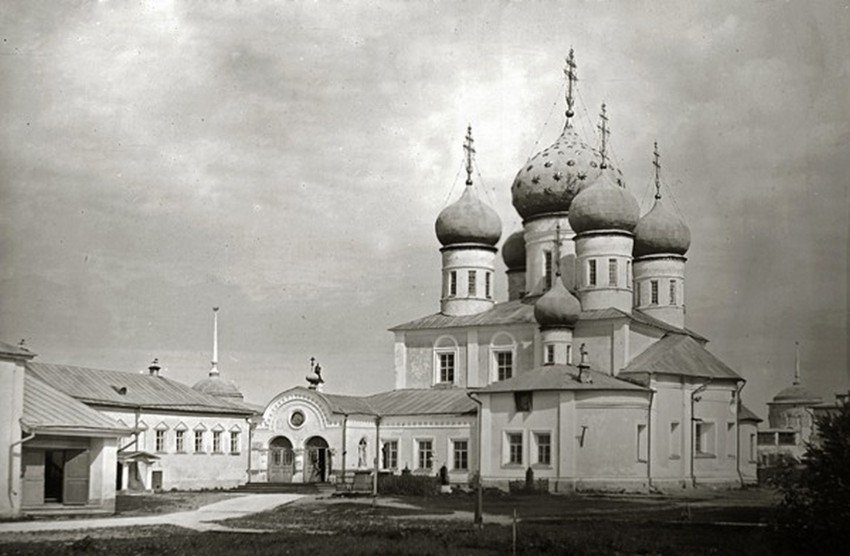
The Troitsky Makariev Monastery was established in the 15th century by Saint Makary of Kalyazin, an influential ascetic who shaped the religious landscape of the Upper Volga (Geomerid). Initially built with wooden structures, the monastery quickly gained prominence, thanks in part to land donations from local nobility. By the early 16th century, stone churches and defensive walls began to appear, reflecting both its spiritual authority and the need for protection during turbulent times.
Architectural Flourishing
The late 16th and 17th centuries marked the golden age of the monastery. Stone fortifications transformed it into one of the most formidable river fortresses in central Russia, rivaling even the Trinity-Sergius Lavra (Geomerid). The construction of St. Nicholas Cathedral in 1694 and the towering 74.5-meter bell tower (built in 1800) underscored its architectural and religious significance (Geomerid).
Economic and Religious Influence
The monastery was not just a religious center; it played a vital role in the region’s economic development. At its height, it owned numerous villages, managed agricultural lands, and supported a thriving community of artisans and merchants. Its religious influence was profound—Saint Makary’s relics attracted thousands of pilgrims, while the monastery’s charitable activities and manuscript production cemented its status as a beacon of Orthodox Christian life (rbth.com).
Role in Russian History
Throughout its history, the Troitsky Makariev Monastery served as a sanctuary and military stronghold. During the Time of Troubles, it was a base for resistance against foreign invaders and a refuge for notable figures like Tsar Alexei Mikhailovich and Patriarch Nikon during periods of plague and unrest (medium.com). Its resilience and rebuilding after invasions and looting became symbols of the region’s enduring faith and tenacity.
The Soviet Era and the Uglich Reservoir
Submersion and Transformation
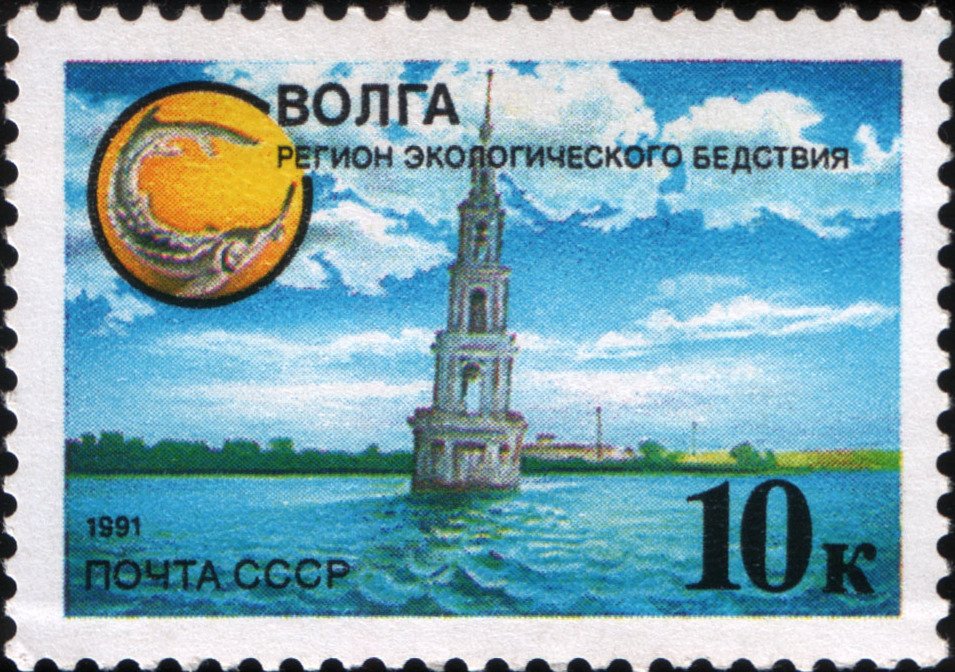
The 20th century brought unprecedented change. After the 1917 Revolution, anti-religious campaigns led to the closure and repurposing of many monasteries, including Troitsky Makariev. The most significant transformation occurred with the construction of the Uglich Dam and Reservoir in 1939–1940 (Atlas Obscura). As the reservoir filled, much of old Kalyazin, including the monastery’s original structures, was submerged. Only the bell tower of St. Nicholas Cathedral remained visible, rising as a solitary monument above the water (thevintagenews.com).
Legacy of the Flooded Belfry
The Flooded Belfry became a powerful symbol of the past—an icon of loss, endurance, and memory. Salvaged artifacts and frescoes are preserved in local museums, while the bell tower itself, now surrounded by water, has become a renowned destination for photographers, pilgrims, and travelers from around the world (charismaticplanet.com, Geomerid).
Visiting Troitsky Makariev Monastery and Kalyazin Today
Kalyazin Bell Tower: Hours, Tickets, and Tours
- Boat Tours The best way to view the Flooded Belfry is by boat. Tours typically operate from May to September, 10:00 AM–6:00 PM, with variations depending on operator and weather (Travel Trip Journey).
- Tickets Prices for boat tours range from 500 to 1000 RUB per person. Tickets are available at the Kalyazin embankment or booked online through local providers.
- Bell Tower Access While you cannot enter or climb the bell tower, boat tours allow close-up views. Occasionally, Orthodox services are held at the site (Atlas Obscura).
Accessibility and Getting There
- By Train Kalyazin is accessible from Moscow’s Yaroslavsky Railway Station, with a journey time of approximately 3.5 hours (transfers required) (expresstorussia.com).
- By Car The M8 (Yaroslavl) highway connects Moscow to Kalyazin, about 180 km northeast.
- By Bus Regional buses also serve Kalyazin from nearby cities.
- Local Transport Taxis and bike rentals are available in town. Embankment docks for boat tours may be challenging for those with limited mobility; inquire with operators about accessibility (nashaplaneta.net).
Nearby Attractions and Amenities
- Kalyazin Historical and Architectural Museum Features artifacts and exhibits related to the submerged monastery (medium.com).
- Local Churches Several Orthodox churches in Kalyazin are open to visitors.
- Cafés and Souvenir Shops The town has a modest selection of eateries and souvenir outlets catering to tourists.
Photography and Special Events
- Photography The Flooded Belfry is especially photogenic at sunrise and sunset. Bring a camera for unique shots.
- Events Annual commemorations of Saint Makary include processions and festivities, drawing pilgrims and visitors.
Visitor Etiquette and Dress Code
- While the bell tower site is not an active religious building, modest attire and respectful behavior are recommended, especially if attending religious events or visiting local churches.
Nizhny Novgorod Troitsky Makariev Monastery
The restored Troitsky Makariev Monastery near Nizhny Novgorod is an active religious center and historical site (nashaplaneta.net).
Visiting Hours, Tickets, and Access
- Hours Open during daylight hours year-round.
- Entrance Admission is free; donations are encouraged.
- Religious Services Held daily at 8:30 and 16:00. Visitors are welcome to attend.
Facilities and Seasonal Considerations
- Amenities Restrooms, basic shops, and cafés (especially near the ostrich farm) are available. There are no large hotels; most visitors come on day trips.
- Best Time to Visit May–September offers mild weather and organized tour options.
Guided Tours and Additional Attractions
- Guided Tours Available with advance booking (English tours possible for groups).
- Nearby Attractions
- Skazka Museum: Folk art and historical exhibits
- Loom Museum: Unique hand-weaving displays and workshops
- Makaryevsky Ostrich Farm: Guided tours, café, and shop (straus-nn.ru)
FAQs
Q: Can I enter the Kalyazin Bell Tower?
A: No, entry is not permitted due to safety and preservation concerns. Boat tours allow close viewing.
Q: What are the visiting hours for the museum exhibits?
A: The Kalyazin Museum is open daily from 10:00 AM to 6:00 PM.
Q: Do I need tickets to visit the Troitsky Makariev Monastery near Nizhny Novgorod?
A: Entrance is free, but donations are appreciated.
Q: Is the site accessible for people with disabilities?
A: The town and museum are accessible, but boat docks and some monastery areas may have uneven surfaces.
Q: When is the best time to visit?
A: Late spring to early autumn (May–September) for good weather and full tour availability.
Q: Are guided tours available in English?
A: Yes, with advance arrangement, especially for groups.
Q: What should I wear when visiting the monastery?
A: Modest dress is required: women should cover their heads and wear skirts (garments provided if needed); men should avoid shorts and sleeveless shirts.