Timisoara
Romania Updated Apr 2026
Church bells, tram brakes, and the smell of coffee from a terrace under Baroque facades: Timișoara, Romania, announces itself through layers rather than one grand reveal. One square gives you Habsburg order in pastel colors, the next carries the memory of the 1989 revolution, and a few blocks later the Bega Canal loosens the whole scene into water, trees, and long evening walks. The surprise is how Central European the city feels, then how quickly it turns local again.
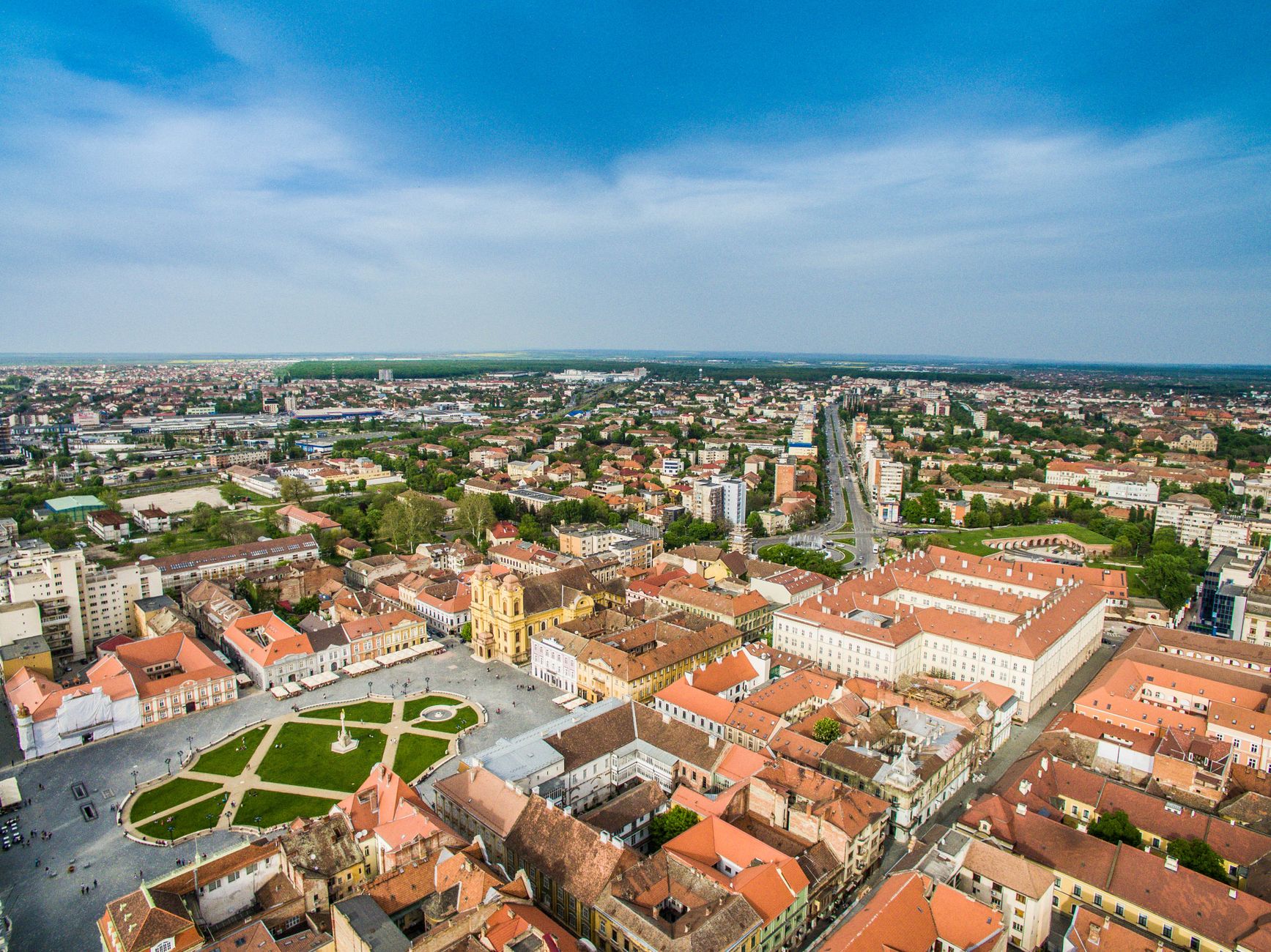 Photo: Adrian Frentescu / Pexels
- Attractions
- 8
- Audio
- 2 h 30 min
- Trip length
- 2-3 days
- Best season
- Late spring to early autumn (May-September)
Why Timisoara
Built from cited sources · see the method · How we make our guides →
Timișoara works best on foot because its character lives in the seams between headline sights. Piața Unirii has the polished confidence of an imperial set piece, with the Baroque Palace, the Roman Catholic Cathedral, and the Serbian Orthodox Cathedral holding the square like stage scenery; Piața Victoriei answers with Secession palaces, the Opera balcony, and the Metropolitan Cathedral's tiled spires rising at the far end.
This is a city built by overlap. Romanian, Serbian, Hungarian, German, Jewish, Ottoman, and Habsburg histories all left marks here, sometimes in the same afternoon walk, and the result feels less like a museum than a place that kept changing its mind in interesting ways.
The secret of Timișoara is that the old center is only the introduction. Cross into Fabric, Iosefin, or Elisabetin and the story gets better: brewery history, synagogue silhouettes, canal embankments, water towers, market life, and streets where the plaster peels just enough to remind you this was never made for postcards alone.
Three Squares, Three Histories
Timișoara's old center reads like a political timeline in stone: Baroque Piața Unirii, Ottoman traces under Piața Libertății, and revolution memory along Piața Victoriei. Few cities let you cross empires, faiths, and 1989 in a ten-minute walk.Habsburg Order, Secession Flourish
The surprise here is how neatly the city shifts from disciplined Habsburg planning to Art Nouveau swagger. Union Square gives you pastel facades and cathedral domes; Fabric and Iosefin answer with water towers, synagogues, canal fronts, and palaces that look built for people who enjoyed being seen.A Multilingual Stage
The Palace of Culture is more than a handsome facade: it houses the Romanian Opera, National Theatre, German State Theatre, and Hungarian State Theatre under one roof. That arrangement tells you what Timișoara has long been, a city that learned to live in several languages at once.The Bega Changes the Mood
The Bega Canal softens the whole city. Walk from Regina Maria Park through Roses Park and down to the river, and the center stops feeling imperial and starts feeling lived in, with willows, bike paths, and the occasional vaporetto sliding past.
Neighborhoods
Where to wander, by quarter — each with its own rhythm.
Cetate
Cetate is the historic core, but it isn't one-note. This is where you move between Piața Unirii, Piața Libertății, and Piața Victoriei, passing Baroque facades, Secession fronts, the Opera House, and terraces that fill early and stay busy after dark; if you only have one day in Timișoara, start here, then stay longer than planned.Fabric
Fabric has the kind of texture that improves the more you slow down. Around Piața Traian, Decebal Bridge, the old brewery zone, and Faber, you'll find long historic facades, industrial leftovers, and a more lived-in rhythm than the polished center, with enough architectural detail to keep your eyes busy for hours.Iosefin
Iosefin belongs to the canal. The Bega embankments, the Palace of Water, late-imperial apartment houses, and the 52-meter Iosefin Water Tower give the district a quieter, slightly weathered grandeur; come in the late afternoon, when the light hits the water and the whole neighborhood seems to exhale.Elisabetin
Elisabetin feels more local, more residential, and better for people who like cities once the checklist falls away. Piața Maria ties the district to the opening days of the 1989 revolution, while the Mühle House, László Székely's home, and the Sacred Heart Church show how much architectural ambition spilled beyond the old fortress walls.Complexul Studențesc
Complexul Studențesc is where Timișoara drops its formal manners. Student bars, cheap shawarma, late pubs, and constant foot traffic around Aleea Studenților make this the district for a casual night out, especially if you want to hear more Romanian than polished visitor English.Traian Square
Piața Traian functions almost like a second historic center inside Fabric. The square and its surrounding streets reward travelers who care more about atmosphere than perfect restoration, with churches, old commercial buildings, tram lines, and the sense that this part of the city still belongs first to the people who use it every day.
Plan your trip
Before you go
- Getting There
- In 2026, most visitors arrive through Timișoara Traian Vuia International Airport (TSR), 12 km northeast of the center; airport bus E4 runs to Bastion and E4b to Gara de Nord. The main rail hub is Timișoara Nord railway station, and road access is strongest via the A1 motorway plus the DN6/E70 and E671 corridors.
- Getting Around
- Timișoara has no metro in 2026, so you'll be using the STPT network: 9 tram lines, trolleybuses, urban buses, express lines, and Bega canal vaporettos. A 60-minute ticket costs 5 lei, a 1-day pass 18 lei, and contactless payment works on board; VeloTM public bikes add another good option, with 500 bicycles and 34 docking points listed by STPT.
- Climate & Best Time
- Spring usually sits around 18°C by day in April, summer climbs to 26-28°C in July and August, autumn drops back to about 18°C in October, and winter hovers near 2°C by day in January with frosty nights. Rain peaks in late spring and early summer, especially June, so the sweet spot is May, June, or September; July and August bring longer evenings but hotter pavements, while November to February is quieter and cheaper.
- Language & Currency
- Romanian is the main language, though English is commonly workable in hotels, cafes, and museums. Romania uses the leu (RON); in 2026 cards are accepted almost everywhere in central Timișoara, but small cash still helps for kiosks, markets, and the occasional old-school bar.
- Safety
- Timișoara is an easy city to handle if you keep city-break habits: watch your bag in crowded squares, use ATMs inside banks, and check that taxis are metered or just book Bolt or Uber. Romania's emergency number is 112, and the central districts around Cetate, Bastion, and Piața Victoriei are the least complicated base for a first stay in 2026.
A Frontier City That Kept Reinventing Itself
From marshland fortress to the city where Romania's revolution caught fire
- 1212
The Fortress Enters the Record
The first widely accepted written reference places Timișoara in the documents of the Hungarian kingdom as a royal fortress on wet, difficult ground. That setting mattered. Marshes made the place miserable to approach and very hard to take, which is why power kept returning here.
- 1241
Mongol Riders Burn the Town
The Mongol invasion smashed through the region and destroyed the early settlement. Timber walls and earthworks do not argue well with fire. Rebuilding after that shock pushed Timișoara toward a tougher, more permanent military role.
- 1316
A King Moves In
Charles I of Hungary made Timișoara one of his main seats while he fought to pull the kingdom back under royal control. For several years, court business, armed escorts, and ambition all ran through this muddy stronghold. The city stopped being provincial the moment the crown treated it as useful.
- 1443
Hunyadi Hardens the Frontier
John Hunyadi turned Timișoara into a serious anti-Ottoman bastion, strengthening the fortress and using it as a base for campaigns to the south. You can still feel that old logic in the city's surviving walls and awkward angles. This was a border city, and everyone knew it.
- 1514
Dózsa Dies by Fire
After the peasant revolt collapsed, György Dózsa was executed near Timișoara in one of the century's most brutal political spectacles. Authorities meant the punishment to be unforgettable. It worked, though not in the way they hoped: the city entered memory as a place where power could be theatrical and savage.
- 1552
Ottomans Take Temeşvar
Ottoman forces captured Timișoara after the Hungarian kingdom had already been shattered by Mohács and its aftermath. The city became the capital of the Eyalet of Temeşvar, with mosques, baths, barracks, and bazaars replacing much of the older Christian and royal fabric. The smell of damp earth gave way to smoke, horses, and a garrison town's constant noise.
Show the full timeline (26 moments)
- 1716
Prince Eugene Breaks the Siege
Prince Eugene of Savoy seized Timișoara for the Habsburgs after a hard campaign that ended 164 years of Ottoman rule. The transfer changed more than flags. It opened the way for draining swamps, redrawing streets, and rebuilding the city in the crisp military geometry Vienna preferred.
- 1728
The Bega Is Tamed
Work began on regulating the Bega and nearby waters, one of the engineering projects that made the city healthier and more workable. This was not glamorous. It was mud, ditches, sweat, and the slow removal of the swamps that had protected Timișoara for centuries and nearly suffocated it at the same time.
- 1736
The Dome Rises in Stone
Construction began on the Roman Catholic Dome in today's Piața Unirii, a church built over decades between 1736 and 1773. Its calm Baroque order was a statement as much as a sanctuary. Habsburg rule intended to look permanent.
- 1771
Newsprint Arrives Early
The Temeswarer Nachrichten began publication here, often described as the first newspaper in what is now Romania. That detail tells you what Timișoara had become: a city with readers, merchants, officials, and enough urban self-confidence to want yesterday's events in fresh ink by morning.
- 1781
Free Royal City Status
Joseph II granted Timișoara the rank of Free Royal City, giving it stronger civic standing inside the Habsburg system. Charters can sound dry on paper. In practice, they change who collects taxes, who builds, who trades, and who gets to imagine a city's future.
- 1849
The City Endures 107 Days
During the revolutions of 1848-1849, Hungarian forces besieged Timișoara for 107 days. Shelling, hunger, and disease pressed the garrison and civilians alike, yet the city held out. Siege cities always remember sound first: artillery, church bells, boots on stone, then silence.
- 1869
Romania's First Tram Clatters
Timișoara opened the first horse-drawn tramway on the territory of present-day Romania. The advance was practical before it was romantic. Rails stitched together a growing city whose markets, workshops, and new neighborhoods were spreading beyond the old fortress logic.
- 1884
Electric Light Floods the Streets
Timișoara became the first city in continental Europe with public electric street lighting, beginning with roughly 300 lamps. Night changed shape. Shopfronts stayed visible, facades gained edges after dark, and the city acquired that modern urban miracle people never get used to: safe light where there used to be shadow.
- 1904
Johnny Weissmuller Is Born
Johnny Weissmuller was born in nearby Freidorf, then part of greater Timișoara, and baptized at St. Rochus Church before his family left for America. The city could never claim his Hollywood years, but it can claim the beginning. Tarzan started in Banat, which is not the plot twist most people expect.
- 1919
Empire Ends, Romania Enters
After the First World War and a brief spell of Serbian occupation, Timișoara passed into Romanian control, a settlement confirmed by the postwar treaties. For a city used to switching masters, this was still a jolt. Street names, offices, schools, and loyalties all had to be rewritten at speed.
- 1936
A New Cathedral Claims the Skyline
Work began on the Orthodox Metropolitan Cathedral at the south end of what is now Piața Victoriei. Its tiled towers and Moldavian-Byzantine lines were meant to announce Romanian confidence in a city long marked by imperial layers. The building does exactly that, and with very little modesty.
- 1944
Bombs Fall on Timișoara
Allied air raids hit the city repeatedly in 1944, shattering buildings, rail infrastructure, and civilian routine. Windows blew inward. Smoke sat over the streets. War arrived not as a map movement but as broken masonry and the sudden knowledge that no facade was solid enough.
- 1948
A University for the New Regime
The University of Timișoara was founded as communist power tightened across Romania. The regime wanted engineers, teachers, and obedient institutions. Cities, inconveniently, make thinkers as well as functionaries.
- 1953
Three Languages, One Stage
By 1953, the Palace of Culture housed state theatre companies in Romanian, Hungarian, and German under one roof, a rare arrangement in Europe. That building says something honest about Timișoara. However hard governments tried to flatten difference, the city kept speaking in several voices at once.
- 1953
Herta Müller Learns the City's Edges
Herta Müller, born in 1953, later lived and worked in Timișoara, where the pressures of dictatorship, surveillance, and Banat German memory sharpened her writing. Her city was not postcard material. It was tram wires, suspicion, factory air, and private language kept alive behind closed doors.
- 1961
MECIPT-1 Starts Thinking
Engineers in Timișoara built MECIPT-1, the first Romanian alphanumeric computer. Early machines never look glamorous now; they look like cabinets and cables. Yet this one marked the moment when a fortress city of stone and bastions joined the electronic age.
- 1989
Tőkés Sparks Defiance
When authorities tried to remove Reformed pastor László Tőkés, parishioners and then strangers gathered to protect him. What began as a local act of solidarity widened into open revolt. In Timișoara, the fall of Romanian communism started with people refusing to step aside.
- 1989
Romania's Revolution Ignites
Between 16 and 20 December 1989, protests, gunfire, army violence, and mass courage turned Timișoara into the first Romanian city to break communist control. Crowds filled Piața Operei and Piața Victoriei despite the risk of being shot. The balcony of the Opera House became a real political stage, not a metaphor.
- 1990
The Proclamation Sets Terms
On 11 March 1990, the Timișoara Proclamation laid out a blunt anti-totalitarian program for post-communist Romania. Parts of it were ignored, resisted, or mocked at the time. Years later, it still reads like the city arguing with the country and, on several points, being right.
- 2023
Culture Takes the Front Stage
Timișoara served as European Capital of Culture in 2023 after a pandemic delay. The title mattered less as a trophy than as a lens. It reminded visitors that this city's real subject is layering: Ottoman traces under Habsburg order, Secession facades beside revolution memory, and a restless habit of starting over.
Who lived here
-
Writer · born 1953
Herta Muller
Lived here
Herta Muller lived in Timisoara before exile turned her into one of Europe's fiercest literary witnesses to dictatorship. She would recognize the city's gift for double meanings: bright facades above streets that remember surveillance, fear, and the small acts of refusal that kept people human.
-
Reformed pastor · born 1952
Laszlo Tokes
Served here in 1989
Tokés was the assistant pastor whose threatened eviction helped ignite the protests of December 1989. Stand near the places tied to those first days and the city stops being a handsome Habsburg set piece; it becomes the place where Romania's fear cracked in public.
-
Olympic swimmer and actor · 1904-1984
Johnny Weissmuller
Born here
Johnny Weissmuller, later Hollywood's Tarzan and a five-time Olympic champion, was born in Timisoara and baptized at St. Rochus Church before leaving for the United States as an infant. He never knew the city as an adult, which somehow suits Timisoara: it keeps producing lives larger than its map suggests.
-
Writer and diplomat · 1893-1977
Milos Crnjanski
Grew up here
Miloš Crnjanski grew up in Timisoara, a city where languages have always overlapped rather than lined up neatly. That borderland tension runs through his writing, and he would still recognize the place in the mix of Serbian memory, Habsburg order, and Banat improvisation.
-
Novelist and playwright · 1894-1957
Camil Petrescu
Taught here
Camil Petrescu taught at the Higher School of Commerce in Timisoara before becoming one of Romanian modernism's sharpest voices. He might enjoy how the city still resists one tidy identity, because tidy identities usually make for dull fiction.
-
High jumper · 1936-2016
Iolanda Balas
Born here
Iolanda Balas, born in Timisoara, changed women's high jump with a dominance that felt almost impolite. A city that likes firsts would claim her gladly: she cleared bars the way Timisoara has often cleared old limits, with less noise than the achievement deserved.
Where to Eat
Where locals actually book dinner — not the tourist menus.
Insider tips
Small things that change how the city treats you.
Pick shoulder season
May, June, and September suit Timisoara best: café terraces are busy, the historic squares stay lively, and you miss the stickier midsummer heat. April can work too if you catch an event weekend in Liberty Square.Walk the three squares
Start in Piața Unirii, cut through Piața Libertății, and finish in Piața Victoriei. That short chain gives you Timisoara's Baroque, Ottoman traces, Secession façades, and 1989 memory without wasting time on taxis.Order Banat first
If a menu offers both Romanian staples and something marked Bănățean or Banat, choose the regional dish first. Timisoara's food strength is the Romanian-Serbian-Hungarian-Swabian mix, with dishes like păturata pe crumpi, papricaș, and plum dumplings.Use the markets
Go early to Piața 700 for fruit, cheese, honey, zacuscă, and a more local slice of the city than the square-side cafés. Badea Cârțan is even more everyday, but Piața 700 is the easier central stop.Choose coffee carefully
Union Square is good for terrace people-watching, but specialty coffee lives elsewhere. Ovride is the sharpest pick if you care about filter brews and beans rather than just a pretty chair in the sun.Drink by the water
For an evening drink, the Bega canal beats the busiest central terraces. Porto Arte gives you water, concerts, and a softer version of Timisoara after dark.
Gallery
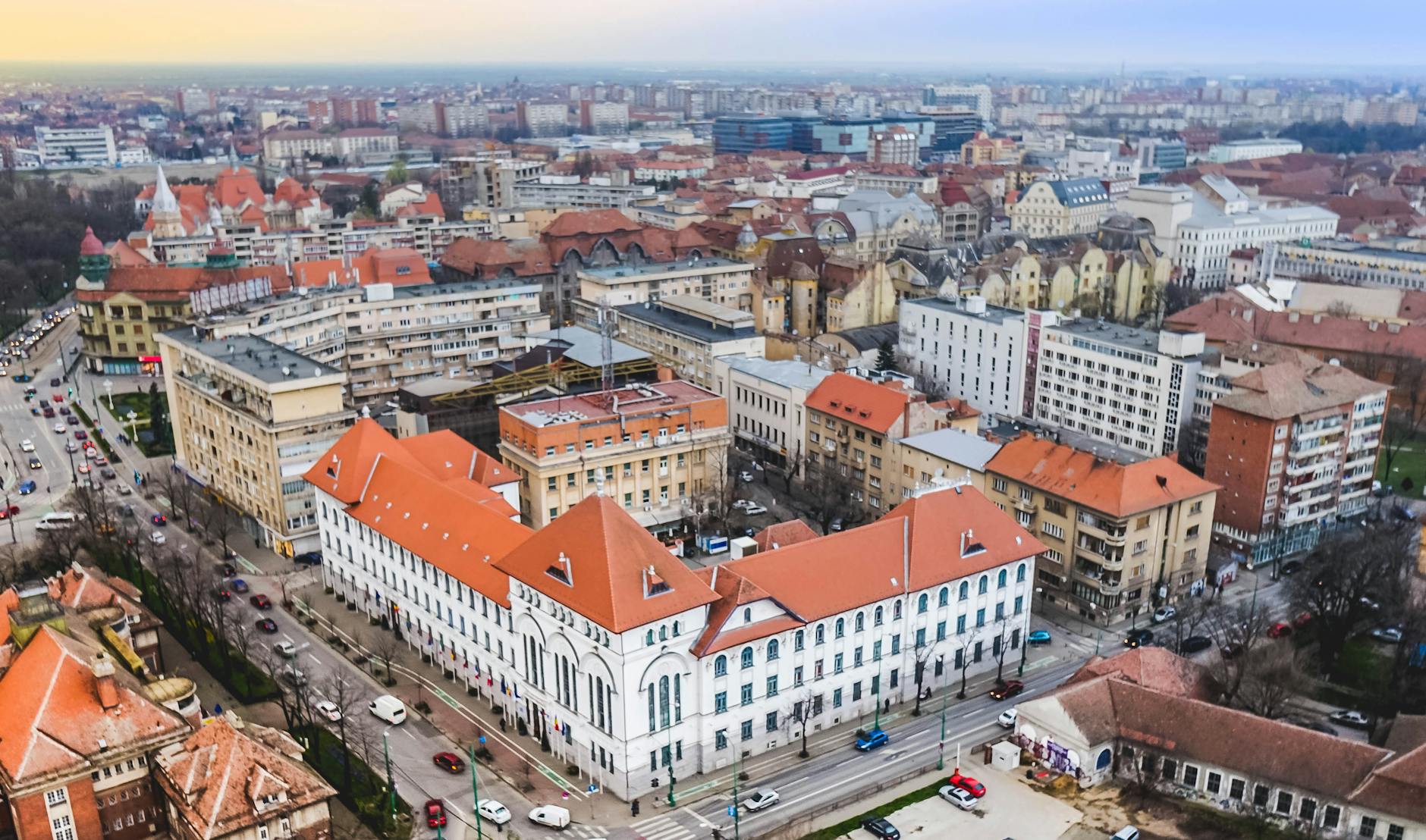
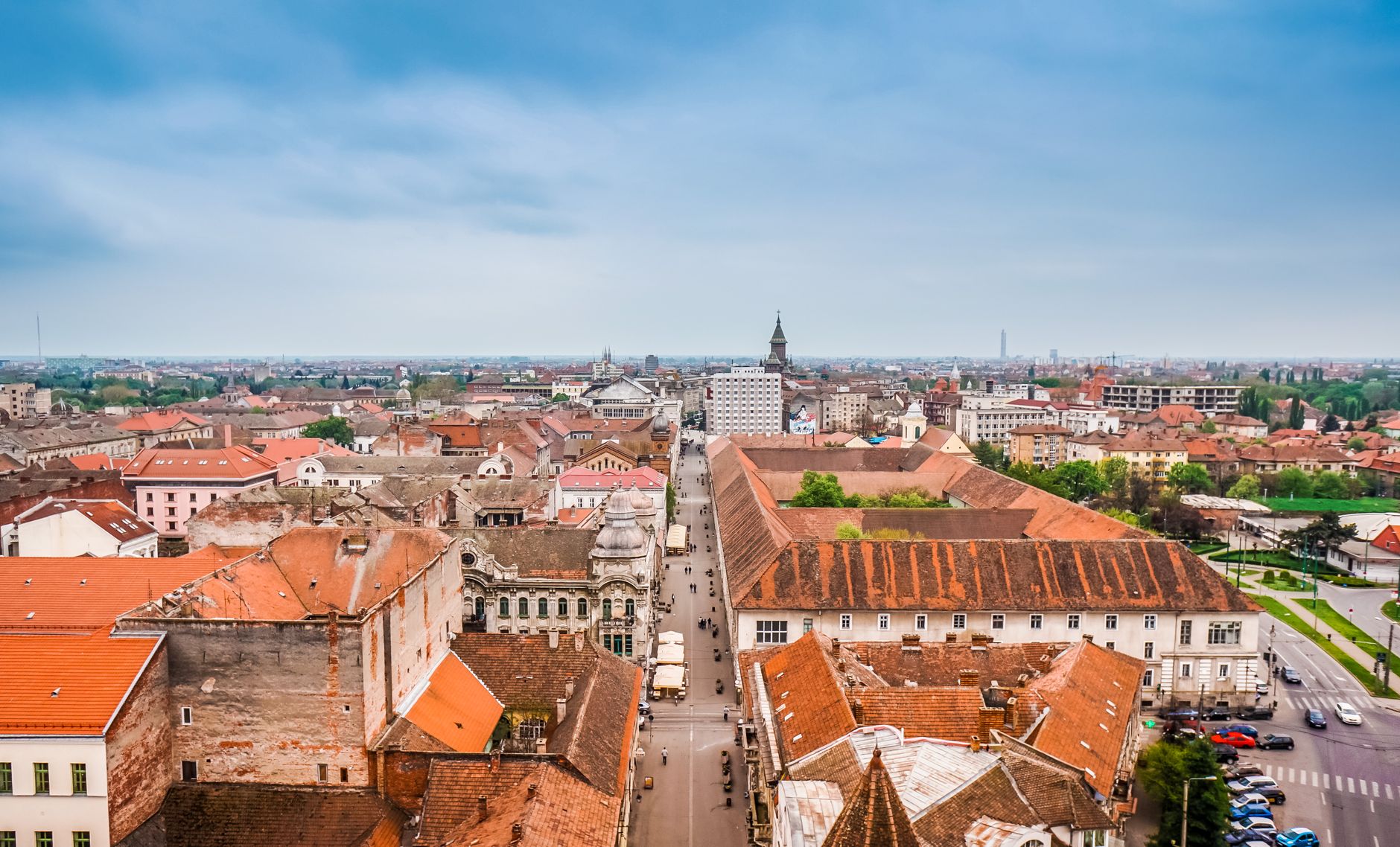
The city, as it actually looks.



Frequently asked
Is Timisoara worth visiting?
Yes, especially if you like cities that show their history in layers instead of one big monument. Timisoara gives you Habsburg Baroque in Union Square, Secession palaces in Victory Square, Ottoman traces in Liberty Square, and the emotional weight of December 1989 within a compact walkable center.
How many days in Timisoara?
Two to three days is the right amount for most travelers. One day covers the three main squares and the cathedral axis; a second lets you add museums, the Theresia Bastion, the canal, and a proper long meal instead of rushed sightseeing.
How do you get around Timisoara?
The historic center is best explored on foot. Union Square, Liberty Square, Victory Square, the Opera, the Metropolitan Cathedral, and the Theresia Bastion sit close enough that walking makes more sense than calling a car for each stop.
Is Timisoara safe for tourists?
Yes, the central visitor areas are generally comfortable and easy to walk, including in the evening when the squares are active. Use normal city caution around crowds, late-night drinking spots, and transport hubs, but Timisoara does not demand siege mentality.
Is Timisoara expensive?
No, Timisoara is usually easier on the wallet than Western European city breaks, and you can keep costs down without eating badly. Markets like Piața 700, student-area fast food, and traditional places away from the prettiest square-front terraces help a lot.
What food should I try in Timisoara?
Start with Banat dishes rather than treating the city like a generic Romanian stop. Look for păturata pe crumpi, papricaș, goulash soup, stuffed cabbage, plum dumplings, Ana Lugojana pancakes, and old-school grilled mici if you want the local range.
Pick up where you left off
Saved and recently read places — kept on this device only.
Photo credits (7)
- Adrian Frentescu — Pexels License (https://www.pexels.com/license/) — Source: https://www.pexels.com/photo/6324944/
- Adrian Frentescu — Pexels License (https://www.pexels.com/license/) — Source: https://www.pexels.com/photo/10135693/
- Adrian Frentescu — Pexels License (https://www.pexels.com/license/) — Source: https://www.pexels.com/photo/6324834/
- Adrian Frentescu — Pexels License (https://www.pexels.com/license/) — Source: https://www.pexels.com/photo/6079064/
- Adrian Frentescu — Pexels License (https://www.pexels.com/license/) — Source: https://www.pexels.com/photo/7346980/
- Adrian Frentescu — Pexels License (https://www.pexels.com/license/) — Source: https://www.pexels.com/photo/6324823/
- Adrian Frentescu — Pexels License (https://www.pexels.com/license/) — Source: https://www.pexels.com/photo/15022383/
Photos may have been resized or cropped.