Sighisoara
Romania Updated Apr 2026
Wood smoke, damp stone, and the creak of a covered stairway do more for Sighișoara, Romania than any Dracula souvenir ever could. This small hill town in central Romania looks almost too composed at first glance: pastel merchant houses, a 64-meter Clock Tower, cobbles polished by centuries of shoes. Then evening comes, the day-trippers thin out, and the citadel stops posing.
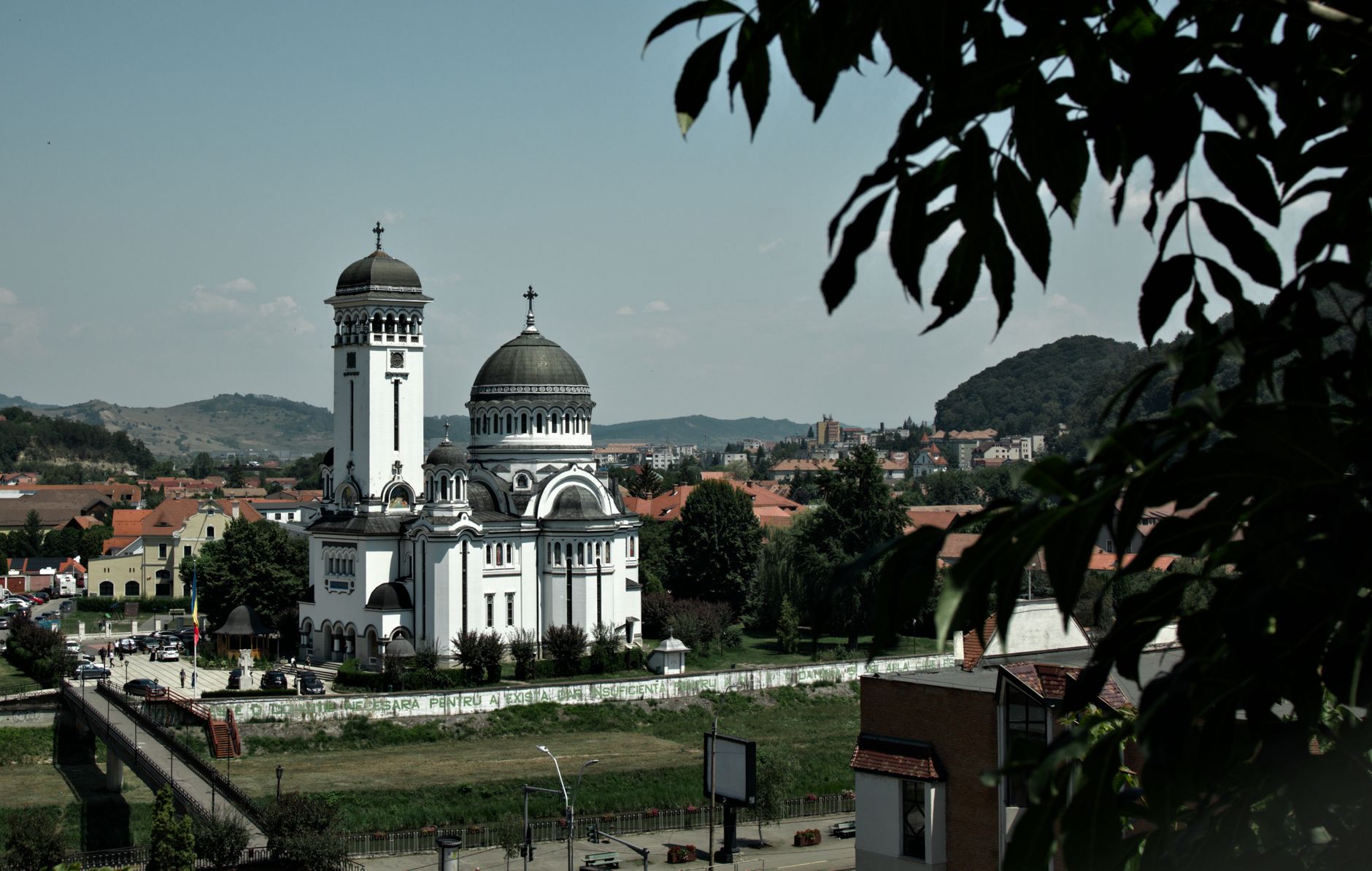 Photo: ArWeltAtty Attila / Pexels
- Attractions
- 12
- Trip length
- 1-2 days
- Best season
- Late spring to early autumn (May-September)
Why Sighisoara
Built from cited sources · see the method · How we make our guides →
Sighișoara matters because the whole place holds together. UNESCO inscribed its historic centre in 1999 not for one church or one tower, but for an inhabited fortified town founded by Transylvanian Saxons, where the street plan, guild towers, and old houses still read as a complete civic world.
The climb tells you how the town worked. You pass under the Clock Tower, cross the old squares where merchants traded and punishments were once public, then take the long wooden Scholars' Staircase up to School Hill, where the Gothic Church on the Hill stands above graves, linden trees, and a silence broken by footsteps on boards.
But the lower town matters too. Across the river, the large Holy Trinity Church and the everyday streets below the walls keep Sighișoara from turning into a medieval stage set; one meal inside the citadel and another outside it will teach you more about the city than any vampire-themed menu ever will.
An Inhabited Citadel
Sighișoara’s old core still feels like a town first and a monument second: laundry, schoolchildren, church bells, then a 14th-century wall turning the corner. UNESCO listed it in 1999 because the whole fortified ensemble survived, not because one building stole the show.Guild Towers and School Hill
The Clock Tower gets the photographs, but the real pleasure is following the defensive logic from tower to tower and then climbing the covered Scholars’ Staircase to the Church on the Hill. Wood creaks underfoot, the light narrows, and the city suddenly reads like a medieval machine.Breite Oak Reserve
A few minutes above the citadel, Breite changes the mood completely: old pasture oaks, open grass, bird calls, and air that smells of dry leaves instead of stone. Go late in the day if you want Sighișoara without the souvenir script.A City That Performs Itself
Sighișoara’s cultural life leans on heritage and festivals more than formal big-city venues. The Medieval Festival, ProEtnica, and summer concerts turn those steep streets into a stage, which suits a town that has always liked costumes, symbols, and public spectacle.
Neighborhoods
Where to wander, by quarter — each with its own rhythm.
Citadel
This is the walled upper town people come for, and rightly so. Cobblestones, guild towers, steep lanes, and painted houses crowd together inside a medieval defensive system that once had 14 towers, nine of which survive; come early for photographs, then come back after dinner when the stone holds the day's heat and the place feels inhabited rather than exhibited.School Hill
Above the main citadel streets, School Hill has a different mood: less theatrical, more reflective. The covered Scholars' Staircase lifts you toward the Church on the Hill, old school buildings, and the Evangelical cemetery, where the Saxon story stops being decorative and starts feeling personal.Lower Town
Below the citadel walls, Sighișoara becomes a working Romanian town again. This is where you'll notice the shift from souvenir shops to ordinary storefronts, from staged medieval dinners to more local routines, with the Târnava Mare River and the Neo-Byzantine Holy Trinity Church widening the city's story beyond its Saxon core.Museum Square and Citadel Square
These linked central spaces are the social heart of the old town, even when they look quiet. Facades here do the pretty work, but the history is harder-edged: markets, tribunals, and public discipline once played out in these squares, which explains why the urban fabric feels civic rather than merely picturesque.Breite Plateau
Breite sits above town rather than inside it, but it belongs in any serious reading of Sighișoara. The old oak pasture gives you air, distance, and a needed break from the citadel script; after an hour among the trees, the fortress below looks less like a fairytale and more like a defended settlement holding its ridge.
Plan your trip
Before you go
- Getting There
- As of 2026, the usual air gateways are Târgu Mureș Transilvania Airport (TGM), Brașov-Ghimbav International Airport (GHV), Sibiu International Airport (SBZ), and Cluj International Airport (CLJ); flight schedules shift, so compare before booking. Trains arrive at Sighișoara railway station, with the main long-distance links running on the Brașov-Sighișoara-Mediaș-Sibiu-Cluj corridor, and drivers usually approach via DN13 / E60, the main road connecting Brașov, Sighișoara, and Târgu Mureș.
- Getting Around
- No metro here. The citadel is compact and best explored on foot, while the lower town, station, and outlying neighborhoods are covered by local buses and inexpensive taxis; expect cobbles, slopes, and stairs rather than smooth rolling. Cycling works better in the lower town and on routes out toward Breite than inside the upper citadel, and as of 2026 Sighișoara does not have a widely used city tourist transit pass.
- Climate & Best Time
- Spring usually runs around 10-20C, summer 22-30C, autumn 10-20C, and winter often drops from 2C down to -5C, with colder snaps possible on clear nights. Rain tends to build in late spring and early summer, July and August bring the heaviest visitor traffic, and the sweet spot is May to June or September to early October, when the stone streets are busy enough to feel alive but not jammed.
- Language & Currency
- Romanian is the working language, but you will still see the Saxon, Hungarian, and German layers in surnames, church history, and older street names. Romania uses the leu (RON); cards are common in hotels and many restaurants, but cash still helps for small shops, market stalls, and older-fashioned places inside the citadel.
- Safety
- Sighișoara is generally calm, especially compared with larger Romanian cities, but the real hazard is physical rather than criminal: polished cobbles, steep lanes, dim staircases, and winter ice. Keep an eye on bags around the train station and during festival weekends, and wear shoes that can handle wet stone.
A Hilltop Citadel Tempered by Fire, Trade, and Borderland Politics
From Saxon frontier settlement to UNESCO-listed survivor
- c. 1500 BCE
Bronze Age Footprints
Most scholars place human settlement in the Sighisoara area back in the Bronze Age, when communities linked to the Wietenberg culture occupied these hills above the Tarnava Mare. Long before towers and guilds, people were already choosing this high ground for defense, water, and a clear view of who was coming up the valley.
- 106 CE
Rome Takes the Region
After Trajan's wars, the wider region entered Roman Dacia, tying the future Sighisoara area to imperial roads, garrisons, and tax systems. The city itself was not yet a Roman town. Still, Roman material found locally reminds you that this hill watched the empire pass beneath it.
- c. 1150
Saxon Founders Arrive
In the mid-12th century, Hungarian kings brought Transylvanian Saxons into this frontier zone, and the medieval town began to take shape under their hands. They came as settlers, traders, and defenders. What they built here was no loose village, but a disciplined urban pocket with walls in its future.
- 1241
Mongol Shockwave
The Mongol invasion tore through Transylvania, and local tradition holds that an earlier fortification on the hill was destroyed in the violence. Even where the record blurs, the effect is plain enough. After the smoke cleared, rebuilding became part of the city's DNA.
- 1280
First Written Mention
The town enters the documentary record as Castrum Sex, the first secure written mention of Sighisoara. Documents matter here because they pin the place to a date instead of a legend. A hill settlement became a named town in the eyes of power.
- 1298
Monastery and Town Grow
By 1298, records mention the Dominican monastery, proof that Sighisoara was already more than a military perch. Prayer, trade, and administration were starting to share the same steep streets. You can still feel that compact medieval logic in the citadel today.
Show the full timeline (27 moments)
- 1367
A Royal Town Confirmed
Sighisoara received formal urban status as Civitas de Segusvar, securing its place among Transylvania's recognized towns. This changed everything that mattered in practice: privileges, markets, self-government, and prestige. A frontier settlement had become a civic machine.
- c. 1400
Guild Walls Rise
Between the 14th and 17th centuries, the citadel's walls, towers, and bastions took on their enduring form, funded and manned by guilds with names that still sound wonderfully practical: tailors, tanners, tinsmiths. Stone by stone, the town turned labor into defense. Nine towers survive, which is enough to understand the argument they were making.
- 1431
Vlad III Is Born
Vlad III, later known as Vlad the Impaler, was born in Sighisoara while his father, Vlad II Dracul, was in exile here. The Dracula myth has made this city work harder than it should. The real story is better: a borderland town produced a prince whose name still rattles across Europe.
- 15th century
A Wealthy Trading Citadel
By the 15th century, Sighisoara had become one of Transylvania's important Saxon towns, rich from trade routes, fairs, and craft production. The citadel was not decorative. It protected stored grain, tools, cloth, ledgers, and the stubborn civic habits that made money stay put.
- mid-16th century
Reformation Changes the Town
The Lutheran Reformation reshaped Sighisoara's religious life, especially among its Saxon inhabitants, and the Monastery Church became the parish church of the community. This was more than a shift in sermons. Altars, language, schooling, and civic identity all changed tone at once.
- 1607
Georg Kraus Records an Age
Georg Kraus, born in 1607, became the town notary and one of the sharpest chroniclers of 17th-century Transylvania. Through his writing, Sighisoara stops being a postcard and starts speaking in its own paperwork, anxieties, and weather-beaten realism. Every old town needs someone who bothered to write things down.
- 1630
A Prince Chosen Here
On 1 December 1630, George I Rakoczi was elected Prince of Transylvania at Sighisoara. That choice placed the town, briefly and unmistakably, at the center of regional politics. For a day, this hilltop citadel was not a provincial stronghold but a political stage.
- c. 1660-1662
The Covered Stairway Appears
In the 17th century, builders enclosed the Scholars' Staircase linking the lower citadel with School Hill and the Church on the Hill. Sources disagree on the exact year, which feels oddly fitting for a structure polished by so many feet. Climb it on a wet day and the old practicality becomes obvious.
- 1676
Fire Devours the Town
The great fire of 1676 tore through the citadel and lower town, destroying houses, workshops, and stores with terrifying speed. Timber beams, pitch, cloth, and wind made a bad combination. Much of what looks serenely old today was rebuilt because the city had no choice.
- 1782
Johann Michael Ackner Born
Johann Michael Ackner, archaeologist and natural scientist, was born in Sighisoara in 1782. His work helped connect Transylvania's ground layers to a larger historical story, turning shards and fossils into evidence. The town produced traders and clerics, yes, but also people who learned to read stone.
- 1817
Georg Daniel Teutsch Arrives
Born in Sighisoara in 1817, Georg Daniel Teutsch became a historian and Lutheran bishop whose work shaped how Transylvanian Saxons understood their own past. Cities are often built twice: once in stone, once in memory. He helped with the second construction.
- 1849
Battle at Segesvar
On 31 July 1849, near Sighisoara at Segesvar and Fehér-egyháza, Russian troops defeated the Hungarian revolutionary army under Józef Bem. The battle ended hopes for the uprising in this corner of Transylvania. Fields outside town filled with smoke, panic, and the ugly mathematics of empire.
- 1849
Petofi Vanishes into Legend
Hungary's great poet Sándor Petofi is widely believed to have died in the battle near Sighisoara, though his body was never found. That uncertainty gave the event a second life. A military defeat became a literary ghost story as well.
- 1899
Clock Tower Becomes a Museum
On 25 June 1899, the History Museum was founded in the Clock Tower, the city's symbolic heart. That move says something important about Sighisoara. The old watchtower no longer guarded against invaders; it guarded memory instead.
- 1918
Romania Takes the City
With the collapse of Austria-Hungary at the end of the First World War, Sighisoara passed into the Kingdom of Romania along with Transylvania. Borders shifted on maps first, then in schools, churches, and official seals. Daily life rarely changes all at once, but sovereignty did.
- 1937
Holy Trinity Consecrated
The Holy Trinity Orthodox Church, built in the lower town between 1934 and 1937, was consecrated on 31 October 1937. Its presence marked the growing Romanian Orthodox profile of a city long defined by Saxon and Lutheran institutions. New domes entered an old skyline.
- 1948
Communist Rule Reshapes Life
After the communist regime consolidated power in Romania, Sighisoara entered decades of industrialization, state control, and demographic change. Workshops gave way to factories, and the balance between old town and expanding lower town shifted hard. Medieval walls survived, but the society around them did not stay still.
- 1999
UNESCO Recognition Arrives
UNESCO inscribed the Historic Centre of Sighisoara on the World Heritage List in 1999, recognizing it as one of Europe's best-preserved inhabited medieval citadels. The word inhabited matters. This is not a stone shell; laundry still dries in courtyards where guild guards once stood watch.
- 2001
ProEtnica Opens a Forum
The ProEtnica intercultural festival began in Sighisoara in 2001, turning the city into a meeting place for Romania's ethnic communities. That choice makes historical sense here. Few towns wear their layered identities so plainly in brick, language, and church towers.
- 2001-2003
Dracula Park Is Defeated
Plans for a Dracula theme park near Sighisoara collapsed after strong opposition from locals, preservationists, and international bodies. Good. The city had spent centuries surviving Mongols, fire, imperial armies, and ideology; it did not need to be flattened into plastic fangs and souvenir fog.
- 2007
An EU-Era Citadel
Romania's entry into the European Union in 2007 placed Sighisoara inside a new framework of mobility, funding, and heritage policy. The city now lives with a familiar modern tension: preservation on one side, tourism pressure on the other. Some places crumble from neglect. Others risk being loved too lazily.
Who lived here
-
Prince of Wallachia · c.1431–1476
Vlad III Dracula
Attributed birthplace
Tradition places his birth in Sighisoara, in the yellow house now branded far too hard for tourists. He would still recognize the defensive logic of the hill, though probably not the souvenir bats.
-
Prince of Wallachia · c.1390–1447
Vlad II Dracul
Lived here in the early 1430s
Vlad II spent time in Sighisoara while political winds pushed him across Transylvania, and local accounts tie him to the house later associated with his son. In a merchant citadel built on guild discipline and guarded gates, he was less a myth than a nervous noble looking for footing.
-
Physicist and rocket pioneer · 1894–1989
Hermann Oberth
Born here
Oberth was born in Sighisoara before he became one of the founding minds of astronautics. A town of clockworks, watchmen, and steep vertical views is an oddly fitting cradle for someone who spent his life thinking past the atmosphere.
Where to Eat
Where locals actually book dinner — not the tourist menus.
-
Sarmale
Stuffed cabbage rolls are the plate you will see again and again in Transylvania, usually filled with pork and rice and served with polenta and sour cream. Order them when you want something slow, rich, and built for cold weather.
-
Ciorba de fasole in bread bowl
Bean soup served in a hollowed loaf turns up all over central Romania for good reason: the broth is smoky, the bread catches the drips, and lunch suddenly feels serious. Tourist? Slightly. Good? Very often.
-
Papanasi
These fried dough dumplings arrive hot, topped with sour cream and berry jam, and they land somewhere between dessert and dare. Share one if you claim self-control.
-
Kurtos kalacs
The Hungarian chimney cake fits Sighișoara’s mixed heritage perfectly: yeasted dough wrapped around a spit, caramelized outside, soft inside, sometimes rolled in walnut or cinnamon sugar. Buy it warm and eat it before it cools into mere pastry.
-
Zacusca
This spread of roasted eggplant, peppers, onions, and tomato looks humble and tastes of woodsmoke and patient cooking. It is best on dark bread, with a local cheese and something sharp to drink.
-
Platou transilvanean
Many local restaurants assemble a Transylvanian platter of cured sausages, smoked pork, cheeses, pickles, and bread. It is the fastest way to taste the region’s Saxon, Romanian, and Hungarian habits on one board.
-
Local plum brandy
Ask for tuica or palinca if you want the local fire in a glass. Small pour, clean burn, faint fruit on the back end; this is not cocktail-hour drinking so much as a village handshake.
-
Cellar tastings
Sighișoara’s old vaulted cellars suit brandy, liqueurs, and red wine better than they suit Dracula kitsch. If you find a small cellar bar with local pours and rough stone walls, stay for one glass longer than planned.
Insider tips
Small things that change how the city treats you.
Stay After Dark
Give Sighisoara one night if you can. Day-trippers thin out by early evening, and the citadel's cobbles, lamplight, and quiet squares make far more sense once the souvenir rush drains away.Check Museum Hours
Verify the Clock Tower museum schedule locally before you climb. The published winter hours conflict between official tourism and museum pages, though both agree it is closed on Mondays.Save Your Knees
The covered Scholars' Staircase is part of the experience, but the exact step count varies by source and the climb is still real. Wear shoes with grip; polished cobbles and wooden treads get slick in rain.Eat Two Ways
Have one meal inside the citadel for the vaulted rooms and old walls, then another in the lower town. The contrast tells you more about Sighisoara than any Dracula menu ever will.Order Local First
Start with ciorba, mici, or a pork-and-beans plate before you retreat to pizza. Sighisoara's menus read best through soup, cabbage, polenta, pickles, and heavy Transylvanian comfort food.Read The Bill
Tipping around 10% to 15% is customary in restaurants, but check whether service has already been added. At least one well-reviewed restaurant has been reported to include an automatic 11% charge.Walk To Breite
If the citadel starts feeling staged, head up to the Breite oak reserve. Old pasture oaks and open grassland give you air, shade, and a different angle on the town.
Gallery
The city, as it actually looks.


Frequently asked
Is Sighisoara worth visiting?
Yes, especially if you care about lived-in historic places rather than polished old-town theater. The UNESCO-listed citadel is compact, but the guild towers, hilltop church, cemetery, and Saxon street pattern give it more depth than a quick Dracula stop suggests.
How many days in Sighisoara?
One full day is enough for the core sights, but 2 days works better. That gives you time for the Clock Tower, Church on the Hill, a slow evening inside the citadel, and a walk to the Breite reserve or lower town.
How do you get to Sighisoara by train?
Train is one of the easiest ways in, with Sighisoara on the main rail line between Brasov and Targu Mures/Cluj connections. From the station, the lower town is walkable and the citadel is an uphill walk rather than a long transfer.
Is Sighisoara safe for tourists?
Yes, Sighisoara is generally an easy, low-stress place to visit. The real hazards are practical ones: steep lanes, uneven cobbles, dark stairways, and slick surfaces after rain.
Is Sighisoara expensive?
No, by Western European standards it is fairly affordable, though restaurants inside the citadel charge for atmosphere. Sleep and eat just outside the walls if you want better value without losing access to the old town.
Can you do Sighisoara as a day trip?
Yes, but you'll miss the town's best mood. Sighisoara changes once the afternoon groups leave, and the emptying citadel is part of why people remember it.
What is the best time to visit Sighisoara?
Late spring through early autumn works best, with May to September giving longer light and the fullest museum hours. Summer brings terrace life and festival energy, but also the most crowded citadel streets.
Is Sighisoara walkable?
Yes, the historic core is small and best explored on foot. But expect steep climbs to School Hill, cobblestones underfoot, and very limited comfort for wheels or flimsy shoes.
Pick up where you left off
Saved and recently read places — kept on this device only.
Photo credits (5)
- ArWeltAtty Attila — Pexels License (https://www.pexels.com/license/) — Source: https://www.pexels.com/photo/27410800/
- Biserica Sfânta Treime, Sighișoara, 2024 (5) — Antimuonium — CC BY-SA 4.0 (https://creativecommons.org/licenses/by-sa/4.0/) — Source: https://commons.wikimedia.org/wiki/File:Biserica_Sfânta_Treime,_Sighișoara,_2024_(5).jpg
- Hans Hermann Schässburg around 1935 — Hans Hermann — CC BY-SA 4.0 (https://creativecommons.org/licenses/by-sa/4.0/) — Source: https://commons.wikimedia.org/wiki/File:Hans_Hermann_Schässburg_around_1935.jpg
- Sighișoara - Carrer — Josep Renalias Lohen11 — CC BY 4.0 (https://creativecommons.org/licenses/by/4.0/) — Source: https://commons.wikimedia.org/wiki/File:Sighișoara_-_Carrer.jpg
- Straatje in Sighisoara — Reintim — CC BY-SA 4.0 (https://creativecommons.org/licenses/by-sa/4.0/) — Source: https://commons.wikimedia.org/wiki/File:Straatje_in_Sighisoara.jpg
Photos may have been resized or cropped.