Cluj-Napoca
Romania Updated Apr 2026
Church bells from St. Michael's cut across espresso grinders and tram brakes, and suddenly Cluj-Napoca, Romania makes sense: this is Transylvania with a fast pulse. The city surprises people because its medieval core is compact, but the mood is young, caffeinated, and slightly argumentative in the best way. Gothic stone, baroque facades, film festivals, student bars, Hungarian street names, Romanian opera posters: they all fit inside a center you can cross on foot.
 Photo: gusat silviu / Pexels
- Attractions
- 12
- Trip length
- 2-3 days
- Best season
- Late spring to early autumn (May-September)
Why Cluj-Napoca
Built from cited sources · see the method · How we make our guides →
Cluj works as a layered city rather than a trophy case. Piața Unirii gives you the obvious postcard with St. Michael's Church and the Matthias Corvinus statue, but a few minutes away the tone shifts from Habsburg grandeur to quieter medieval lanes, then to the solemn Romanian architecture around Avram Iancu Square. That overlap is the whole point.
Students from the universities keep the place awake long after the history books would have closed it down. Cafes spill into side streets near Museum Square, Piezișă turns cheap beer into a social system, and festivals like TIFF and Untold give the city a scale of cultural ambition that would feel improbable if the streets did not carry it so easily.
Cluj's real charm is that it never lets one identity win. The Hungarian past is visible in church towers and old houses, the Romanian 20th century speaks through cathedrals and theaters, and present-day Cluj would still rather meet you over specialty coffee than a formal ceremony. Even the viewpoints tell the story: from Cetățuia, the old center looks settled; on the ground, the city is still busy becoming itself.
A Gothic Heart With Layers
Piața Unirii reads like a civic argument in stone: St. Michael’s Church rising in Gothic lines, the Matthias Corvinus statue holding the square, and baroque facades trying to keep up. A five-minute walk takes you from medieval Hungarian Cluj to the more ceremonial Romanian axis at Avram Iancu Square.Festival City, Not Just Museum City
Cluj’s cultural life doesn’t stay politely indoors. TIFF, Untold, concerts in the Reformed Church, and exhibitions in the old Casino building give the city a young, restless pulse that fits its university crowds.Green Breaks Inside The City
Central Park and the 14-hectare Alexandru Borza Botanical Garden keep Cluj from feeling sealed in stone. Then Cetățuia Hill lifts the whole place open at sunset, with church towers, tiled roofs, and the Someș corridor spread below.Transylvania In Miniature
Cluj makes sense because its identities never quite merge. Gothic churches, Austro-Hungarian palaces, Romanian monumental buildings, student bars on Piezișă, and old fortifications like the Tailors’ Tower all sit in the same compact center.
Neighborhoods
Where to wander, by quarter — each with its own rhythm.
Centru (Old Town)
Centru is the district that holds Cluj together. You'll walk between Piața Unirii, Eroilor, and the surrounding lanes under Austro-Hungarian facades, with coffee shops, wine bars, bookstores, and churches packed so tightly that the city feels edited rather than sprawling.Piața Unirii
Union Square is Cluj at its most declarative: St. Michael's Church rises over the square, the Matthias Corvinus statue anchors local memory, and Bánffy Palace adds baroque polish across the way. Come early if you want the stone and light; by evening, the terraces take over and the square becomes less monumental, more lived-in.Piața Muzeului
Museum Square feels older, smaller, and better at keeping secrets. The terraces are calmer than those around Unirii, the medieval texture shows more clearly, and Matthias Corvinus House nearby gives the area a historical charge that never turns stiff.Avram Iancu Square
This is where Cluj's Romanian civic face steps forward. The Assumption Cathedral, the Romanian National Opera, and the broad formal space create a different rhythm from the medieval center: less intimate, more ceremonial, with the kind of architecture built to make a point.Hașdeu and Piezișă
Hașdeu is the student zone, and Piezișă is its loudest street-level expression. Expect cheap drinks, late-night shawarma, covrigi, and a social scene that cares very little about polish; if you want to see how the city behaves without fixing its collar first, come here.Central Park and Lake Chios
Central Park gives the center room to breathe. Locals jog, flirt, smoke, push strollers, and drift toward the restored Casino building, while Lake Chios catches the light in a way that makes even an ordinary weekday look briefly composed.Cetățuia
Cetățuia sits above the center on the site of an old Austrian fortification, and yes, people go for the view. Stay for the perspective: from up here, St. Michael's tower, the Someș corridor, and the jumble of red roofs explain how compact Cluj really is.
Plan your trip
Before you go
- Getting There
- In 2026, most visitors arrive through Avram Iancu Cluj International Airport (CLJ) on Traian Vuia Street, about 30 minutes by car from the center; the airport lists direct flights to 40-plus destinations. Main rail arrivals use Cluj-Napoca railway station, usually called Gara Cluj-Napoca. By road, the city is linked by the A3 Transylvania Motorway and the DN1/E60 corridor west toward Oradea and east toward the Brașov-Bucharest route.
- Getting Around
- Cluj still has no operating metro in 2026, despite the planned Metro Line I project, so daily movement runs on CTP buses, trolleybuses, trams, and night lines. The tram system has four published services: 100, 101, 102, and 102L; airport trips are easiest on A1 or A1E, while 24B is useful for VIVO! Cluj-Napoca. The best-value visitor tickets are the 24-hour all-lines pass at 20 lei and the 72-hour pass at 33 lei, and the city lists 1,427 secure bicycle parking spaces if you plan to mix transit with cycling.
- Climate & Best Time
- Cluj has a humid continental climate: spring usually runs from about 10C to 20C, summer from 23C to 25C by day, autumn from 6C to 21C, and winter from roughly -6C lows to 2C highs. June is usually the wettest month, while July is the warmest. May, June, and September give the best balance of mild weather and walkable days; late June through August is livelier, but also warmer and busier.
- Language & Currency
- Romanian is the default language, but Cluj’s Hungarian layer is real and still audible in parts of Transylvania’s cultural life. In 2026, English is usually easy in hotels, cafes, airport services, and university districts. Romania uses the Romanian leu (RON), not the euro, and cards are widely accepted across central Cluj and on CTP’s contactless ticket system.
- Safety
- Cluj feels manageable by big-city standards, and Romania is listed by the U.S. State Department at Level 1 in 2026. The usual weak spots are the main station area late at night, crowded public transport, airport terminals, and bars or clubs where drink spiking and card fraud are the risks worth taking seriously. Emergency number: 112.
A City Written in Latin, Hungarian, Romanian, and Stone
From Roman Napoca to a restless Transylvanian capital
- c. 6000 BCE
First Fires at Gura Baciului
Most scholars place the earliest settlement near today's Cluj at Gura Baciului, where Neolithic communities left traces of houses, pottery, and ritual pits. Long before church spires and tram wires, smoke was already rising here from hearths cut into the earth.
- 106
Rome Takes Dacia
Trajan's conquest folded the region into the Roman Empire, and the old Dacian settlement of Napoca entered a new imperial grid of roads, taxes, and troops. Latin arrived with the army. Stone did too.
- 108
Napoca Enters the Record
A milestone found at Aiton names Napoca and marks the road from Potaissa, giving the city its first firm appearance in writing. It is a small object with large consequences: one carved line that proves this place was already plugged into Rome's hard, efficient geography.
- c. 124
Hadrian Makes a Municipium
Under Hadrian, Napoca rose to municipium status, which meant urban rights, local magistrates, and a bigger civic identity than a frontier stop deserved on paper. The city was learning to think of itself as a city.
- 274
Rome Pulls Back
Imperial administration withdrew from Dacia under pressure, and Napoca faded from the neat Roman record. Walls crack faster than memory. The Roman imprint stayed in the ground, in names, and later in arguments about who belonged here first.
- 1213
Castrum Clus Appears
The medieval settlement enters the documents as Castrum Clus, a fortress-town tucked among western hills and ravines. The name likely points to an enclosed place, which fits Cluj well: a city that has always felt slightly gathered in on itself, even when it grows.
Show the full timeline (34 moments)
- 1241
Mongols Burn the Region
The Mongol invasion tore through Transylvania and devastated the settlement around Cluj, as it did much of the kingdom. Fire has a way of editing history. After 1241, defense stopped being theory and became masonry.
- 1316
A Royal Town Is Born
King Charles I granted the settlement town privileges after local Saxons backed him against the rebel voivode Ladislaus Kan. Self-government, trade rights, courts, walls: this was the legal birth of medieval Cluj. Paper made the town. Then stone followed.
- c. 1349
St. Michael's Rises
Construction of St. Michael's Church began in the 14th century and continued for generations, which is the honest pace of Gothic ambition. Its vaults still hold that cool, mineral smell of worked stone, and its scale tells you Cluj already thought bigger than a market town.
- 1405
Free Royal City
King Sigismund granted Cluj the rank of free royal city, lifting it into the upper tier of urban life in the Kingdom of Hungary. New fortifications followed. So did confidence.
- 1437
Peasants Seize Cluj
During the Bobalna uprising, rebel peasants briefly captured Cluj and turned the city into a rare center of social revolt in late medieval Transylvania. The nobles answered with the Unio Trium Nationum, an alliance built to restore order and keep power where it had long sat.
- 1443
Matthias Corvinus Is Born
Matthias Corvinus was born here, in a house that still stands off today's old center, and Cluj has never stopped reminding you of it. He carried the city's name into royal courts, Renaissance politics, and legend, which is not bad work for a local son.
- 1486
Corvinus Expands the Walls
Under Matthias Corvinus, Cluj's defenses were strengthened and the late medieval city reached a new level of urban muscle, with bastions and guild towers tightening the perimeter. The Tailors' Bastion still carries that mood: practical, proud, slightly severe.
- 1541
Transylvania Turns Autonomous
After the Ottomans shattered the old Hungarian order, Transylvania became an autonomous principality, and Cluj grew into one of its main cultural and religious centers. Power sat elsewhere at times. Influence often lived here.
- 1557
Stephen Bocskai Arrives
Stephen Bocskai, born in Cluj, would later become Prince of Transylvania and one of the defining political figures of the age. His career belongs to the wider region, but his birthplace matters: Cluj was already producing men who shaped maps, not just inhabited them.
- 1581
Jesuit Academy Opens
Stephen Bathory founded a Jesuit academy in Cluj, the institutional ancestor of today's Babeș-Bolyai University. This is where the city begins to feel unmistakably itself: argumentative, bookish, multilingual, a little too convinced that ideas matter. And often right.
- 1699
The Habsburgs Take Over
The Treaty of Karlowitz brought Cluj under Habsburg rule, shifting the city from the orbit of the Ottoman borderlands into imperial Central Europe. Baroque facades followed soldiers and clerks. Empires always arrive with paperwork.
- c. 1715
The Citadel Watches the City
Austrian authorities built the fortress on Cetatuia Hill to control Cluj as much as defend it, which is the real story of many fortresses. From below, the hill became a reminder that imperial order had a view over every roof and chimney.
- c. 1775
Banffy Palace Sets the Tone
Banffy Palace rose in baroque style over the center, giving Cluj one of its grandest urban interiors of staircases, stucco, and aristocratic self-regard. It now houses art, which feels fitting. The building always wanted an audience.
- 1798
Fire Tears Through Town
A major fire damaged large parts of Cluj at the end of the 18th century, the kind of urban disaster that turns timber, hay, and close-packed roofs into a single argument for rebuilding. You can still read many Central European cities by their fires. Cluj is one of them.
- 1802
Janos Bolyai Is Born
Janos Bolyai was born in Cluj and went on to fracture classical geometry with the idea that parallel lines did not have to behave. Few cities get to claim a man who changed the shape of mathematical space itself. Cluj does.
- 1848
Revolution Reaches Cluj
The revolutions of 1848 pulled Cluj into the violent argument over empire, nationalism, and reform that shook the Habsburg world. Troops moved through the city, loyalties hardened, and the streets became political long before modern party offices lined them.
- 1872
A Modern University Begins
The Franz Joseph University opened in Cluj, giving the city a modern university structure that would be renamed, split, and reassembled across regimes. Students changed the air. A city of merchants and officials became a city of lectures, manifestos, and late-night arguments.
- 1873
Miklos Banffy Is Born
Miklos Banffy was born in Cluj, and his later writing would preserve the fading world of Transylvanian aristocracy with unusual sharpness and no shortage of irony. He understood that elegance and decline often share the same drawing room.
- 1906
The Theater Curtain Rises
The National Theatre building opened with all the self-confidence of late imperial architecture: grand facade, heavy ornament, public ambition. Cluj was no provincial afterthought by then. It meant to be seen and heard.
- 1918
Cluj Becomes Romanian
After the First World War and the union of Transylvania with Romania, Cluj entered a new national framework that changed administration, education, and public symbolism. The same streets stayed in place. The language of power did not.
- 1919
Emil Racovita Rebuilds Science
Emil Racovita came to Cluj after the union and helped turn the city into a Romanian scientific center, later founding the world's first speleology institute here. Caves are quiet places. He made them speak.
- 1933
The Orthodox Cathedral Opens
The Dormition Cathedral on Avram Iancu Square opened after a decade of construction, marking the Romanian state's presence in stone, brick, and dome. Its placement was no accident. Cities announce political change through skylines before they say it aloud.
- 1940
The Vienna Award Cuts Deep
The Second Vienna Award handed Northern Transylvania, including Cluj, to Hungary, and the city changed rulers again under the pressure of Axis diplomacy. For locals, this was not abstract geopolitics. It altered schools, offices, uniforms, and fear.
- 1944
War Returns, Then Recedes
Soviet and Romanian forces took Cluj in October 1944, ending Hungarian wartime control. Liberation is the clean word. Real cities get rubble, grief, and a new layer of authority the very next morning.
- 1974
Ceausescu Adds Napoca
The communist regime officially renamed the city Cluj-Napoca, fastening the Roman past onto the modern name for political reasons as much as historical ones. Even the toponym became an argument. In this city, history is rarely neutral.
- 1989
Communism Breaks
The Romanian Revolution ended the regime that had industrialized, controlled, and ideologically repainted the city for decades. Cluj stepped into freedom unevenly, with old tensions intact and new possibilities suddenly, almost shockingly, open.
- 2015
A Youthful City Finds Its Voice
As European Youth Capital, Cluj showed what it had become after 1989: a university city with festivals, start-ups, crowded terraces, and a talent for turning former edges into meeting points. The old center still smells of stone after rain. The future, around it, speaks several languages at once.
- 2021
UNESCO Names a Film City
Cluj joined UNESCO's Creative Cities Network as a City of Film, a title that makes sense once you've seen how often the city stages itself through festivals, screens, and public squares. Medieval walls, Habsburg palaces, communist blocks, tech money, student energy: few places edit their own contradictions this well.
Who lived here
-
King of Hungary and Croatia · 1443–1490
Matthias Corvinus
Born here
Matthias Corvinus was born in Cluj, and the city never let that fact fade into footnote status. His statue still commands Union Square, but the more intimate clue is his birth house near Museum Square, where the medieval city feels close enough to touch and royal history suddenly shrinks to a domestic scale.
-
Mathematician · 1802–1860
János Bolyai
Born here
János Bolyai entered the world in Cluj and then helped break Euclid's hold on geometry, which is a fairly large thing to do from a Transylvanian city. His name on Babeș-Bolyai University keeps the link alive, as if Cluj still enjoys the idea that one of its sons changed the shape of space itself.
-
Biologist and speleologist · 1868–1947
Emil Racoviță
Worked here 1919–1947; died here
Emil Racoviță came to Cluj after polar exploration and founded the world's first speleological institute here in 1920. That means one of the city's defining scientific stories begins not in a lecture hall but in caves, darkness, and the patient study of life where sunlight never arrives.
-
Chemist · 1894–1972
Raluca Ripan
Studied and worked here; died here
Raluca Ripan built her career in Cluj and became the first woman in Romania elected to the Academy, which still feels like a line worth underlining. She served as professor, dean, rector, and institute founder here, turning the city into a place where scientific authority no longer had to wear a man's face.
-
Dissident and professor · 1929–2018
Doina Cornea
Lived and taught here from 1958
Doina Cornea taught French in Cluj and became one of the sharpest moral voices against the Ceaușescu regime. Walking the city today, with students spilling out of cafés and plazas, you can feel how much her kind of courage mattered: public life did not stay public by accident.
-
Neuroscientist · born 1982
Sergiu P. Pașca
Born here
Sergiu Pașca was born in Cluj and studied medicine here before moving into the frontier of brain organoid research at Stanford. He would probably recognize the city's old habit of producing minds that travel far, even while the local universities keep replenishing the next wave.
Where to Eat
Where locals actually book dinner — not the tourist menus.
Insider tips
Small things that change how the city treats you.
Sunset From Cetatuia
Head up Cetățuia 30 to 45 minutes before sunset, when the old center, St. Michael's tower, and the ring of hills catch the last light. Bring a light layer; the hill cools off fast after dark.Order The Local
Try varză a la Cluj at least once: layered sour cabbage, minced meat, and rice, usually finished with sour cream. It's the city's signature dish, and locals will judge you less for tourist habits if you start there.Walk The Core
Cluj makes sense on foot in the center. Start at Piața Unirii, drift through Piața Muzeului, then cross to Avram Iancu Square to feel the city's Hungarian, baroque, and Romanian layers change street by street.Use The Green Breaks
Slot Central Park or the 14-hectare Alexandru Borza Botanical Garden into the middle of the day, not the end. They work best as breathing space between churches, museums, and café stops.Choose Museums Carefully
Prioritize Bánffy Palace for the building as much as the art inside, and add the Ethnographic Museum or Romulus Vuia Ethnographic Park if you want context. Keep expectations modest for the National Museum of Transylvanian History, which recent visitors describe as uneven.Pick Museum Square
If Union Square feels too posed, sit in Piața Muzeului instead. The terraces are calmer, the medieval fabric feels closer, and the city finally drops its public face.Save A Day Trip
Leave one full day for Turda Salt Mine or Cheile Turzii if you're staying longer than two nights. Cluj's appeal grows once you use it as a base, not just a city break.
Gallery
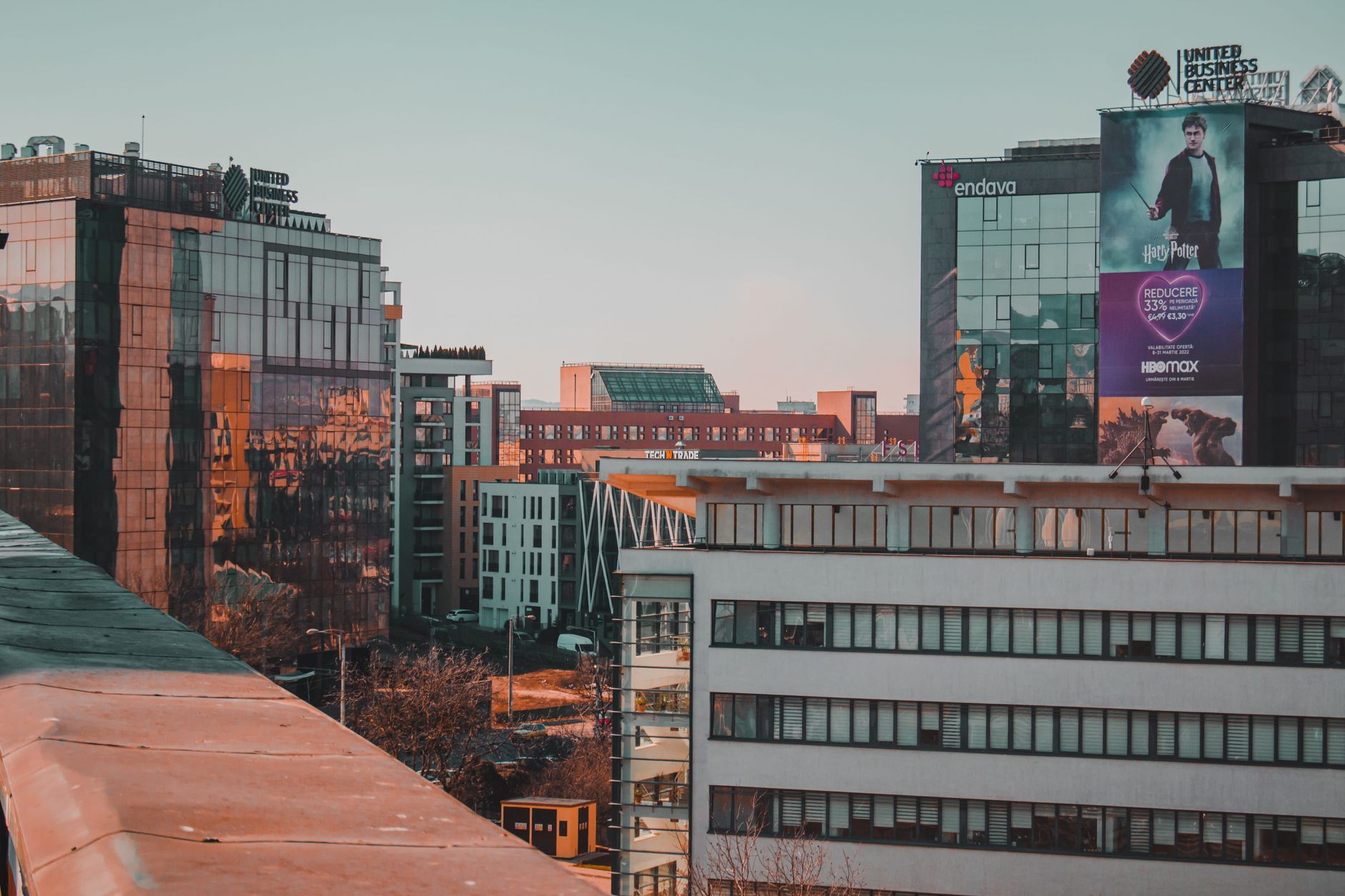
The city, as it actually looks.


Frequently asked
Is Cluj-Napoca worth visiting?
Yes, especially if you like cities with layers instead of one blockbuster sight. Cluj packs a Gothic church, baroque palaces, university energy, strong cafés, and easy day trips into a compact center. Two days can feel full here without becoming exhausting.
How many days in Cluj-Napoca?
Two to three days works well for most travelers. Two days covers the old town, Cetățuia, Central Park, and the Botanical Garden; a third day lets you add museums or a trip to Turda Salt Mine or Cheile Turzii.
Is Cluj-Napoca walkable?
Yes, the historic core is very walkable. Piața Unirii, Piața Muzeului, Avram Iancu Square, Central Park, and even the climb to Cetățuia link together naturally, though the hill will remind you it is still Transylvania.
How do I get from Cluj-Napoca to Turda Salt Mine?
Cluj is one of the easiest bases for Turda Salt Mine, and many travelers treat it as the default day trip. You can go by organized tour, car, or regional transport, and some itineraries pair the mine with Cheile Turzii for a longer day.
Is Cluj-Napoca expensive?
By European city standards, Cluj sits in the middle rather than the bargain basement. Costs rise during big festival periods, but everyday sightseeing stays manageable if you walk the center, choose a few key museums, and eat local dishes instead of chasing polished tasting menus.
What is Cluj-Napoca known for?
Cluj is known for its layered Transylvanian identity: Hungarian medieval roots, Romanian civic monuments, a huge university population, and a festival-heavy cultural life. St. Michael's Church, Matthias Corvinus, TIFF, Untold, and varză a la Cluj all belong to that picture.
Is Cluj-Napoca safe for tourists?
Yes, Cluj has a comfortable, lived-in center and a large student population, so most visitors find it easy to handle. Use the usual city caution late at night, especially if you've spent the evening on Piezișă Street or are walking back from viewpoints after dark.
When is the best time to visit Cluj-Napoca?
Late spring through early autumn is the sweet spot. Parks, café terraces, and Cetățuia all work better in mild weather, and summer brings the festival pulse that partly explains the city's reputation.
Pick up where you left off
Saved and recently read places — kept on this device only.
Photo credits (4)
- gusat silviu — Pexels License (https://www.pexels.com/license/) — Source: https://www.pexels.com/photo/33692380/
- Ott Maidre — Pexels License (https://www.pexels.com/license/) — Source: https://www.pexels.com/photo/2086834/
- Maxime Max — Pexels License (https://www.pexels.com/license/) — Source: https://www.pexels.com/photo/36789068/
- Evelin Rotaru — Pexels License (https://www.pexels.com/license/) — Source: https://www.pexels.com/photo/11559602/
Photos may have been resized or cropped.