Plan and listen to National Military Club with Audiala.
Audio guide in your pocket, itinerary in your browser. Built for the way you actually visit.
Introduction
The National Military Club (Cercul Militar Național) in Bucharest stands as one of Romania’s most prestigious historical and architectural landmarks. Blending military tradition with vibrant cultural life, the club offers visitors an exceptional journey through Romanian history, architectural grandeur, and contemporary cultural events. This article provides a detailed guide to its origins, architectural style, cultural importance, visiting hours, ticketing, accessibility, and practical tips to help you make the most of your visit to this iconic Bucharest historical site.

History and Founding of the National Military Club
The National Military Club was conceived in the early 20th century as a central meeting place for Romanian military officers and dignitaries. Its establishment reflected Romania’s modernization and the desire to align its capital with Western European cities, both culturally and architecturally. The land was acquired in central Bucharest, demonstrating the military’s prominent role in society at the time. Construction began in 1911 under the direction of architect Dimitrie Maimarolu, and the building was inaugurated in 1912, during the city’s celebrated Belle Époque (Evendo).
Architectural Significance and Features
Designed in exquisite French neoclassical style with Baroque and neo-Renaissance elements, the National Military Club epitomizes Bucharest’s historic nickname, the “Little Paris of the East.” The façade features grand Corinthian columns, an ornate entablature, and a monumental staircase. The building’s symmetrical composition and rich decorative details reflect the ambition of early 20th-century Romania to embrace European elegance (Imperial Transilvania).
Inside, the club boasts ten sumptuous halls, each with distinct architectural styles:
- Marble Hall: Adorned with white marble columns and a vaulted ceiling with military motifs.
- Gothic Hall: Features pointed arches and dark wood accents reminiscent of medieval castles.
- Norwegian Hall: Incorporates Scandinavian decorative elements and references to Norse mythology.
- Moorish Hall: Richly paneled with a gold-leaf ceiling, inspired by North African and Spanish palaces.
- Byzantine Hall: Decorated with mosaics and iconographic motifs, reflecting Romania’s Eastern influences.
Throughout the building, visitors encounter period furnishings, intricate stucco work, and artistic details such as chandeliers and monumental staircases (Imperial Transilvania).
Role in Military and Social Life
Originally established to foster camaraderie and intellectual exchange among military officers, the club soon became a nexus of social and cultural life in Bucharest. During the interwar years, its balls and receptions were legendary, attracting the city’s elite. The club also played a vital bridge between the armed forces and the civilian population, hosting lectures, art exhibitions, and important official events (Evendo).
Historical Events and Restoration
The National Military Club has endured significant historical events, serving as a command center during wars and undergoing changes during Romania’s communist period. After sustaining damage in World War I, it was restored and officially inaugurated in 1923. Through the communist era and after the 1989 Revolution, the building continued to function as a prestigious institution. Recent restoration efforts have preserved its architectural integrity and historical significance (Imperial Transilvania).
Preservation and Cultural Heritage
Recognized as a historic monument, the National Military Club is protected under Romanian heritage laws. Restoration projects have ensured that its original features—such as the façade, interior decorations, and period furniture—remain intact. The club houses a museum and library with extensive collections of military memorabilia and historical documents, supporting research and public education (Evendo).
Visiting Information: Hours, Tickets, Accessibility
Visiting Hours:
- The National Military Club does not have fixed daily visiting hours for the general public. Access is primarily available during scheduled events, exhibitions, and cultural programs.
- For guided tours or special exhibitions, it is essential to consult the official website or event-specific pages in advance.
Tickets and Admission:
- There is no regular ticketing for general visits. Tickets may be required for specific events, concerts, or guided tours.
- Prices vary: typical fees for special exhibitions or tours range from 20 to 50 RON, with discounts for students and seniors.
Accessibility:
- The building is partially accessible, with ramps and elevator access to most public areas. Due to its historic design, some halls may have limited accessibility.
- Visitors with special needs should notify staff or contact the club ahead of time for assistance.
Dining:
- The club’s restaurant and terrace are open to the public, serving Romanian and European cuisine in an elegant setting.
Events, Guided Tours, and Photographic Highlights
The National Military Club is renowned for hosting a diverse range of cultural events, including:
- International conferences (e.g., ACTIT, BSDA, SIGSEC)
- Major music festivals (e.g., EUROPAfest opening gala)
- Art exhibitions, theater performances, and academic conferences
Guided tours and educational workshops are offered periodically, particularly for school groups or during national holidays. Photography is generally allowed in public areas, but special exhibitions or events may have restrictions.
Recommended Photographic Spots:
- The Marble Hall’s grand staircase and columns
- The Byzantine Hall’s ornate interiors
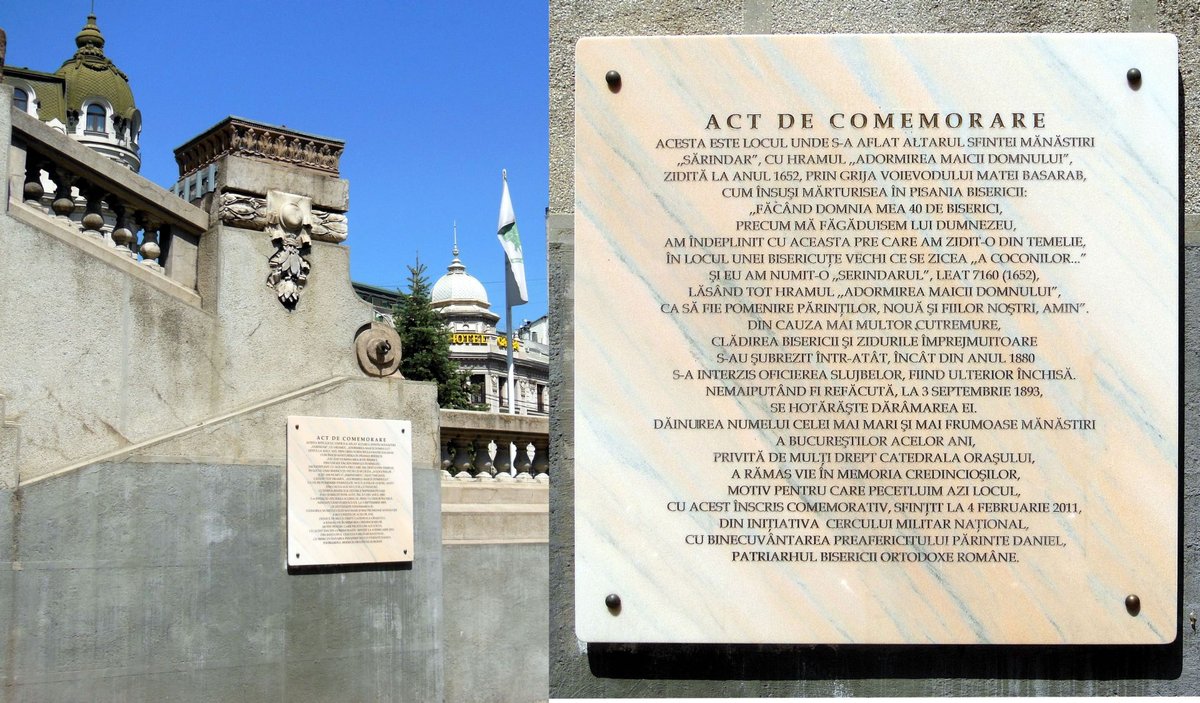
- The building’s neoclassical façade and the Sărindar Fountain
How to Get There and Nearby Attractions
Location:
- 1 Constantin Mille Street, at the intersection with Calea Victoriei, central Bucharest
Getting There:
- Metro: Universitate (M2 line) – 7-minute walk
- Bus/Tram: Multiple lines serve the area
- Taxi/Rideshare: Readily available in the city center
Nearby Attractions:
- Romanian Athenaeum
- Cismigiu Gardens
- CEC Palace
- Revolution Square
- Bucharest Old Town (Lipscani)
These sites make it easy to integrate the club into a broader exploration of Bucharest’s cultural heart.
Frequently Asked Questions (FAQ)
Q: What are the visiting hours?
A: The club is open to the public mainly during scheduled events, exhibitions, or guided tours. There are no regular daily visiting hours.
Q: Are tickets required?
A: General entry is event-based. Tickets may be needed for special exhibitions, concerts, or tours.
Q: Is the club accessible for visitors with disabilities?
A: Most public areas are accessible, but historic architectural constraints may limit access to some halls. Contact the club for specific needs.
Q: Are guided tours available?
A: Yes, during special events or by prior arrangement.
Q: Can I dine at the club?
A: Yes, the restaurant and terrace are open to visitors.
Q: How can I buy tickets?
A: Tickets for events and tours are available through the club’s official website or event organizers.
Listen to the full story in the app
The whole National Military Club,
told well.
Audio guides for 1,100+ cities across 96 countries. History, stories, and local insight — offline ready.
Verified, and shown.
Researched and written by the Audiala editorial team from historical records, architectural archives, and local expertise.
Researched from Wikidata, Wikipedia & official sources · fact-checked · How we make our guides →