Brasov
Romania Updated Apr 2026
Church bells bounce off a forested mountainside in Brașov, Romania, and five minutes later you are standing in a square lined with pastel merchant houses, eating a hot covrig while the Black Church throws its shadow across the cobbles. Few cities stage their contrasts this cleanly. Saxon Gothic, Orthodox courtyards, cable cars, Anatolian carpets, and serious mountain air all fit inside a center you can cross on foot before your coffee cools.
 Photo: Παναγιώτης Αρκουμάνης / Pexels
- Attractions
- 12
- Audio
- 1 h 40 min
- Trip length
- 2-3 days
- Best season
- Late spring to early autumn (May-September)
Why Brasov
Built from cited sources · see the method · How we make our guides →
Brașov looks like a medieval postcard until you notice how many stories don't match the postcard. The old Saxon core around Piața Sfatului still holds the headline sights, but step through Catherine's Gate into Șcheii Brașovului and the city changes language, faith, and mood; St. Nicholas Church and the First Romanian School remind you that Brașov was never one thing for long.
The city works because its scale stays humane. You can spend the morning under the vaults of the Black Church, built between 1385 and 1477, hear the organ rehearsing in the dim air, then ride up Tâmpa in about two minutes or climb by the Gabony Steps and look down on red roofs packed tight against the trees.
Brașov has better cultural instincts than many mountain gateway cities. A 1902 neo-Baroque art museum, evenings at the Philharmonic or Reduta, strong coffee on Strada Postăvarului, and a produce run through Piața Star give the place a daily life that survives the souvenir shops. Stay long enough and the city stops feeling like a base for Bran or ski slopes. It starts to feel like the point.
Gothic Stone, Ottoman Silk
The Black Church changes the room the moment you step inside: cold Gothic stone, a 1385-1477 shell, and one of Europe’s stranger church treasures, a rich collection of Anatolian carpets hung beneath the vaults. Stay for an organ concert if you can; the sound climbs the nave like smoke.A Frontier City Still Visible
Brașov still reads like a defended town rather than a museum set. Walk După Ziduri to the White Tower, Black Tower, Catherine’s Gate, and Weavers’ Bastion, and the old border-city logic snaps into focus.Two Histories, One City
Most first-time visitors stay inside the Saxon walls and miss the point. Cross into Șcheii Brașovului for St. Nicholas Church and the First Romanian School, and Brașov stops being a postcard and becomes a layered Transylvanian argument about language, faith, and power.Mountain at the Doorstep
Tâmpa doesn’t sit outside town; it rises straight behind it, steep enough to feel like the city forgot to end. You can ride the cable car up in about 2 minutes, then look down on red roofs, church spires, and streets that suddenly make geometric sense.
Neighborhoods
Where to wander, by quarter — each with its own rhythm.
Centrul Vechi
Brașov's old town is where most visits begin, and rightly so. Piața Sfatului, the Black Church, Rope Street, and the old merchant houses sit close together, with Strada Republicii handling the café traffic and side streets like Postăvarului and Michael Weiss offering better places to linger once the square starts feeling staged.Șcheii Brașovului
Șchei changes the story of Brașov from Saxon showpiece to layered border city. Beyond the old walls, the streets grow quieter, gates open onto courtyards, and the Romanian side of the city's history comes into focus at St. Nicholas Church and the First Romanian School, where early printing and schooling in Romanian still shape the place's self-understanding.Sub Tâmpa
The strip beneath Mount Tâmpa feels half urban promenade, half mountain threshold. Come here for the shaded paths, the fortification walks around După Ziduri, and the odd pleasure of hearing traffic fade while the sign above the ridge reminds you the center is still just below your feet.Piața Sfântul Ioan
This pocket west of the main square feels more local and less performative. Markets, temporary events, murals, and easier everyday rhythms give it a looser mood than Council Square, and it makes a good reset if you want central Brașov without the full postcard treatment.Centrul Nou
Brașov's newer civic center is worth a walk if you want to see what happened after the medieval chapter. Around Eroilor, the Art Museum, library, administrative buildings, and late-19th- to early-20th-century facades show a city that was growing into modernity rather than preserving itself in amber.Bartolomeu
Bartolomeu sits outside the usual first-time circuit, which is exactly why it can be useful. The draw is St. Bartholomew's Church, first attested in 1223 and widely described as Brașov's oldest church, along with a more workaday stretch of the city where the tourist script finally drops away.
Plan your trip
Before you go
- Getting There
- As of 2026, the closest airport is Brașov-Ghimbav International Airport (GHV), linked to the city by RATBV line A1 with stops at Livada Poștei and Gara Brașov. The main rail hub is Gara Brașov, with frequent CFR connections to București Nord; many travelers still arrive via Bucharest Henri Coandă Airport (OTP), then take the 20-25 minute airport train to București Nord before continuing 2.5-4 hours by rail. Major road approaches are DN1/E68 from Bucharest and Sibiu, DN11/E574 from Bacău, and DN73 toward Bran and Pitești.
- Getting Around
- Brașov has no metro and no tram; in 2026 the system is built around RATBV buses and trolleybuses. The useful visitor lines are A1 for the airport, line 4 between Gara Brașov and Livada Poștei, and line 20 to Poiana Brașov; the standard urban fare is 5 lei for 90 minutes, with 1-day, 3-day, and 7-day passes at 20, 50, and 90 lei. The old town is best on foot, while cycling is stronger as a leisure and mountain-biking activity than as a city-transport network.
- Climate & Best Time
- Brașov runs cold in winter and warm rather than punishing in summer: roughly -4 to 4 C in winter, 6 to 18 C in spring, 14 to 28 C in summer, and 5 to 18 C in autumn. June is usually the wettest month, while July to August bring the longest outdoor days; September is the sweet spot for clear walks and day trips, and December to February suits travelers pairing the city with Poiana Brașov skiing. Peak tourism clusters around summer weekends, Christmas markets, and ski season.
- Language & Currency
- Romanian is the official language, though English is common in hotels, restaurants, and the old-town visitor trade. Romania uses the Romanian leu (RON), not the euro, and card payment is widely accepted in 2026, including contactless payment on RATBV vehicles; keep a little cash for kiosks and small purchases.
- Safety
- Brașov is generally an easy city to handle, but the real annoyances are petty theft, card fraud, and careless taxi choices around stations and tourist traffic. Use Bolt, Uber, or a clearly licensed metered taxi, watch your pockets at Gara Brașov and busy squares, and treat mountain-edge bear warnings seriously in Poiana Brașov and forested areas: do not approach, feed, or photograph wildlife, and call 112 if needed.
A Frontier City Built of Trade, Fire, and Stubborn Stone
From Dacian hill settlements to post-communist reinvention beneath Tâmpa
- c. 9500 BCE
First Traces in the Basin
Most scholars place the earliest human presence around Brașov in the Neolithic, long before the city had walls, guilds, or a German name. The basin below Tâmpa already offered what settlers needed: water, shelter, and defensible ground. Brașov did not begin as a medieval accident. It began as a good place to stay alive.
- c. 1200 BCE
Bronze Age Cultures Take Hold
Archaeological finds link the area to the Schneckenberg and Noua cultures, whose settlements and burials show a landscape already thick with human use. Clay, metal, and storage pits matter here because they reveal continuity. People were not merely passing through this valley; they were building lives in it.
- c. 100 BCE
Dacian Strongholds Above the Town
Dacian traces on Tâmpa, Șprenghi, and near Solomon's Rocks suggest a network of hilltop defenses and storage sites before any medieval charter mentioned Brașov. That changes how you read the terrain. The mountain looming over the old town was strategic long before it became scenic.
- 1211
Teutonic Knights Enter Burzenland
King Andrew II of Hungary brought in the Teutonic Knights to defend Burzenland, and with them came a new phase of fortified settlement. A stronghold rose on or near Tâmpa, tying military logic to the ground plan of the future city. Brașov's story turns sharper here: frontier, commerce, and faith start moving together.
- 1235
Corona Appears in Writing
A church document records the settlement as Corona, the first secure written mention of Brașov. Names matter. This one carries the stamp of the Saxon world that shaped the city center still standing around Council Square.
- 1241
Mongol Invasion Breaks the Region
The Mongol invasion smashed through Transylvania and struck the Brașov area hard, including the Șprenghi fortification. Ash and panic leave fewer elegant records than charters, but the consequence is plain enough. After 1241, defense was no theory.
Show the full timeline (29 moments)
- 1252
Barasu Enters Royal Records
A charter of King Béla IV refers to Terra Saxonum de Barasu, tying the settlement more firmly to royal administration and Saxon privilege. Paper can sound dry. In practice, it meant trade rights, legal status, and the kind of protection that lets a town grow teeth.
- 1383
The Black Church Begins
Construction starts on the great parish church that would later be called the Black Church, a Gothic mass planted at the foot of Tâmpa. Even unfinished, it announced ambition on a scale rare in the region. Stone by stone, Brașov was declaring itself a city of merchants who thought big.
- 1421
Ottoman Raid Scars the City
An Ottoman attack burned parts of Brașov and disrupted work on the great church and the defenses. Smoke leaves its own archive. The city learned, again, that prosperity on a frontier comes with a price.
- 1495
Romanian School Appears in Schei
The first documentary mention of the Romanian school in Schei marks a different Brașov from the Saxon square inside the walls. Beyond the gates, Orthodox Romanian life had its own institutions, teachers, and memory. The city was never one thing.
- 1498
Johannes Honterus Is Born
Johannes Honterus, humanist, printer, and reformer, was born in Brașov at the edge of the 15th century. He would carry the city's intellectual life into the Reformation, linking this mountain-ringed town to the arguments remaking Europe. Few figures explain Brașov's mind more clearly.
- 1521
Neacșu's Letter Reaches Brașov
Neacșu of Câmpulung sent a warning letter to Johannes Benkner in Brașov about Ottoman movements south of the mountains. It survives as the oldest preserved text in Romanian. You can almost hear the urgency in it: trade town, border intelligence post, and linguistic milestone at once.
- 1533
Honterus Brings the Reformation
By the 1530s, Honterus had returned from his studies and turned Brașov into a workshop of Lutheran reform and printing. Presses clattered, paper smelled of ink and damp fiber, and ideas moved faster than caravans. The city became one of Transylvania's sharpest intellectual centers.
- 1556
Coresi Prints in Romanian
Deacon Coresi began printing Romanian-language religious books in Brașov in the mid-16th century, giving written Romanian wider reach and prestige. This was not a decorative literary gesture. It shifted who could hear sacred language in words close to their own speech.
- 1559
Catherine's Gate Rises
Catherine's Gate took shape as the ceremonial and defensive entrance toward Schei, its pointed roof and towers giving stone a certain theatrical confidence. Today it feels picturesque. In its own time, it controlled movement, status, and safety.
- 1600
Michael the Brave Passes Through Power
Michael the Brave's brief union of Wallachia, Transylvania, and Moldavia changed the political weather of the whole region, Brașov included. His moment did not last. But it lodged a durable idea in Romanian memory: these lands could be imagined together.
- 1689
The Great Fire Blackens the Church
A devastating fire tore through Brașov and darkened the great parish church so thoroughly that later generations would call it the Black Church. Timber cracked, bells shook in smoke, and the city lost more than buildings. Fire altered its face and its name at once.
- 1699
Habsburg Rule Takes Hold
The Treaty of Karlowitz brought Transylvania more firmly into Habsburg hands, and Brașov entered a new imperial order. Administrators, taxes, and military expectations changed the city's habits. The frontier remained, but it now answered to Vienna.
- 1812
George Barițiu's Brașov Century
George Barițiu, born in 1812, became one of the major Romanian journalists and public intellectuals associated with Brașov. In this city he helped turn print into civic force, arguing for education and political awareness among Romanians in Transylvania. Libraries remember him for good reason.
- 1839
The Giant Organ Finds Its Voice
A monumental organ was installed in the Black Church, eventually making the building as much a vessel for sound as for worship. The church's interior already held cool stone and filtered light; now it could fill with thunder. Brașov gained one of its defining acoustics.
- 1867
Magyar Rule Tightens Administration
The Austro-Hungarian Compromise placed Transylvania under the Hungarian half of the monarchy, and pressure to Magyarize public life increased. Names, schools, and official language became political ground. Brașov's multicultural reality did not vanish, but it grew more contested.
- 1899
Brassaï Is Born Here
Gyula Halász, later known to the world as Brassaï, was born in Brașov in 1899. Paris made him famous, but Brașov gave him the first grammar of shadows, steep streets, and dramatic contrast. A city of walls and fog leaves an eye for night.
- 1918
Brașov Joins Greater Romania
The union of Transylvania with Romania pulled Brașov into a new national framework after the First World War. Flags changed faster than habits, but the political meaning was immense. A city shaped by Saxon merchants, Hungarian crowns, and Habsburg rule now belonged to the Romanian state.
- 1950
Brașov Becomes Stalin City
On 22 August 1950, the communist regime officially renamed the city Orașul Stalin. Few names age worse. The change was ideological theater poured over an old Transylvanian town that had never asked for Soviet grandeur.
- 1960
The Old Name Returns
A decade later, the Stalin name was dropped and Brașov returned to official use. The reversal mattered because names are never just labels. They tell you who is allowed to own the past.
- 1987
Workers Revolt Against the Regime
In November 1987, workers from the tractor plant and other factories marched in protest against shortages, lies, and the daily humiliations of late socialism. Security forces crushed the revolt, but the silence had broken. Two years later, the whole country would follow.
- 1989
Revolution Ends Communist Rule
The Romanian Revolution toppled Nicolae Ceaușescu in December 1989, and Brașov crossed into the uncertain freedom of the post-communist years. Factories would falter, memory would sharpen, and old buildings would be looked at differently. The city stopped pretending the 20th century had been tidy.
- 1991
Black Tower Wall Gives Way
Heavy rain brought down part of the Black Tower's southern wall in 1991, a reminder that medieval masonry does not care about romance. Stone fails when water keeps working at it. Restoration followed, but the collapse was a useful correction to postcard thinking.
- 2007
Romania Enters the European Union
Romania's accession to the European Union folded Brașov into new circuits of funding, travel, and investment. The change was visible in restoration projects, business rhythms, and the mix of languages heard under the arcades of Council Square. Medieval walls met open borders.
Who lived here
-
Photographer · 1899–1984
Brassai
Born here as Gyula Halasz
Brașov gave Brassaï his first geometry lesson: steep streets, hard winter light, and walls that still make shadows behave dramatically. He later made Paris nocturnal and famous on film, and you can imagine him grinning at how photogenic his birth city remains once the day-trippers thin out.
Where to Eat
Where locals actually book dinner — not the tourist menus.
Insider tips
Small things that change how the city treats you.
Watch the square prices
Council Square and the busiest stretch of Strada Republicii are handy, but menus there often lean tourist-first. For better value, walk onto Strada Postavarului, Michael Weiss, George Enescu, or into Schei before you sit down.Time the Black Church
Check the Black Church program before you go. Concerts, ceremonies, and seasonal hours can cut into visiting time, and the official site posts both access windows and ticket details.Use Tampa strategically
Take the Tâmpa cable car up if you want the view fast, then walk part of the mountain back down. The ride is about 2 minutes, which saves your legs for the old-town fortifications later.Order less first
Traditional Romanian meals in Brașov run heavy: soup, bread, then a meat-and-polenta main can flatten an afternoon. Start with one dish, especially at places known for Transylvanian comfort food like La Ceaun or Sergiana.See Piata Star
Piata Star shows the city at working speed, not postcard speed. Go for cheese, honey, produce, and quick snacks if you want a cheap lunch or something edible for the train.Tip in the total
A 10-15% restaurant tip is standard in Romania. Many locals simply tell the server the total amount they want charged instead of leaving coins behind on the table.
Gallery
The city, as it actually looks.

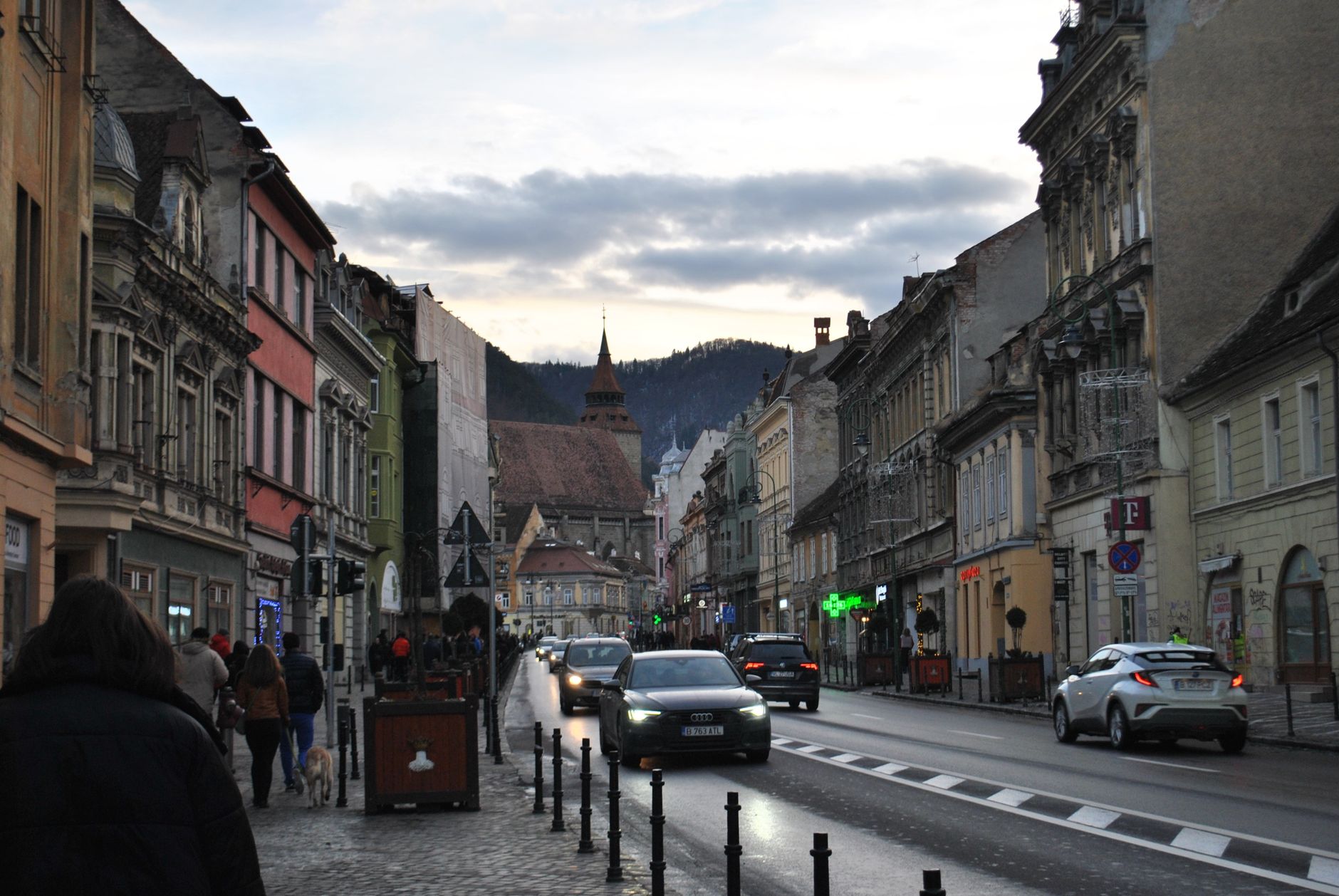


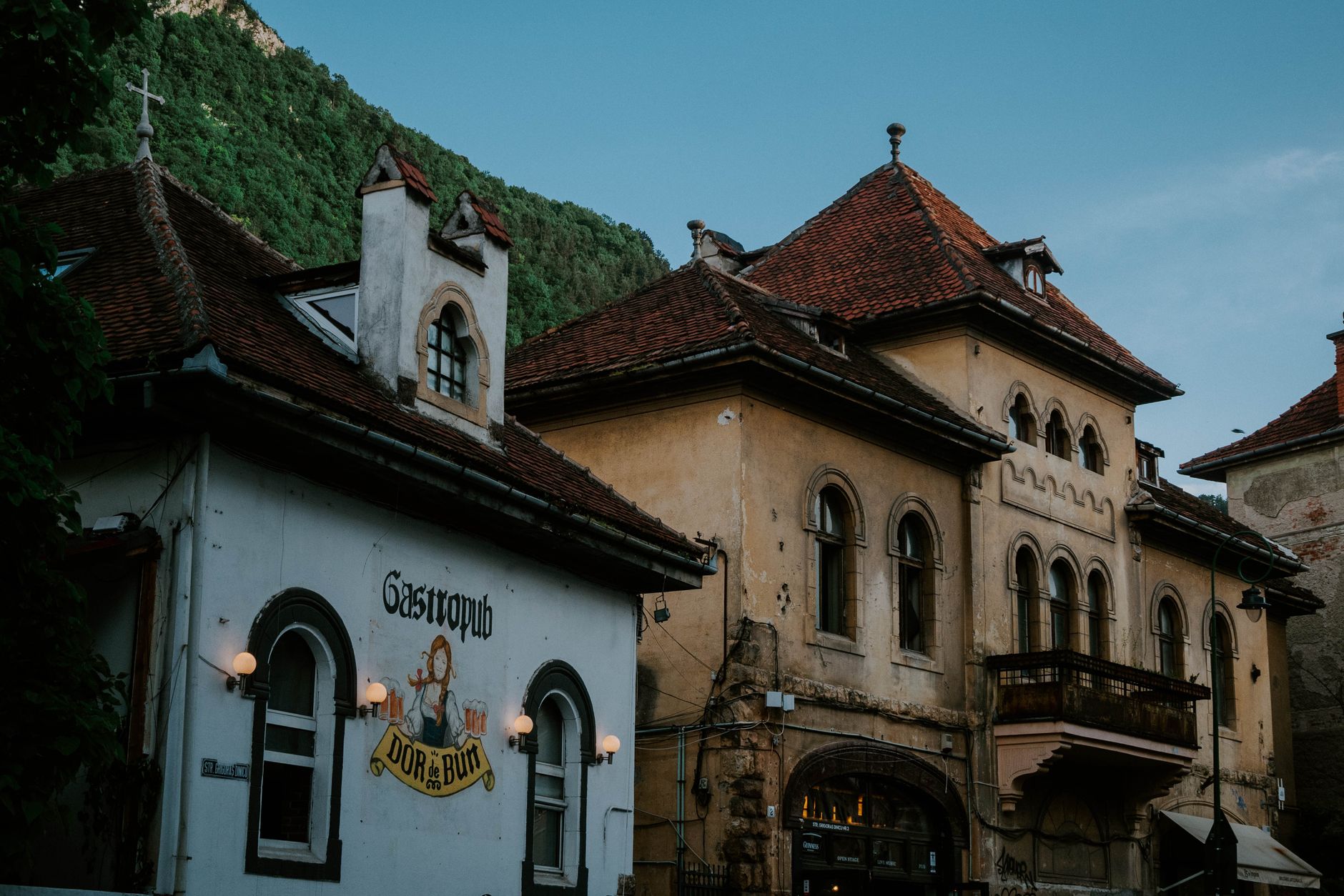
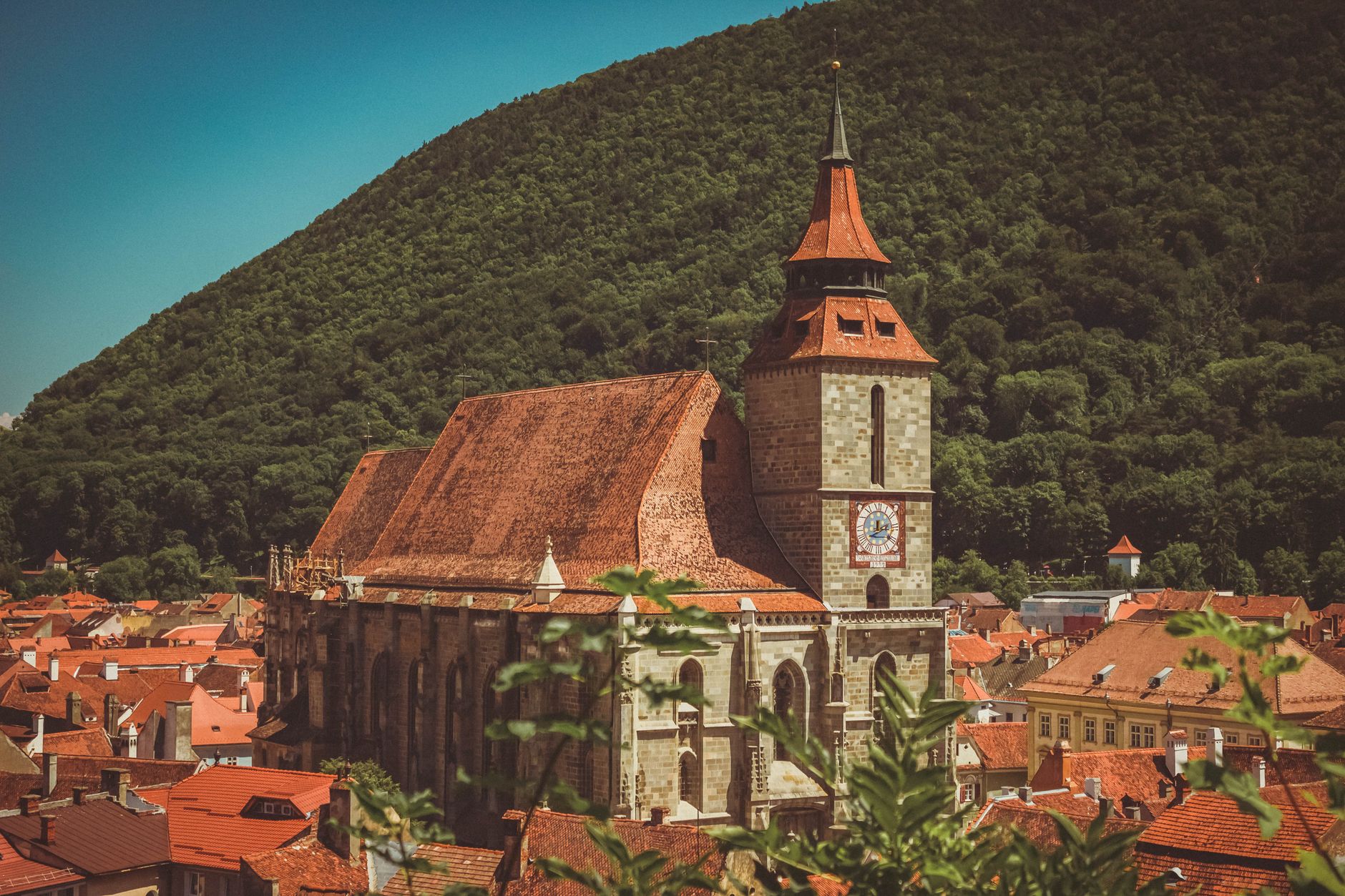
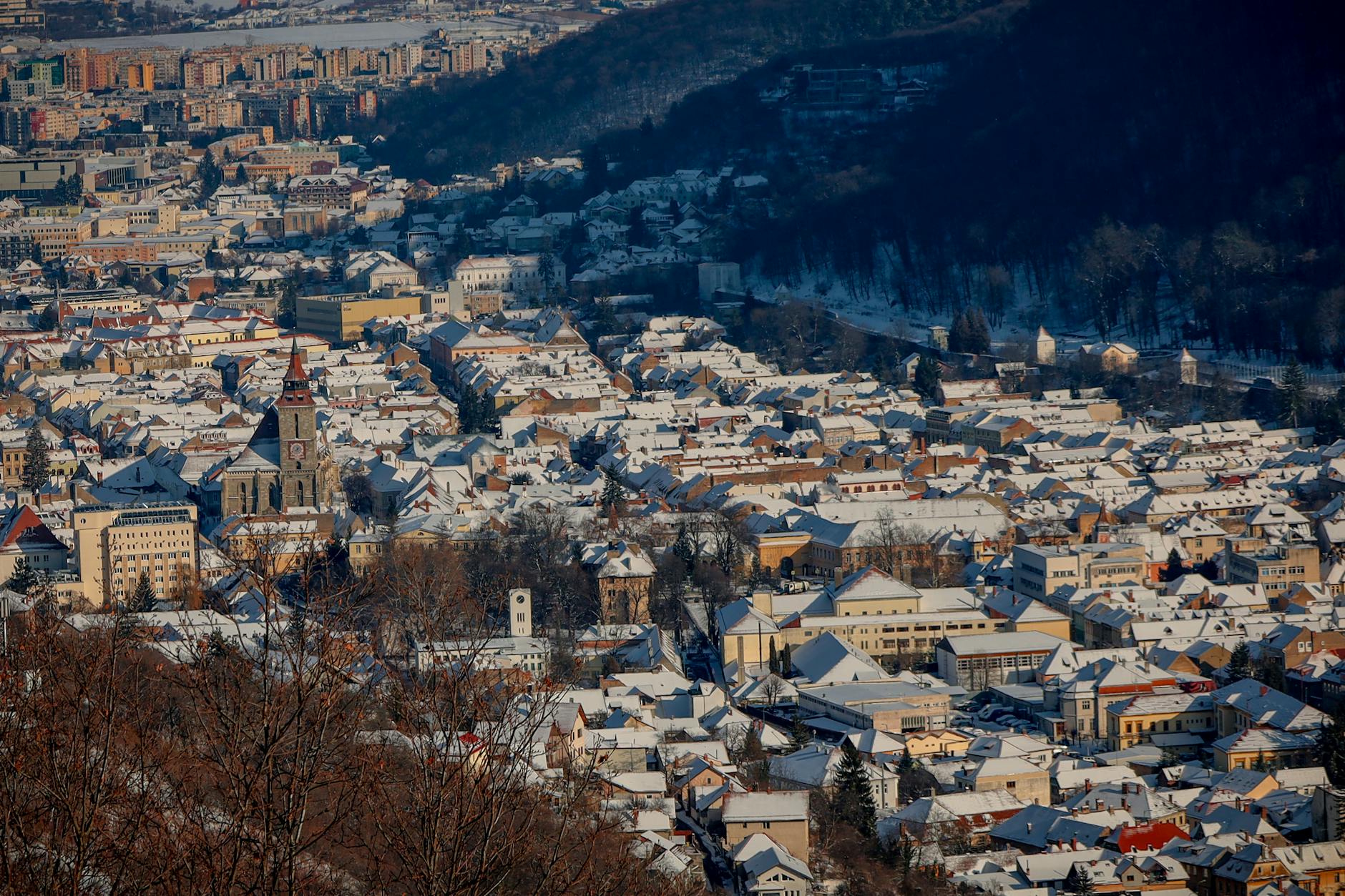
Frequently asked
Is Brasov worth visiting?
Yes. Brașov gives you a medieval square, a giant Gothic church, mountain views, and a second, quieter story in Șcheii Brașovului, all within a short walk. That mix makes it feel richer than a quick 'old town and done' stop.
How many days in Brasov?
Two to three days works well for most travelers. One day covers Council Square, the Black Church, Rope Street, and the fortifications; a second gives you Tâmpa, Schei, St. Nicholas Church, and the First Romanian School; a third lets you add museums or a day trip such as Prejmer.
Can you walk around Brasov easily?
Yes, the central city is very walkable. Old Town, the Black Church, După Ziduri, Rope Street, and much of Schei sit close enough to link on foot, though the climb toward Tâmpa and upper Schei will remind you that Brașov has real slopes.
Do I need to take the Tampa cable car in Brasov?
No, but it helps if your time is short or your knees are arguing with you. Hikers can go up on foot, while the cable car gives you the overlook in minutes and leaves more energy for the rest of the city.
Is Brasov expensive for tourists?
Not by big Western European city standards, but the difference between streets is real. Council Square carries the highest tourist markup, while side streets and market stops like Piata Star usually stretch your budget much further.
Is Brasov safe for tourists?
Generally, yes. The historic center stays busy and easy to read, but the usual city habits still apply: keep an eye on your bag in crowded squares, and do not assume every restaurant facing the main square deserves your money.
What is the best area to stay in Brasov?
Old Town is the best base for a first visit. You can walk to the Black Church, Council Square, the fortifications, cafés, and evening venues without dealing with transport, while Schei works better if you want quieter streets and more local rhythm.
Pick up where you left off
Saved and recently read places — kept on this device only.
Photo credits (10)
- Παναγιώτης Αρκουμάνης — Pexels License (https://www.pexels.com/license/) — Source: https://www.pexels.com/photo/11534893/
- Alina Gheordunescu — Pexels License (https://www.pexels.com/license/) — Source: https://www.pexels.com/photo/13798548/
- Valeria Drozdova — Pexels License (https://www.pexels.com/license/) — Source: https://www.pexels.com/photo/35396475/
- Andreea Juganaru — Pexels License (https://www.pexels.com/license/) — Source: https://www.pexels.com/photo/5718472/
- Ejov Igor — Pexels License (https://www.pexels.com/license/) — Source: https://www.pexels.com/photo/26184277/
- Ejov Igor — Pexels License (https://www.pexels.com/license/) — Source: https://www.pexels.com/photo/26184269/
- Reanimated Man X — Pexels License (https://www.pexels.com/license/) — Source: https://www.pexels.com/photo/17713520/
- Bogdan Chirea — Pexels License (https://www.pexels.com/license/) — Source: https://www.pexels.com/photo/35624448/
- Valeria Drozdova — Pexels License (https://www.pexels.com/license/) — Source: https://www.pexels.com/photo/35410890/
- Marian Florinel Condruz — Pexels License (https://www.pexels.com/license/) — Source: https://www.pexels.com/photo/19768814/
Photos may have been resized or cropped.