Poto-Poto Painting School
Since 1951, the École de Peinture has been a living studio, not a museum—artists paint in front of you and sell straight off the easel. One canvas buys you a direct line to 75 years of Congolese color theory.
At 5:47 pm the Congo River turns molten copper and Kinshasa’s skyline glints back like a dare. You’re standing on Brazzaville’s Corniche, drinking palm-wine that costs less than a bus ticket, while two capitals—Republic of the Congo on your left, Democratic Republic of the Congo on your right—trade bass lines across 1.8 km of water.
 Brazzaville · Republic of the Congo
Researched from Wikidata, Wikipedia & official sources · fact-checked · How we make our guides →
BAt 5:47 pm the Congo River turns molten copper and Kinshasa’s skyline glints back like a dare. You’re standing on Brazzaville’s Corniche, drinking palm-wine that costs less than a bus ticket, while two capitals—Republic of the Congo on your left, Democratic Republic of the Congo on your right—trade bass lines across 1.8 km of water.
This is the only place on earth where you can start the night in one country, watch the sunset from another, and never show a passport. The city’s pulse is Congolese rumba—declared UNESCO Intangible Heritage in 2021—spilling from tin-roofed maquis onto streets named for French generals and African kings. Colonial balconies sag under laundry; murals painted with fermented-indigo dye shout tomorrow’s slogans.
Walk inland three blocks and the river hush gives way to Poto-Poto’s paint-splattered alleyways where artists from the 1951 painting school sell canvases still wet. By midnight the same painters are dancing barefoot at Diamant Noir, arguing over who stole whose guitar riff—proof that in Brazzaville, art and nightlife are the same currency.
What makes this place worth slowing down for.
Since 1951, the École de Peinture has been a living studio, not a museum—artists paint in front of you and sell straight off the easel. One canvas buys you a direct line to 75 years of Congolese color theory.
La Corniche lets you stand in the quieter capital and watch the louder one glow across 2 km of brown water. At dusk the Pont du 15 Août 1960 flickers from white concrete to neon calligraphy.
Lesio-Louna Reserve is only 150 km north—leave after breakfast, track habituated western lowland gorillas before lunch, back for riverfront beers. You bring the food; they provide the 4×4 and the primates.
Sacré-Cœur (1894) is the oldest still-standing cathedral in Central Africa; Sainte-Anne’s frescoes swallow sunlight whole. Between them you span the entire colonial-to-post-colonial emotional arc.
Where to wander, by quarter — each with its own rhythm.
The administrative heart laid out by French surveyors in 1910 still smells of wet stone at dawn. Walk the grid between Avenue de Gaulle and Place du 15 Août to see 1930s government buildings painted the exact shade of bruised lilac chosen by the last colonial governor. At noon the cafés empty and civil servants debate politics over $1.20 espresso that arrives with a side of political gossip.
Every wall is a canvas—some commissioned, most not. The 1951 art school keeps its doors open; buy a painting still dripping and the artist will roll it in yesterday’s newspaper. Night brings tiny maquis where fish is grilled over oil-drum barbecues and paintings become tablecloths.
Brazzaville’s commercial spine pulses loudest after sunset. Street-side stalls sell saka-saka wrapped in banana leaf while sound systems stacked on wheelbarrows blast ndombolo that rattles shop shutters. It’s sweaty, loud, and the fastest way to learn that $2 beer tastes better when the bartender is also the DJ.
A 3 km promenade where fishermen mend nets at dawn and couples promenade at dusk. The river smells of diesel and tilapia; vendors thread skewers of goat while the 15 Août bridge cycles through LED colors timed to whatever playlist leaks from passing taxis.
Working-class maze where every second courtyard hides a bar smaller than your hotel bathroom. Thursday nights the rhythm comes from a single battered guitar and three voices that could restart empires. Order grilled plantain; the cook will remember your name on the third visit.
The city’s youngest district parties hardest. Former army barracks turned into open-air clubs where concrete floors sweat rumba. Weekends spill into the streets; expect dancing until the 4 a.m. bread vans arrive, selling baguettes still warm from Chinese-built ovens.
Mid-rise concrete blocks painted in football-club colors. The Sunday market under the mango trees sells second-hand Parisian leather jackets and mangoes so sweet they make you forget the heat. Kids kick bottle-cap footballs between stalls; their mothers argue over the price of smoked catfish in Lingala and French.
From Téké kingdom to capital of the river
The Anzico Kingdom, led by the Téké people, consolidates power along the Congo River. Sacred forests mark royal burial grounds at Mbé, 200 kilometers north of where Brazzaville will stand. Ivory and copper traders navigate these waters centuries before Europeans arrive.
Pierre Savorgnan de Brazza enters the world in Rome, destined to carve his name into African geography. The Franco-Italian explorer will later claim this riverbank for France through a single treaty, giving the future capital both its name and its colonial fate.
De Brazza plants the French tricolor on the north bank of the Congo River, founding a military outpost that will bear his name. The wooden fort rises where fishermen once mended nets, marking the beginning of Brazzaville's transformation from village to capital.
Workers lay the first stones of Cathédrale du Sacré-Cœur, Central Africa's oldest surviving cathedral. Simple brick walls rise where drums once echoed. The church bell will call worshippers for 130 years, its bronze voice carrying across the growing colonial town.
Brazzaville becomes the administrative heart of French Equatorial Africa, governing Chad, Gabon, Ubangi-Shari, and Congo from this single hilltop. Government House overlooks the river where steamers now dock daily, carrying rubber, ivory, and colonial officials.
Forced laborers break ground on the 512-kilometer railway to Pointe-Noire. The tracks will claim 17,000 lives before completion in 1934. Each sleeper laid represents a coffin, each mile of track a testament to colonial ambition built on African backs.
General Charles de Gaulle arrives with the Free French forces, making Brazzaville the symbolic capital of resistance against Nazi occupation. The governor's palace becomes a war room; African soldiers drill in the streets where French refugees from Europe now walk in shock.
De Gaulle announces the end of colonial rule from the same governor's palace where France once administered an empire. The conference room echoes with promises of African autonomy, though full independence remains sixteen years distant. The words mark the beginning of the end.
French painter Pierre Lods opens an art school in the Poto-Poto district, creating Africa's most influential artistic movement. Canvas after canvas emerges depicting daily life in bold colors and geometric patterns. The school's artists will define Congolese visual identity for generations.
Congo votes to become an autonomous republic within the French Community. The colonial flag comes down in stages rather than suddenly. Brazzaville's streets fill with celebration, but also uncertainty about what comes after two generations of French rule.
August 15th. The tricolor is lowered for the last time as Fulbert Youlou becomes Congo's first president. Drums replace military marches in the streets where colonial administrators once walked. The new flag—green, yellow, red—snaps in the wind above Government House.
Captain Marien Ngouabi seizes power, declaring Congo a Marxist-Leninist state. The People's Republic is born amid red flags and Soviet-style parades. The young military officer will rule from the same palace where French governors once issued colonial decrees.
President Ngouabi is assassinated in his residence, his body discovered at 4:30 AM on March 18th. The murder remains unsolved—political rivals, foreign agents, or military rivals all had motives. His mausoleum becomes both shrine and warning about power's price in post-colonial Africa.
Brazzaville hosts the All-Africa Games, building new stadiums and hotels for 3,000 athletes. The city dresses itself in bright colors for the continent's cameras. For ten days, the capital shows it can host the world—then returns to empty stadiums and economic reality.
Serge Ibaka is born in Brazzaville, destined to become the NBA's first Congolese star. The child who will grow up playing basketball on dirt courts will later represent his country on the world stage. His journey from these streets to NBA arenas begins in a working-class neighborhood.
Machine gun fire echoes through Brazzaville's streets as militias battle for control. The Congo River runs red with bodies thrown from bridges. Over 250,000 civilians flee, leaving neighborhoods to burn. The capital that survived colonialism now tears itself apart.
December 1998. The entire population of southern Brazzaville abandons their homes overnight, streaming into the forest with whatever they can carry. Children die of malnutrition under makeshift shelters. The city becomes a ghost town, its grand colonial buildings standing empty.
The Pont du 15 Août 1960 finally opens, a white cable-stayed bridge spanning the Congo River's edge. Chinese contractors built what local engineers couldn't afford to dream. At night it lights up in shifting colors, a symbol of recovery that cost $20 million and took five years.
Brazzaville hosts the African Games again, 37 years after the first. New stadiums rise where ruins once stood. The city that fled in 1998 welcomes 15,000 athletes and spectators, proving that even civil war's scars can heal in a generation.
Construction begins on the Twin Towers—two 30-story buildings of glass and steel that will dominate the skyline. A revolving restaurant on the top floor will slowly spin above the Congo River, offering views of Kinshasa across the water. The city reaches for the sky it once fled.
The people who shaped the city — and were shaped by it.
The Franco-Italian signed a treaty with King Makoko Iloo I on the same spot where the neon Pont du 15 Août now glows. He’d smirk at the bridge named for independence day, built by Chinese engineers—empires still trading places.
Lods handed brushes to street kids and told them to paint their city. Today their canvases sell in Paris galleries, but you can still buy raw originals for the price of dinner from the artists working in the same courtyard.
His red-star mausoleum towers over Avenue de l’Indépendance. Ngouabi would find it ironic that the souvenir stalls outside now sell fridge magnets of Che Guevara next to rumba festival posters.
His plays premiered in a city where power cuts paused the action nightly. Tansi’s satirical lines about military parades still echo at Charles de Gaulle Square every August 15, spoken aloud by citizens who remember when tanks rolled instead of dancers.
Where locals actually book dinner — not the tourist menus.
Chicken stewed in palm-nut cream, peanuts and ndombo (bitter leaf). Order it at a riverside shack on La Corniche—sauce thick enough to mop with sticky manioc fufu.
Pounded cassava leaves simmered with smoked fish and a whisper of chili. Vegetal, smoky, electric green; tastes like the forest condensed into a side dish.
Fresh tilapia steamed in banana leaves with tomato, onion and local basil. The leaf parcel arrives puffed and steaming—tear it open tableside for the full aromatic hit.
Hit a neighbourhood nganda (open-air bar) at 17:00 for still-warm beignets and a 65-cl Regab beer. Doughnuts cost 150 XAF each; the gossip is free.
Fermented cassava steamed in leaf bundles—tangy, chewy, perfect vehicle for moambe sauce. Street women sell them warm from plastic buckets for 200 XAF a roll.
Purple African pears boiled, salted and sold in paper cones. Buttery avocado-like flesh; eat three and you’ve had your daily fat ration straight from the tree.
Small things that change how the city treats you.
Eat with your right hand at maquis and homes—left is for hygiene. Locals will notice immediately and quietly correct you.
Maya-Maya airport cabs have no meters—agree 5,000–7,000 XAF to Centre-Ville before you shut the door. Green-and-white livery means official; still negotiate.
July delivers 3 mm of rain versus 264 mm in November. You get clear river views, cool 28 °C days, and the best odds for gorilla tracking at Lesio-Louna.
The Pont du 15 Août cycles purple-gold LEDs at dusk; stand on the downstream footpath for a straight shot of Kinshasa’s skyline lighting up across 4 km of water.
Hotel menus overcharge. Walk La Corniche at 18:00, look for tilapia grilling in banana leaves—whole maboke and saka-saka for 2,500 CFA eaten on plastic stools.
Lesio-Louna reserve office in Brazzaville requires 24-hour advance booking and a 4×4. Bring all food; the lodge has power but no store.
The city, as it actually looks.

A clear view of a prominent office building rising above the cityscape of Brazzaville, Republic of the Congo.
Edouard MIHIGO on Pexels
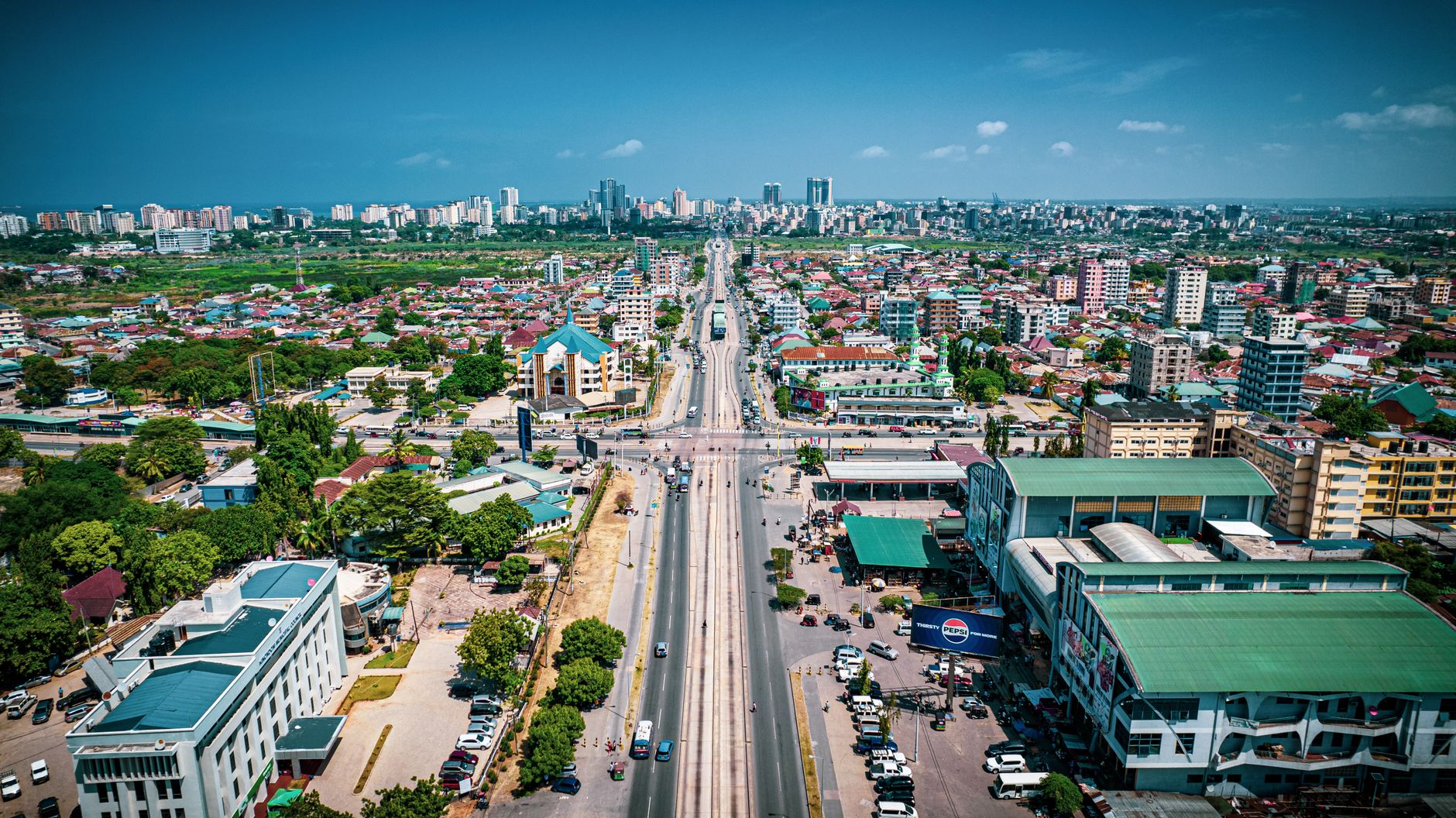
A stunning aerial perspective of the bustling urban landscape of Brazzaville, Republic of the Congo, showcasing its unique mix of modern and traditional architecture.
Alex Levis on Pexels
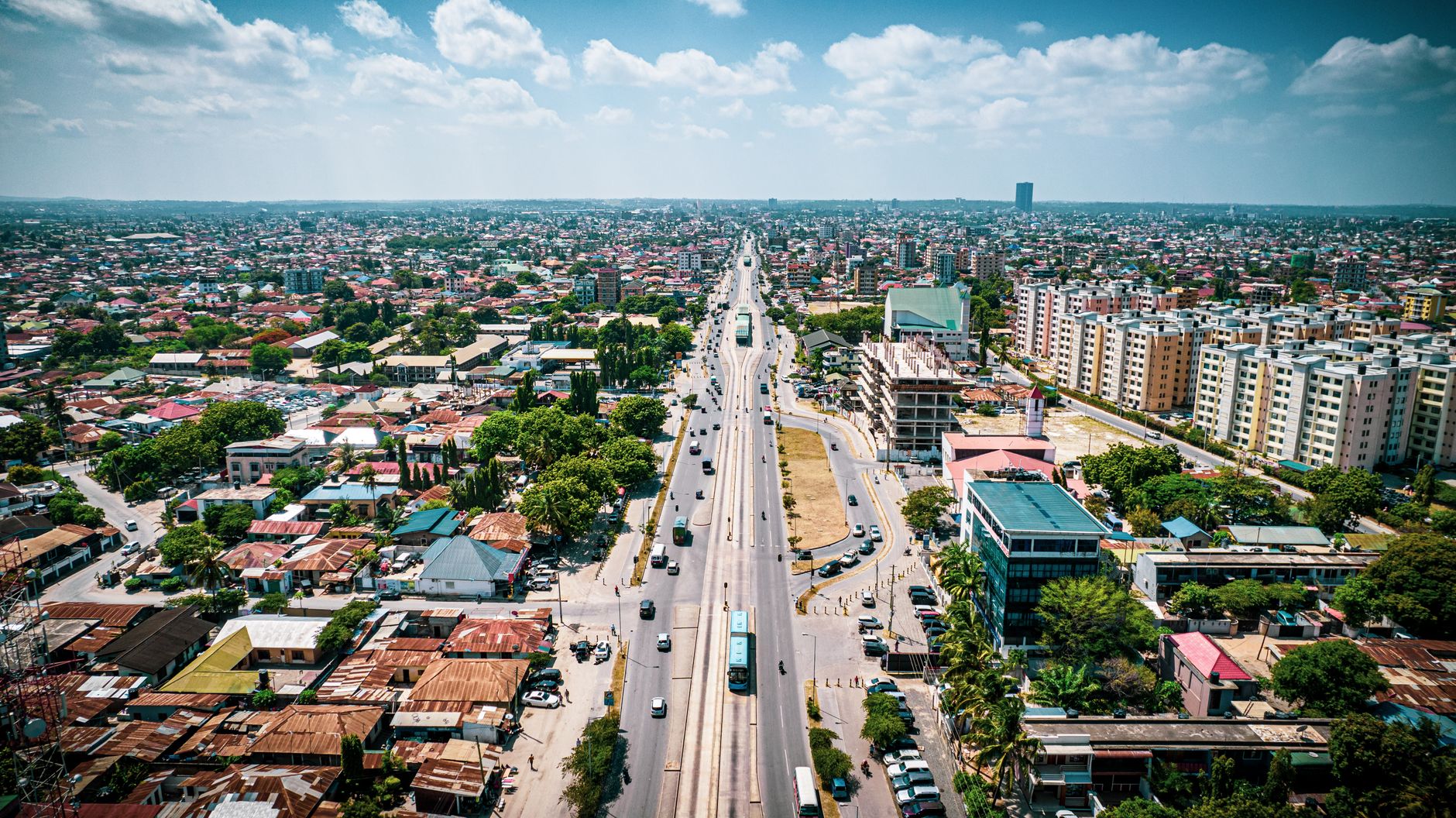
A high-angle aerial perspective captures the bustling urban landscape and central transit artery of Brazzaville, Republic of the Congo.
Alex Levis on Pexels

An elevated perspective of a major highway interchange winding through the dense urban landscape of Brazzaville, Republic of the Congo.
Silvere Meya on Pexels

A high-angle view captures the diverse architectural landscape and urban density of Brazzaville in the Republic of the Congo under a clear sky.
SINAL Multimédia on Pexels

A breathtaking aerial perspective of Brazzaville, Republic of the Congo, as the golden sunset illuminates the city's diverse architecture and riverfront landscape.
Xavier Messina on Pexels
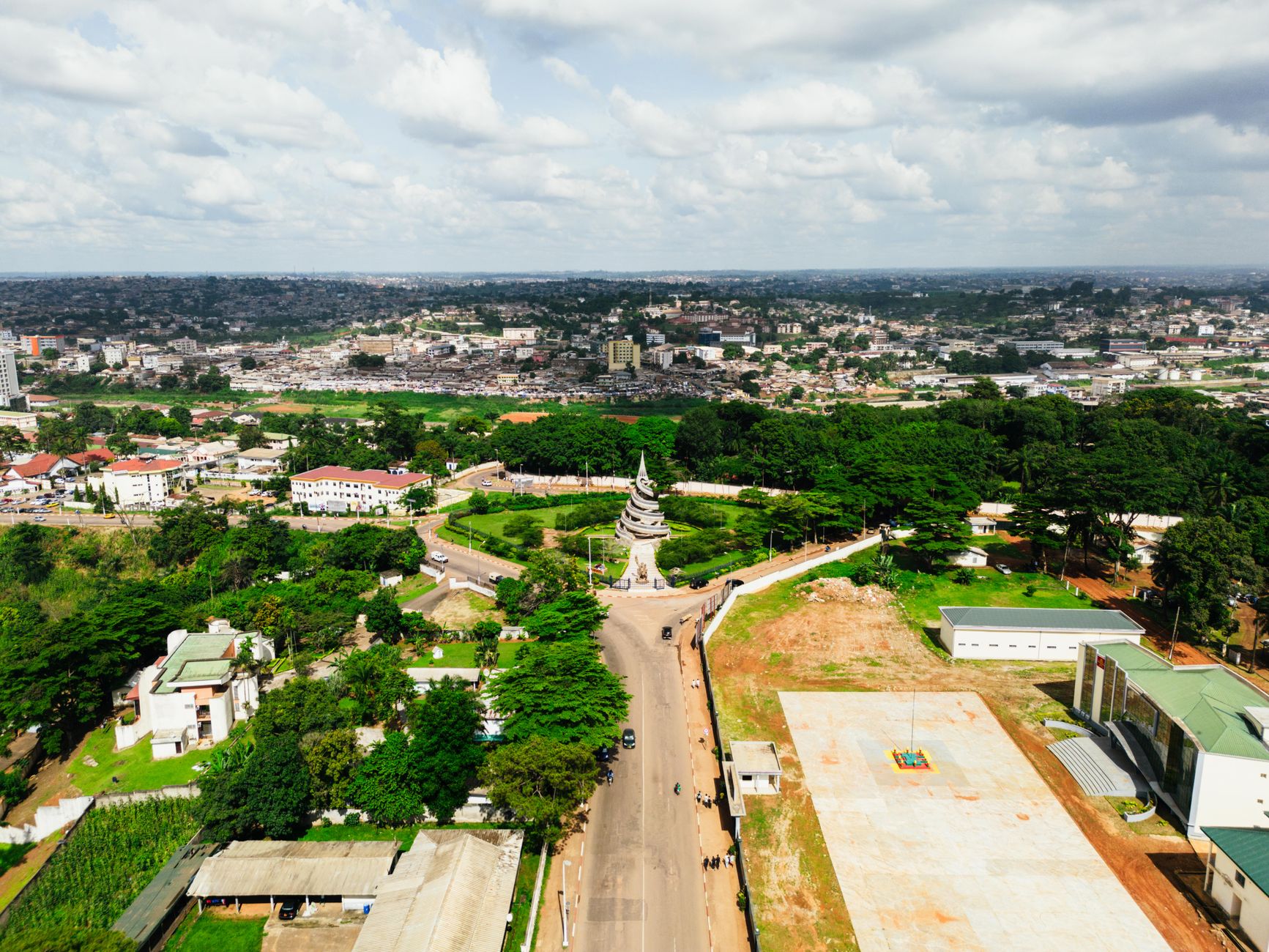
An aerial perspective of Brazzaville, Republic of the Congo, showcasing the city's unique spiral monument surrounded by vibrant greenery and urban development.
Kelly on Pexels
Yes—watch one continent’s most famous rumba scene, see another capital (Kinshasa) across the river, and track gorillas on a day-trip. The city punches far above its size in music, art, and cross-river drama.
Three full days: one for Corniche, markets, and neon bridge; one for Poto-Poto painting school plus Basilique Sainte-Anne; a third for Lesio-Louna gorilla reserve. Add a fourth if FESPAM music festival is on.
Official green-and-white taxis wait curbside—no meters, so fix 5,000–7,000 XAF to Centre-Ville before moving. Hotel pre-booked shuttles cost more but spare you the haggle and baggage surcharge.
Stick to hotel-recommended drivers after dark; street crime concentrates in dim residential pockets and market edges. La Corniche stays lively and patrolled until about 22:00.
Cash is king. Bring crisp euros or USD to change into CFA; ATMs exist but often empty. Cards work only in a handful of upscale hotels and airlines—assume 90 % of purchases need paper money.
Whole tilapia grilled in banana leaves (maboke) plus saka-saka at Corniche stalls runs 2,500–3,000 CFA. Bring exact change; vendors rarely break large bills.
Ready to book?
Maya-Maya International Airport (BZV) sits 10 km south of centre; green-white taxis meet every flight but fares must be haggled in XAF—expect 8,000–12,000. No rail link; the single highway N1 feeds in from the coastal route at Pointe-Noire.
Brazzaville has zero metro, tram or scheduled buses. Mobility equals shared minivans (‘taxi-collectifs’) and hotel-ordered taxis—always fix the price before the door shuts. Cycling lanes do not exist; two-wheeled transport is for locals, not visitors.
June–September is the long dry: 19 °C dawns, 29 °C afternoons, almost no rain. October–May brings afternoon storms (November peaks at 264 mm). Come in July for the clearest river views and the coolest nights.
French is official; Lingala dominates street chatter. Central African CFA (XAF) is locked to the euro—€1 always equals 655 XAF. ATMs live in the Plateau banking strip; carry small notes for markets.
Daytime riverside and Plateau are calm; after 21:00 take hotel cars, not foot. Petty theft clusters around Marché Total—keep cameras in a plain tote, phones out of back pockets.