Doha

Qatar

Doha

Doha comes alive after dark: souq lanes, karak counters, museum icons, and Corniche views turn this Gulf capital into a surprisingly layered city.

location_on 12 attractions
calendar_month November-March
schedule 3-4 days

Introduction

Call to prayer drifts over the spice stalls at Souq Waqif while, a few minutes away, I. M. Pei's Museum of Islamic Art cuts into Doha Bay like a blade of pale stone. That contrast is Doha, Qatar in a single glance: falcon shops and karak counters on one side, Jean Nouvel, Rem Koolhaas, and waterfront towers on the other. Many Gulf capitals ask you to choose between heritage and spectacle. Doha insists on both.

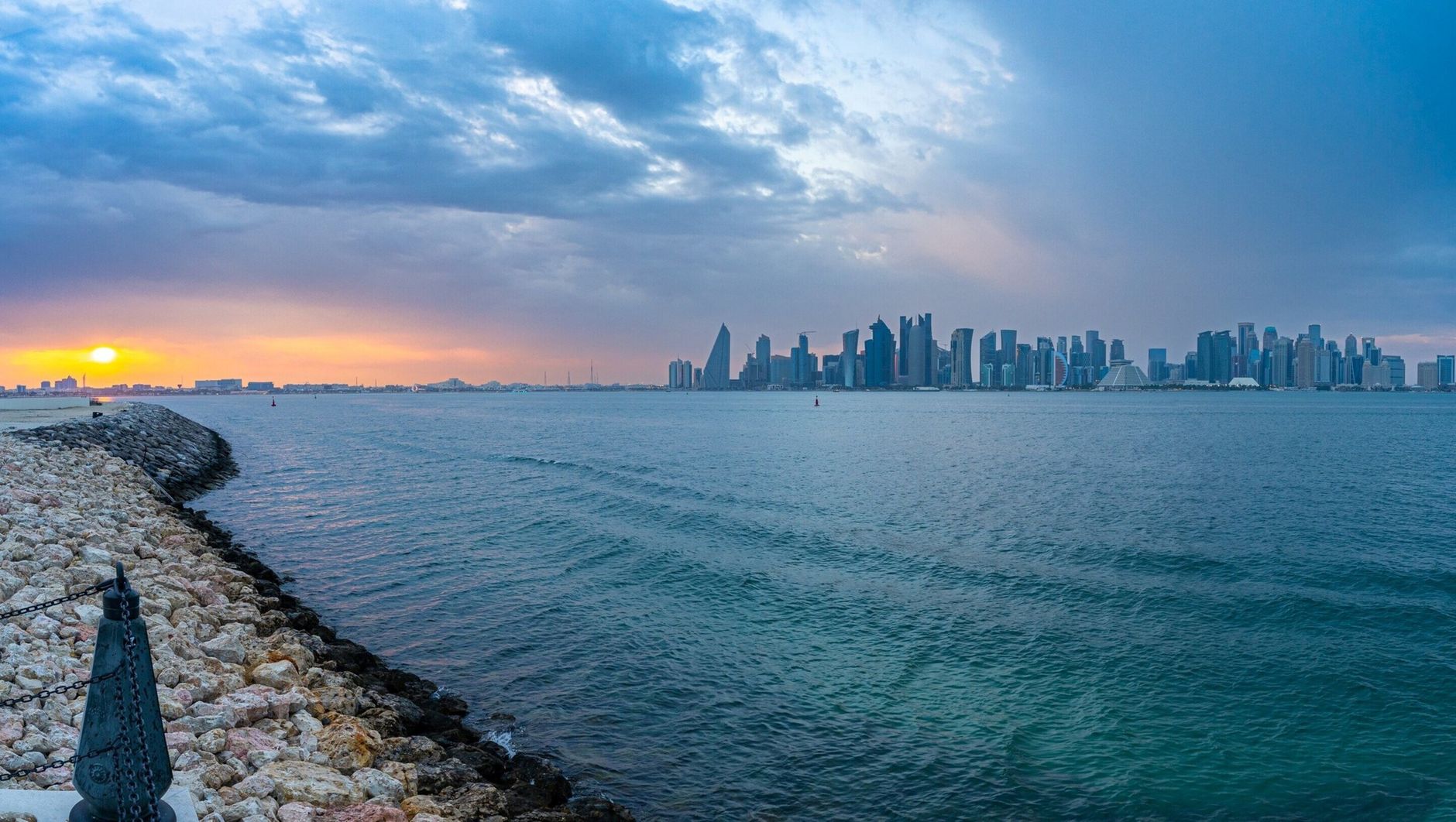
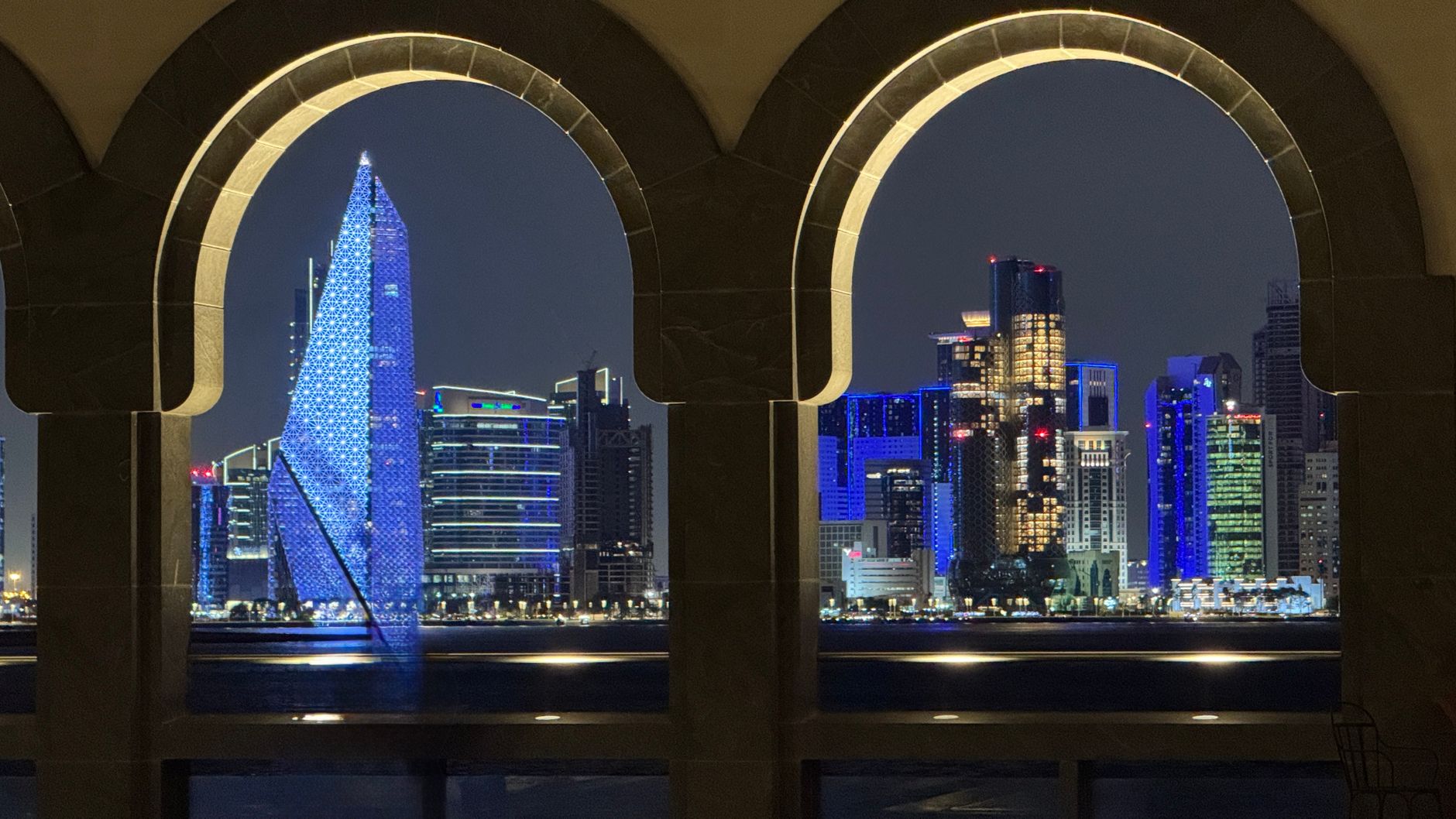
The city makes more sense when you stop looking for a postcard old town and start reading its layers. Pearling-port Doha survives in fragments around Al Jasra, Al Koot Fort, and the market lanes of Souq Waqif; modern Doha arrives in controlled bursts through Msheireb, M7, Education City, and the Corniche skyline, where the towers look almost theatrical after sunset. Short distances help. A morning can begin with balaleet and regag, pass through a museum built around a former palace, and end beside Richard Serra steel plates with the bay turning silver.

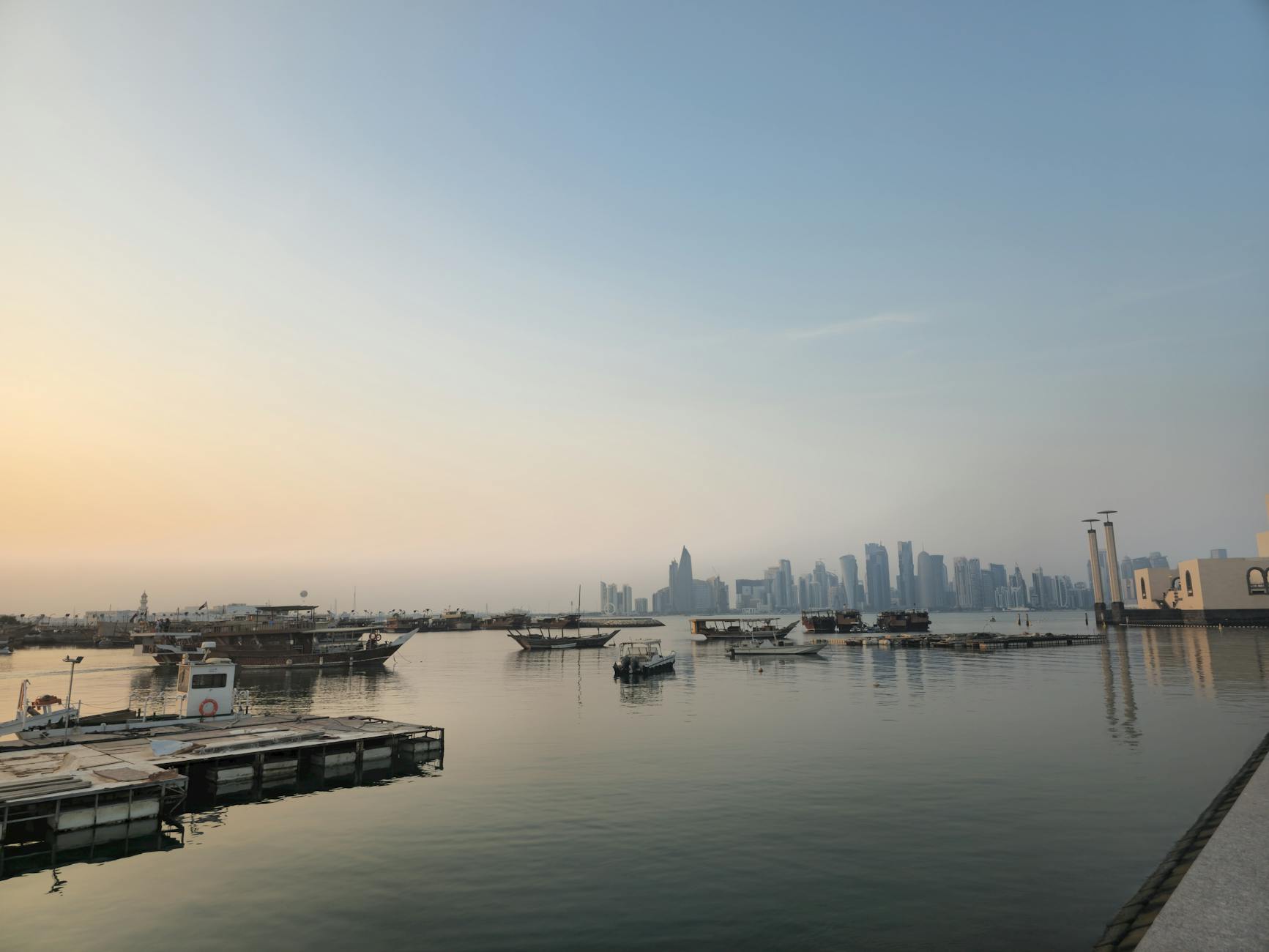
Food tells the truth faster than architecture. Doha's habits live in qahwa poured with the right hand, in late dinners, in Yemeni stews near the souq, in seafood at Old Doha Port, and in the fact that a city this polished still runs on karak. Hotel restaurants matter here, more than in many cities, because nightlife and drinking sit largely inside licensed venues in West Bay and the big resorts. But eat only in those rooms and you'll miss the place entirely.

What stays with you is the city's confidence about editing itself in public. Msheireb Museums faces hard histories of slavery, labor, oil, and urban change without softening the edges, while nearby design hubs and waterfront districts present a future Qatar is still writing. Doha can feel carefully staged. Then a falconer walks through the market, the air smells of cardamom and charcoal, and the stage turns real.

Places to Visit

The Most Interesting Places in Doha

What Makes This City Special

Museums With Nerve

Doha doesn't treat museums like quiet warehouses. I. M. Pei's Museum of Islamic Art sits off the Corniche like a limestone mirage, while Jean Nouvel's National Museum of Qatar folds around the old royal palace in discs shaped like a desert rose.

Souq Waqif After Sunset

Souq Waqif is where Doha drops the polished corporate voice and starts smelling of cardamom, oud, grilled meat, and shisha smoke. Falcon shops, spice stalls, the Gold Souq, and late dinners under rough timber roofs make this the city's clearest link to its trading past.

Skyline Built By Architects

Few Gulf cities put big-name architecture this close together. Rem Koolhaas at Qatar National Library, Jean Nouvel at the national museum, I. M. Pei on the waterfront, and Richard Serra's steel tower "7" all fit into a city that likes making cultural ambition visible.

Desert At The Edge

Doha's strangest trick is how quickly the city gives way to emptiness. A day trip to Khor Al Adaid or Zekreet gets you dunes, salt air, chalk-white rock, and the kind of horizon that makes the towers back in West Bay feel temporary.

Historical Timeline

From Al Bidda Fort to a Global Capital

Doha began as a hard-used harbor beside an older settlement and grew, by fire and force and oil money, into the political stage set of modern Qatar.

castle
1681

Bide Enters the Record

The earliest known documentary reference to the site appears in a Carmelite record mentioning a sheikh and a fort at Bide, the settlement later folded into modern Doha. That single line matters more than it looks. It tells you this coast was already organized, defended, and watched long before towers of glass appeared on the Corniche.

public
1765

A Harbor on Gulf Maps

Carsten Niebuhr's Gulf mapping appears to mark a settlement on the Doha and Al Bidda coast, suggesting the harbor had entered wider regional knowledge by the late 18th century. Maps flatten everything. Still, a dot on paper meant sailors, traders, and rival rulers already saw this inlet as worth naming.

castle
1801

Seton Finds a Fortified Town

British envoy David Seton described Al Bidda as a fortified coastal settlement with defensive works and a real urban footprint. You can almost hear the scrape of hulls in shallow water and the grit underfoot near the fort walls. Doha's future capital began, very plainly, as a place that expected trouble.

swords
1821

The First Destruction

The East India Company brig Vestal bombarded and destroyed Al Bidda after accusing its inhabitants of breaking maritime peace arrangements. Several hundred residents fled to nearby islands. The city's early story is not a tale of steady growth; it starts with smoke, splintered timber, and people forced off the shore.

public
1823

Doha Appears Beside Al Bidda

By January 1823, British accounts and mapping by Lieutenants Guy and Brucks treated Doha and Al Bidda as neighboring settlements, effectively twins on the same coast. This is the hinge moment. Modern Doha did not spring fully formed from sand; it emerged beside an older harbor and then slowly absorbed it.

person
c. 1825

Sheikh Jassim Is Born

Sheikh Jassim bin Mohammed Al Thani, later regarded as the founder of the modern Qatari state, was born around 1825 into the political world that centered on the Doha-Al Bidda coast. His importance to Doha lies in what he made the town become: less a vulnerable harbor, more a seat of rule. The city still lives in the shape of that shift.

swords
1828

Bahrain Strikes Doha

After a murder dispute tied to Bahrain, the ruler of Bahrain destroyed the Al Bu 'Ainain fort in Doha and expelled the tribe. One fort gone, one warning delivered. The episode shows how little distance separated commerce from coercion on this coast.

swords
1847

Battle of Umm Suwayyah

Isa bin Tarif and about 80 of his men were killed in the Battle of Umm Suwayyah on 17 November 1847, in fighting that shaped power along the Doha-Bidda coast. The battle was not fought in the center of town, but its consequences landed there. Control of the harbor, the fort, and the tribes attached to both would decide who spoke for this shore.

person
1851

Mohammed bin Thani Rules

Sheikh Mohammed bin Thani began his rule in 1851, marking the opening chapter of Al Thani leadership in Doha's political rise. Under him, the town's scattered authority began to gather into something more durable. Rule here was never abstract; it sat in forts, family alliances, and the ability to command loyalty at the water's edge.

local_fire_department
1867

Doha Is Ruined Again

During the war between Bahrain, aided by Abu Dhabi, and Qatar, Doha was virtually destroyed. That phrase can sound tidy on the page. In real life it meant homes smashed, trade broken, and a coastal town forced to rebuild itself yet again from wreckage and salt air.

gavel
1868

Qatar Wins Recognition

The 12 September 1868 agreement with Britain, reached after the 1867-68 war, marked the turning point in Qatar's separation from Bahrain. Doha gained something more valuable than a repaired harbor. It gained political weight, the kind that lets a town stop being merely contested and start becoming a capital in waiting.

gavel
1871

Ottoman Troops Arrive

Ottoman forces entered Qatar in 1871 and maintained a garrison in Doha, tying the city directly to imperial power from Istanbul. You can picture the scene: uniforms in the heat, orders passing through a port that had known too many rival claims already. Doha was no longer just a Gulf town arguing with its neighbors; it had become a node in a larger empire.

person
1880

Abdullah bin Jassim Born

Sheikh Abdullah bin Jassim Al Thani was born in Al Bidda in 1880, in the settlement that became part of modern Doha. He later governed Doha and then ruled Qatar during the protectorate and oil concession years. His old palace still sits at the heart of the National Museum, a rare case where state memory kept the house as well as the story.

swords
1893

Al Wajbah Shakes Ottoman Rule

The Battle of Al Wajbah was fought west of Doha, but the final drama ran through the city when Ottoman troops withdrew to Al Bidda Fort and fired into the settlement before surrendering. Water decided the matter. Once Qatari forces cut off their supply, imperial power looked a lot less grand under the desert sun.

gavel
1916

Protectorate Seals the Capital

The treaty signed on 3 November 1916, later ratified in 1918, placed Qatar under British protection in foreign affairs. Doha, already the main political center, became the administrative core of that arrangement. Pearling dhows still lined the shore, but decisions about the peninsula now ran more sharply through this one town.

factory
1935

Oil Enters the Contract

On 17 May 1935, Qatar signed its oil concession with the Anglo-Persian Oil Company. Paper changed the city's future before pipelines did. Doha was still living off pearling and fishing rhythms, but the ink had already begun to reroute the century.

factory
1949

Oil Revenue Changes the Shore

Commercial-scale oil recovery began in 1949, after wartime delays had slowed the transformation promised by the 1939 discovery. Doha then moved decisively from pearling town to oil capital. The smell of tar, diesel, and sea salt became part of the same city.

gavel
1963

Municipality Takes Shape

Doha Municipality was formally established in 1963, a dry administrative act with very visible consequences. Streets, services, and planning no longer belonged only to custom and ruler's orders. A town built by harbor logic was being taught to think like a modern city.

gavel
1971

Independence Makes It Official

Qatar became independent from Britain on 3 September 1971, and Doha became the capital of the newly independent state later that year. The old problem of shallow reefs and awkward harbor access had just been eased by port works. Timing mattered. A state needs a capital that can speak to the world and receive it.

person
1983

Al-Mayassa's Cultural Doha

Sheikha Al-Mayassa bint Hamad bin Khalifa Al Thani was born in Doha in 1983 and would become the public face of the city's museum era through Qatar Museums. Her work helped turn Doha's cultural ambitions into buildings, collections, and institutional confidence. Cities rarely invent themselves through architecture alone; someone has to decide which stories deserve marble, glass, and money.

gavel
1995

A Palace Coup, A New Scale

On 27 June 1995, Sheikh Hamad bin Khalifa Al Thani took power in a palace coup that redirected Qatar's pace and profile. Doha changed with him. The city began to grow beyond the logic of an oil capital toward media, education, diplomacy, and culture, each one leaving concrete marks on the skyline.

public
1996

Al Jazeera Goes On Air

Al Jazeera launched from Doha on 1 November 1996 and gave the city a voice far larger than its population. This was more than a media company opening a studio. Doha became a place spoken about nightly in living rooms from Rabat to Baghdad, and sometimes far beyond.

local_fire_department
2003

Fire Hits Souq Waqif

Much of Souq Waqif burned in 2003, tearing through one of old Doha's last historic commercial districts. Fire is a brutal editor. It erased timber and plaster, then forced the city to decide whether its past was worth rebuilding in a place where reclamation and demolition often moved faster than memory.

palette
2008

MIA Rewrites the Skyline

The Museum of Islamic Art opened in 2008 on a man-made island off the Corniche, designed by I. M. Pei with the calm authority of cut stone and light. Inside, 1,400 years of art sit against the shimmer of the bay. Outside, the building announced that Doha wanted its cultural institutions to stand as visibly as its ministries and hotels.

palette
2010

Katara Opens Its Stage

Katara Cultural Village soft-opened in 2010 on reclaimed coastline between West Bay and The Pearl. The district feels curated because it is. Amphitheatre, mosque, galleries, beach, and ceremonial spaces were arranged to give Doha a public cultural quarter built almost from scratch, which is a very Gulf way of solving the problem of missing old urban fabric.

flight
2014

Hamad Airport Opens Wide

Hamad International Airport fully replaced the old Doha airport on 27 May 2014 and changed the city's sense of distance. Transit became identity. Doha was no longer only a destination or capital; it became one of the places through which the world now passes at all hours under polished ceilings and impossible air-conditioning.

public
2019

Metro and Desert Rose

Doha Metro began opening in 2019, and the new National Museum of Qatar opened on 28 March the same year in Jean Nouvel's desert-rose structure wrapped around the old palace. That pairing says a lot about the city. One project moved bodies faster; the other arranged memory, placing the ruler's house inside a national story told at monumental scale.

public
2022

The World Cup City

From 20 November to 18 December 2022, Doha became the organizational and symbolic center of the first FIFA World Cup held in the Arab world and Middle East. Al Bidda Park's fan festival drew more than 1.8 million visitors. For a month, names once known mainly to Gulf specialists and airline passengers were suddenly spoken by everyone.

palette
2025

Husain Gets a Home

Lawh Wa Qalam, the M. F. Husain Museum, opened in Education City on 28 November 2025, giving Doha a dedicated home for the painter who spent his later years here. Husain's long, energetic lines found a final address in the city. That feels right: Doha has become a place where exile, patronage, and modern art now meet in public view.

schedule
Present Day

Notable Figures

Sheikh Abdullah bin Jassim Al Thani

1880โ€“1957 ยท Ruler of Qatar
Born in Al-Bida and served as Governor of Doha

Before Doha became a skyline, Abdullah bin Jassim was shaping the town that would grow into the capital. He governed Doha in 1906, then led Qatar through the first oil-era shift; the palace folded into today's National Museum still carries his shadow.

Tamim bin Hamad Al Thani

born 1980 ยท Emir of Qatar
Born and educated in Doha

Tamim belongs to the Doha that moved from pearl-town memory into a city of museums, stadiums, and diplomatic theater. Walk through Msheireb, the Corniche, or the sports district and you are looking at the capital during his era of self-definition.

Sheikha Al-Mayassa bint Hamad bin Khalifa Al Thani

born 1983 ยท Art patron and museum leader
Born in Doha and leads cultural institutions centered there

Sheikha Al-Mayassa helped turn Doha into a city where art is statecraft, not decoration. MIA, the National Museum, M7, and the broader museum network read differently once you realize they form part of her long argument about what Doha should mean in the world.

Nasser Al-Khelaifi

born 1973 ยท Sports executive and former tennis player
Born in Doha

Before he became one of football's most powerful executives, Nasser Al-Khelaifi was a Doha athlete shaped by Qatar's rise through sport. His career makes sense in a city that built stadiums, media networks, and prestige around games with extraordinary speed.

Mutaz Essa Barshim

born 1991 ยท Olympic high jumper
Born in Doha and linked with Team Aspire

Barshim gave Doha one of its cleanest symbols: grace under pressure, then sudden height. The city that built Aspire and the Olympic and Sports Museum would probably look familiar to him as a place that treats sport as identity, not pastime.

Dana Al Fardan

born 1985 ยท Composer
Born in Doha

Dana Al Fardan writes the kind of music Doha likes to hear about itself: modern, polished, local in instinct but outward-facing in form. Her career tracks the city's cultural shift from importing prestige to composing some of its own.

Nasser Al-Attiyah

born 1970 ยท Rally driver and Olympic shooter
Born in Doha

Al-Attiyah carries two versions of Qatar at once: desert endurance and elite competition. That double identity suits Doha perfectly, a capital where falcon shops and Formula One ambitions can sit within the same national story.

Ghanim Al-Muftah

born 2002 ยท Entrepreneur and disability advocate
Born in Doha

Ghanim Al-Muftah became one of the faces of Qatar's 2022 World Cup opening, but his story begins in Doha long before the cameras arrived. He represents a younger public voice in the city: ambitious, media-savvy, and determined to make visibility mean something.

Plan your visit

Practical guides for Doha โ€” pick the format that matches your trip.

Practical Information

flight

Getting There

Hamad International Airport (DOH) is Doha's air gateway and sits about 14 km from the city center, usually 20 minutes by car in normal traffic. Qatar has no intercity passenger rail in 2026, so there are no mainline train stations; the useful rail arrival point is Hamad Intl Airport Terminal 1 on the Doha Metro Red Line, with Msheireb as the main interchange for central hotels. Main road approaches are via Ras Abu Aboud Expressway from the airport, Al Shamal Road heading north toward Lusail and Al Khor, Dukhan Highway westbound, and Salwa Road toward the Saudi border.

directions_transit

Getting Around

The Doha Metro has 3 lines and 37 stations in 2026: Red for the airport, West Bay, Katara, and Lusail; Gold for Souq Waqif, the National Museum, and Sports City; Green for Education City and Qatar National Library. Lusail Tram runs 4 lines and 25 stations, while Msheireb Tram and Education City Tram are free local circulators; Karwa buses, free Metrolink feeders, and Metroexpress fill the gaps. A Standard travel card costs QAR 2 per trip with a QAR 6 daily cap, and a 30-day metro plus Lusail Tram pass costs QAR 120.

thermostat

Climate & Best Time

Winter is Doha's sweet spot, with January highs around 21.7 C and lows near 12.8 C; spring climbs fast from about 27.8 C in March to 38.5 C in May, and summer from June to September sits around 38.8-41.5 C with almost no rain. Rain falls mostly in winter, with annual precipitation around 71.33 mm, so the city feels dry for most of the year. Peak visitor months run roughly November to February, while late October to late November and early April to early May give you warm evenings without the furnace blast of midsummer.

translate

Language & Currency

Arabic is the official language, but English is widely spoken in hotels, museums, metro stations, and restaurants, which makes daily logistics easy. The currency is the Qatari riyal (QAR), officially pegged at QAR 3.64 to USD 1; cards work almost everywhere, though a little cash still helps for tips, taxis, and smaller stalls. In 2026, Ooredoo's visitor SIM offers start at QAR 75 for 6 GB over 7 days, with airport kiosks in Hamad arrivals.

shield

Safety

Street crime in Doha remains low by regional and global standards, and most visitors' bigger enemies are traffic, heat, and overconfidence in the midday sun. The more serious 2026 concern is regional military tension: as of April 22, 2026, the U.S. State Department lists Qatar at Level 3 and the UK advises against all but essential travel, so keep an eye on airline changes and avoid public gatherings if the situation shifts. Emergency services use 999, and licensed Karwa taxis or major ride-hailing apps are the sensible late-night option.

Tips for Visitors

schedule
Go Out Late

Plan your main walk and dinner after sunset, especially in warmer months. Souq Waqif, the Corniche, Katara, and Mina District all make more sense once the heat drops and the city loosens up.

front_hand
Mind Coffee Etiquette

Use your right hand when receiving food or Arabic coffee in traditional settings. If qahwa is offered, accept at least a small cup or decline gently; in Qatar, coffee is part of hospitality, not just a drink.

train
Use The Metro

Doha's Metro saves money and time for first-time visitors. Gold Line stops make Souq Waqif and the National Museum easy to pair on the same day without dealing with parking.

restaurant
Start With Breakfast

Don't wait until dinner to look for local food. Shay Al Shamoos or Al Jasra Cafรฉ in Souq Waqif will tell you more about Doha through regag, balaleet, and karak than another hotel buffet ever will.

checkroom
Dress With Respect

Shoulders and knees should generally be covered in public for both men and women. Hotel pools, private beaches, and some nightlife venues are looser, but Ramadan calls for extra care.

local_taxi
Drink In Hotels

If you want cocktails or a late bar, head to licensed hotel venues in West Bay or major waterfront resorts. Doha does nightlife in controlled pockets, not as a street-by-street pub crawl.

savings
Skip Service Dupes

Check the bill before adding a tip. Many mid-range and upscale places already include a service charge, so a small extra cash tip is a thank-you, not a fixed rule.

Explore the city with a personal guide in your pocket

Your Personal Curator, in Your Pocket.

Audio guides for 1,100+ cities across 96 countries. History, stories, and local insight โ€” offline ready.

smartphone

Audiala App

Available on iOS & Android

download Download Now

Join 50k+ Curators

Frequently Asked

Is Doha worth visiting? add

Yes, if you like cities where old trading habits and polished new ambition sit side by side. Doha gives you a restored souq, I. M. Pei's Museum of Islamic Art, Jean Nouvel's National Museum, serious Arab art, and late-night food culture within a compact area.

How many days in Doha? add

Three to four days works well for most travelers. That gives you time for Souq Waqif and Msheireb, the Corniche and MIA, the National Museum, then one slower evening in Katara, Mina District, or West Bay.

Is Doha safe for tourists? add

Yes, Doha is widely considered very safe for visitors, including solo travelers. The bigger issue is social awareness rather than street danger: dress modestly in public, be especially respectful during Ramadan, and keep nightlife expectations aligned with local rules.

How do you get around Doha without a car? add

Use the Metro first, then taxis or ride-hailing for the gaps. The Gold Line is especially useful for Souq Waqif and the National Museum, while the Corniche, Msheireb, and parts of central Doha work well when paired in the same outing.

Is Doha expensive to visit? add

It can be, but it doesn't have to be. Hotel bars, fine dining, and waterfront districts like The Pearl push prices up fast; metro rides, souq breakfasts, karak stops, and casual Yemeni or grill restaurants keep daily costs far lower.

What is the best time to visit Doha? add

November through March is the sweet spot for weather. That's when evening walks along the Corniche, outdoor meals in Souq Waqif, and waterfront districts like Katara or Mina District feel good instead of punishing.

Can tourists drink alcohol in Doha? add

Yes, but usually only in licensed hotel bars and hotel restaurants. Don't waste an evening hunting for independent pubs in residential neighborhoods; Doha's drinking scene is contained, polished, and tied to venues that already hold the permits.

What food should I try first in Doha? add

Start with machboos, regag, balaleet, karak, and Arabic coffee. A Qatari breakfast in Souq Waqif gives you the city's real flavor faster than a formal dinner, then you can branch into seafood at Mina District or a museum restaurant like Jiwan.

Sources

Last reviewed:

All Places to Visit

1 place to discover

photo_camera

Doha Money-Saving Passes & Cards