Plan and listen to Praia Da Ursa with Audiala.
Audio guide in your pocket, itinerary in your browser. Built for the way you actually visit.
Introduction
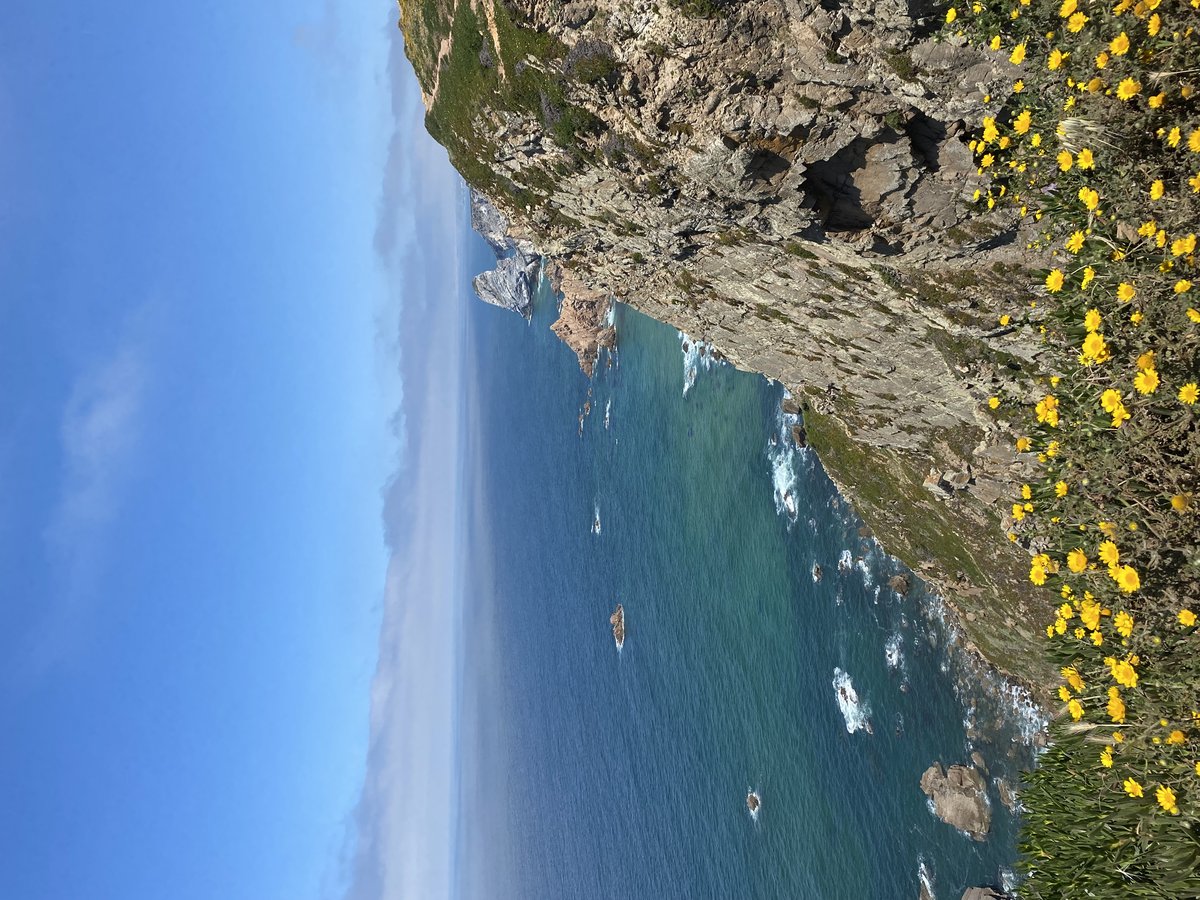
Nestled within the Sintra-Cascais Natural Park, the Grutas da Ursa, or Bear Caves, are a hidden gem that showcases the breathtaking interplay between geological processes and human history. Located near Praia da Ursa and just north of Cabo da Roca, the westernmost point of mainland Europe, these caves have been shaped by the relentless action of the Atlantic Ocean over millions of years. The Grutas da Ursa are not only a spectacle of natural beauty but also a site steeped in mythological and historical significance (Mad About Sintra).
The name 'Ursa' derives from the prominent rock formation, Rocha da Ursa, which resembles a bear cradling its cub. This formation is tied to a local legend about a mother bear who refused to flee the thawing ice age and was turned to stone by the gods, symbolizing the tension between nature and divine forces (Mad About Sintra).
In addition to its mythological allure, the Grutas da Ursa have served various roles throughout history, from prehistoric shelters to rumored pirate hideouts during the medieval period. Today, these caves are part of the Sintra-Cascais Natural Park, recognized as a UNESCO World Heritage Site in 1995, emphasizing the need for their conservation and the preservation of their historical and natural elements (The Global Curious).
This comprehensive guide aims to provide an in-depth exploration of the Grutas da Ursa, covering everything from their geological formation and historical significance to practical travel tips and visitor information.

Historical Context
Geological Formation and Early History
The Grutas da Ursa are a fascinating geological formation located near Praia da Ursa, just north of Cabo da Roca, the westernmost point of mainland Europe. These caves were formed over millions of years through the relentless action of the Atlantic Ocean's waves, which carved out the limestone cliffs to create these natural wonders.
Mythological Significance
The mythological significance of Grutas da Ursa adds a layer of mystique to the site. The legend of Rocha da Ursa, where a mother bear and her cubs were turned to stone, symbolizes the eternal struggle between nature and divine forces. This legend has been passed down through generations, adding to the cultural tapestry of Sintra (Mad About Sintra).
Archaeological Discoveries
Artifacts found within the caves suggest that they were used by early human settlers as shelters. These findings include stone tools and remnants of ancient fires, indicating that the caves provided refuge for prehistoric communities. The exact timeline of human habitation is still a subject of ongoing research, but it is believed that the caves have been in use for thousands of years.
Historical Usage
Throughout history, the Grutas da Ursa have served various purposes. During the medieval period, the caves were rumored to be hideouts for pirates and smugglers who took advantage of the secluded location to stash their loot. The rugged terrain and hidden entrances made the caves an ideal spot for clandestine activities. Local folklore is rich with stories of hidden treasures and secret passages, adding an element of adventure to the historical narrative.
Modern-Day Significance
In contemporary times, the Grutas da Ursa have gained recognition as a site of natural beauty and historical intrigue. The caves are part of the Sintra-Cascais Natural Park, which was designated a UNESCO World Heritage Site in 1995. This recognition underscores the importance of preserving the unique blend of natural and cultural elements that define the area (The Global Curious).
Visitor Information
Tickets and Visiting Hours
While the Grutas da Ursa themselves do not require an entry fee, the Sintra-Cascais Natural Park has specific visiting hours. Ensure to check the official website for the most current information.
Guided Tours
Guided tours are available for a more in-depth exploration of the site's history and geological significance. Check local tour operators for availability and prices.
Conservation Efforts
Efforts to preserve the Grutas da Ursa and the surrounding natural park are ongoing. The Sintra-Cascais Natural Park authorities have implemented measures to protect the delicate ecosystems and geological formations. Visitors are encouraged to follow designated trails and adhere to guidelines to minimize their impact on the environment. These conservation efforts are crucial in ensuring that future generations can continue to enjoy and learn from this remarkable site.
Visitor Experience
Practical Tips for Visitors
- Footwear: Wear sturdy hiking boots to navigate the rugged terrain.
- Supplies: Pack a lunch and plenty of water, as there are no dining options nearby.
- Safety: Swimming at Praia da Ursa is discouraged due to hidden rocks and strong currents.
- Timing: Visit during the early morning or late afternoon to avoid crowds and enjoy a more serene experience.
- Weather: Be prepared for variable weather conditions; layers are advisable (Mad About Sintra).
Accessibility
While the Grutas da Ursa offer a unique and enriching experience, they are not easily accessible to everyone. The steep and uneven paths can pose challenges for individuals with mobility issues. However, for those who can make the trek, the reward is a glimpse into one of Portugal's most pristine and unspoiled landscapes.
Nearby Attractions
After visiting the Grutas da Ursa, consider exploring nearby attractions such as Cabo da Roca, the westernmost point of mainland Europe, and the picturesque village of Sintra, renowned for its historic palaces and gardens.
Cultural Impact
The cultural impact of Grutas da Ursa extends beyond its historical and mythological significance. The site has inspired numerous artists, writers, and photographers who are captivated by its raw beauty and the legends that surround it. The caves and the beach have been featured in various works of art and literature, further cementing their place in the cultural heritage of Sintra.
Future Prospects
Looking ahead, the Grutas da Ursa continue to be a focal point for both conservation efforts and tourism. The balance between preserving the natural environment and accommodating visitors is a delicate one. Ongoing research and sustainable tourism practices are essential in maintaining the integrity of this historical site.
Listen to the full story in the app
The whole Praia Da Ursa,
told well.
Audio guides for 1,100+ cities across 96 countries. History, stories, and local insight — offline ready.
Verified, and shown.
Researched and written by the Audiala editorial team from historical records, architectural archives, and local expertise.
Praia da Ursa
Sintra, Portugal
Best time to visit Portugal
Visiting Sintra Portugal Guide
Secrets of Sintra: Your Ultimate 2024 Travel Guide
Things to do in Sintra, Portugal
Sintra, Portugal
Researched from Wikidata, Wikipedia & official sources · fact-checked · How we make our guides →