Introduction
Nestled in Porto’s UNESCO-listed historic center, the Fountain of the Virtues (Chafariz das Virtudes) is a striking testament to the city’s Baroque artistry, civic pride, and enduring heritage. Constructed in 1619 and attributed to architect Pantaleão de Seabra e Sousa, this monumental granite fountain was once a vital source of water, harnessing the city’s underground springs. Today, it stands as a serene meeting point where Porto’s layered history, artistic achievement, and urban beauty converge. Surrounded by the terraced Virtudes Garden, the fountain offers panoramic views over the Douro River and is complemented by Portugal’s tallest ginkgo biloba tree.
This comprehensive guide details the fountain’s history and architecture, provides essential information on visiting hours, accessibility, and ticketing, and highlights nearby attractions. Whether you are a history enthusiast, architecture lover, or traveler seeking tranquil beauty, the Fountain of the Virtues is an unmissable stop in Porto’s historic core.
For further insights, explore references such as Guia da Cidade, Google Arts & Culture, and the Porto Tourism website.
Photo Gallery
Explore Fountain of the Virtues in Pictures

The Fountain of Virtues featuring intricate stone sculptures and water flowing in a historical setting

Close-up of a grotesque sculpture detail from the Fountain of Virtues showcasing intricate artistic features

Close-up image showcasing the central body of the Fountain of Virtues with intricate sculptural details
Origins and Development
Commissioned in the early 17th century, the Fountain of the Virtues was constructed to channel water from Porto’s underground “minas” (springs), supporting the city’s growing population (Guia da Cidade). Its location in the Miragaia parish—strategically placed near the now-channeled Rio Frio—reflects both utilitarian planning and a desire to beautify the expanding city.
The fountain is attributed to Pantaleão de Seabra e Sousa and exemplifies a period when Porto was developing beyond its medieval walls. It mirrors European trends of monumental public fountains that symbolized civic progress and advances in water management (e-cultura.pt).
Architectural Features and Symbolism
Design and Materials
The fountain’s imposing Baroque structure is constructed from local granite. Its high central backrest is flanked by two fluted pilasters, supporting a projecting cornice and a curved pediment topped by the royal coat of arms. Two mascaron spouts once funneled water into lateral basins, while a central niche originally displayed the image of Senhora das Virtudes (Our Lady of Virtues) (e-cultura.pt).
A marble cartouche with Latin verses and the date “1619” authenticates the fountain’s provenance, while heraldic and religious motifs underscore Porto’s civic and spiritual identity.
Artistic Elements
The Fountain of the Virtues is a superb example of Mannerist style. Decorative highlights include:
- Heraldic motifs: Two castles and the Marian niche, referencing Porto’s coat of arms and the city’s title “Cidade da Virgem” (City of the Virgin) (Wikipedia).
- Grotesque mascarons: Theatrically sculpted “beast-head” faces serve as water spouts, blending utility with artistic flair (Google Arts & Culture).
- Volute scrollwork and pyramids: Mannerist elements that add movement and grandeur.
The fountain’s integration with the granite retaining wall and terraced garden further anchors it within Porto’s historic landscape (Google Arts & Culture).
Visiting Information
Location
- Address: Calçada das Virtudes, Miragaia parish, Porto, Portugal.
- Coordinates: Located at the northern end of Virtudes Square, at the intersection of Rua das Virtudes and Passeio das Virtudes (Time Out Porto).
Opening Hours and Tickets
- Open daily: Sunrise to sunset.
- Admission: Free, no tickets required (Portugal Getaways).
- Best times: Early morning and late afternoon for tranquil views and ideal photography conditions.
Accessibility
- On foot: Approx. 7-minute walk from Clérigos Tower; 10 minutes from São Bento Train Station.
- Public transport: Served by Metro Line D (São Bento), bus lines 200/201/207 (“Cordoaria” stop), and the Infante tram stop.
- By car: Parking is limited and discouraged in the historic center; use parking at Parque de Estacionamento Cordoaria and walk.
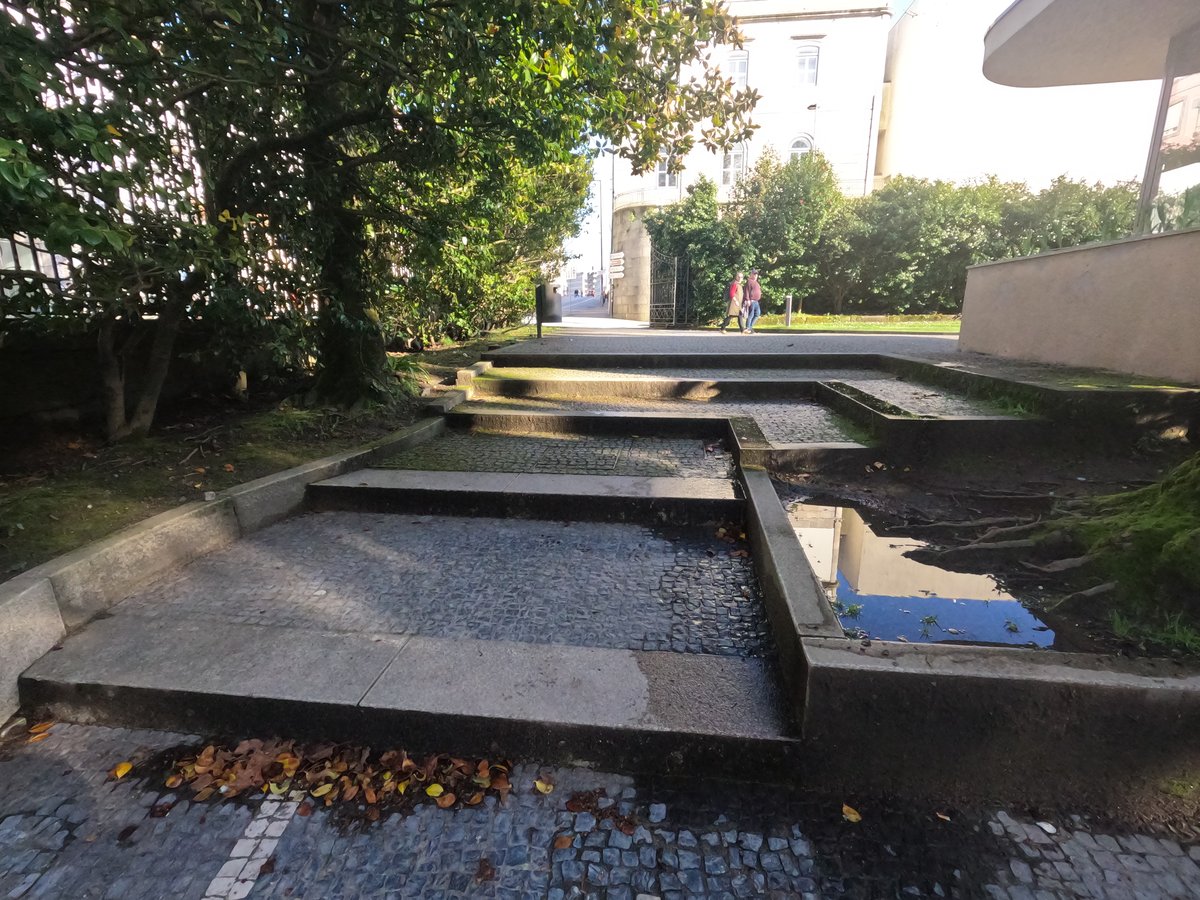
- Mobility: The terraced, cobblestone landscape can be challenging for those with reduced mobility; assistance is recommended.
Facilities
- Restrooms: Not available on site; use nearby cafés.
- Seating: Benches and low walls throughout the garden.
- Food & Drink: Cafés such as Café Virtudes and Miradouro Ignez offer refreshments and scenic terraces.
Safety
- The area is safe and well-lit, but visitors should be mindful of belongings during busy periods.
Visitor Experience
Atmosphere
The fountain is set within the lush Virtudes Garden—Porto’s only vertical park—offering breathtaking vistas over the Douro River and the city's historic rooftops. The garden’s terraced design and botanical highlights, including the tallest ginkgo biloba in Portugal, make it a tranquil retreat. The sound of cascading water, intricate stone carvings, and interplay of light create a multisensory experience ideal for relaxation, photography, or quiet contemplation (Evendo).
Activities
- Photography: The fountain’s Baroque details and panoramic views are a delight for photographers.
- Picnicking: Grassy terraces and benches provide ideal spots for a picnic.
- Exploration: Combine your visit with nearby Porto landmarks (see below).
- Cultural events: Occasional music performances and local festivities take place in Virtudes Square.
Nearby Attractions
- Clérigos Tower: Iconic Baroque bell tower with 360° city views (The Crazy Tourist).
- Livraria Lello: Renowned historic bookstore, famed for its neo-Gothic interior.
- São Bento Train Station: Famous for its blue and white azulejo tilework.
- Ribeira District: Picturesque riverside quarter, a UNESCO World Heritage Site (The Crazy Tourist).
- Jardim das Virtudes: The terraced garden adjacent to the fountain.
- Port Wine Cellars: Located across the river in Vila Nova de Gaia.
- Serralves Museum and Gardens: A short ride away for modern art and landscaped grounds (Portugal Getaways).
Preservation and Recognition
The Fountain of the Virtues has been carefully preserved despite urban changes and the passage of time. Its area is part of Porto’s UNESCO World Heritage Site designation (since 1996), ensuring ongoing conservation and recognition of its cultural value (visitar-porto.com).
Frequently Asked Questions (FAQ)
Q: What are the Fountain of the Virtues visiting hours?
A: Open daily from sunrise to sunset; the site is freely accessible.
Q: Is there an entrance fee or are tickets required?
A: No, visiting the fountain and garden is free.
Q: How accessible is the site?
A: The main entrance is accessible, but steep and uneven paths may challenge those with reduced mobility.
Q: Are guided tours available?
A: Yes, many walking and bike tours of Porto include the fountain as a highlight (The Crazy Tourist).
Q: What other attractions are nearby?
A: Clérigos Tower, São Bento Station, Livraria Lello, Ribeira District, and more.
Visitor Tips
- Wear comfortable shoes for cobblestone and sloped paths.
- Bring a light jacket, especially in the evening.
- Visit late afternoon or sunset for the best ambiance and photos.
- Respect the monument; do not climb or sit on the fountain.
- Dispose of litter properly and help preserve the garden’s tranquility.
Visual Media
 Alt text: Fountain of the Virtues, a historic granite fountain in Porto with panoramic views over the Douro River.
Interactive Map: Fountain of the Virtues and Surrounding Porto Historical Sites
Plan Your Visit
Enhance your Porto adventure with the Audiala app for detailed guides, interactive maps, and insider tips. Stay up to date by following us on social media and exploring related posts about Porto’s top monuments.
For more on Porto’s historic sites, see Time Out Porto’s guide, Evendo, and the official Porto Tourism website.
Notable Facts and Figures
- Year built: 1619 (e-cultura.pt)
- Designer: Pantaleão de Seabra e Sousa (attributed)
- Key features: Baroque design, royal coat of arms, mascarons, Marian niche, Latin inscription
- Virtudes Garden: Established 17th century, public since 19th century, home to Portugal’s tallest ginkgo biloba (35m)
- UNESCO World Heritage status: Since 1996 (visitar-porto.com)
Listen to the full story in the app
Your Personal Curator, in Your Pocket.
Audio guides for 1,100+ cities across 96 countries. History, stories, and local insight — offline ready.
Audiala App
Available on iOS & Android
Join 50k+ Curators
Sources
- verified
- verified
- verified
- verified
- verified
Last reviewed: