Introduction
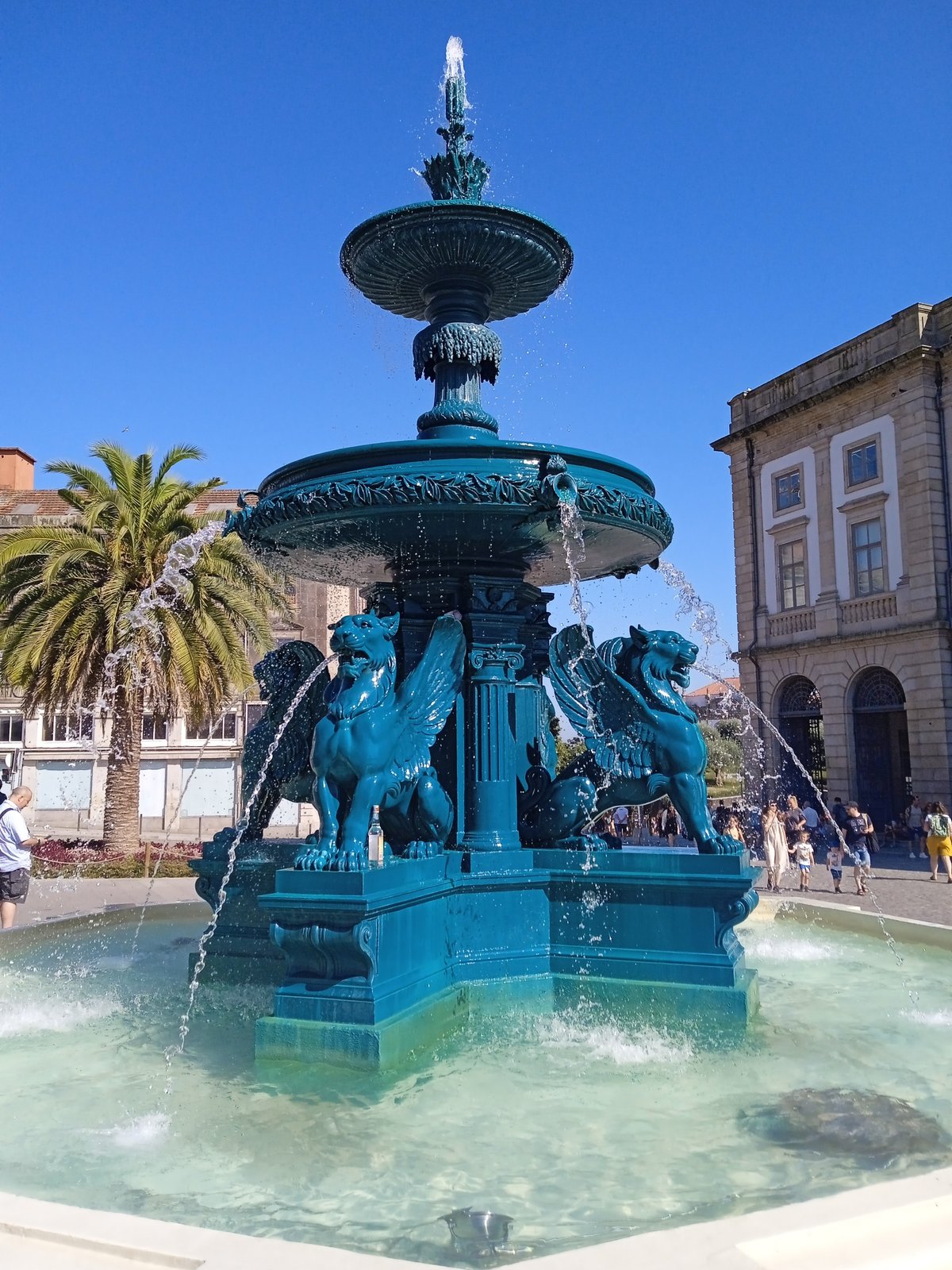
Fonte Mouzinho da Silveira stands as a distinguished landmark in Porto’s historic center, captivating visitors with its neoclassical design, civic symbolism, and enduring role in the city’s urban life. Located on Rua Mouzinho da Silveira, this monumental granite fountain not only commemorates the influential 19th-century statesman Mouzinho da Silveira but also embodies Porto’s tradition of integrating public water features into its urban landscape. Originally constructed in the late 1800s and faithfully reconstructed in 1964 to replace its earlier version removed in 1920, the fountain is a testament to Porto’s commitment to preserving its architectural and cultural heritage (asfontesdaminhavida.blogs.sapo.pt; PortoJofotos).
This guide provides comprehensive details on visiting Fonte Mouzinho da Silveira, including practical information, historical context, architectural highlights, travel tips, and suggestions for making the most of your exploration of Porto’s historic heart (Visit Porto; UNESCO World Heritage Centre).
Fonte Mouzinho da Silveira is a classic example of Porto’s 19th-century public works, reflecting the city’s dedication to urban beautification and civic welfare. Originally built to honor Mouzinho da Silveira—a pivotal figure in Portuguese liberal reform—the fountain’s neoclassical style is evident in its elegant granite structure, ornamental shell motifs, and sculptural flourishes. Its position on Rua Mouzinho da Silveira, a major thoroughfare linking the Ribeira riverside to Porto’s commercial core, highlights its dual function as both a practical water source and an urban landmark (asfontesdaminhavida.blogs.sapo.pt).
The current iteration, completed in 1964, is a faithful reconstruction of the original fountain removed in 1920 due to urban development. This act of restoration reflects Porto’s broader commitment to heritage preservation, maintaining architectural harmony and historical continuity within the city’s evolving landscape.
Social and Cultural Significance
Historically, public fountains like Fonte Mouzinho da Silveira were central to Porto’s daily life, serving as critical water sources and gathering spots before the advent of modern plumbing. They functioned as social hubs where neighbors met, exchanged news, and reinforced communal bonds. Even today, the fountain remains a favored meeting point and a symbol of Porto’s urban identity. Its ongoing maintenance by the Câmara Municipal do Porto underscores its enduring value as both a civic resource and a monument of shared memory (asfontesdaminhavida.blogs.sapo.pt).
Preservation and Symbolism
The 1964 reconstruction of the fountain was a deliberate act of heritage recovery after the loss of the original. This gesture, aligned with Porto’s mid-20th-century efforts to safeguard its historic fabric, illustrates the city’s resilience and respect for its past. As part of Porto’s UNESCO World Heritage Site, the fountain not only marks a chapter of urban modernization but also symbolizes the city’s ongoing dialogue between tradition and progress (UNESCO World Heritage Centre).
Visitor Information: Hours, Tickets, and Accessibility
- Visiting Hours: The fountain is located in a public area, open 24 hours a day, every day of the year.
- Admission: Free; there are no entry fees or tickets required.
- Accessibility: Rua Mouzinho da Silveira is pedestrian-friendly and mostly flat, making the site accessible for wheelchair users and strollers. Some adjacent cobblestone streets may be less accessible.
- Facilities: Benches and shaded areas are available nearby. Public restrooms can be found at São Bento Station and in cafés close by.
Getting There: Directions and Transportation
Address: Rua Mouzinho da Silveira, 4000-069 Porto, Portugal.
- By Metro: São Bento Station (10-minute walk southeast) or Bolhão Station (walk via Rua Fernandes Tomás and Rua Passos Manuel).
- By Train: From Porto Campanhã, take Metro Line A to São Bento, then walk 10 minutes. São Bento Station is nearby.
- By Bus: Take Bus 500 and get off at ‘Mouzinho da Silveira’ stop.
- By Tram: Historic Tram Line 1 to ‘Cordoaria,’ then walk along Rua de Infante D. Henrique.
- By Car: Limited street parking; best to use public transit or city-center car parks.
- On Foot: Easily accessible from the Ribeira, Avenida dos Aliados, and São Bento Station.
Nearby Attractions and Itinerary Suggestions
The fountain’s central location makes it an excellent starting point for exploring Porto’s UNESCO-listed historic center. Within walking distance are:
- São Bento Railway Station: Renowned for its azulejo tile panels.
- Livraria Lello: Famed as one of the world’s most beautiful bookstores.
- Clérigos Tower: Iconic baroque bell tower and city viewpoint.
- Ribeira District: Picturesque riverside quarter.
- Sé do Porto (Porto Cathedral): Key religious and architectural landmark.
- Other Fountains: Such as Chafariz do Anjo and Chafariz do Jardim de São Lázaro.
Combine your visit with a heritage walk for a richer experience of Porto’s layered history (Visit Porto; PortoJofotos).
Practical Tips for Visitors
- Best Times to Visit: Early morning for tranquility and photos; late afternoon for golden light and evening ambiance; weekdays to avoid crowds.
- Photography: The fountain’s granite details and water features are best captured in natural daylight or under evening illumination.
- Safety: The area is generally safe, but remain aware of your belongings.
- Etiquette: Do not climb or disturb the fountain. Enjoy the area respectfully.
- Language: Portuguese is primary, but English is widely understood in tourist areas.
- Weather: Porto’s climate is mild; pack accordingly for rain in winter and warmth in summer.
- Currency: Euro (€); cards are accepted widely, but some cash is advised.
- Wi-Fi: Free public Wi-Fi is available in various city-center locations.
Frequently Asked Questions (FAQ)
Q: Is there an entry fee to visit Fonte Mouzinho da Silveira?
A: No, the site is open to the public and free of charge at all times.
Q: What are the best times for photography?
A: Early mornings and late afternoons provide the best light; the fountain is strikingly lit at night.
Q: Is the fountain accessible for wheelchair users?
A: Yes, the site is largely accessible, though adjacent cobblestone streets may pose some challenges.
Q: Are there guided tours?
A: While there are no tours dedicated solely to the fountain, it is included in many walking tours of Porto’s historic center.
Q: Where are the nearest public restrooms?
A: Facilities are available at São Bento Station and nearby cafés.
Listen to the full story in the app
Your Personal Curator, in Your Pocket.
Audio guides for 1,100+ cities across 96 countries. History, stories, and local insight — offline ready.
Audiala App
Available on iOS & Android
Join 50k+ Curators
Sources
- verified
- verified
- verified
- verified
Last reviewed: