Plan and listen to Ponte Filipina De Carenque De Baixo with Audiala.
Audio guide in your pocket, itinerary in your browser. Built for the way you actually visit.
Introduction
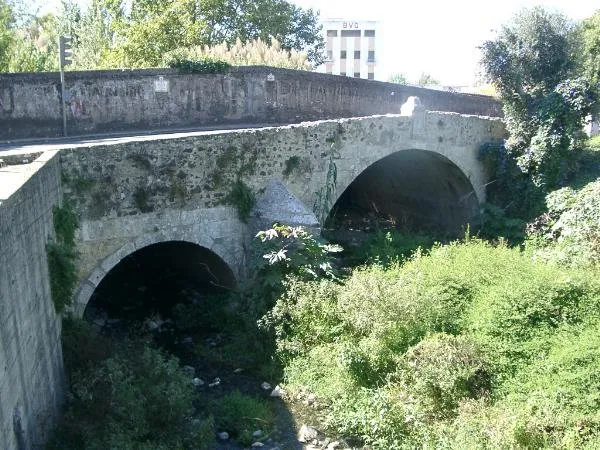
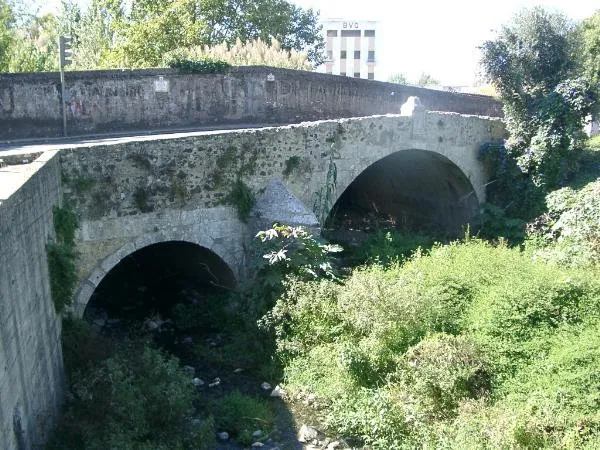
The Ponte Filipina de Carenque de Baixo, also known as Ponte Velha or Ponte do Lido, is an architectural and historical gem located in Lisbon, Portugal. Constructed in 1631, this stone bridge spans the Ribeira de Carenque, connecting the Freguesia de Venteira in Amadora to Queluz and Belas in Sintra. Commissioned by the Senate of Lisbon and funded by a tax on local goods, the bridge is a testament to the engineering prowess and community spirit of 17th-century Portugal. Historically, it was a crucial part of the Estrada Real Lisboa-Sintra, facilitating trade and communication between Lisbon and Sintra, thus playing a significant role in the region's economic and social integration (Wikiwand) (Wikipedia).
The Ponte Filipina de Carenque de Baixo is notable for its robust stone construction, which has withstood the test of time, including surviving the devastating 1755 Lisbon earthquake. The bridge's architectural design reflects the engineering techniques of the period, aimed at ensuring durability and functionality. In 2006, it was classified as an Imóvel de Interesse Municipal (Municipal Heritage Site), highlighting its historical and cultural importance and ensuring its preservation for future generations (Wikiwand).
Located near the Necropolis of Carenque, an archaeological site with late Neolithic tombs dating back to 3000 BCE, the bridge's surroundings add another layer of historical depth to the area. Today, the Ponte Filipina de Carenque de Baixo stands as a peaceful pedestrian walkway, attracting history enthusiasts and tourists alike who wish to explore its architectural beauty and historical significance (Wikipedia).
Exploring Ponte Filipina de Carenque de Baixo: History, Visiting Hours, and Travel Tips
History of Ponte Filipina de Carenque de Baixo
Construction and Early Significance
The Ponte Filipina de Carenque de Baixo, also known as the Ponte Velha or Ponte do Lido, is a historic bridge constructed in the 17th century. It spans the Ribeira de Carenque, connecting the Freguesia de Venteira in the Municipality of Amadora with the Freguesia of Queluz and Belas in the Municipality of Sintra. The bridge was commissioned by the Senate of Lisbon and funded by the local populace, as indicated by an inscription on a stone marker on the bridge: "Esta ponte foi mandada fazer pelo Senado de Lisboa à custa do real do povo, 1631" (Wikiwand).
Historical Context
The construction of the Ponte Filipina de Carenque de Baixo took place during a period of significant infrastructural development in Portugal. The bridge was part of the old Estrada Real Lisboa-Sintra, a royal road that facilitated travel between Lisbon and Sintra, passing by the Palácio de Queluz. This road was crucial for trade and communication in the region, making the bridge an essential structure for the local economy and mobility (Wikipedia).
Architectural Features
The bridge is an exemplary piece of 17th-century Portuguese architecture, characterized by its robust stone construction. The design reflects the engineering techniques of the time, aimed at ensuring durability and functionality. The stone marker with the inscription is a notable feature, providing historical context and emphasizing the community's role in its construction (Wikiwand).
Role in Local Transportation
For many years, the Ponte Filipina de Carenque de Baixo was a vital link for vehicular traffic between Amadora and Queluz. It facilitated the movement of goods and people, contributing to the economic and social integration of the region. However, in 2013, the traffic was redirected to a new bridge downstream, reducing the load on the historic structure and preserving it for future generations (Wikipedia).
Preservation and Recognition
In recognition of its historical and architectural significance, the Ponte Filipina de Carenque de Baixo was classified as an Imóvel de Interesse Municipal (Municipal Heritage Site) in 2006. This designation helps ensure the bridge's preservation and maintenance, protecting it from potential threats and promoting its historical value (Wikiwand).
Connection to the Necropolis of Carenque
The bridge is located near the Necropolis of Carenque, an archaeological site consisting of three well-preserved late Neolithic collective sepulchres or tombs dating back to around 3000 BCE. Discovered and excavated in 1932, the necropolis was classified as a National Monument in 1936. This proximity adds another layer of historical significance to the area, highlighting its long-standing importance as a site of human activity and settlement (Wikipedia).
Impact of the 1755 Lisbon Earthquake
The 1755 Lisbon earthquake, one of the most devastating in history, had a profound impact on the region. While much of Lisbon's ancient and medieval architecture was destroyed, the Ponte Filipina de Carenque de Baixo survived, underscoring its robust construction. The earthquake reshaped the city's landscape, but structures like this bridge serve as enduring reminders of the architectural resilience of the period (World History).
Modern-Day Relevance
Today, the Ponte Filipina de Carenque de Baixo stands as a testament to the engineering prowess and community spirit of 17th-century Portugal. It attracts history enthusiasts and tourists who appreciate its architectural beauty and historical significance. The bridge's preservation as a Municipal Heritage Site ensures that it remains a valuable cultural asset for future generations (Wikiwand).
Visitor Experience
Visitors to the Ponte Filipina de Carenque de Baixo can enjoy a scenic walk across the bridge, taking in the historical ambiance and the surrounding natural beauty. The nearby Necropolis of Carenque offers an additional point of interest, providing a glimpse into the region's ancient past. The bridge's location between Amadora and Queluz makes it easily accessible, allowing tourists to explore other historical sites in the area, such as the Palácio de Queluz (Wikipedia).
Visitor Information
Visiting Hours
The Ponte Filipina de Carenque de Baixo is accessible to visitors at all times as it is an open historical monument without restricted visiting hours. However, it is recommended to visit during daylight hours to fully appreciate the architectural details and surrounding scenery.
Ticket Prices
There is no entry fee required to visit the Ponte Filipina de Carenque de Baixo. It is a public heritage site open to all visitors.
Travel Tips
- Best Time to Visit: The best time to visit is during the spring and autumn months when the weather is pleasant for outdoor exploration.
- Safety: While the bridge is sturdy, visitors should still exercise caution, especially if visiting with children.
- Nearby Attractions: Include a visit to the Palácio de Queluz and the Necropolis of Carenque for a fuller historical experience.
- Accessibility: The bridge is accessible on foot and is located near public transportation routes in Amadora and Queluz.
FAQ
What are the visiting hours for Ponte Filipina de Carenque de Baixo?
The bridge is accessible at all times as it is an open monument.
Is there an entry fee for Ponte Filipina de Carenque de Baixo?
No, visiting the bridge is free of charge.
How do I get to Ponte Filipina de Carenque de Baixo?
The bridge is easily accessible from Amadora and Queluz by public transportation or car.
Discover More
For more historical insights and travel tips, download the Audiala mobile app and follow us on social media. Explore other related posts on our website for a deeper dive into Portugal's rich heritage.
Listen to the full story in the app
The whole Ponte Filipina De Carenque De Baixo,
told well.
Audio guides for 1,100+ cities across 96 countries. History, stories, and local insight — offline ready.
Verified, and shown.
Researched and written by the Audiala editorial team from historical records, architectural archives, and local expertise.
Researched from Wikidata, Wikipedia & official sources · fact-checked · How we make our guides →