Introduction
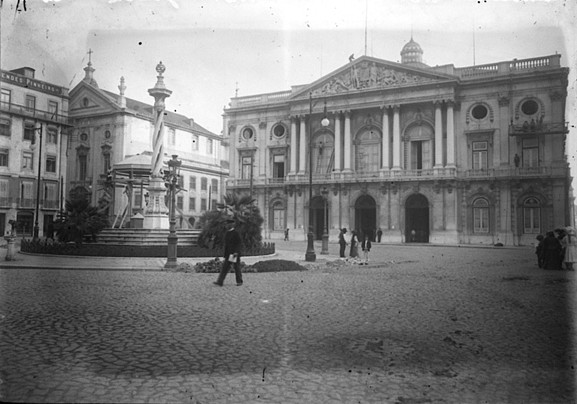
The Pillory of Lisbon (Pelourinho de Lisboa) is a distinctive historical monument located at the heart of Lisbon’s Baixa district, specifically in Praça do Município. Serving as a symbol of municipal authority and justice, the pillory is an enduring testament to Portugal's legal and civic traditions. This guide offers a detailed exploration of the monument’s origins, architectural features, cultural significance, practical visitor information, and nearby attractions, ensuring a complete understanding and memorable experience for all visitors.
Historical Background
Pillories, or “pelourinhos,” were prominent across Portugal, representing municipal autonomy and the administration of justice. The Pillory of Lisbon, first referenced in the late 12th century after Lisbon’s charter by Afonso I, marked the city’s right to self-governance (Portugal Visitor; Wikipedia). Over time, its location shifted in accordance with urban development and changing civic needs.
The original pillory was destroyed in the catastrophic 1755 Lisbon earthquake. The current structure, designed by Eugénio dos Santos de Carvalho and completed in 1783, was part of the city’s grand reconstruction. Unlike earlier versions used for public punishments, the existing pillory is primarily symbolic and commemorative (Wikipedia; Portugal Visitor).
Civic Significance and Symbolism
Justice and Municipal Authority
Throughout history, pillories signified not just punishment, but the jurisdictional powers of a city. Their presence indicated that a community had been granted the royal privilege to govern itself and administer justice. In Lisbon, the pillory’s prominent placement in Praça do Município, adjacent to City Hall, reinforces its role as a civic and judicial emblem (Portugal Visitor; Wikipedia).
Community Life
Praça do Município has long served as a focal point for public gatherings, civic ceremonies, and official announcements. Royal decrees and municipal notices were often affixed to the pillory, making it a hub for public information and a centerpiece in the city’s cultural landscape (Wikipedia).
Social Evolution and Heritage
From Punishment to Heritage
While pillories in medieval Portugal were associated with public shaming and corporal punishment, such practices declined over time. The Lisbon pillory in its current form was never used for executions and its punitive functions faded by the 19th century (Portugal Visitor). In 1910, it was classified as a National Monument, signifying its transformation from an instrument of justice to a cherished symbol of civic heritage (Wikipedia).
Preservation and Restoration
Despite threats from vandalism and urban changes—including an attempted removal during the French occupation in 1808—the pillory has been carefully preserved. Restoration efforts in the 20th century and the establishment of a special protection zone in 2006 have ensured its continued presence in Lisbon’s urban memory (Wikipedia).
Architectural Features
The Pillory of Lisbon is architecturally unique and visually striking:
- Materials: Constructed primarily from white marble, set atop an octagonal limestone base with five steps.
- Column: Features an intricately sculpted, twisted (helical) shaft—a rare design among Iberian pillories.
- Capital and Finial: The capital is adorned with classical motifs and topped with a metal armillary sphere—an enduring symbol of Portugal’s Age of Discoveries and national identity. The armillary sphere is attributed to the sculptor Pêro Pinheiro (Wikipedia; Portugal Visitor).
- Height: The structure stands approximately 4 meters (13 feet) tall, commanding the square and drawing the eye with its elegant spiraling form.
Visiting Information
Location
- Address: Praça do Município, Baixa, Lisbon
- Nearest Metro: Terreiro do Paço (Blue Line)
- Accessibility: The square is pedestrian-friendly, with paved, mostly level surfaces suitable for wheelchairs. Some surrounding streets have traditional cobblestones, so caution is advised.
Opening Hours
- Pillory Access: Open-air monument, accessible 24 hours a day, seven days a week.
- Best Visiting Times: Early mornings or late afternoons offer the best lighting and fewer crowds, ideal for photography and quiet reflection.
Tickets and Admission
- Admission: Free. No tickets are required.
Guided Tours
- While the pillory does not have dedicated tours, it is frequently included in city walking tours of the Baixa district. These provide valuable historical context and engaging stories about its role in Lisbon’s past.
Amenities
- Restrooms: Available in nearby cafes and restaurants.
- Dining and Shopping: The surrounding Baixa and Chiado neighborhoods offer a wide range of eateries, cafes, and shops.
Visitor Tips
- Combine your visit with nearby landmarks such as Lisbon City Hall, Praça do Comércio, and the Church of São Julião.
- During festivals like Festas de Lisboa in June, the square hosts vibrant cultural events (Lisbon Explorers).
- Climbing or sitting on the monument is discouraged to help preserve its condition.
The Pillory in Lisbon’s Urban Landscape
The pillory forms part of a unique urban tableau, set against the backdrop of the neoclassical City Hall and surrounded by significant civic and cultural sites. Its presence enhances the historical ambiance of Praça do Município, which remains a hub for official ceremonies, public gatherings, and cultural celebrations.
Cultural and Contemporary Role
Today, the Pillory of Lisbon is a celebrated National Monument (Wikipedia), drawing visitors interested in history, architecture, and civic identity. Its endurance through disasters, political changes, and urban renewal makes it a powerful symbol of Lisbon’s resilience. The monument continues to inspire reflection on justice, governance, and community in Portugal’s capital (World History Journal).
Frequently Asked Questions (FAQ)
Q: What are the visiting hours of the Pillory of Lisbon?
A: The monument is accessible 24/7 as it is located in an open public square.
Q: Is there an admission fee?
A: No, visiting the Pillory of Lisbon is free.
Q: Is the site accessible for visitors with reduced mobility?
A: Yes, the square is mostly flat and paved, though some nearby streets feature cobblestones.
Q: Are guided tours available?
A: Many walking tours of Lisbon’s historic center include the pillory as a stop.
Q: What else can I see nearby?
A: Lisbon City Hall, Praça do Comércio, Church of São Julião, and the vibrant Baixa and Chiado districts.
Listen to the full story in the app
Your Personal Curator, in Your Pocket.
Audio guides for 1,100+ cities across 96 countries. History, stories, and local insight — offline ready.
Audiala App
Available on iOS & Android
Join 50k+ Curators
Sources
- verified
- verified
- verified
- verified
- verified
- verified
- verified
Last reviewed: