Plan and listen to Capela De Nossa Senhora De Nazaré with Audiala.
Audio guide in your pocket, itinerary in your browser. Built for the way you actually visit.
Introduction
The Capela de Nossa Senhora de Nazaré stands as a beacon of Portugal’s spiritual, cultural, and artistic legacy. Perched majestically atop the cliffs of Nazaré and represented as well in the elegant Estoril chapel, this sanctuary is celebrated for its legendary origins, remarkable architecture, and enduring role in national religious life. Whether you are drawn by its storied miracles, breathtaking Atlantic vistas, or the exquisite artistry of its interiors, this guide provides all the essential details for planning a memorable visit—including opening hours, ticket information, accessibility, travel tips, and a deeper exploration of its historical and cultural significance (Sanctuary of Our Lady of Nazaré - Wikipedia, Official Nazaré Tourism Website).

Early Origins and Founding Legend
The roots of Capela de Nossa Senhora de Nazaré reach back to 1182, entwined with the legendary miracle of Dom Fuas Roupinho. As the story goes, the nobleman was saved from tumbling off Nazaré’s fog-shrouded cliffs by the Virgin Mary’s intervention. In gratitude, he established the Ermida da Memória atop a grotto where a sacred Black Madonna statue—reputedly brought from Nazareth—had long been venerated. The chapel soon became a focal point for pilgrimage, with the miraculous horseshoe imprint preserved in the rock serving as a tangible testament to the event (Sanctuary of Our Lady of Nazaré - Wikipedia).
Architectural Evolution and Artistic Features
Nazaré Sanctuary
Over centuries, the original chapel evolved through royal patronage and architectural enhancement:
- Expansion: King Ferdinand expanded the sanctuary in the 14th century to accommodate increasing pilgrims. Later monarchs such as João I, João II, Manuel I, and Philip II contributed further, adding porches, chapels, staircases, and enlarging the nave.
- Baroque Developments: The 17th-century Latin cross plan introduced a Baroque façade, twin bell towers, and elaborate interior decoration.
- Artistic Highlights: The sanctuary’s interior is adorned with:
- Painted wooden ceilings and a late-17th-century gilded high altar with marbled and Solomonic columns.
- The revered Nursing Madonna statue, crowned with regal gifts and mantles.
- Blue-and-white azulejos by António de Oliveira Bernardes (1714) and Dutch tiles by Williem Van der Klöet, depicting biblical scenes and Marian miracles.
- Devotional Artifacts: Paintings, ex-votos, and sacred vessels enrich the site’s spiritual and artistic ambiance (Official Nazaré Tourism Website, visitportugal.com).
Estoril Chapel
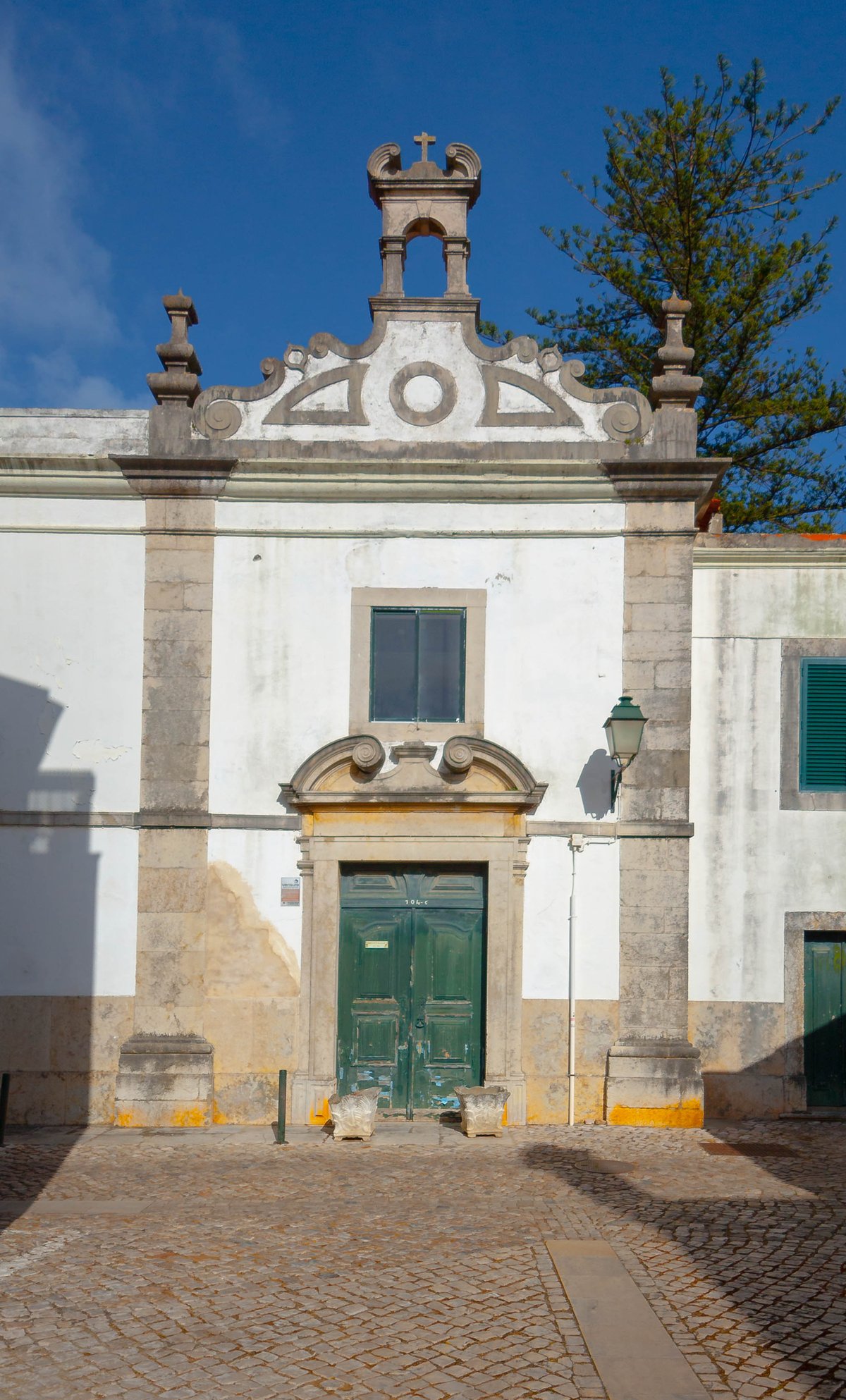
Built in 1713 adjacent to the Solar dos Falcões, the Estoril chapel distinguishes itself with:
- Exterior: Simple whitewashed walls, a rectangular stone-framed entrance, and an understated bell tower.
- Interior: A single nave with a chancel separated by a triumphal arch, richly decorated with:
- Extensive 18th-century azulejos narrating Marian miracles.
- Gilded woodwork (talha dourada) and baroque altar.
- Paintings depicting episodes from the life of the Virgin Mary.
- Artifacts: Ornate altarpieces, statues, and funerary monuments connected to the Falcão family (vaiver.com).
Distinctions: Nazaré and Estoril Chapels
While both sanctuaries share a dedication to Our Lady of Nazaré, they differ in history, setting, and artistic presentation:
- Nazaré Sanctuary: A major pilgrimage site on coastal cliffs, deeply entwined with Portuguese national identity and local legend.
- Estoril Chapel: A refined example of 18th-century Portuguese religious architecture, originally a family mausoleum, now an intimate place of devotion and community gatherings (Sanctuary of Our Lady of Nazaré - Wikipedia, vaiver.com).
Visiting Hours, Tickets & Accessibility
Nazaré Sanctuary
- Hours: Generally open daily 9:00 AM–6:00 PM; hours may vary during holidays or festivals. Check the Official Nazaré Tourism Website for updates.
- Tickets: Entry is free. Donations are encouraged to support ongoing preservation.
- Accessibility: The sanctuary is located atop steep cliffs, accessible via winding roads and stairs. Some areas are wheelchair accessible, but visitors with mobility challenges should plan accordingly. Parking is available nearby; local guides can assist with practical access.
Estoril Chapel
- Hours: Typically open 9:00 AM–6:00 PM, with possible variations for religious ceremonies.
- Tickets: Admission is free; donations are appreciated.
- Accessibility: Entrance is at ground level, but interior space is limited. Some mobility restrictions exist due to historic architecture.
Essential Travel Tips
- Dress Code: Modest attire is requested (shoulders and knees covered). Remove hats indoors and maintain silence during services.
- Photography: Photography without flash is generally permitted; always observe posted guidelines.
- Best Times to Visit: Spring (April–June) and early autumn (September–October) offer mild weather and fewer crowds. The annual festival on September 8th attracts many pilgrims and is a highlight for cultural immersion.
- Guided Tours: Available through local operators, especially during festivals and peak seasons. Contact the Nazaré tourism office or local hotels for bookings.
- Arriving Early: Recommended to secure parking and enjoy a quieter experience, especially in summer.
Nearby Attractions
- Sanctuary of Our Lady of Nazaré: Main pilgrimage site with revered Madonna statue (Roman Catholic Saints).
- Farol da Nazaré (Lighthouse): Famous for views of giant waves and surfing events.
- Museu Dr. Joaquim Manso: Explores Nazaré’s fishing heritage and local traditions.
- Cascais Citadel and Estoril Casino: For visitors at the Estoril chapel.
- Nazaré’s town center: Offers dining, shopping, and local crafts.
Religious and Cultural Significance
The Capela de Nossa Senhora de Nazaré is a vibrant symbol of Marian devotion, blending centuries-old legend, royal patronage, and artistic heritage. It remains central to local and national identity, hosting annual festivals, processions, and community events that attract pilgrims and tourists from around the world (visitportugal.com, portugaltravel.org).
Preservation and Contemporary Context
Recognized as a protected historical monument, the sanctuary benefits from ongoing conservation initiatives—restoring azulejos, maintaining structural integrity, and supporting traditional crafts. It remains an active site of worship and a focal point for cultural tourism (monumentos.gov.pt).
Frequently Asked Questions (FAQ)
Q: What are the visiting hours?
A: Generally 9:00 AM–6:00 PM daily; always confirm with official sources before visiting.
Q: Is there an entrance fee?
A: No, entry is free; donations are welcomed.
Q: Are guided tours available?
A: Yes, through local operators, especially during festivals.
Q: Is the site wheelchair accessible?
A: Partial accessibility in Nazaré and ground-level access in Estoril; some areas may be challenging.
Q: Can I take photos inside?
A: Yes, but without flash; respect posted signs.
Q: Are large groups or families welcome?
A: Yes, but supervise children near cliffs. Large groups should consider splitting up to avoid congestion.
Visitor Photography and Media
Capture panoramic views, intricate tilework, and sacred art during your visit. For a preview, explore virtual galleries on the Official Nazaré Tourism Website and Portugal Travel.
Discover More
The Capela de Nossa Senhora de Nazaré is a cornerstone of Portuguese faith, history, and cultural vibrancy. Whether tracing the miraculous legend of Dom Fuas in Nazaré or admiring the baroque artistry of Estoril’s chapel, visitors are invited to experience an enduring site of devotion and artistic splendor. Plan your visit for spring or early autumn, consult official resources for updates, and consider extending your journey to nearby attractions for a fuller experience.
For the latest information, download the Audiala app—your mobile companion for detailed guides, maps, and event notifications. Follow us on social media, explore related articles, and prepare for an unforgettable journey into Portugal’s Marian heritage.
Listen to the full story in the app
The whole Capela De Nossa Senhora De Nazaré,
told well.
Audio guides for 1,100+ cities across 96 countries. History, stories, and local insight — offline ready.
Verified, and shown.
Researched and written by the Audiala editorial team from historical records, architectural archives, and local expertise.
Researched from Wikidata, Wikipedia & official sources · fact-checked · How we make our guides →