Plan and listen to Artificial Caves Of Alapraia with Audiala.
Audio guide in your pocket, itinerary in your browser. Built for the way you actually visit.
Introduction
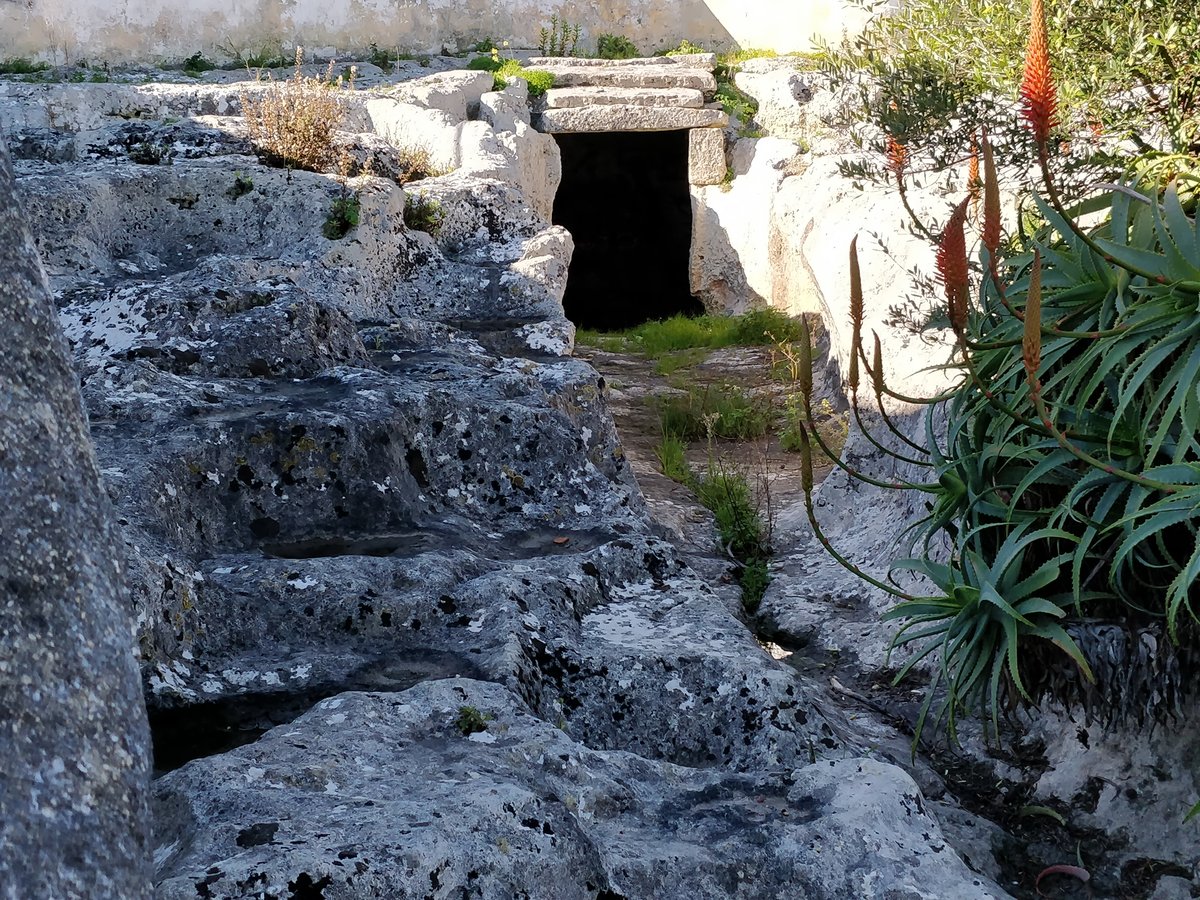
Nestled in the picturesque municipality of Cascais, within the Estoril area of Portugal, the Artificial Caves of Alapraia (Grutas Artificiais de Alapraia) are among the most significant prehistoric monuments in the Lisbon region. These hand-carved limestone hypogea, dating from the Late Neolithic to Early Chalcolithic periods (circa 3000–2000 BCE), provide invaluable insights into ancient funerary practices, social structures, and the spiritual beliefs of early Iberian communities. Today, they stand as a testament to prehistoric ingenuity and continue to fascinate archaeologists, history enthusiasts, and travelers alike (All About Portugal, Cultura Cascais, Mad About Sintra).
This guide delivers comprehensive, up-to-date information about the caves’ archaeological context, architectural features, current preservation status, ticketing, visiting hours, travel tips, and nearby attractions.

Origins and Archaeological Discovery
The Artificial Caves of Alapraia were first systematically excavated in the early 20th century after their initial discovery in the late 19th century. Archaeologist Virgílio Correia led the first major surveys, revealing four interconnected hypogea carved into limestone bedrock. These were not natural caves but were purpose-built as collective burial spaces, displaying advanced engineering and ritual intent (All About Portugal).
Excavations uncovered complex funerary rites, including layered human remains and a wealth of grave goods: pottery, stone tools, engraved plaques, and beads made from exotic materials, all indicating long-distance trade and rich cultural connections.
Architectural Features and Significance
The Alapraia complex comprises four main circular burial chambers, each accessed via narrow, stone-lined corridors and topped with skylights ("claraboias") for natural illumination. These architectural choices—circular chambers, corbelled ceilings, and side niches—reflect sophisticated craftsmanship and a symbolic spatial organization linking the living and the ancestral realm. The caves’ design aligns with a broader tradition of hypogean funerary monuments found across the western Mediterranean, but Alapraia’s scale and preservation make it unique in Portugal.
Chronological and Cultural Context
Dating from approximately 3000 to 2000 BCE, the caves were used over several centuries for communal burials, as evidenced by stratified remains and repeated ritual activity. Grave goods such as pottery, bone ornaments, copper artifacts, and imported Mediterranean shells reveal not only advanced technology but also the existence of extensive trade networks and cultural exchanges during the Late Neolithic and Early Chalcolithic periods (Cultura Cascais).
Site Preservation and Restoration
Current State and Conservation
Recognized as a National Monument, the Artificial Caves of Alapraia are the focus of ongoing conservation and restoration. Over time, environmental factors and urban encroachment have threatened their integrity. To prevent further deterioration, some tombs have been filled with gravel and secured with locked gates. Restoration projects, delayed by the COVID-19 pandemic, resumed in late 2024 and are expected to conclude by June 2025. The Casal Saloio farmhouse, adjacent to the caves, is being renovated into an interpretive center to enhance educational outreach (Prehistoric Portugal).
Artefact Preservation
Artefacts excavated from the site are conserved and displayed at the Municipal Museum in Cascais and the Museu da Música Portuguesa in Estoril, ensuring their preservation and continued public engagement.
Visiting the Caves: Hours, Tickets, and Accessibility
Location
- Address: Largo Afonso do Paço, 2765-011, Estoril, Portugal
- GPS Coordinates: 38°42'23.3"N, 09°22'38.1"W
- Access: Quiet residential neighborhood, a 10–15 minute walk from São João do Estoril train station (Mad About Sintra)
Visiting Hours and Tickets
- Current Status (June 2025): The caves are closed to the public due to restoration. There are no available visiting hours or ticket sales for interior access.
- Future Plans: Upon completion of restoration, the interpretive center will likely offer ticketed access, educational exhibits, and guided tours. Updates on reopening and ticketing will be available on official sites.
External Access
Visitors can currently view the site from the street and read interpretive signage but must respect all barriers and closures to preserve the fragile heritage.
Accessibility
- Terrain: Uneven and sometimes overgrown; sturdy footwear advised.
- Facilities: No restrooms, cafés, or visitor centers on site during restoration. Nearby Estoril offers various amenities.
- Disability Access: External viewing is possible at street level, but dedicated facilities are limited.
Travel Tips and Visitor Experience
- Verify Updates: Always check the official restoration updates before planning your visit.
- Combine Visits: Include a stop at the Municipal Museum in Cascais or the Museu da Música Portuguesa to see artifacts and gain broader context.
- Respect Boundaries: Adhere to signs and do not attempt to enter or disturb the caves.
- Best Time: Visit during daylight for safety; spring and autumn offer the most comfortable weather.
- Getting There: Access by train (São João do Estoril station), bus, taxi, or car. Parking is limited due to the residential location.
Nearby Attractions
- Cascais Citadel: Historic fortress offering panoramic views of the coast.
- Santa Marta Lighthouse Museum: Maritime museum and scenic lighthouse.
- Poço Velho Natural Caves: Another significant prehistoric site in the region.
- Estoril Beaches: Relax on the renowned Praia de São Pedro do Estoril.
- Fort of Santo António da Barra: Coastal fortification for history enthusiasts.
Frequently Asked Questions (FAQ)
Q: Are the Alapraia Caves open to the public?
A: As of June 2025, the caves are closed for restoration. Check official updates for reopening information.
Q: Is there an entrance fee?
A: No tickets are available during restoration. Once reopened, the interpretive center may charge an entrance fee.
Q: Is the site accessible to people with disabilities?
A: Some external viewing is possible at street level, but internal access is limited, and no specialized facilities are currently available.
Q: Are there guided tours?
A: Guided tours are expected with the opening of the new interpretive center after restoration.
Q: Can I see artifacts from the caves?
A: Yes, at the Municipal Museum in Cascais and the Museu da Música Portuguesa in Estoril.
Q: Are there visitor facilities on site?
A: None during restoration; Estoril’s town center offers cafés, restaurants, and shops nearby.
Listen to the full story in the app
The whole Artificial Caves Of Alapraia,
told well.
Audio guides for 1,100+ cities across 96 countries. History, stories, and local insight — offline ready.
Verified, and shown.
Researched and written by the Audiala editorial team from historical records, architectural archives, and local expertise.
Researched from Wikidata, Wikipedia & official sources · fact-checked · How we make our guides →