An introduction.
Researched by the Audiala editorial team from historical records, architectural archives, and local expertise.
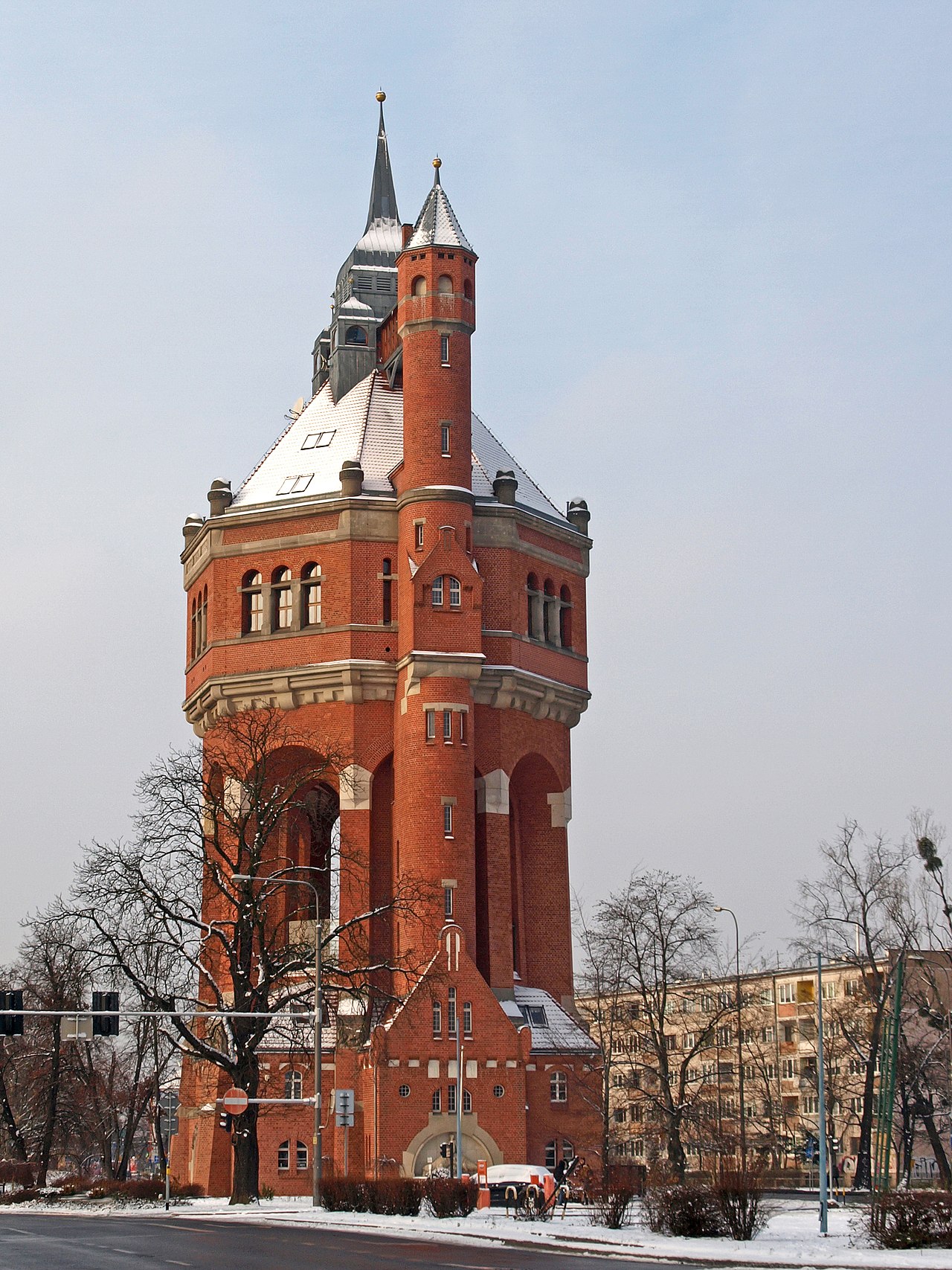
WWhen the mountain views were especially good, staff at the Wrocław Water Tower hoisted a red flag so the city knew it was worth the elevator ride. That was 1908, and the tower on ul. Sudecka 125A in Wrocław, Poland, has been demanding attention ever since — a 62-meter spike of clinker brick and sandstone grotesques that looks less like municipal plumbing and more like a fortress dreamed up by someone who'd read too many fairy tales.
The tower stands in the Borek neighborhood, in the median of aleja Wiśniowa, south of the Old Town. It was built to equalize water pressure. That's the boring version. The interesting version is that architect Karl Klimm wrapped that utilitarian job in a shell of late-historicist theatrics — turrets, sculptural nymphs, winged beasts — and gave Breslau's southern suburbs a landmark they didn't strictly need but couldn't stop looking at.
After decades of neglect following its retirement from the water system in the mid-1980s, the tower has cycled through reinventions. The latest, a 2025 relaunch as Fine Spot / Fine Wine, fills the interior with event and tasting rooms designed by the Warsaw-based studio mode:lina. The bones remain early 1900s; the pulse is very much now.
You don't come here for a checklist. You come because the building is strange in a way that rewards slow looking — sandstone tritons at street level, a crown of battlements at the top, and a century of scars and stories layered in between.
The Wrocław Water Tower
artlust01 What to see.
The Sculptural Bestiary
The Battlements and the View They Framed
Fine Spot / Fine Wine Interior
02 In pictures.






Watch & Explore Wrocław Water Tower.
Plan and listen to Wrocław Water Tower with Audiala.
Audio guide in your pocket, itinerary in your browser. Built for the way you actually visit.
03 Visitor logistics.
The practical scaffolding for a good visit — kept short.
Getting There
The tower stands in the median of al. Wiśniowa, though the postal address reads ul. Sudecka 125A — don't let that confuse your GPS. Trams 1, 2, and 10 stop at Krzyki or Sudecka, putting you about a 5-minute walk away. From Wrocław's Old Town, it's roughly 4 km south — a 15-minute tram ride or a pleasant 40-minute walk through the Krzyki district. Driving is easy, but street parking near al. Wiśniowa fills up on weekends.
Opening Hours
As of 2025, the tower has relaunched as Fine Spot / Fine Wine, a culinary and event venue. Opening hours depend on scheduled tastings, dinners, and private events — check fine-spot.pl/en/wroclaw for the current calendar before you go. Walk-in access to the exterior and ground-level areas is generally available during daylight hours, but upper floors require a reservation or event ticket.
Time Needed
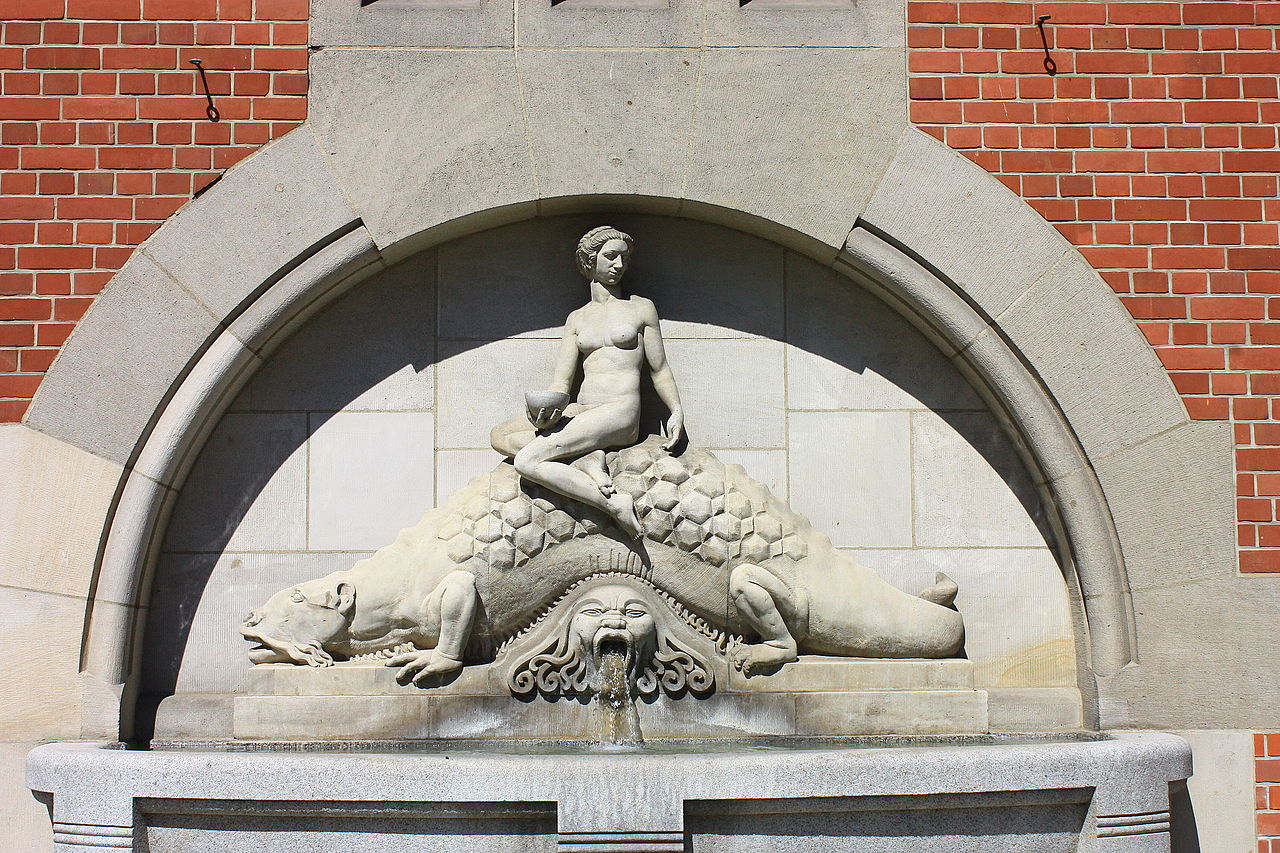
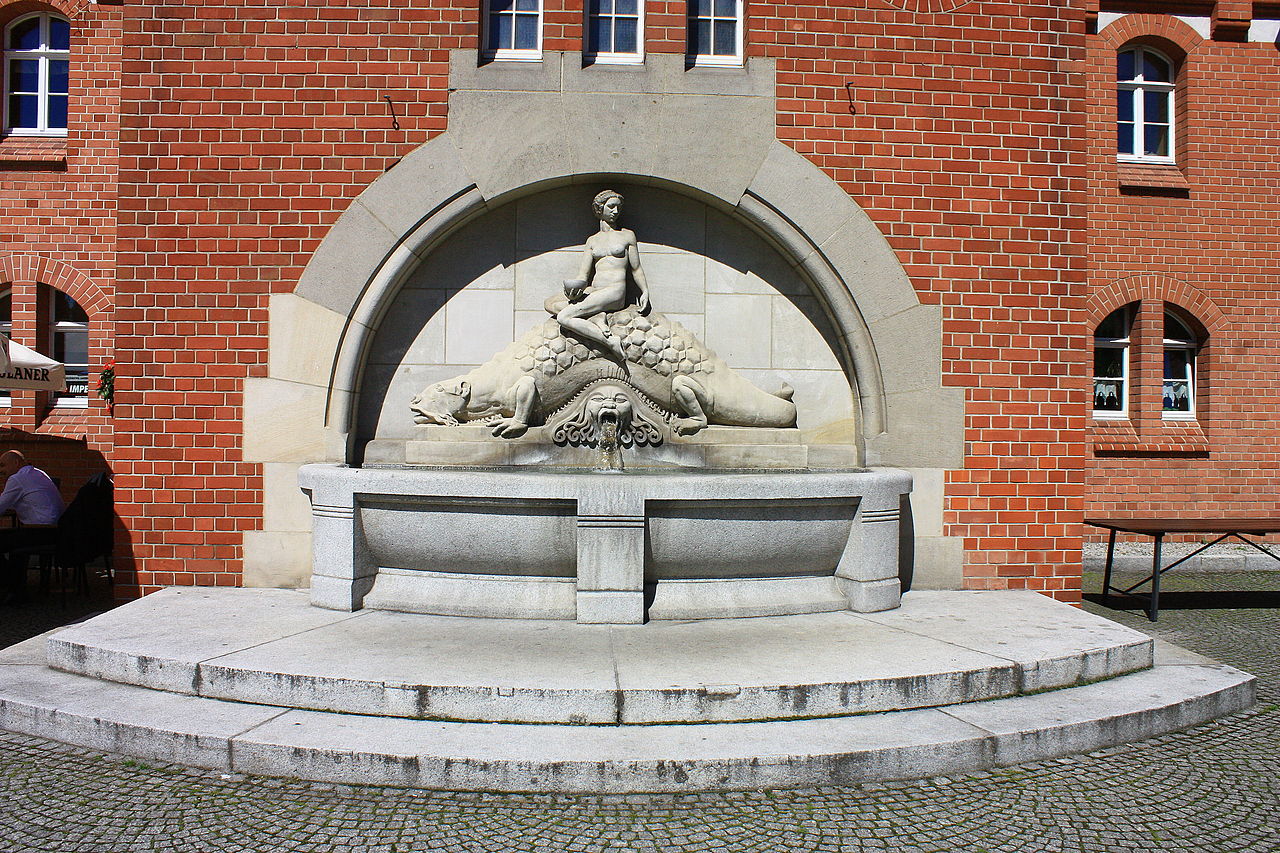
If you're just circling the exterior to admire Taschner and Bednorz's sandstone grotesques — the winged beasts, the Nymph of the Spring and Triton — budget 15 to 20 minutes. Attending a tasting or dining event inside will take 1.5 to 2 hours. Pair it with a stroll through the surrounding Borek neighborhood's early-1900s villas and you could fill a relaxed morning.
Cost & Tickets
As of 2025, there's no standard admission fee for the tower itself — access is tied to Fine Spot events, which range from wine tastings to private dinners. Check their site for pricing, which varies by event. Viewing the exterior, including the sculptural fountain on the north-eastern face, costs nothing.
04 Tips for visitors.
Small things that change the day.
Don't Just Shoot Up
Most visitors photograph the tower's silhouette from a distance. Walk to the north-eastern base instead — that's where the sculptural fountain and the wildest sandstone grotesques live, at eye level, in a register most people miss entirely.
Golden Hour From the South
Late afternoon light hits the clinker brick façade from the south-west and turns the whole structure a deep amber. In winter, when the sun sits low around 3 PM, the sculptural details throw dramatic shadows you won't get at midday.
Combine With Centennial Hall
Wrocław's actual UNESCO World Heritage Site, Centennial Hall, sits about 2.5 km north-east — a 30-minute walk or quick tram hop. The two buildings bookend the city's ambitions: one dressed infrastructure as a castle, the other reinvented what concrete could do.
Eat Nearby on Sudecka
For mid-range Polish comfort food, try Kurna Chata on ul. Sudecka, a short walk from the tower. If you want coffee and cake in a calmer setting, Café Borówka on nearby ul. Powstańców Śląskich is a local favorite — budget about 20–30 PLN for a generous spread.
Walk the Borek Villas
The streets around the tower — especially al. Wiśniowa and ul. Powstańców Śląskich — are lined with early 20th-century residential architecture from the same era as the tower itself. It's a free, self-guided architecture walk that most visitors to Wrocław never discover.
Red Flag Story
In 1908, staff would hoist a red flag from the observation gallery when the Karkonosze mountains were visible on the horizon — a pre-smartphone weather alert for hikers. Ask your server at Fine Spot if anyone's revived the tradition. They haven't, but the question always gets a good story.
Where to Eat
Don't Leave Without Trying
Fine Wine - salon z winem i delikatesami & wine bar
local favoriteOrder: A curated wine flight paired with local Polish charcuterie and aged cheeses—this place takes its selection seriously, with bottles sourced from small producers across Europe.
Located right at the Water Tower landmark, this is where locals actually go to unwind with a proper glass of wine and honest food. The intimate setting and expert staff make it feel like a secret even though it's perfectly positioned for visitors.
AULA
local favoriteOrder: Whatever's on the seasonal menu—AULA rotates its offerings based on what's fresh, so regulars keep coming back to discover what's new.
Over 1,000 reviews speak for themselves: this is a neighborhood staple where Wrocław residents gather. The fact that it doesn't need a website or fancy marketing tells you everything about its solid reputation.
Żabka | Prosto z pieca
quick biteOrder: Fresh-baked pastries straight from the oven—the name means 'fresh from the oven' and they deliver on it. Perfect for breakfast or an afternoon pick-me-up.
This is your spot for genuine Polish café culture without pretense. Early opening hours make it ideal for grabbing something warm before exploring the Water Tower area.
Dining Tips
- check The Water Tower is in the Borek residential area—a short tram ride from the city center (Rynek) where you'll find more dining variety.
- check For the best local street food and casual eats, head toward the Four Denominations District (Świętego Antoniego street).
- check Summer months often bring street food truck pop-ups around the city center and near Centennial Hall—check local event calendars.
Restaurant data powered by Google
05 A Fortress for Tap Water
Wrocław at the turn of the twentieth century was still Breslau, a German city expanding fast enough to outgrow its own pipes. The southern districts needed stable water pressure, and the city commissioned a tower that would do the job with an absurd amount of style. Construction dates are slightly disputed — some records say 1903–1904, others 1904–1905 — but by the time the tower was operational, it had already become a destination rather than just infrastructure.
What happened next is a compressed version of the city's own twentieth century: imperial showpiece, wartime observation post, socialist-era workhorse, post-industrial ruin, capitalist renovation. The tower survived all of it, which is more than most buildings in Breslau's southern belt can say.
Karl Klimm's Castle in the Pipes
Karl Klimm was not the kind of architect who believed plumbing should look like plumbing. Active in Breslau during its Wilhelmine growth spurt, Klimm also designed the Zwierzyniecki Bridge and contributed to the architecture faculty building at what is now Wrocław University of Science and Technology. For the water tower, he chose a vocabulary borrowed from medieval fortifications — heavy massing, a crown of battlements, a silhouette that reads as defensive even though the only thing inside was a water tank.
The sculptural program pushed it further. Klimm brought in Ignatius Taschner and Robert Bednorz to carve sandstone figures for the exterior: a Nymph of the Spring paired with a Triton on the northeast face, and a lower register of winged beasts and grotesques that feel closer to a Romanesque bestiary than to anything you'd expect on a piece of civic infrastructure. A fountain once sent spring water cascading beneath the nymph group. The tower didn't just hold water — it performed it.
From the start, the building doubled as a viewing platform. An electric lift carried visitors to a gallery roughly 42 meters up — about the height of a twelve-story apartment building — where, for 10 pfennigs, they could scan the horizon toward Ślęża, the Sudety range, and on the clearest days the Karkonosze peaks some 100 kilometers south. The red-flag system for announcing good visibility lasted years, a charmingly analog notification service.
Siege, Survival, and Slow Decay
Reinvention After Reinvention
Listen to the full story in the app
The whole Wrocław Water Tower,
told well.
Audio guides for 1,100+ cities across 96 countries. History, stories, and local insight — offline ready.

06 Frequently asked.
The questions travellers send us most about Wrocław Water Tower.
Is Wrocław Water Tower worth visiting?
Yes, if you care about architecture that does more than it needs to. The tower was built to equalize water pressure for Wrocław's southern districts, but architect Karl Klimm dressed it in clinker brick, sandstone grotesques, and Art Nouveau sculpture as if civic infrastructure deserved the same attention as a cathedral. The north-eastern base once had a working fountain framed by a Nymph of the Spring and Triton — details you'd never guess from the silhouette alone.
How long do you need at Wrocław Water Tower?
Allow 30 to 60 minutes for the exterior and a drink or tasting inside. The sculptural programme on the lower register — winged beasts, grotesques, the sandstone figures by Ignatius Taschner and Robert Bednorz — rewards slow looking rather than a quick pass. If you're attending a Fine Spot event, budget two to three hours.
What is the history of the Wrocław Water Tower?
The tower was built around 1904–1905 to supply the growing southern suburbs of what was then the German city of Breslau, and it kept working in the municipal water system until the mid-1980s. During the 1945 Siege of Breslau it served as an artillery observation point. After decades of neglect it was converted into a restaurant in the 1990s, then relaunched in 2025 as Fine Spot, an event and wine venue redesigned by the Poznań studio mode:lina.
Who designed the Wrocław Water Tower?
The tower was designed by Karl Klimm, a Breslau architect also associated with the Zwierzyniecki Bridge. The sandstone sculpture — including the Nymph of the Spring, Triton, and the bestiary of winged creatures on the lower zone — is credited to Ignatius Taschner and Robert Bednorz. The 1990s restaurant conversion was handled by architect Wacław Bieniasz-Necholson, and the 2025 interior redesign is by mode:lina.
Can you go inside the Wrocław Water Tower?
Yes — since its 2025 relaunch as Fine Spot, the interior is open for wine tastings, culinary events, and private hire. The space was redesigned by mode:lina, a studio known for treating historic shells as active participants rather than backdrops. Check the Fine Spot website for current event schedules before visiting.
What architectural style is the Wrocław Water Tower?
The tower sits in late historicism with Art Nouveau (Jugendstil) touches — clinker brick walls, a crown that reads almost defensive, and ornament far stranger than most infrastructure buildings ever received. Karl Klimm modeled it loosely on a medieval castle, then let Taschner and Bednorz populate the base with mythological figures and grotesque beasts that belong more to a cathedral portal than a waterworks.
Where exactly is the Wrocław Water Tower located?
The official postal address is ul. Sudecka 125A in the Borek district, but the tower actually stands in the median of al. Wiśniowa — a small navigational wrinkle worth knowing before you set out. It's in the Krzyki district of southern Wrocław, about 4 km from the Old Town Market Square.
Is the Wrocław Water Tower a listed building?
Yes — it entered the Polish heritage register on 19 October 1978. The tower is not a UNESCO World Heritage Site; Wrocław's UNESCO-listed landmark is Centennial Hall. Heritage status helped protect it through the long period of post-industrial neglect before its 1990s conversion.
Verified, and shown.
Researched and written by the Audiala editorial team from historical records, architectural archives, and local expertise.
Polish photographic archive with historical images, address details, heritage registration date, and the 1908 red-flag anecdote.
Editorial city guide entry covering Karl Klimm, the tower's operational history, 1945 siege use, and 1990s conversion.
Detailed POI entry covering sculptors Taschner and Bednorz, the viewing gallery, fountain, staff flats, and post-1945 history.
Official site for the 2025 Fine Spot / Fine Wine relaunch of the tower as an event and tasting venue.
Architecture studio portfolio page detailing the 2025 interior redesign of the tower.
Polish design and culture site covering the architectural style, clinker brick, and sculptural programme.
Background article including the 1908 red-flag viewing tradition and general construction history.
Structured data entry confirming heritage registration and basic identifiers for the tower.
University source attributing the design to Karl Klimm and contextualizing his Wrocław work.
Trade press article on the 2025 relaunch as a culinary and event destination.
Researched from Wikidata, Wikipedia & official sources · fact-checked · How we make our guides →