Introduction
Nestled on the scenic Wyspa Piasek (Sand Island) in Wrocław, Poland, the Saints Cyril and Methodius Church is a vibrant testament to the city’s rich religious, cultural, and architectural tapestry. This Orthodox church functions not only as a place of worship but also as a living monument honoring Saints Cyril and Methodius, two Byzantine brothers whose 9th-century missionary work laid the foundations for Slavic literacy and Christian tradition through the creation of the Glagolitic alphabet and translation of sacred texts into Old Church Slavonic (Ancient Origins; National Today). Their enduring influence is celebrated in the church’s vibrant iconography and liturgical life.
The church’s location symbolizes centuries of history, from its medieval roots and Baroque transformation to devastation during World War II and postwar rebirth. Its reconstruction and rededication to Saints Cyril and Methodius underscore the resilience of Wrocław’s communities and the ongoing importance of Orthodox Christianity in the region (visitwroclaw.eu; Wikipedia). Today, visitors can admire its Baroque architecture and Eastern Orthodox art, with the church set amidst other historic landmarks such as Tumski Bridge and the Church of St. Mary on the Sand (Locator; Catholic Echo). This guide offers detailed historical context, practical information, and travel tips to help you experience one of Wrocław’s most cherished spiritual and cultural sites (boboandchichi.com).
- Historical Overview
- Visiting Information
- Architectural and Artistic Features
- Community and Cultural Significance
- Visitor Tips and FAQs
- Conclusion
- References
Medieval Foundations
The church’s site traces its origins to the Middle Ages, initially hosting a chapel dedicated to Saints Joseph, Natalie, and Adrian. This early structure was demolished in the 17th century, making way for subsequent religious buildings (visitwroclaw.eu).
Baroque Construction and 18th–19th Century Transformations
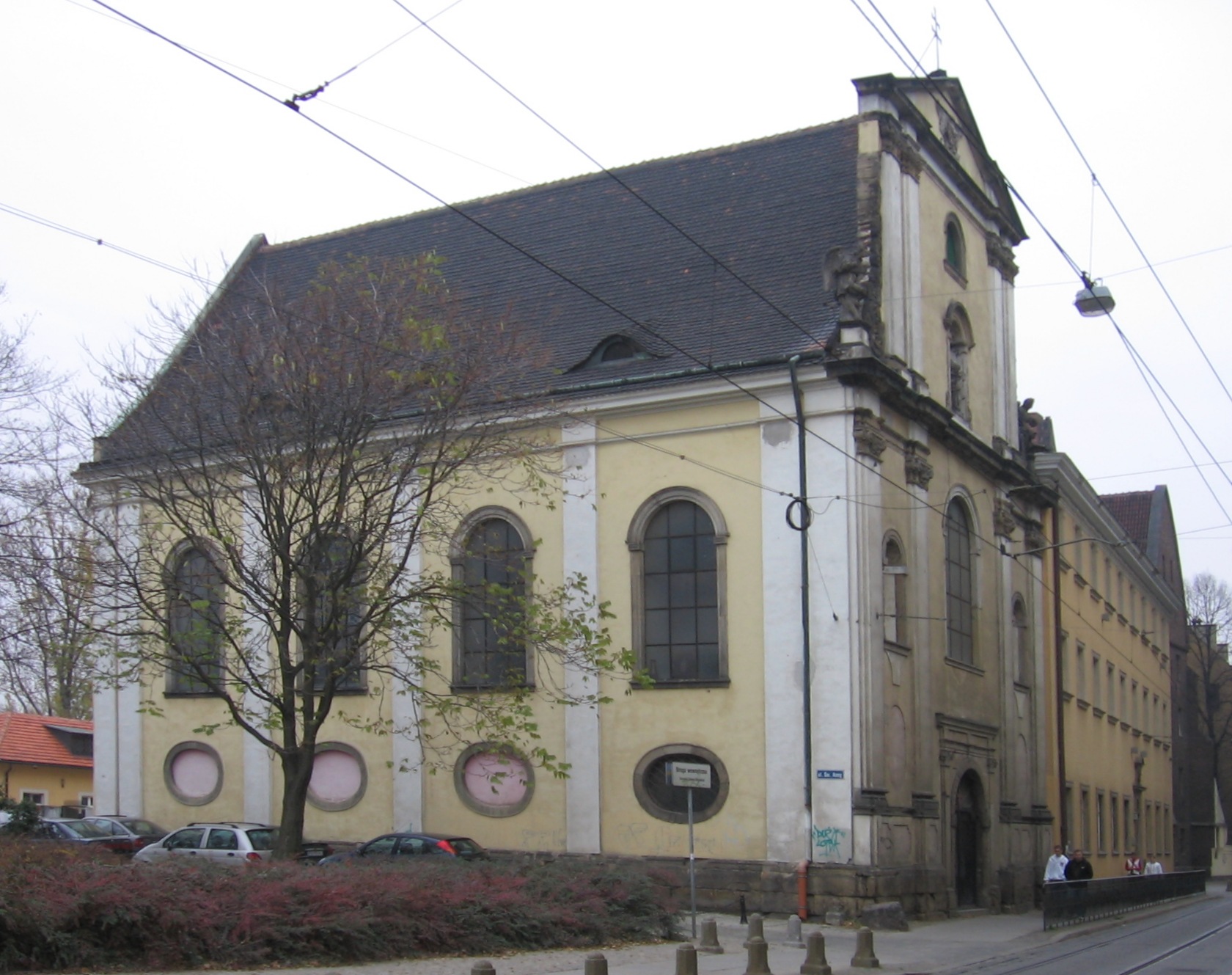
Between 1686 and 1690, the Baroque-style St. Anne’s Church was constructed for Augustinian nuns, featuring ornate details that became a hallmark of the area (Wikipedia). After a fire in 1791, the church was rebuilt and later became a spiritual center for the Polish Catholic minority under Prussian rule (FrejaTravels).
Twentieth Century and Wartime Destruction
In the early 20th century, the church was used by the Polish Catholic minority and then transferred to the Old Catholic Church. During World War II, it served as a storage site for nearly half a million books from the University of Breslau, only to be severely damaged during the 1945 Siege of Breslau, resulting in the loss of the structure and its contents (Wikipedia).
Postwar Orthodox Rebirth
After WWII, with Wrocław’s reintegration into Poland and a shift in demographics, the ruined church was transferred to the Polish Autocephalous Orthodox Church and rededicated to Saints Cyril and Methodius. This rebirth signified both the revival of Orthodox Christianity and the city’s deepening connection to Slavic spiritual traditions (visitwroclaw.eu).
The Legacy of Saints Cyril and Methodius
Saints Cyril and Methodius, born in Thessalonica, were pivotal figures in the spread of Christianity and literacy among the Slavic peoples. Their creation of the Glagolitic script—and the later evolution of the Cyrillic alphabet—enabled the translation of liturgical texts into vernacular Slavic languages, fostering both religious and cultural identity (Ancient Origins; National Today; English Radio CZ; Church Wonders).
Visiting Information
Location and Access
The church is located at 13 Świętej Jadwigi on Sand Island, a short walk over the Tumski Bridge from Ostrów Tumski, Wrocław’s oldest district (boboandchichi.com). Public transportation options include trams and buses stopping at Plac Bema or Hala Targowa.
Visiting Hours and Entry
- Tuesday to Sunday: 10:00 AM – 5:00 PM
- Closed Mondays and during major Orthodox holidays
- No tickets required; entry is free, with donations encouraged for maintenance and cultural programs
Hours may vary during religious holidays and special events, so it's advisable to check local tourism websites or parish notices before planning your visit.
Accessibility
- Wheelchair accessible via gently sloping entrance ramps
- Assistance available upon request
- Restrooms are not inside the church; nearby public facilities are available
Mass and Liturgical Services
The church holds regular Orthodox liturgies, with special celebrations on the feast day of Saints Cyril and Methodius (May 24) and during major Orthodox holidays. Visitors are welcome to attend, but are asked to respect the sanctity of ongoing services.
Guided Tours and Special Events
- Guided tours focusing on history, architecture, and iconography are available by prior arrangement through local tourist offices
- The church participates in cultural festivals and hosts concerts, icon exhibitions, and liturgical celebrations
Architectural and Artistic Features
Exterior
- Baroque façade with Eastern Orthodox elements, including a central dome topped by an Orthodox cross
- Arched windows and doorways allow natural light to enhance the interior atmosphere
- Decorative brickwork and stucco, often featuring Byzantine-inspired patterns (Locator)
Interior
- Sanctuary and Nave: Traditional Orthodox spatial arrangement, symbolizing the journey from the earthly to the divine
- Iconostasis: Richly adorned with hand-painted icons of Christ, the Virgin Mary, Saints Cyril and Methodius, and other saints; features gilded woodwork and intricately carved royal doors (Catholic Echo)
- Frescoes and Wall Paintings: Depict biblical scenes, liturgical motifs, and portraits of the patron saints, reinforcing the church’s spiritual heritage (RhodeTrips2110)
- Lighting: Natural illumination from arched windows is complemented by candlelight and chandeliers, creating a serene and contemplative atmosphere
Symbolic and Liturgical Furnishings
- Dome art often features a Pantocrator surrounded by angels and prophets
- Altar table adorned with embroidered cloths, gospel book, cross, and candles
- Candelabra and processional banners are used during feast day processions, embroidered with saints and biblical scenes
Community and Cultural Significance
- The church is a focal point for Wrocław’s Orthodox community, hosting workshops, restoration projects, and cultural events that engage local artisans and parishioners
- As one of four Orthodox churches in Wrocław, it contributes uniquely to the city’s religious and artistic landscape (Locator)
- Its dedication to Saints Cyril and Methodius links it to pan-Slavic traditions and the broader Cyril and Methodius Route, recognized by the Council of Europe as a key heritage trail (Cyril and Methodius Route)
Visitor Tips and FAQs
Essential Tips
- Best Time to Visit: Spring and early autumn for pleasant weather and fewer crowds; weekday mornings for a peaceful experience
- Dress Code: Modest attire (shoulders and knees covered) is recommended; hats should be removed inside
- Photography: Respect restrictions during services; flash photography is discouraged
- Nearby Attractions: Combine your visit with the Tumski Bridge, Church of St. Mary on the Sand, Wrocław Cathedral, Market Hall, and the Botanical Garden (boboandchichi.com)
Frequently Asked Questions
Q: Is there an entrance fee?
A: No, entry is free; donations are welcome.
Q: What are the church’s visiting hours?
A: Generally Tuesday through Sunday, 10:00 AM to 5:00 PM; closed Mondays and during major Orthodox holidays.
Q: Is the church wheelchair accessible?
A: Yes, with ramps and assistance available.
Q: Are guided tours available?
A: Yes, by prior arrangement through tourist offices or the parish.
Q: Can I attend services as a visitor?
A: Yes, visitors are welcome but should observe silence and refrain from photography during services.
Q: Are there restrooms on site?
A: No, but public facilities are nearby.
Listen to the full story in the app
Your Personal Curator, in Your Pocket.
Audio guides for 1,100+ cities across 96 countries. History, stories, and local insight — offline ready.
Audiala App
Available on iOS & Android
Join 50k+ Curators
Sources
- verified
- verified
- verified
- verified
- verified
- verified
- verified
- verified
- verified
- verified
- verified
- verified
- verified
- verified
- verified
- verified
- verified
Last reviewed: