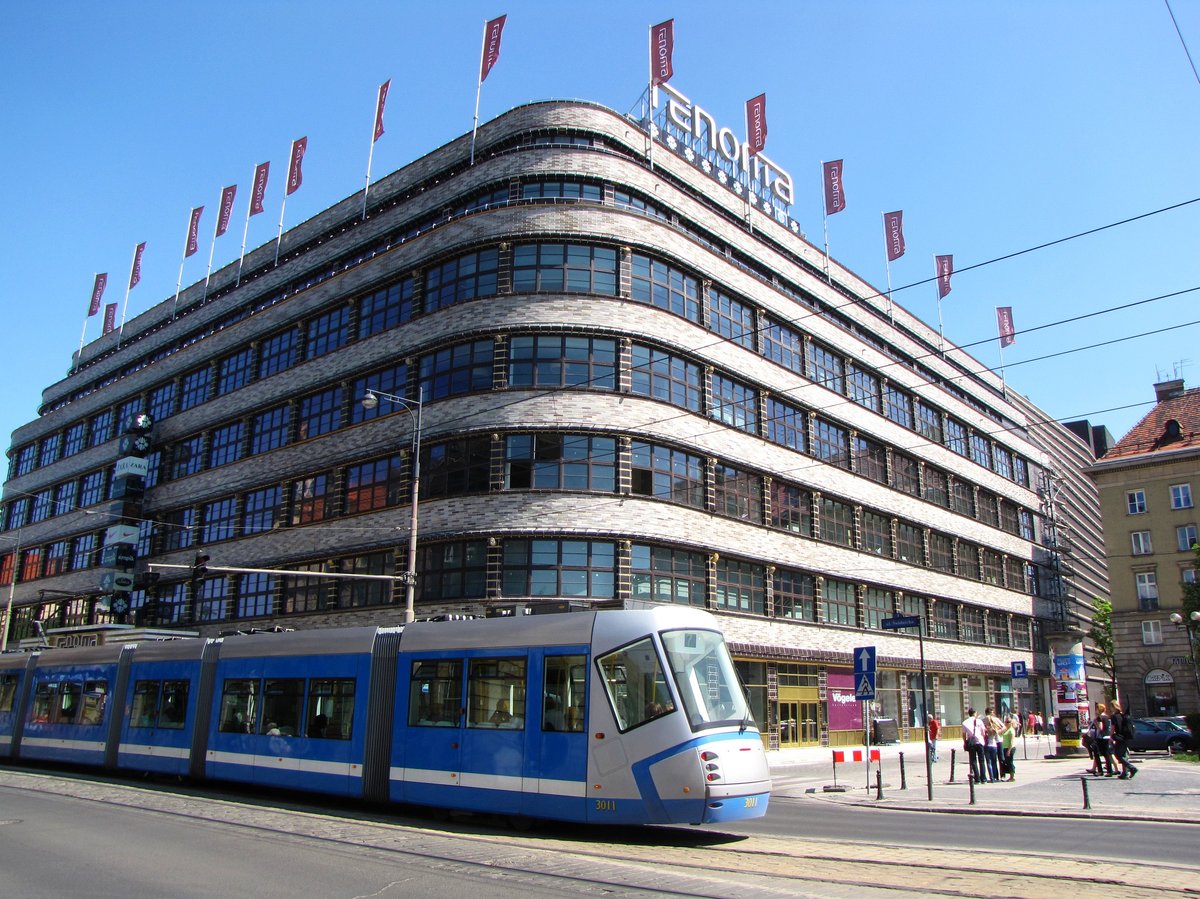
Introduction to Renoma Wrocław
Renoma in Wrocław, Poland, stands as one of the city’s most distinguished landmarks—a synthesis of early 20th-century modernist and Art Déco architecture with contemporary commercial and cultural vibrancy. Originally opened in 1930 as the Wertheim department store, Renoma has witnessed and adapted to nearly a century of Wrocław’s tumultuous history. Its innovative design by German architect Hermann Dernburg introduced steel-frame construction, expansive glass atriums, and the now-iconic gilded portrait heads on its façade. Through war, political change, and urban transformation, Renoma has endured as a central point for shopping, dining, culture, and community life.
Today, Renoma offers visitors a unique blend of architectural splendor and modern amenities, all within walking distance of Wrocław’s Old Town. This comprehensive guide details Renoma’s history, visiting hours, accessibility, ticketing, nearby attractions, and visitor tips—ensuring a rewarding experience for architecture enthusiasts, shoppers, and cultural explorers alike. For further information, see Renoma official and Wikipedia.
Photo Gallery
Explore Renoma in Pictures
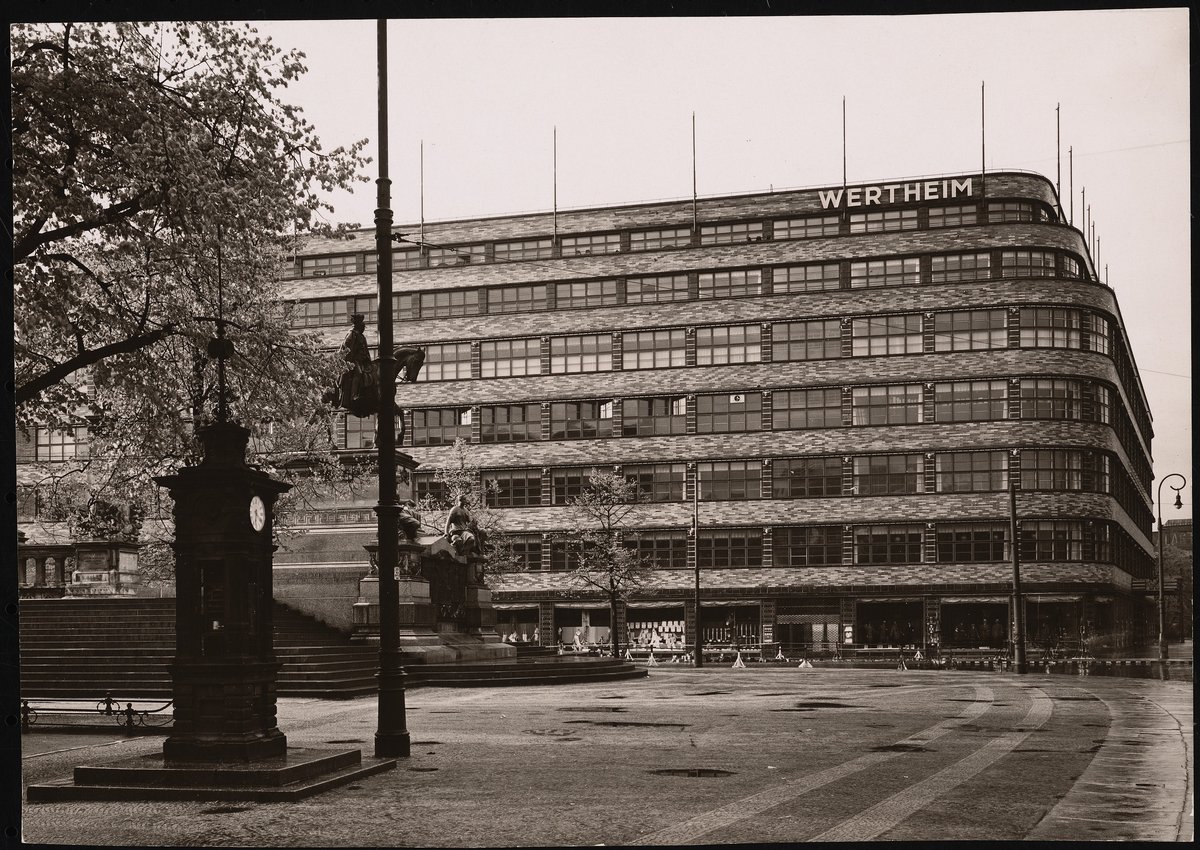
Photograph of Warenhaus Wertheim in Breslau (now Wroclaw) designed by architect Hermann Dernburg, taken in 1929. Historic view of the department store on pl. Tadeusza Kosciuszki (formerly Tauentzienplatz).
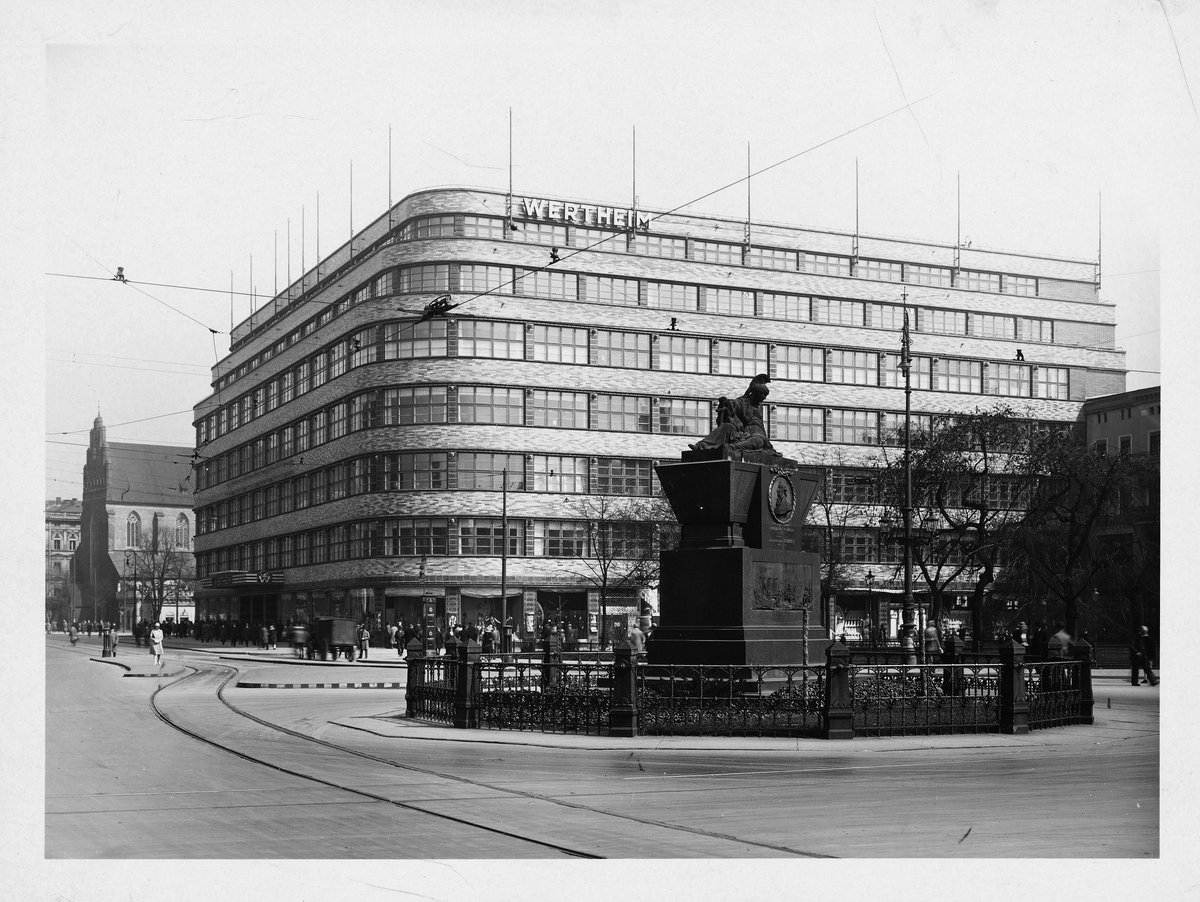
Historic black and white photograph of Warenhaus Wertheim, a department store in Breslau (now Wroclaw), taken by Hermann Dernburg between 1929 and 1930. The image shows the department store located at pl. Tadeusza Kosciuszki (formerly Tauentzienplatz), showcasing early 20th century architecture on a
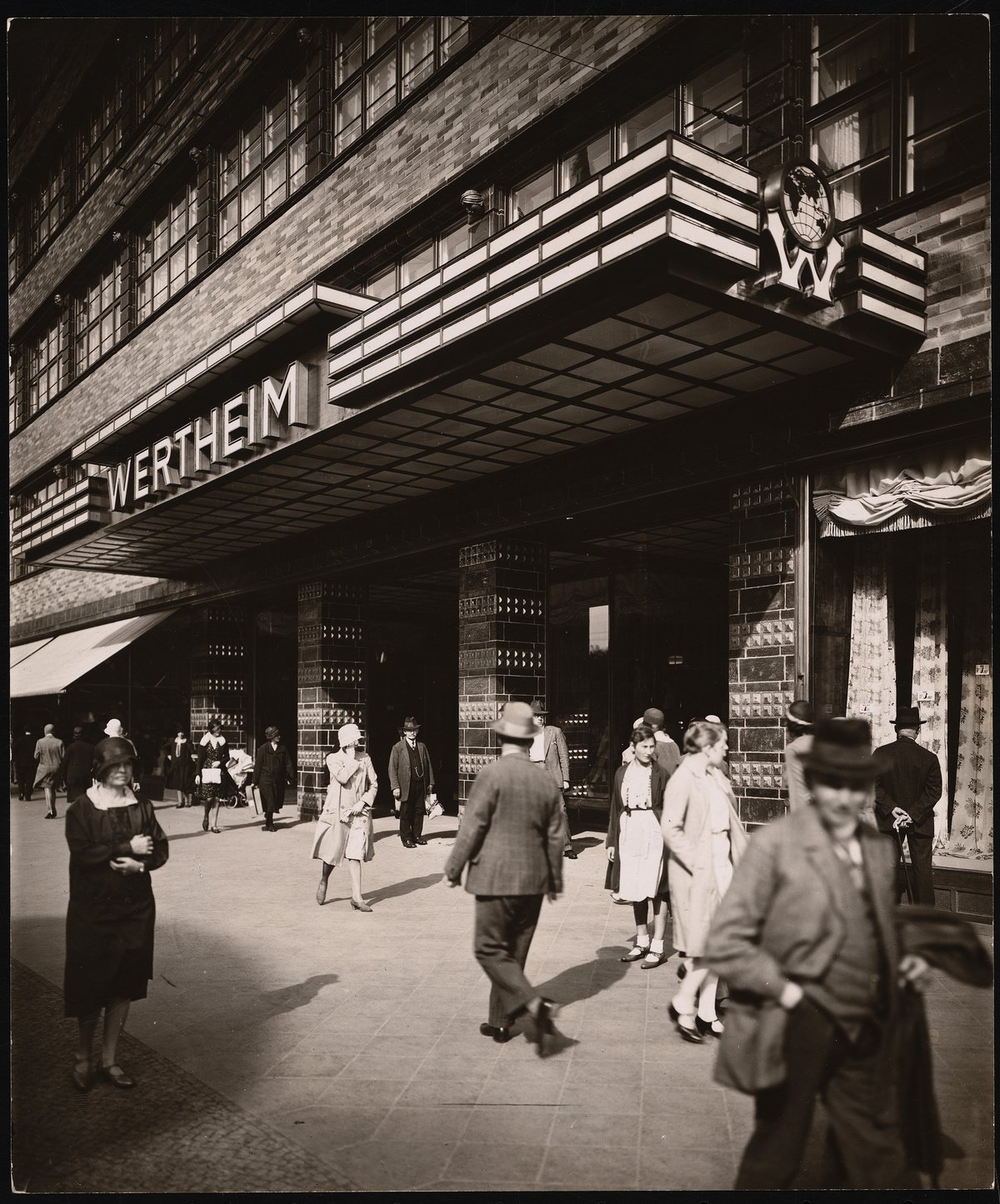
Historical photo of the entrance to Warenhaus Wertheim department store in Breslau (now Wroclaw), captured by Hermann Dernburg during 1929-1930. Photographic print on paper measuring 28.4 x 23.6 cm, showing architectural details on pl. Tadeusza Kosciuszki (historically Tauentzienplatz).
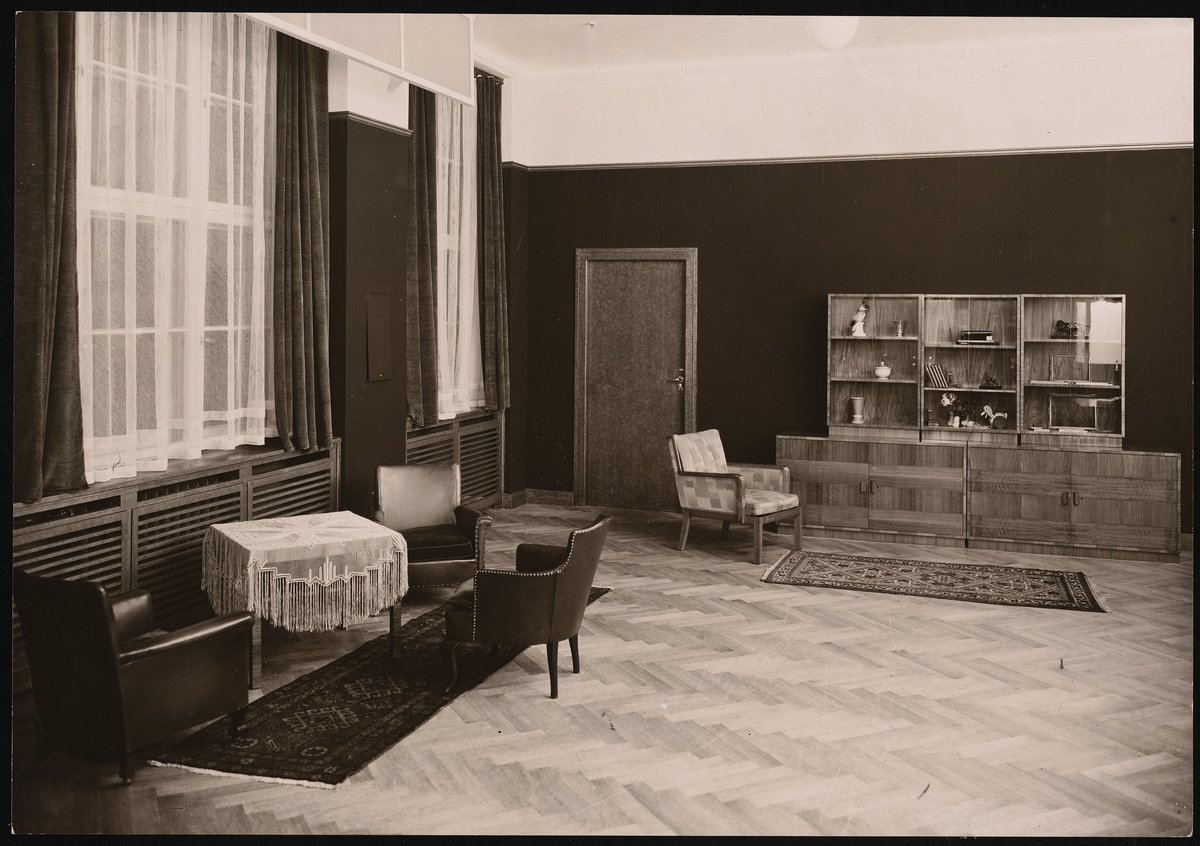
Historical interior photograph of the director's office at the Wertheim department store in Breslau (now Wroclaw), designed by architect Hermann Dernburg between 1929 and 1930. Photo taken by an unknown photographer, depicts office details and design elements.
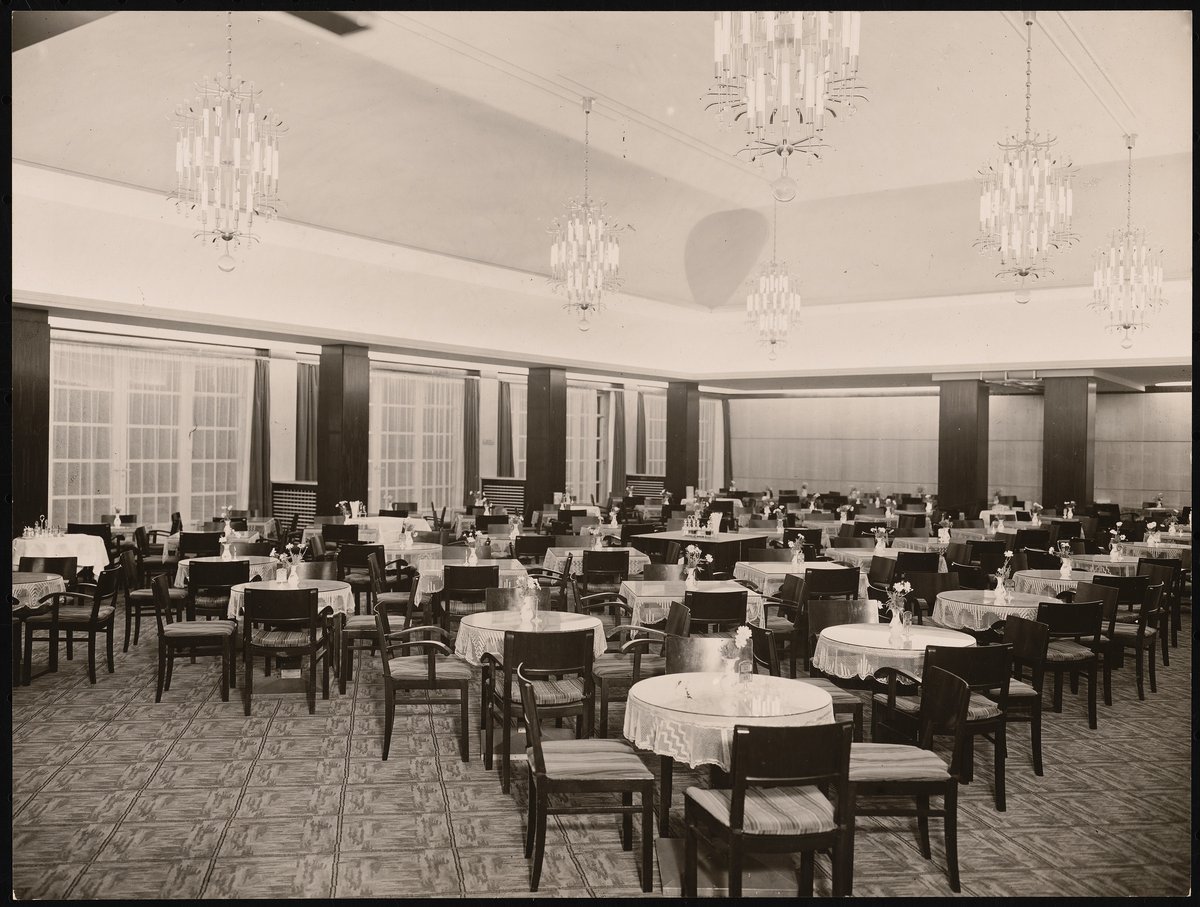
Historical black and white photograph showing the interior of the restaurant at Wertheim department store in Breslau (now Wroclaw), taken between 1929 and 1930. Architect Hermann Dernburg's involvement. Photo on paper, dimensions 21.9x29 cm.
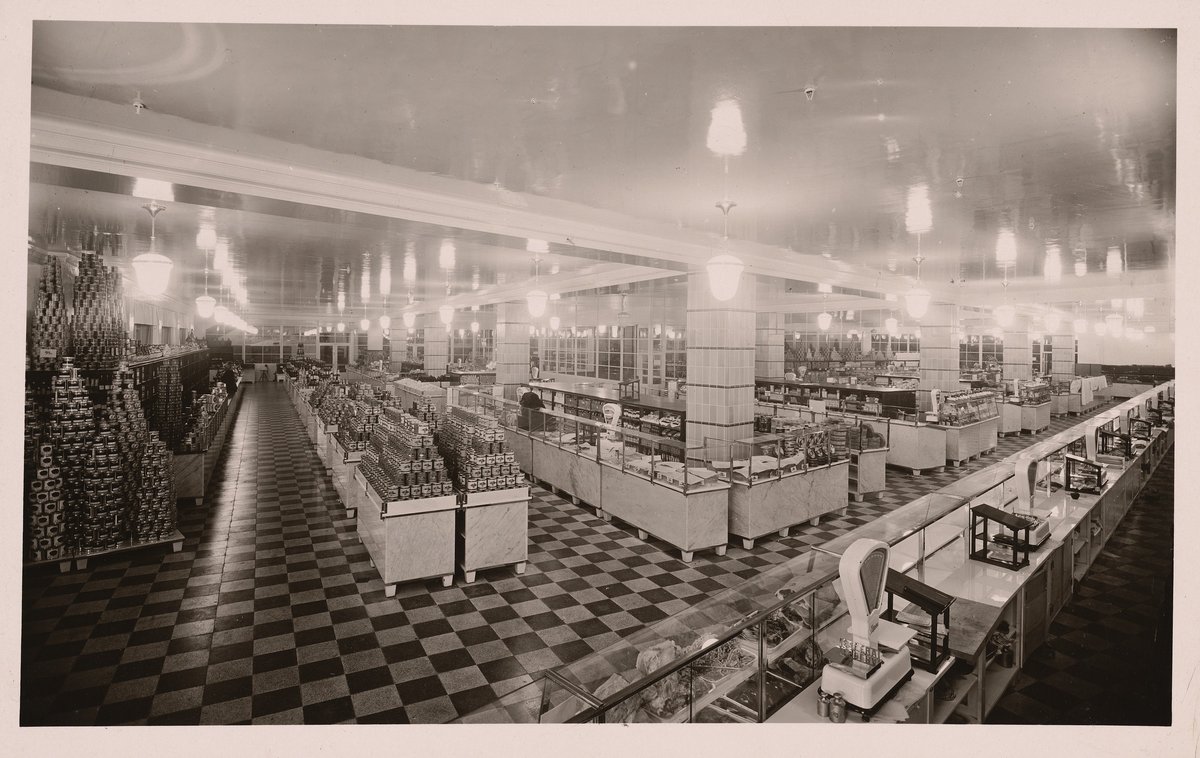
Historical photograph of the interior of the grocery department in Warenhaus Wertheim, located in Breslau (now Wroclaw), taken around 1929-1930. The department store was designed by architect Hermann Dernburg. Photo on paper measuring 17.8 x 28.2 cm.
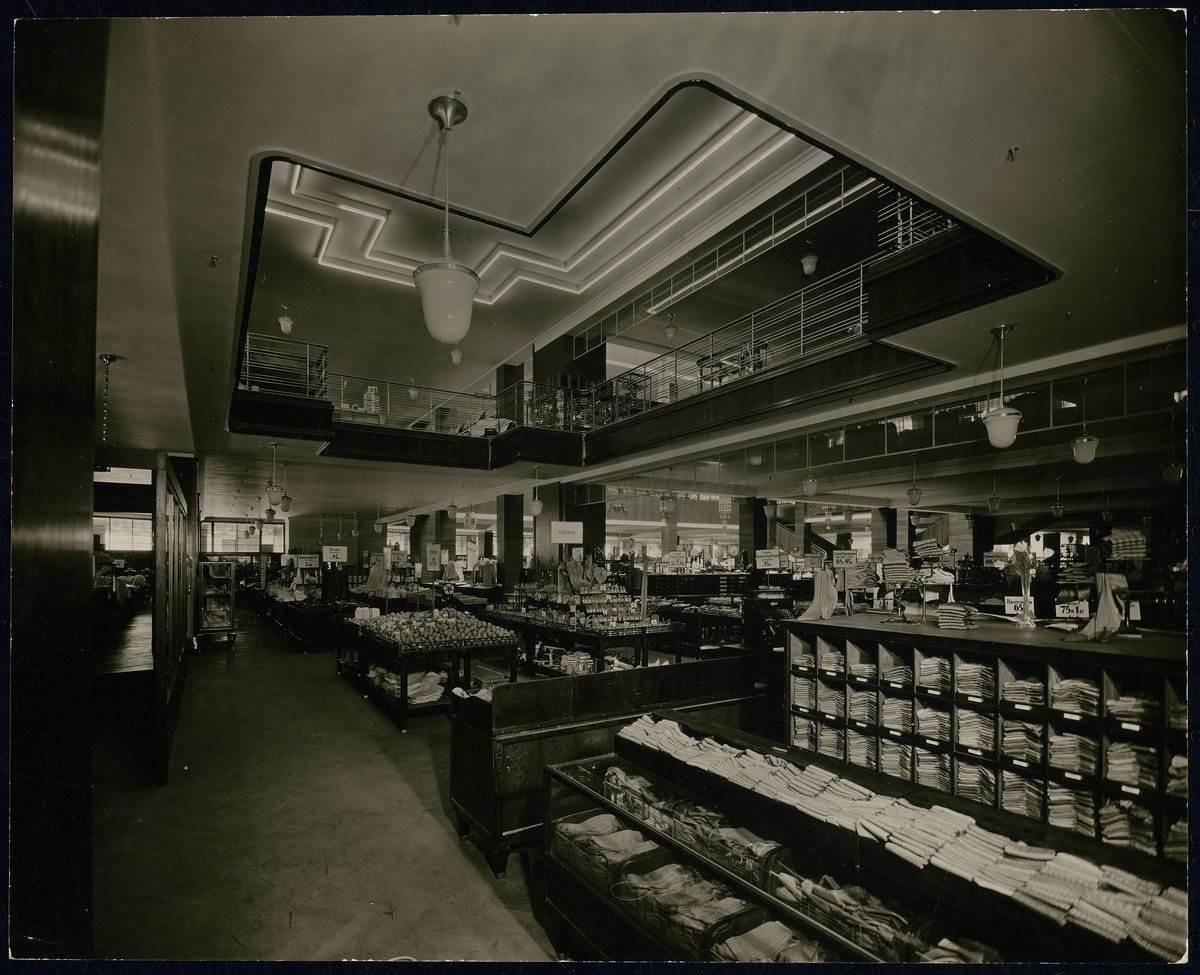
Historic photo showing the interior view of the clothing department at Warenhaus Wertheim in Breslau (now Wroclaw), taken around 1929-1930 by an unknown photographer. Photo on paper, size 23.1 x 28.4 cm.
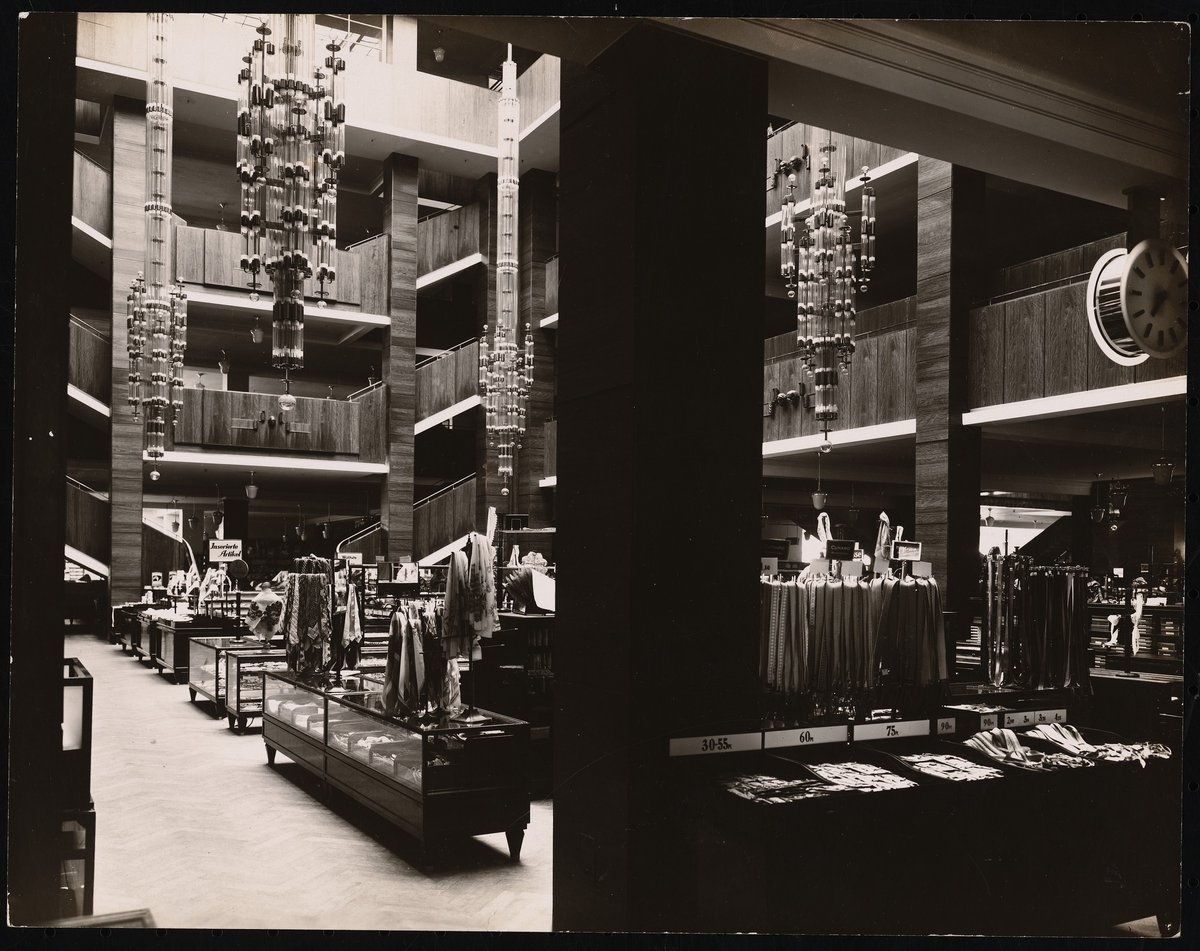
Historic black and white photo depicting the interior of the clothing department at Warenhaus Wertheim department store in Breslau (now Wroclaw), taken between 1929 and 1930 by Hermann Dernburg.
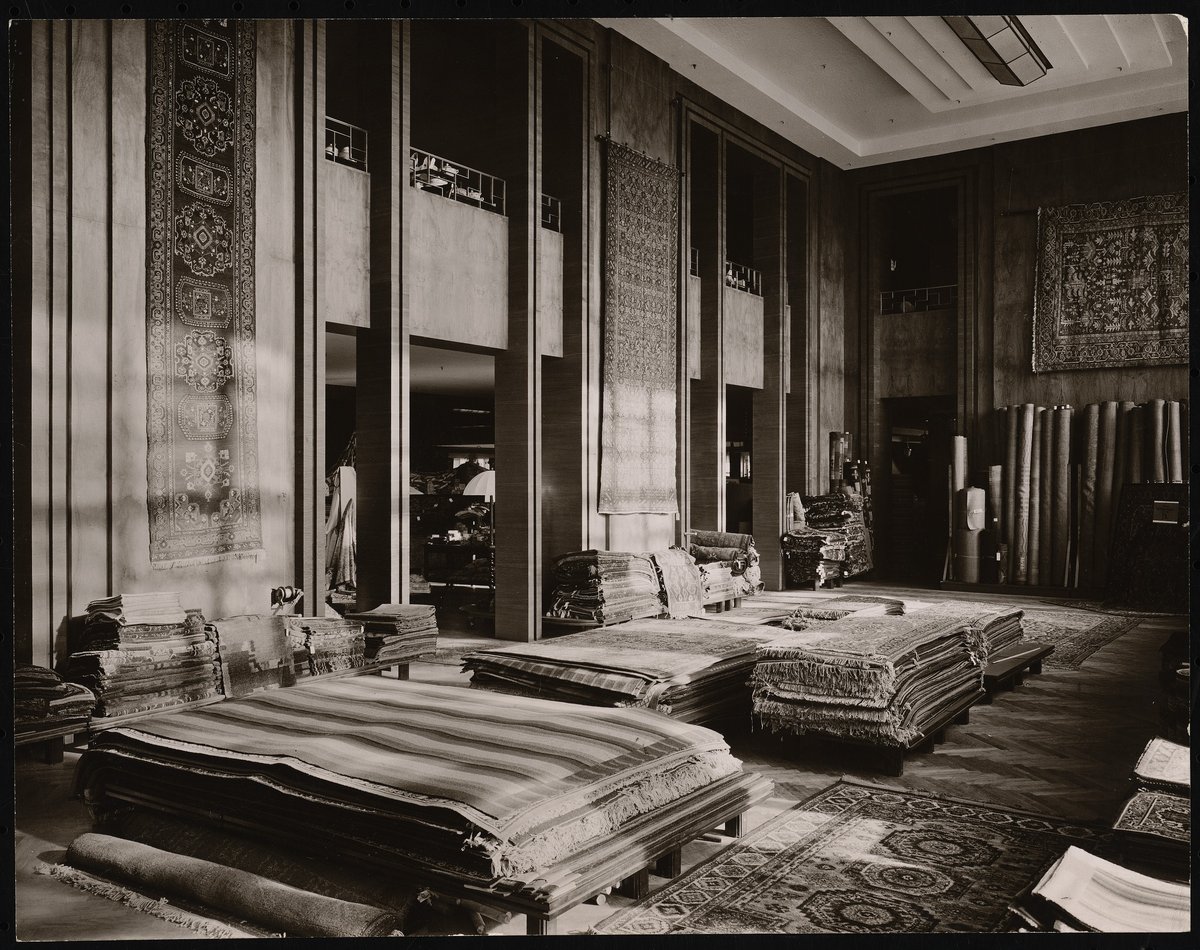
Historic 1929-1930 photo showing the interior of the carpet section in Warenhaus Wertheim, a department store in Breslau (now Wroclaw), designed by architect Hermann Dernburg, taken by an unknown photographer.
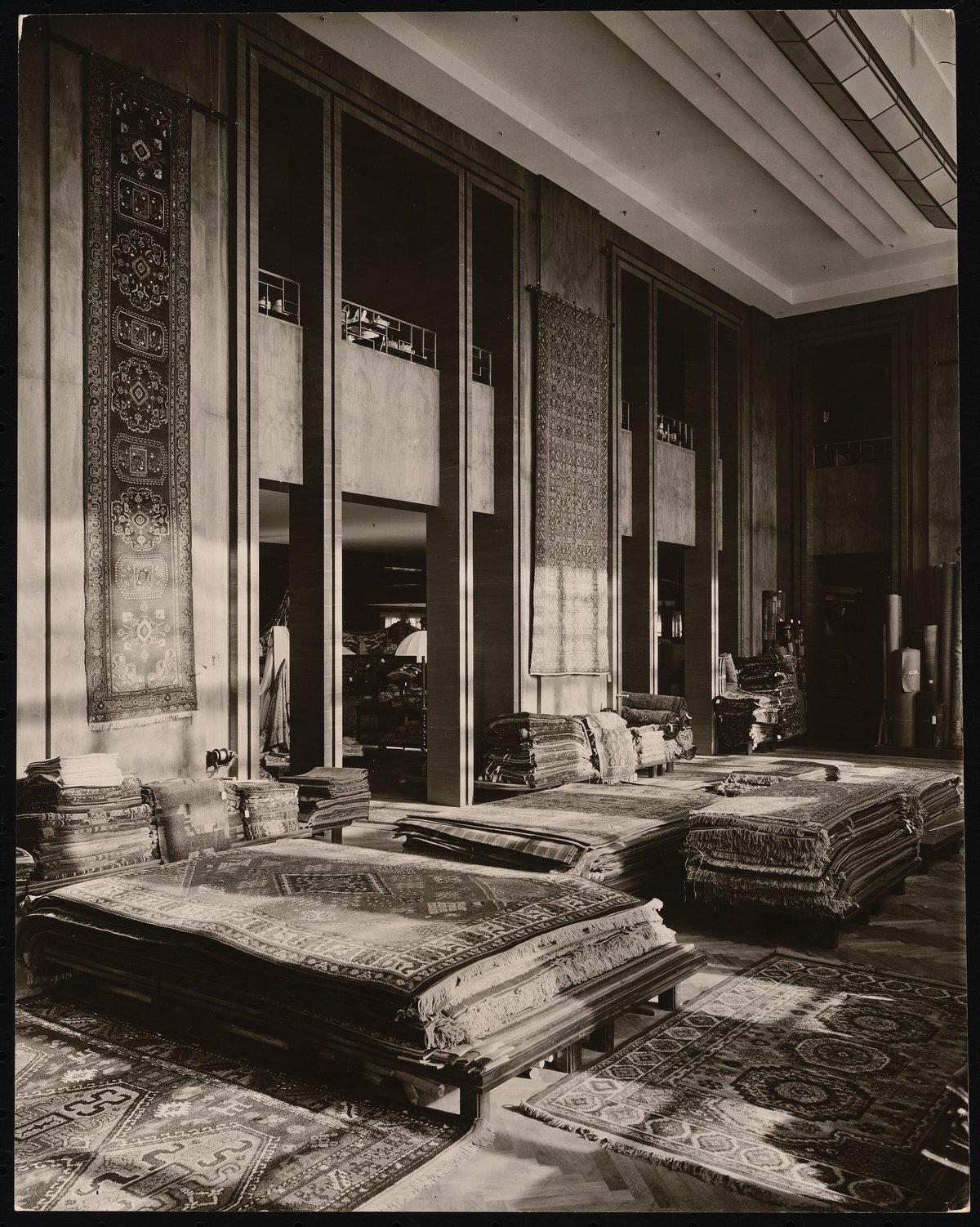
Historical photograph depicting the interior of the carpet department at Warenhaus Wertheim department store in Breslau (today Wroclaw), taken around 1929-1930. Architect Hermann Dernburg involved in the project. Photo measures 30.1 x 24 cm, showing early 20th-century retail design.
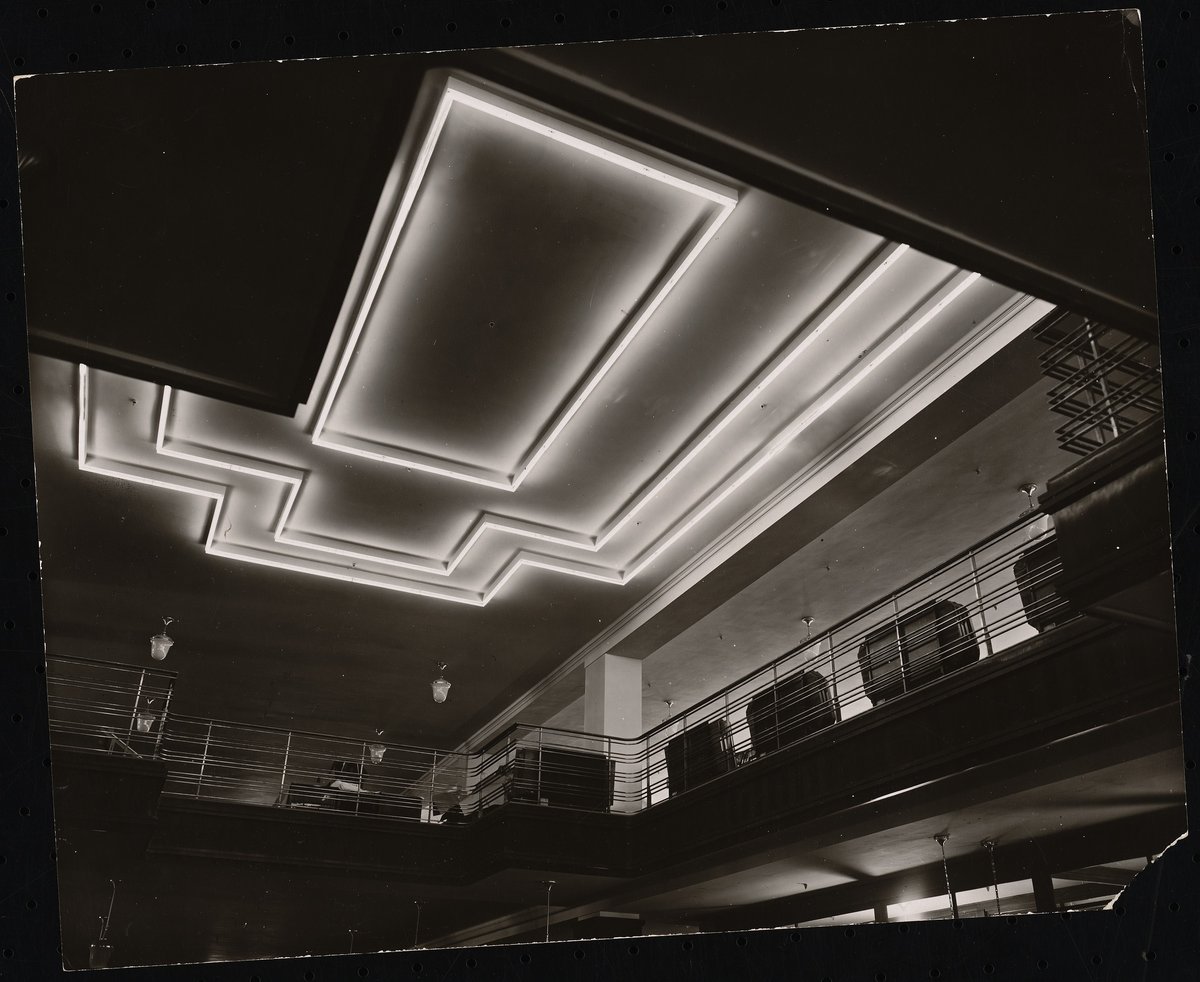
Photograph showing the interior ceiling lighting of Warenhaus Wertheim, Breslau, designed by architect Hermann Dernburg (1868-1935). Taken by an unknown photographer between 1929 and 1930. The photo is printed on paper, size 25.3 x 31 cm, located in Wroclaw (historically Breslau) at pl. Tadeusza Kos
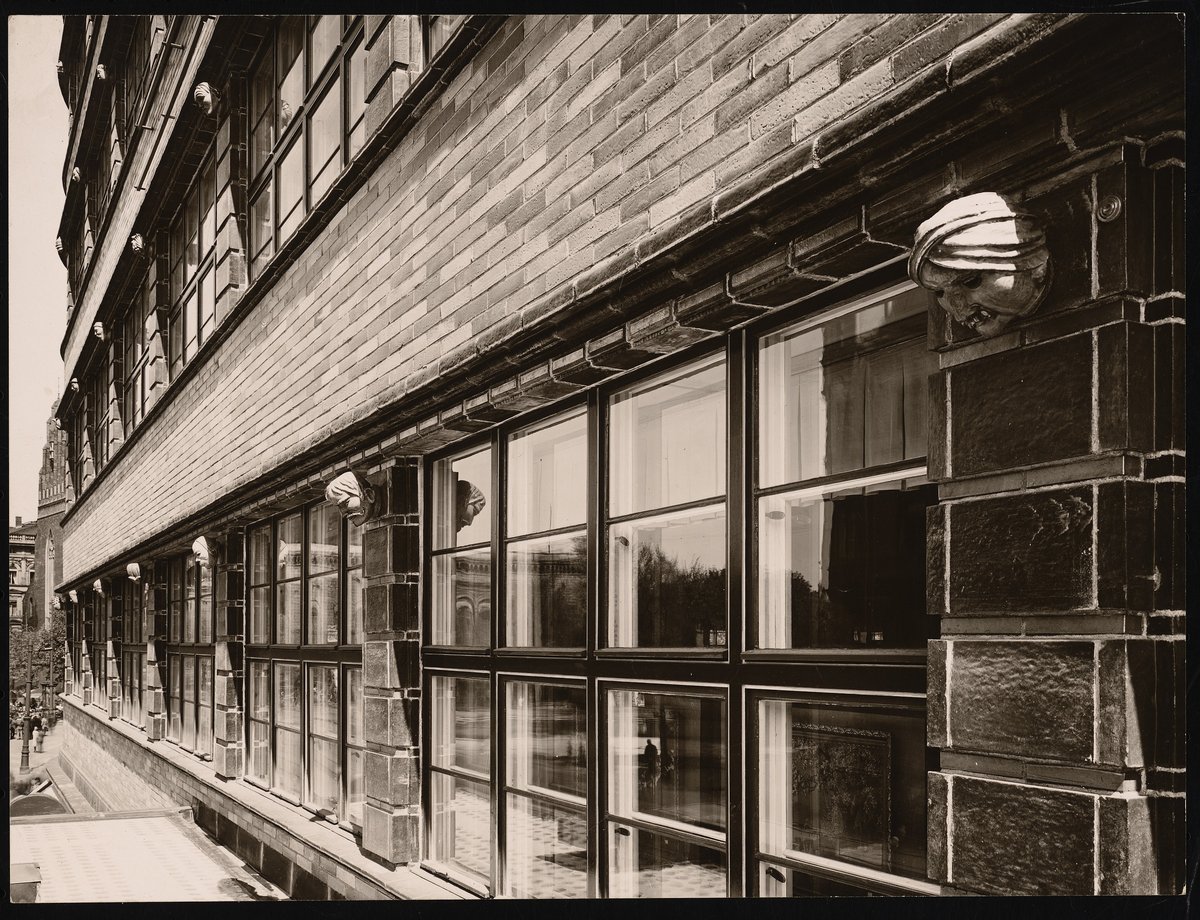
Photo of the facade detail of Warenhaus Wertheim department store in Wroclaw (formerly Breslau), designed by Hermann Dernburg between 1929 and 1930, taken by an unknown photographer. Historic building located at pl. Tadeusza Kosciuszki (formerly Tauentzienplatz).
Origins and Architectural Significance
Renoma’s story began in the late 1920s, when the Wertheim family—a prominent German-Jewish retail dynasty—commissioned architect Hermann Dernburg to design a flagship department store in Breslau (now Wrocław). Dernburg’s winning design, selected from a Berlin-based competition, introduced a monumental steel-frame structure, making Renoma the largest building of its kind in Europe at the time. Its Art Déco façade, adorned with shimmering glazed ceramic tiles and stylized gold-plated portrait heads, immediately set it apart as a symbol of cosmopolitan optimism (Wikipedia; Renoma official; Explore Your Life).
Inside, Renoma featured twin atriums, vast open retail floors, and abundant natural light—a radical departure from traditional department store layouts. The decorative heads, originally sculpted by Ulrich Nitschke and Hans Klakow, represented internationalism and the global reach of Wertheim’s business (Bright Nomad).
Wartime Survival and Post-War Transformation
During World War II, Renoma survived the siege of Breslau with its main structure intact. After the war and the city's transfer to Poland, the building was nationalized and renamed Powszechny Dom Towarowy (PDT), or PeDeT—a symbol of socialist commerce and postwar recovery (Globalworth). For decades, PeDeT was Wrocław’s premier shopping destination, embedded in the city’s collective memory as a place of resilience and adaptation.
Decline, Renovation, and Modern Revival
Following the fall of communism in 1989, Renoma entered a period of uncertainty, passing through several owners and facing competition from new shopping centers. Its protected monument status, granted in 1977, preserved its architectural heritage and guided subsequent renovations. The major overhaul between 2005 and 2009, led by architect Zbigniew Maćków, meticulously restored the façade, portrait sculptures, and interior atriums while expanding retail and office space (Globalworth; Renoma official).
Recent Redevelopment and Urban Impact
The most recent metamorphosis, culminating in 2023, further enhanced Renoma’s historical features and introduced new gastronomic, retail, and office zones. This adaptive reuse project, in collaboration with conservation authorities, has positioned Renoma as a model for sustainable urban renewal—balancing heritage conservation with modern urban needs (Renoma Press Release; Globalworth).
Visitor Information
Visiting Hours
- Monday–Saturday: 9:00 AM – 9:00 PM
- Sunday: 10:00 AM – 8:00 PM
Note: Hours may vary on public holidays and during special events. Always check the official Renoma website for real-time updates.
Tickets and Admission
- General entry: Free (no ticket required)
- Special exhibitions or cultural events: May require separate tickets, available online or at the venue (Renoma Visitor Info).
Accessibility
- Wheelchair accessible: Ramps, elevators, and accessible restrooms throughout
- Family-friendly: Baby-changing stations, play areas, and cloakroom services
- Pets: Allowed in designated areas; check individual store/event policies
Getting There and Parking
- Address: Świdnicka 40, 50-950 Wrocław, Poland
- Public transport: Accessible via trams/buses; nearby stops include Renoma (Świdnicka), Arkady (Capitol), and Opera (Theater Square)
- Parking: Underground facility accessible from Czysta Street; first hour free, then 5 PLN per hour, daily max 50 PLN (Renoma Parking)
Nearby Attractions
Renoma’s central location makes it an excellent starting point for exploring Wrocław’s key sites:
- Market Square (Rynek)
- Old Town Hall
- Odra River embankments
- Centennial Hall (UNESCO site)
- Opera House and Capitol Theatre
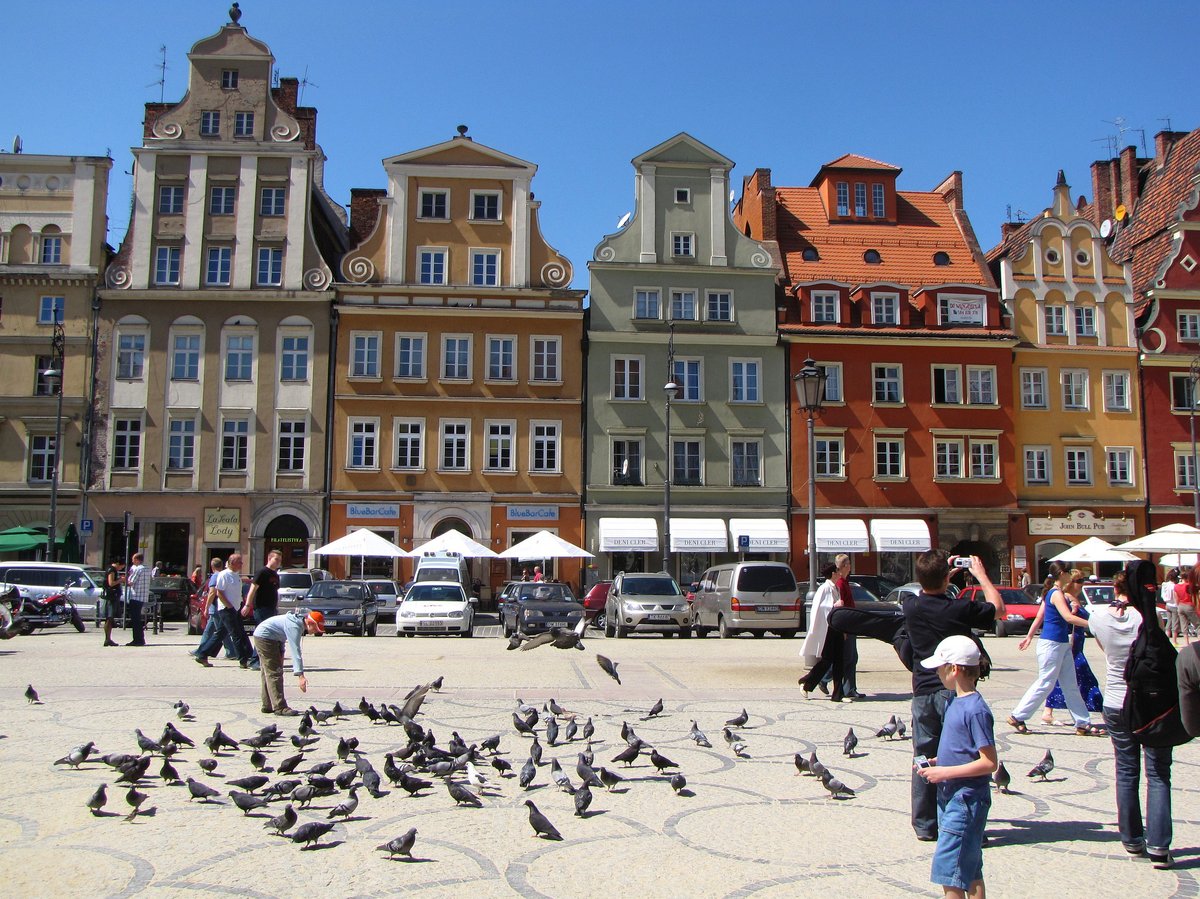
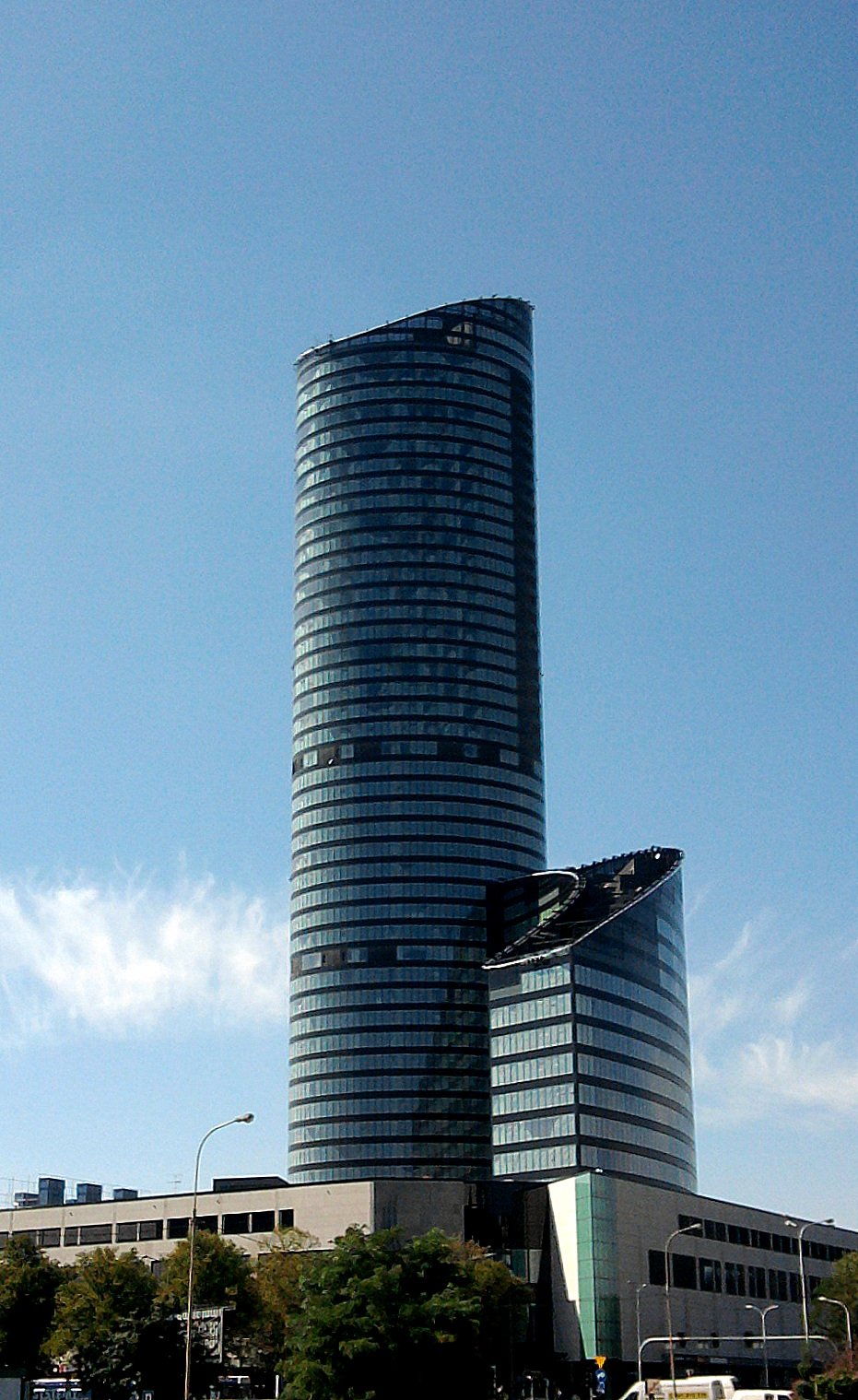
Combine your visit with a walk to Wrocław’s famous dwarf statues, the Sky Tower observation deck, or the Penitent Bridge for panoramic city views (thecrazytourist.com; bulgarianonthego.blog).
Architectural Highlights and Features
Façade and Sculptural Details
Renoma’s façade exemplifies the Art Déco style, with horizontal bands of color, rounded corners, and more than 100 portrait sculptures representing diverse continents. The gilded and ceramic tiles shimmer in changing light, offering a dynamic visual experience (Renoma official; Globalworth).
Atriums and Interior Design
The restored atriums, particularly the northern one, are clad in Portuguese and Turkish marble, illuminated by a 22-meter-high glazed skylight. Two monumental chandeliers and suspended sculptural heads evoke the building’s pre-war grandeur (Globalworth).
Symbolism and Cultural Context
Renoma’s portrait heads were intended to symbolize internationalism and openness, while its continuous transformation mirrors Wrocław’s resilience. The building’s protected heritage status ensures careful conservation and ongoing relevance (Wikipedia; Explore Your Life).
Shopping, Dining, and Events
Renoma hosts over 120 shops, premium boutiques, and essential services. Its vibrant gastronomic zone features international cuisine, coffee houses, and fine dining with panoramic views. The “Pedet” food and culture hall offers concerts, exhibitions, and guided tours, especially during special anniversaries and festivals (Renoma Press Release; Silent Disco Renoma).
Visitor Amenities and Practical Tips
- Free Wi-Fi throughout the building
- ATMs and currency exchange on site
- Multilingual signage and English-speaking staff
- Security and surveillance for safety
- Sustainability initiatives: Energy-efficient lighting, waste reduction, local artisan markets
Tips:
- Visit during weekday mornings for a quieter experience.
- For the best photos, capture the façade at golden hour or panoramic views from the rooftop terrace.
- Check the events calendar for exhibitions and markets.
Frequently Asked Questions (FAQ)
Q: What are Renoma’s opening hours?
A: Monday–Saturday: 9:00 AM–9:00 PM; Sunday: 10:00 AM–8:00 PM.
Q: Is there an admission fee?
A: No, general access is free. Special events may have separate tickets.
Q: Is Renoma accessible?
A: Yes, with ramps, lifts, and accessible facilities for all visitors.
Q: Are guided tours available?
A: Yes, by appointment and during select events—check the official website.
Q: Is parking available?
A: Yes, underground parking with the first hour free.
Q: Can I bring pets?
A: Pets are allowed in designated areas; check specific policies.
Listen to the full story in the app
Your Personal Curator, in Your Pocket.
Audio guides for 1,100+ cities across 96 countries. History, stories, and local insight — offline ready.
Audiala App
Available on iOS & Android
Join 50k+ Curators
Sources
- verified
- verified
- verified
- verified
- verified
- verified
- verified
Last reviewed: