Introduction
Plac Ludwika Hirszfelda in Wrocław, Poland, serves as a vibrant testament to the city's rich historical and cultural tapestry. Situated in the Krzyki district, this square is not only a physical space but a symbolic landmark commemorating significant historical events and figures. Established in 1882 by Alexander Kaumann and A. Hofmann, the square's early development featured green spaces intersected by a dual carriageway, setting the stage for its future architectural and social significance (Wikipedia).
The square's name honors Ludwik Hirszfeld, a pioneering Polish bacteriologist and immunologist whose contributions to medical science have left an indelible mark on history (Wikipedia). Hirszfeld's work, particularly during World War I and II, was instrumental in advancing the fields of immunology and seroanthropology. His legacy is deeply intertwined with Wrocław, where he became the first dean of the Medical Faculty at the University of Wrocław and founded the Institute of Immunology and Experimental Therapy (NCBI).
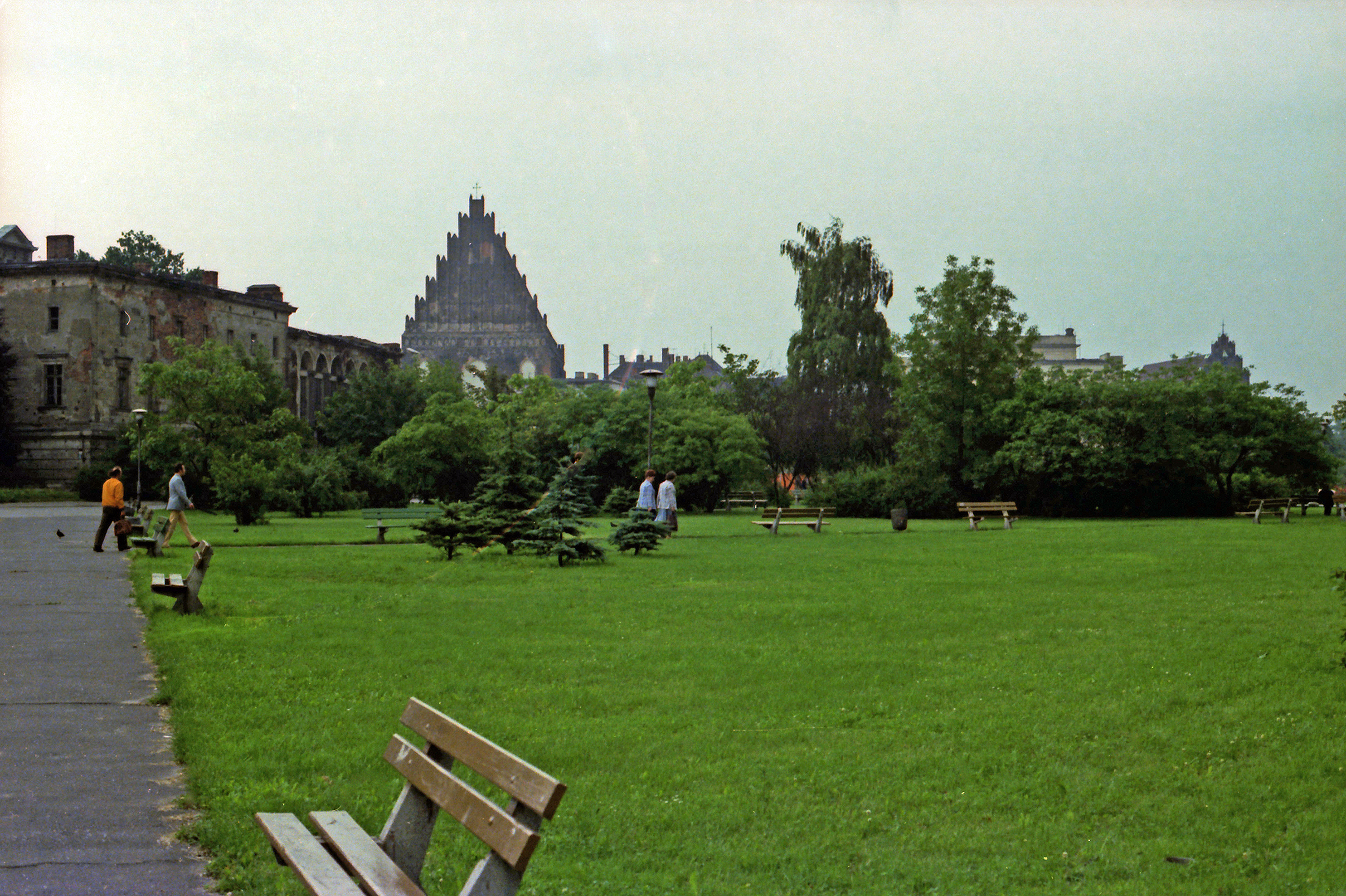
Plac Ludwika Hirszfelda also stands as a testament to Wrocław's resilience and commitment to preservation. Despite the destruction caused during the Siege of Breslau in World War II, several key structures, including the hospital and insurance institution buildings, survived and now form part of the Dolnośląskie Centrum Onkologii (Wikipedia). These buildings are listed as historical monuments and continue to serve the community.
In addition to its historical and architectural significance, the square functions as a cultural and social hub. It is surrounded by a variety of amenities, including shops, restaurants, and cafes, making it a lively part of the city. Nearby attractions such as the Sky Tower, the Market Square, and the Panorama of the Battle of Racławice further enhance its appeal (Mapcarta, Wroclaw Guide).
Historical Background
Origins and Early Development
Plac Ludwika Hirszfelda has a rich history dating back to the late 19th century. The square was initially laid out in 1882 based on a regulatory plan developed by Alexander Kaumann and A. Hofmann (Wikipedia). Originally, it was a green area intersected by a dual carriageway, forming the central axis of the design with streets radiating from the corners of the square.
Architectural Evolution
In the late 19th and early 20th centuries, the area around the square saw significant development. Tenement houses were constructed around the square, except for the eastern frontage, which was reserved for a complex of buildings. This complex included the neomanieristic building of the Landesversicherungsanstalt Schlesien (State Insurance Institution of Silesia) and the Krankenhaus Der Landesversicherungsanstalt (Hospital of the State Insurance Institution), designed by Karl Grosser and built between 1891 and 1893 (Wikipedia).
Impact of World War II
The square and its surrounding buildings were significantly affected during World War II. During the Siege of Breslau in 1945, much of the area was destroyed. However, the buildings of the hospital and the insurance institution survived the war (Wikipedia). These surviving structures now form part of the Dolnośląskie Centrum Onkologii (Lower Silesian Oncology Center), which continues to serve the community.
Post-War Reconstruction and Modernization
In the 1970s, the square underwent further transformation. It was developed into a rectangular urban space, complementing the nearby roundabouts of Powstańców Śląskich and Żołnierzy Wyklętych, both of which were also green spaces (Wikipedia). The new development included a residential and commercial complex designed by architect Leszek Tumanowicz, featuring a two-story pavilion with a glass-aluminum facade and a residential tower with a concrete facade. Some parts of the pavilion extended over Zaporoska Street, creating an open gallery on the first floor.
Naming History
Plac Ludwika Hirszfelda has undergone several name changes throughout its history. Initially known as Höfchenplatz, it was later renamed Franz-Seldte-Platz and then Plac Prostokątny (Wikipedia). The current name honors Ludwik Hirszfeld, a prominent Polish bacteriologist and immunologist who made significant contributions to the field of immunology and seroanthropology (Wikipedia).
Ludwik Hirszfeld's Contributions
Ludwik Hirszfeld, born on August 5, 1884, in Warsaw, was a pioneering figure in medical science. He studied medicine in Würzburg and Berlin, earning his doctorate with a thesis on agglutination and later his habilitation with research on the relationship between immune phenomena and blood coagulation (Wikipedia). During World War I, he played a crucial role in combating typhus in Serbia and organizing the local healthcare system.
After World War II, Hirszfeld moved to Wrocław, where he became the first dean of the Medical Faculty at the University of Wrocław. In 1952, he founded the Institute of Immunology and Experimental Therapy of the Polish Academy of Sciences in Wrocław, which was later named after him (Wikipedia). His contributions to medical science and his efforts in establishing key medical institutions in Wrocław are commemorated by the naming of the square.
Modern-Day Significance
Today, Plac Ludwika Hirszfelda is a bustling area that combines historical significance with modern amenities. The Dolnośląskie Centrum Onkologii, located at the square, continues to be a vital healthcare institution, providing oncology services to the region (Wikipedia). The square also features a distinctive commercial building that once extended over Zaporoska Street but was partially dismantled in 2006.
Architectural Heritage
The architectural heritage of Plac Ludwika Hirszfelda is preserved through several buildings listed as historical monuments by the Wojewódzki Urząd Ochrony Zabytków (Provincial Office for the Protection of Monuments) in Wrocław (Wikipedia). These include the neomanieristic structures of the former State Insurance Institution and the hospital, which stand as testaments to the area's rich architectural and historical legacy.
Cultural and Social Hub
In addition to its historical and architectural significance, Plac Ludwika Hirszfelda serves as a cultural and social hub. The square is surrounded by various amenities, including shops, restaurants, and cafes, making it a lively and vibrant part of the city. The nearby Sky Tower, one of the tallest buildings in Poland, offers panoramic views of Wrocław and adds to the modern skyline of the area (Mapcarta).
Visitor Information
Visiting Hours and Tickets
Plac Ludwika Hirszfelda is a public square and can be visited at any time. However, specific buildings and institutions around the square, such as the Dolnośląskie Centrum Onkologii, may have their own visiting hours. It's advisable to check their official websites for the most accurate and up-to-date information.
Travel Tips
- Explore the Historical Buildings: Take time to appreciate the architectural details of the surviving historical buildings, including the former State Insurance Institution and the hospital.
- Visit the Dolnośląskie Centrum Onkologii: While primarily a healthcare facility, the center's historical significance makes it worth a visit.
- Enjoy the Local Amenities: The square is home to various shops, cafes, and restaurants, providing plenty of options for dining and shopping.
- Take in the Views from Sky Tower: For a panoramic view of Wrocław, visit the nearby Sky Tower, which offers stunning vistas of the city.
- Learn About Ludwik Hirszfeld: Understanding the contributions of Ludwik Hirszfeld adds depth to the visit, highlighting the importance of the square's namesake in medical history.
Special Events and Guided Tours
While there are no regular guided tours specifically for Plac Ludwika Hirszfelda, various local tour companies may include it as part of their historical tours of Wrocław. Special events may occasionally be held at the square, so it's worth checking local event listings.
Photographic Spots
Plac Ludwika Hirszfelda offers several picturesque spots for photography, especially the historical buildings and the views from the Sky Tower. The blend of old and new architecture provides a unique backdrop for memorable photos.
Nearby Attractions
- Wrocław's Market Square (Rynek): One of the largest market squares in Europe, featuring beautiful Gothic and Baroque architecture.
- Panorama of the Battle of Racławice: A monumental cycloramic painting depicting the Battle of Racławice during the Kościuszko Uprising.
- Wrocław Cathedral: A stunning Gothic cathedral located on Ostrów Tumski, the oldest part of the city.
- Centennial Hall (Hala Stulecia): A historic building and UNESCO World Heritage Site, known for its impressive architecture and cultural events.
Accessibility
Plac Ludwika Hirszfelda is accessible by public transportation, including trams and buses. The square and its surrounding areas are generally wheelchair accessible, though some historical buildings may have limitations.
FAQ
What are the visiting hours for Plac Ludwika Hirszfelda?
Plac Ludwika Hirszfelda is a public square and can be visited at any time. Check specific institutions around the square for their visiting hours.
Are there guided tours available?
While there are no regular guided tours specifically for Plac Ludwika Hirszfelda, various local tour companies may include it as part of their historical tours of Wrocław.
What are the nearby attractions?
Nearby attractions include Wrocław's Market Square, the Panorama of the Battle of Racławice, Wrocław Cathedral, and Centennial Hall.
How can I get to Plac Ludwika Hirszfelda?
The square is accessible by public transportation, including trams and buses.
What is the significance of Ludwik Hirszfeld?
Ludwik Hirszfeld was a prominent Polish bacteriologist and immunologist who made significant contributions to medical science and established key medical institutions in Wrocław.
Listen to the full story in the app
Your Personal Curator, in Your Pocket.
Audio guides for 1,100+ cities across 96 countries. History, stories, and local insight — offline ready.
Audiala App
Available on iOS & Android
Join 50k+ Curators
Sources
-
verified
Wikipedia contributors
Plac Ludwika Hirszfelda we Wrocławiu. In Wikipedia, The Free Encyclopedia
-
verified
Wikipedia contributors
Ludwik Hirszfeld. In Wikipedia, The Free Encyclopedia
-
verified
National Center for Biotechnology Information (NCBI)
(2022). Ludwik Hirszfeld: Contributions to Medical Science
-
verified
Mapcarta contributors
Plac Ludwika Hirszfelda - Mapcarta
-
verified
Wroclaw Guide contributors
Things to Do in Wroclaw
Last reviewed: