Introduction
Przejście Oławskie, also known as the Oławska Passage, is a hidden gem in the vibrant city of Wrocław, Poland. This intriguing site is renowned for its historical and cultural significance, particularly symbolized by the poignant 'Monument to the Anonymous Passerby' (Przejście), masterfully created by Jerzy Kalina. Unveiled in December 2005 to mark the 24th anniversary of Poland's martial law period (1981-1983), this powerful sculpture depicts 14 lifelike figures sinking into and emerging from the ground, vividly representing the repression and resilience experienced by Polish citizens during this tumultuous time (Atlas Obscura).
Located at the intersection of Świdnicka Street and Piłsudskiego Street, Przejście Oławskie is easily accessible and offers visitors a profound glimpse into Wrocław's storied past. The monument stands as a testament to the indomitable spirit of the Polish people and their unyielding quest for freedom. This guide will provide you with detailed insights into the historical background, visitor tips, nearby attractions, and practical information to ensure a fulfilling visit to this remarkable site (The Places Where We Go).
Photo Gallery
Explore Oława Gate, Wrocław in Pictures

Historic remains of the 16th-century Breslau city fortifications wall of the Tunneltor Bastion built in 1576/77 by Bernardo Nurion at Brama Olawska in Wrocław, Poland, showing the Staromiejska promenade tunnel under Oławska street
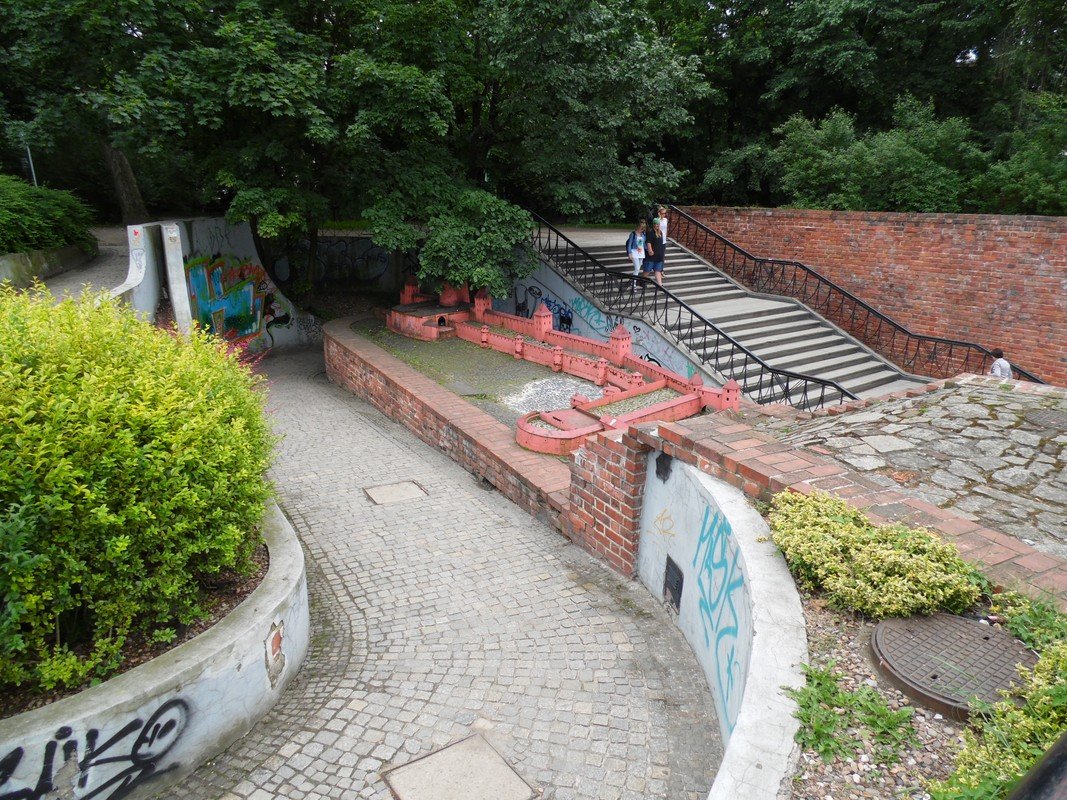
Detailed model representing the city moat in Wroclaw, showcasing historical urban fortifications

Photograph showing the exit of the underground passage near Oławska Gate leading towards Dominikański Gallery, a shopping and cultural area in Wrocław, Poland.

Detailed metal model (1:25 scale) of Brama Oławska showing Wrocław's city fortifications from the late 16th century, featuring the Ohlauer Tor and tunnel gate bastion near the Old Town promenade under Olawska street
Historical Significance
Przejście Oławskie, also known as the Oławska Passage, is a significant historical site in Wrocław, Poland. This passage is not just a physical route but a symbolic representation of the city's tumultuous history, particularly during the Communist era. The passage is famously marked by the "Monument to the Anonymous Passerby" (Przejście), created by Jerzy Kalina. This monument, installed in December 2005, commemorates the 24th anniversary of the martial law period in Poland from December 1981 to July 1983. The sculpture depicts 14 lifelike figures sinking into the ground on one side of the street and emerging on the other, symbolizing the repression and subsequent resurgence of Polish citizens during and after the martial law (Atlas Obscura).
Architectural and Artistic Features
The "Monument to the Anonymous Passerby" is a striking piece of public art that captures the attention of visitors with its lifelike and poignant representation of people seemingly disappearing into and emerging from the ground. This artistic installation is a powerful reminder of the resilience of the Polish people during a dark period in their history. The monument is located at the corner of Świdnicka Street and Piłsudskiego Street, making it easily accessible for tourists exploring the city (The Places Where We Go).
Visitor Tips
Best Time to Visit
The best time to visit Przejście Oławskie is during the spring and summer months when the weather is pleasant, and the city is bustling with activity. Early mornings or late afternoons are ideal for avoiding the crowds and capturing the monument in the best light for photography.
How to Get There
Przejście Oławskie is centrally located in Wrocław, making it easily accessible by public transportation. Visitors can take trams or buses to the nearby stops at Świdnicka Street or Piłsudskiego Street. For those staying in the city center, the passage is within walking distance from major attractions like the Market Square (Rynek) and the Old Town (Visit Wroclaw).
Special Events and Guided Tours
Special Events
Throughout the year, various cultural and historical events may take place at or near Przejście Oławskie. These events often include exhibitions, performances, and commemorative ceremonies that further highlight the historical significance of the site.
Guided Tours
For those interested in a deeper understanding of the historical and cultural significance of Przejście Oławskie, guided tours are available. These tours often include other historical sites in Wrocław and provide valuable insights into the city's past. Visitors can book tours through local tour operators or online platforms (Pati's Journey Within).
Nearby Attractions
While visiting Przejście Oławskie, tourists can explore several nearby attractions to enhance their experience:
- Market Square (Rynek): One of the largest market squares in Europe, featuring beautiful Gothic and Renaissance architecture, vibrant cafes, and shops.
- Ostrów Tumski: The oldest part of Wrocław, known for its stunning cathedrals and picturesque streets.
- Hydropolis: An interactive museum dedicated to water, located a short distance from the passage (Salt in Our Hair).
Cultural Context
Przejście Oławskie holds a deep cultural significance for the people of Wrocław and Poland as a whole. The monument serves as a poignant reminder of the struggles faced during the Communist era and the resilience of the Polish people. It is a place of reflection and remembrance, where visitors can learn about the historical context of martial law and its impact on the citizens of Wrocław.
Practical Information
Opening Hours and Admission
Przejście Oławskie is an open public space, accessible 24/7. There is no admission fee to visit the monument, making it an easily accessible attraction for all visitors.
Visitor Experience
Photography
Przejście Oławskie is a popular spot for photography enthusiasts. The lifelike sculptures and the symbolic representation of people disappearing and re-emerging from the ground provide unique and thought-provoking photo opportunities. Visitors are encouraged to capture the monument from different angles to fully appreciate its artistic and symbolic elements.
Reflection and Remembrance
Visitors to Przejście Oławskie often spend time reflecting on the historical significance of the monument. The site serves as a place of remembrance for those who suffered during the martial law period and a testament to the resilience of the Polish people. It is a powerful reminder of the importance of freedom and human rights.
FAQ
How to get to Przejście Oławskie?
Przejście Oławskie is centrally located in Wrocław and can be easily reached by trams or buses to the stops at Świdnicka Street or Piłsudskiego Street. It is also within walking distance from the city center.
What is the best time to visit Przejście Oławskie?
The best time to visit is during the spring and summer months when the weather is pleasant and the city is lively. Early mornings or late afternoons are ideal for avoiding crowds and capturing the monument in the best light.
Is there an admission fee for Przejście Oławskie?
No, Przejście Oławskie is an open public space and can be visited free of charge.
Listen to the full story in the app
Your Personal Curator, in Your Pocket.
Audio guides for 1,100+ cities across 96 countries. History, stories, and local insight — offline ready.
Audiala App
Available on iOS & Android
Join 50k+ Curators
Sources
- verified
- verified
- verified
- verified
Last reviewed: