Introduction
The Collegium Maximum in Wrocław, Poland, is an enduring symbol of Baroque architectural mastery and academic tradition. As the historic main building of the University of Wrocław, it has shaped the cultural and intellectual landscape of Silesia since its founding in 1702 by Emperor Leopold I (wroclawexplorer.com). With its extensive Baroque façade along the Oder River and richly decorated ceremonial halls, the Collegium Maximum stands as a must-see destination for history buffs, architecture enthusiasts, and travelers eager to immerse themselves in Wrocław’s vibrant heritage (makromol.uwr.edu.pl). This comprehensive guide details everything you need to know about visiting, including hours, tickets, accessibility, nearby attractions, and the building’s remarkable history and ongoing role in the cultural life of the city.
Photo Gallery
Explore Collegium Maximum in Wrocław in Pictures

Black and white image of a historic university building featuring a bridge over a street in the city of Breslau, Silesia, Germany, currently Wrocław, Poland

A stunning panoramic image showcasing the historic cityscape of Vratislav, featuring classic architecture and a vibrant city view under bright daylight.
Historical Origins and Baroque Architecture
Founded as the Jesuit Academy Leopoldina in 1702, the Collegium Maximum was designed to solidify Catholic influence in Silesia. The building’s construction began in 1728 under architect Christoph Tausch and concluded in 1741. Its 170-meter-long Baroque façade is among Central Europe’s most impressive, harmoniously blending with the Oder River’s waterfront (makromol.uwr.edu.pl).
The Collegium Maximum is part of the larger Leopoldina complex, which also includes the Church of the Holy Name of Jesus and the St. Joseph boarding school. The entire ensemble exemplifies the opulence and intellectual aspirations of the Baroque era, with the university’s emblematic Mathematical Tower crowning the structure (uwr.edu.pl).
Key Sites and Features
Aula Leopoldina
The Aula Leopoldina is the ceremonial heart of the Collegium Maximum, famed as one of Central Europe’s most stunning Baroque interiors. Its lavish stucco, gilded sculptures, and frescoes by Johann Christoph Handke and Franz Mangoldt create an awe-inspiring space for academic ceremonies and concerts (Third Eye Traveller). The hall’s monumental rector’s podium and statues of Habsburg emperors underscore its historical significance.
Visitor Tip: Check ahead for closures due to renovations or events. Photography is allowed, but avoid using flash.

Oratorium Marianum
Originally constructed as a Marian chapel, the Oratorium Marianum later became a concert hall celebrated for its acoustics and ornate Baroque décor. Its woodwork, gilding, and ceiling fresco of the Assumption of the Virgin Mary make it an atmospheric venue for classical music and university events (Third Eye Traveller).
Visitor Tip: Consult the event calendar for upcoming performances—attending a concert here is highly recommended.
Baroque Staircase
The grand Baroque Staircase connects the main entrance to the ceremonial halls. Its sweeping curves, balustrades, and allegorical paintings epitomize Baroque artistry and the university’s prestige (Third Eye Traveller). Sunlight streaming through the windows accentuates the interplay of gilded details.
Visitor Tip: Late afternoon offers the best lighting for photography.
Mathematical Tower & Observatory
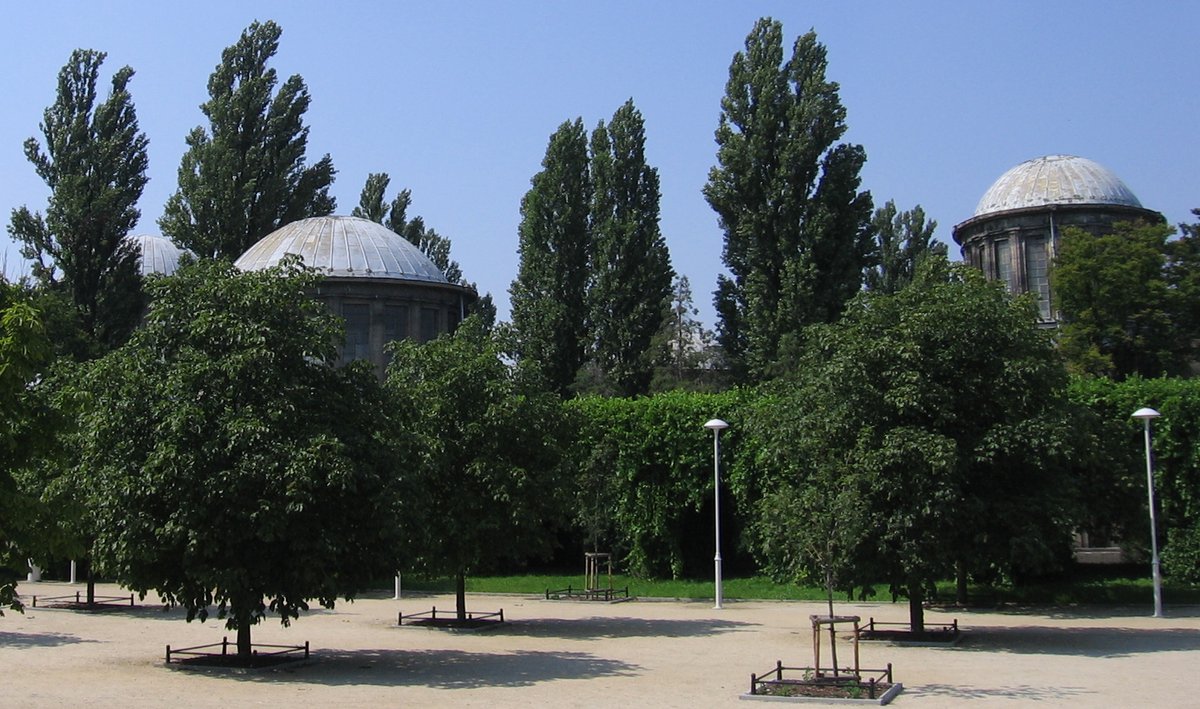
The Mathematical Tower, built in the mid-18th century, originally served as an astronomical observatory. Visitors climb a winding staircase past exhibits on the university’s scientific achievements to reach an open-air terrace with panoramic views of the Old Town, Oder River, and cityscape (nomads-travel-guide.com).
The tower is adorned with allegorical statues representing mathematics, astronomy, theology, and philosophy, symbolizing the pursuit of knowledge. Its blend of art and science reflects Enlightenment ideals.
Visitor Tip: The climb is steep; wear comfortable shoes. Visit on clear days for the best vistas.
Entrance Highlights
Outside, visitors are greeted by the Krasnal Professor—a bronze dwarf statue symbolizing academic spirit—and the Wrocław Meridian Line, commemorating the city’s astronomical research (Third Eye Traveller).
University Museum Exhibitions
The University Museum, located within the Collegium Maximum, features permanent and temporary exhibitions on the university’s history, Nobel laureates, academic regalia, scientific instruments, and more (The Crazy Tourist). Multimedia presentations and guided tours provide deeper insights into the institution’s impact on science and culture.
Visitor Tip: Allow at least an hour for a thorough visit. Tours are offered in multiple languages.
Visiting Hours, Tickets & Accessibility
- Opening Hours: Most key interiors are open Tuesday to Sunday, 10:00 AM–5:00 PM (Mathematical Tower until 6:00 PM), closed on Mondays and public holidays. Always confirm on the official University Museum website.
- Tickets: Admission for standard exhibitions ranges from 15–25 PLN, with discounts for students, seniors, and families. Combined tickets grant access to the Aula Leopoldina, Oratorium Marianum, Mathematical Tower, and exhibitions. Purchase tickets online or at the entrance.
- Accessibility: The Aula Leopoldina, Oratorium Marianum, and museum exhibitions are wheelchair accessible. The Mathematical Tower terrace is accessible only by stairs. Assistance is available—contact staff for details.
Travel Tips & Getting There
- Location: Plac Uniwersytecki 1, in Wrocław’s Old Town, along the Oder River.
- Public Transport: Trams 6, 7, 15, and 23 (stop: "Uniwersytet" or "Plac Uniwersytecki"); trams 4, 10, and 20 for the Mathematical Tower.
- By Car: Limited parking nearby; public transport or walking is recommended due to city center restrictions.
- Best Times to Visit: Early mornings, late afternoons, and during spring or early autumn for fewer crowds and pleasant weather.

Events, Tours & Photography
- Guided Tours: Offered regularly in Polish, English, and German; advance booking recommended for groups.
- Events: The Aula Leopoldina and Oratorium Marianum host concerts, academic ceremonies, and art exhibitions, particularly during cultural festivals.
- Photography: Permitted in most areas without flash or tripods. Always check signage or ask staff, especially during events.
Nearby Attractions
- Church of the Holy Name of Jesus: Baroque church adjacent to the university complex.
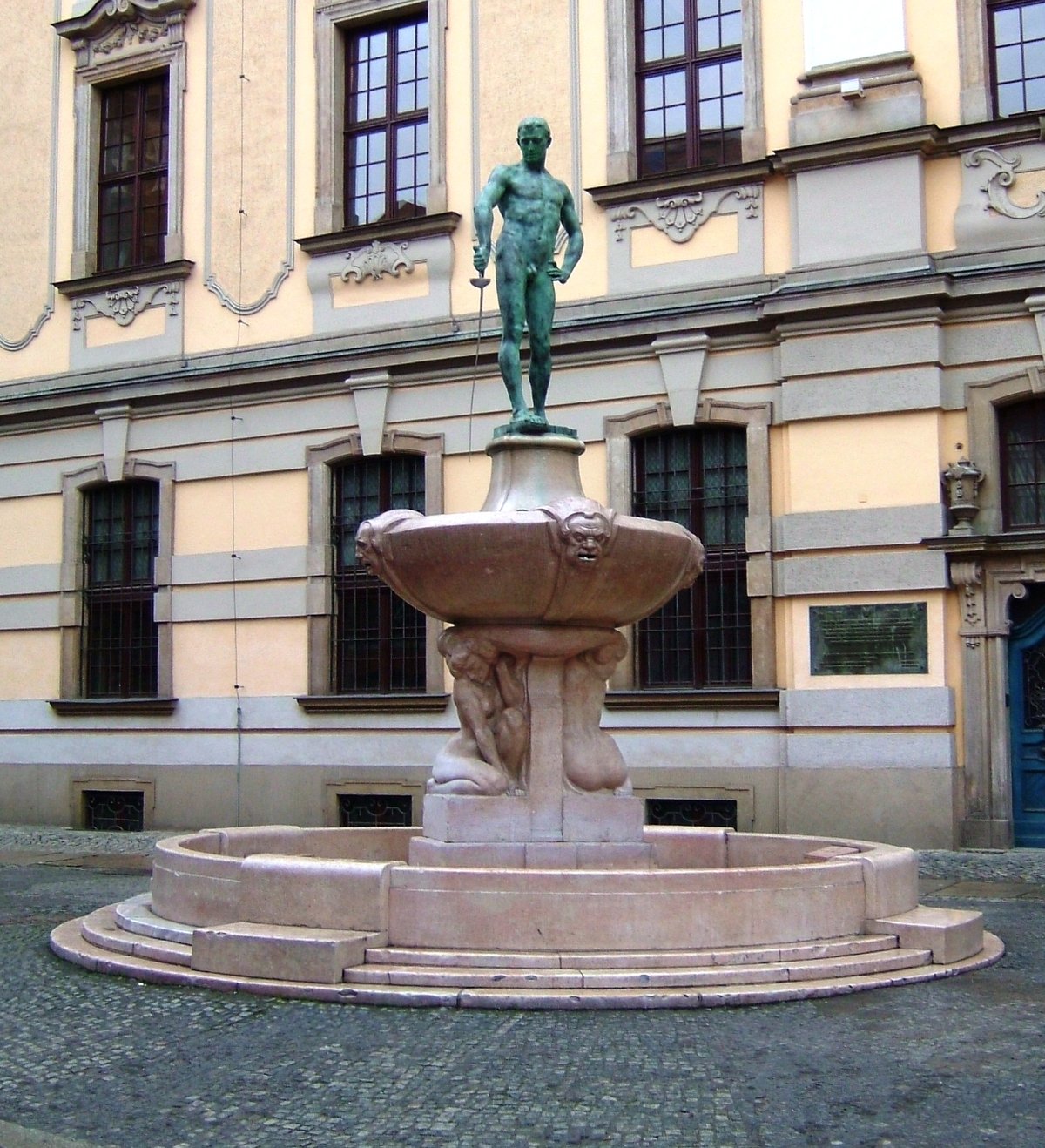
- University Square: Features the Swordsman Fountain and vibrant student life.
- Wrocław Old Town: Explore Market Square, Town Hall, Ostrów Tumski, and the city’s famous dwarf statues.
- Centennial Hall: A UNESCO World Heritage Site, easily reached by tram (touristplaces.guide).
Wartime Damage and Restoration
The Collegium Maximum sustained damage during World War II, but its most significant interiors survived. Extensive restoration has ensured the preservation of its Baroque features, frescoes, and sculptures, maintaining its role as a living center of academia and culture (uwr.edu.pl).
Academic and Cultural Role Today
Today, the Collegium Maximum is the administrative core of the University of Wrocław and a major cultural venue. It welcomes over 120,000 visitors annually and serves as a hub for academic ceremonies, concerts, exhibitions, and public events (makromol.uwr.edu.pl). Its position within the university’s historic corridor fosters a vibrant exchange between students, scholars, and tourists alike (destinationabroad.co.uk).
Practical Information
- Facilities: Restrooms, gift shop (souvenirs, books, postcards), and a staff fluent in multiple languages.
- Cafés/Dining: Numerous options nearby, from traditional Polish milk bars to modern restaurants.
- Luggage Storage: Available at the Tourist Information Center.
- Wi-Fi: Free in university buildings and many local cafés.
- Safety: Wrocław is generally safe for tourists; always mind personal belongings.
Frequently Asked Questions (FAQ)
Q: What are the visiting hours for Collegium Maximum and its attractions?
A: Most key sites are open Tuesday–Sunday, 10:00 AM–5:00 or 6:00 PM. Confirm on the official museum website before your visit.
Q: How do I buy tickets?
A: Tickets are available online via the University Museum website or at the entrance.
Q: Are guided tours available?
A: Yes, in Polish, English, and German. Book in advance for group tours.
Q: Is the building accessible for those with mobility challenges?
A: Most interiors are accessible; the Mathematical Tower’s terrace is not. Contact staff for specific assistance.
Q: Is photography allowed?
A: Yes, in most areas, but avoid flash and tripods. Always check with staff.
Listen to the full story in the app
Your Personal Curator, in Your Pocket.
Audio guides for 1,100+ cities across 96 countries. History, stories, and local insight — offline ready.
Audiala App
Available on iOS & Android
Join 50k+ Curators
Sources
- verified
- verified
- verified
- verified
- verified
Last reviewed: