Plan and listen to Tyszkiewicz Palace with Audiala.
Audio guide in your pocket, itinerary in your browser. Built for the way you actually visit.
Introduction
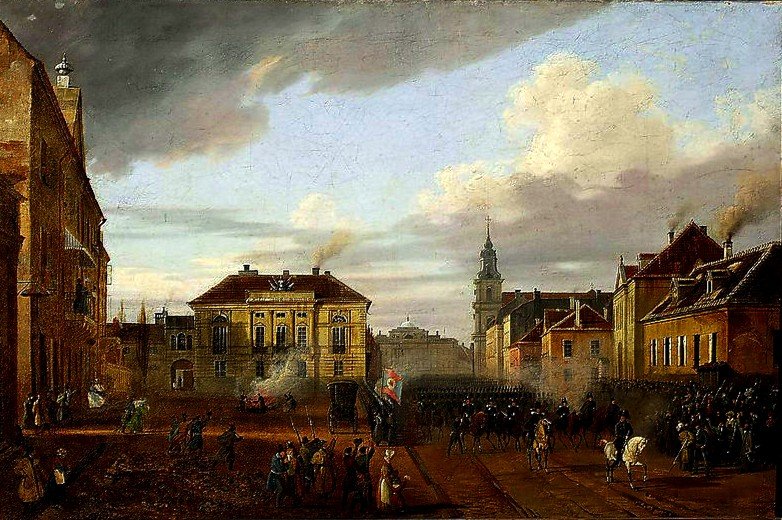
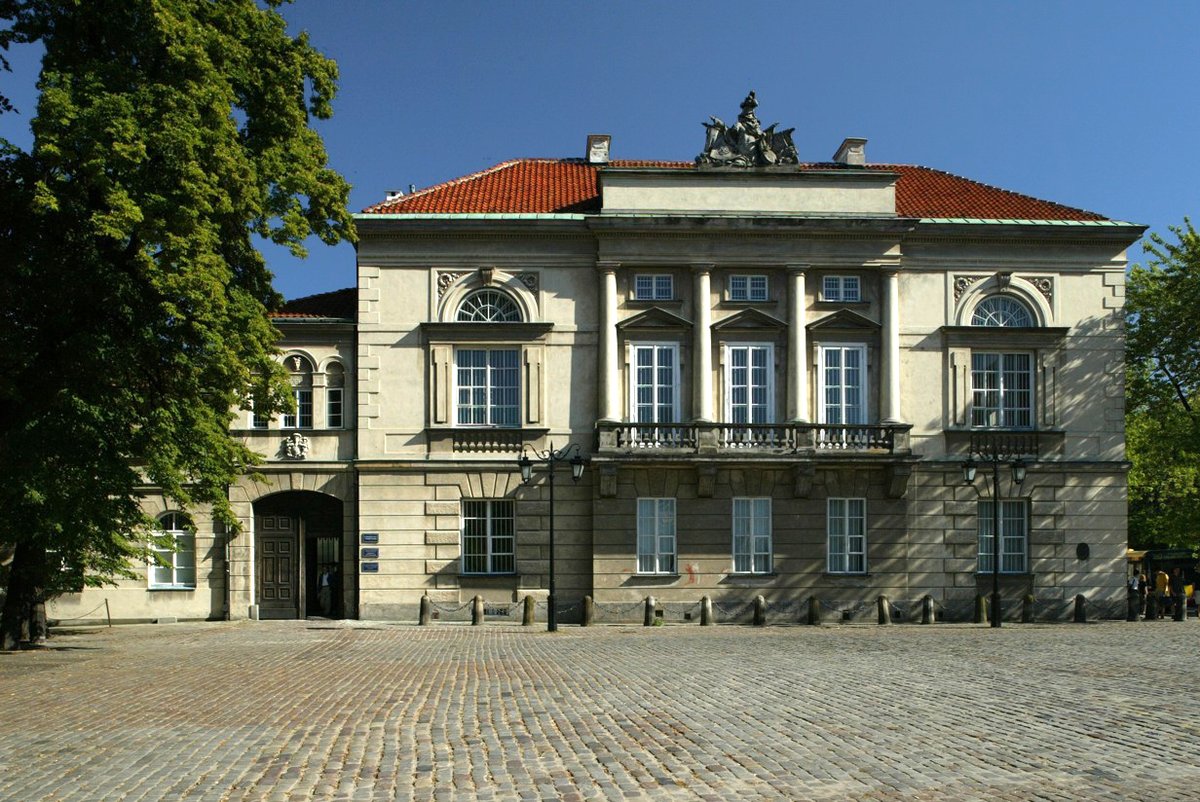
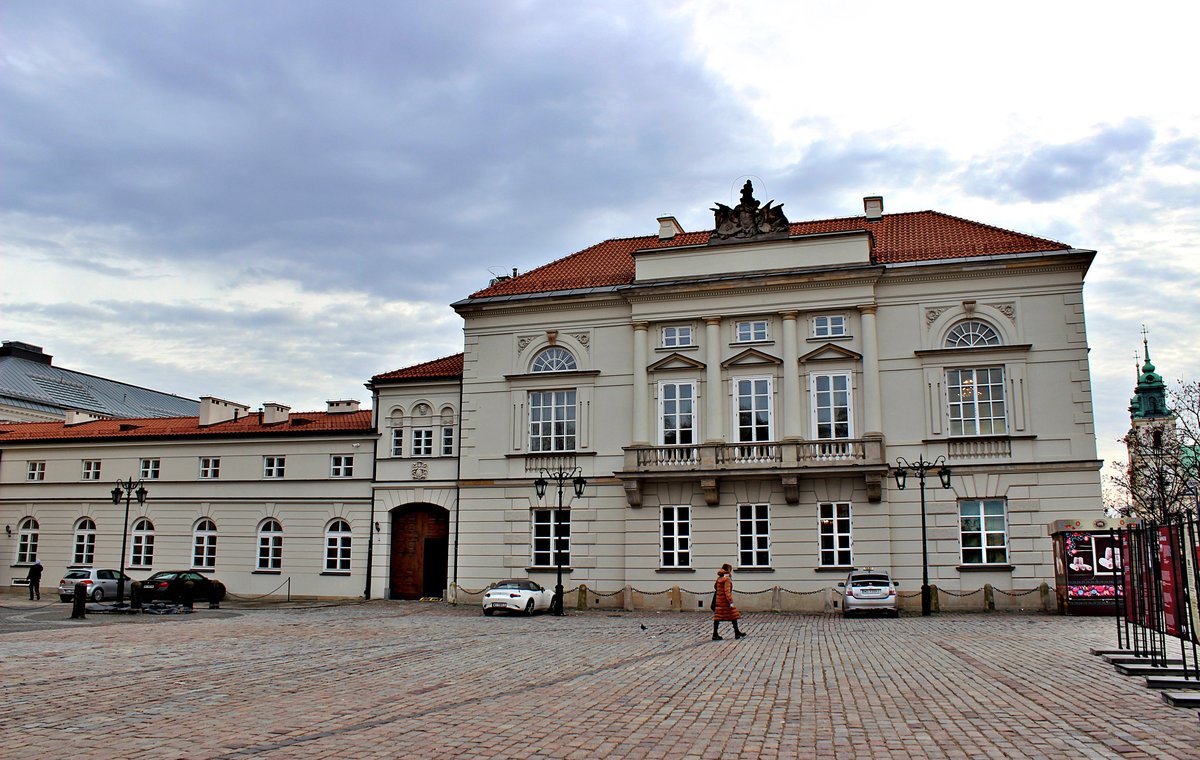
Tyszkiewicz Palace, also known as the Tyszkiewicz-Potocki Palace, stands as a magnificent testament to Poland’s neoclassical architectural heritage and the enduring legacy of Warsaw’s aristocracy. Situated on Krakowskie Przedmieście, one of Warsaw’s most prestigious streets, the palace has witnessed pivotal moments in Polish history and now serves as a cultural and academic center under the University of Warsaw. This guide provides a detailed overview of the palace’s history, architectural features, visiting information, and tips for exploring surrounding historical sites. For the latest updates, always consult the University of Warsaw Museum official website and Culture.pl’s feature on Warsaw palaces.
Origins and Construction:
Commissioned in 1785 by Ludwik Tyszkiewicz, a Grand Hetman of Lithuania, the palace embodies the Enlightenment ideals of symmetry and classical beauty. The original design by Stanisław Zawadzki was later refined by Jan Chrystian Kamsetzer. Construction finished in 1792, as the Polish-Lithuanian Commonwealth faced political upheaval (University of Warsaw Museum).
19th Century Transformations:
After Poland’s partitions, the Potocki family acquired the palace in 1840, initiating renovations that preserved its neoclassical façade while updating interiors for contemporary tastes. The palace became a hub for Warsaw’s social and intellectual elite, hosting concerts, salons, and political meetings.
War and Reconstruction:
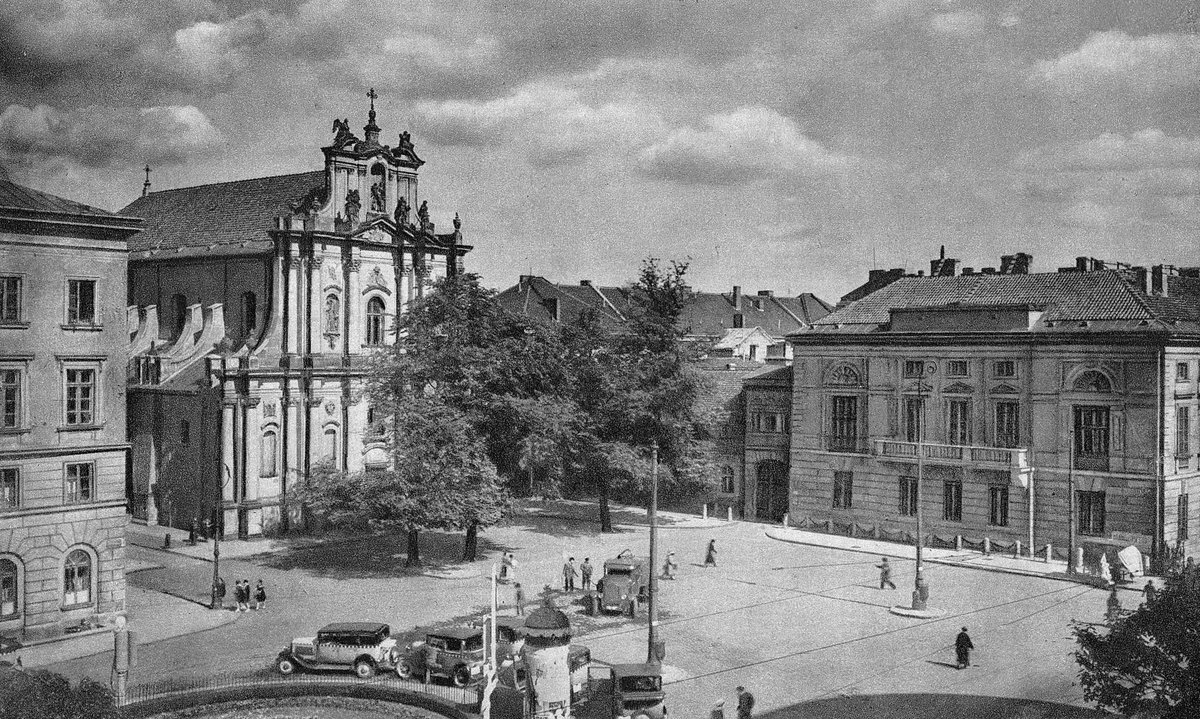
The palace suffered significant damage during the 1944 Warsaw Uprising, losing much of its original woodwork and interior decoration. Postwar restoration led by architect Jan Dąbrowski aimed for faithful exterior reconstruction and partial interior revival. Since 1951, the University of Warsaw has overseen the palace, using it for museum exhibitions and academic activities (University of Warsaw Museum, What About Poland?).

Architectural Highlights
Façades and Ornamentation:
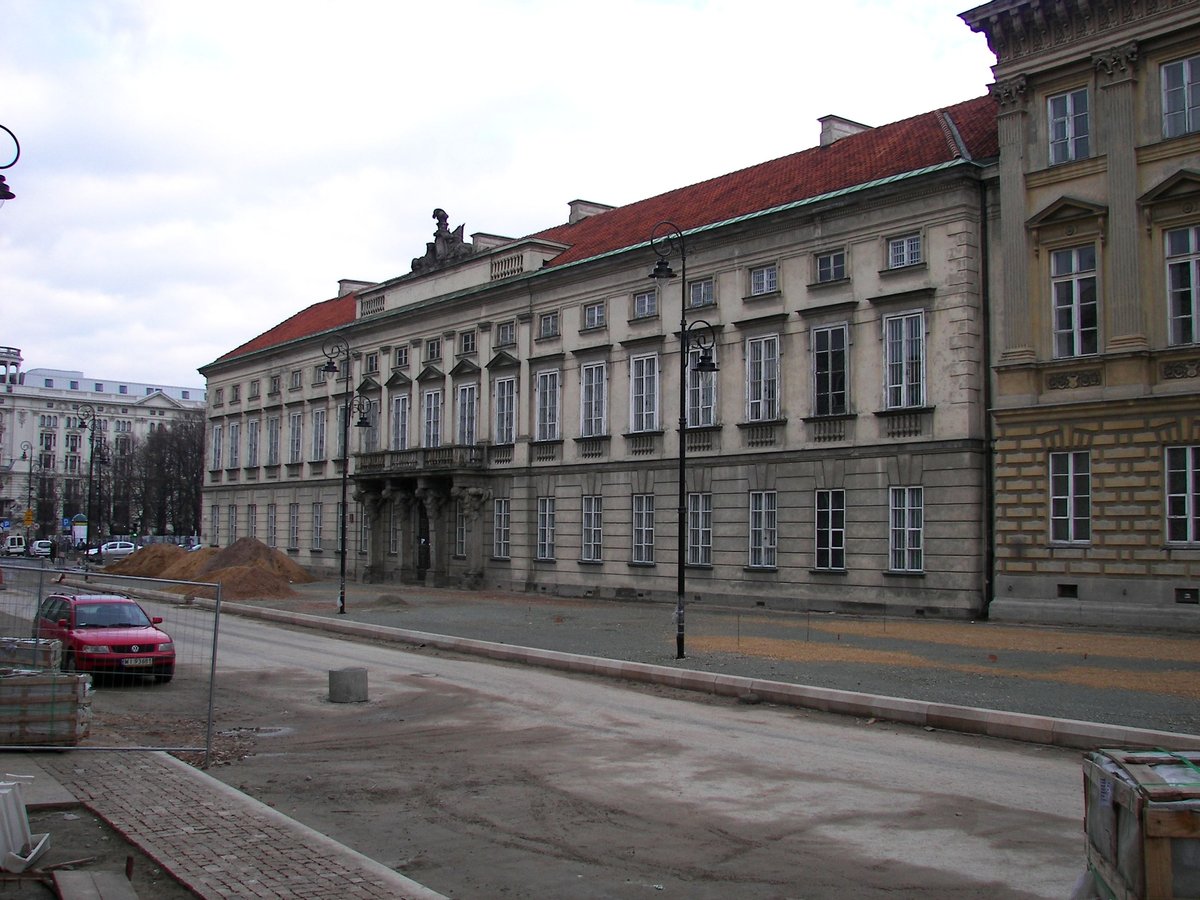
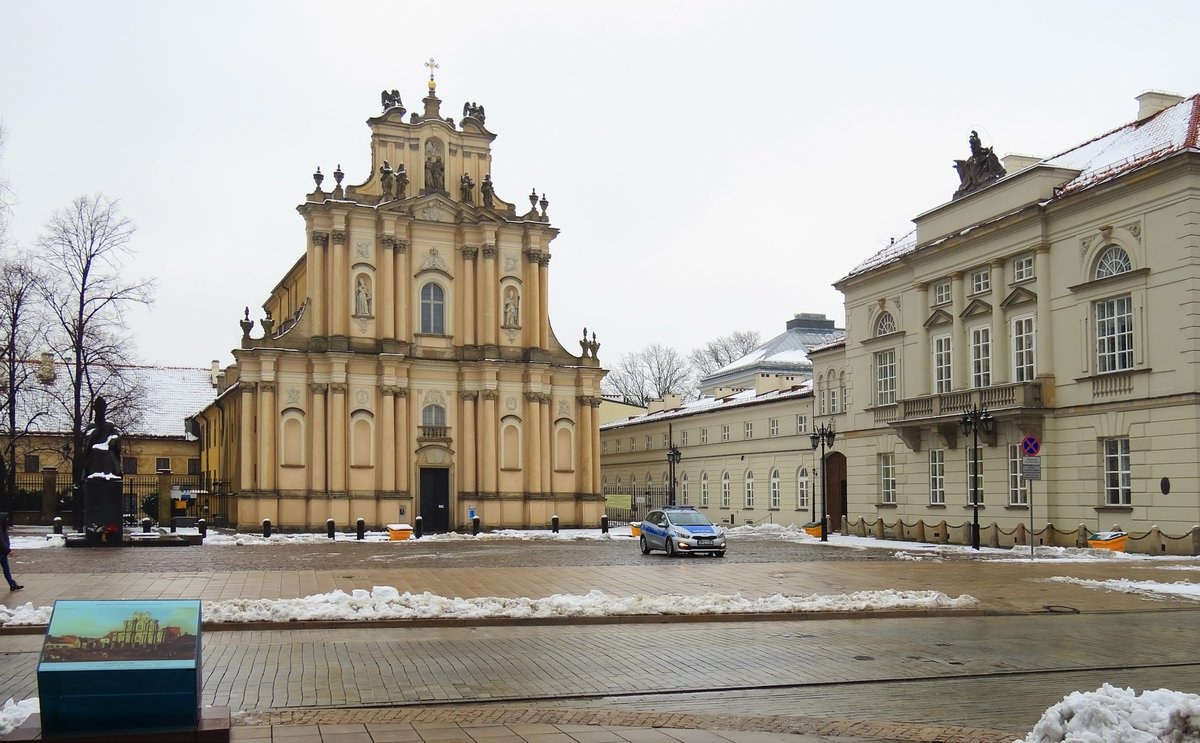
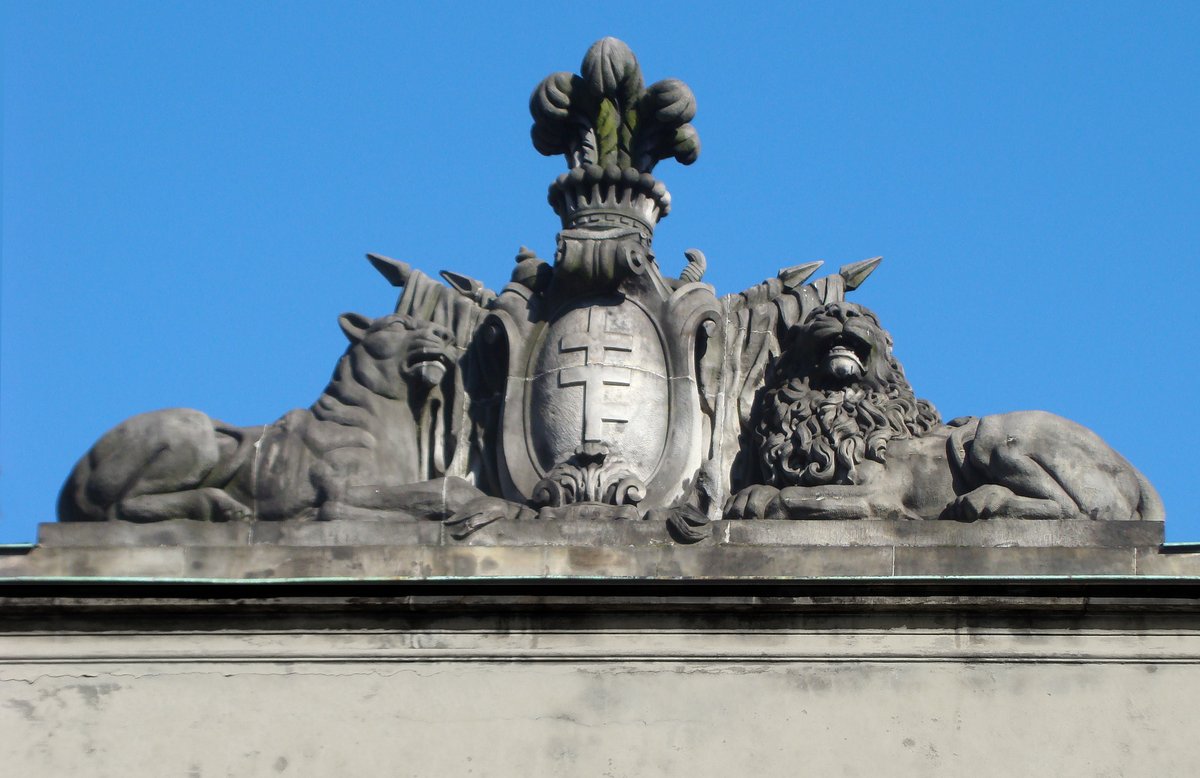
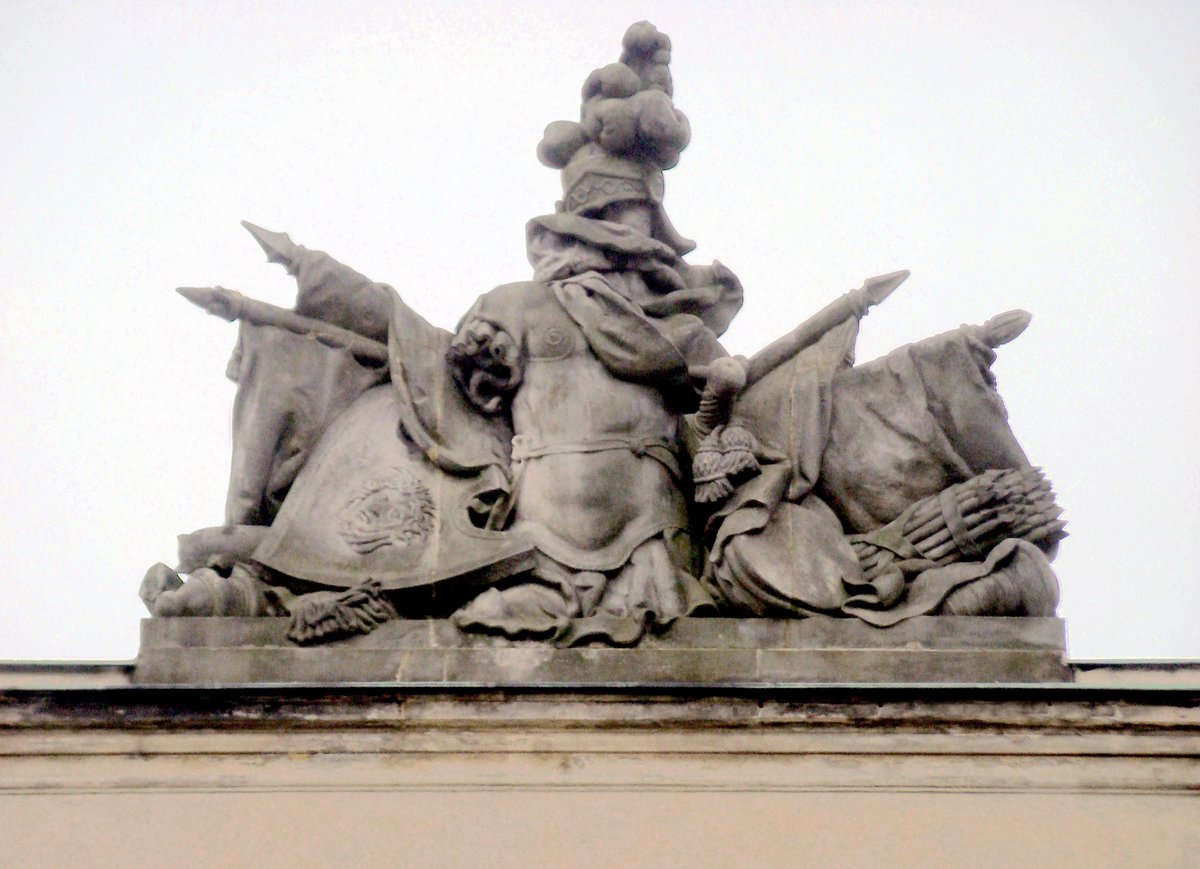
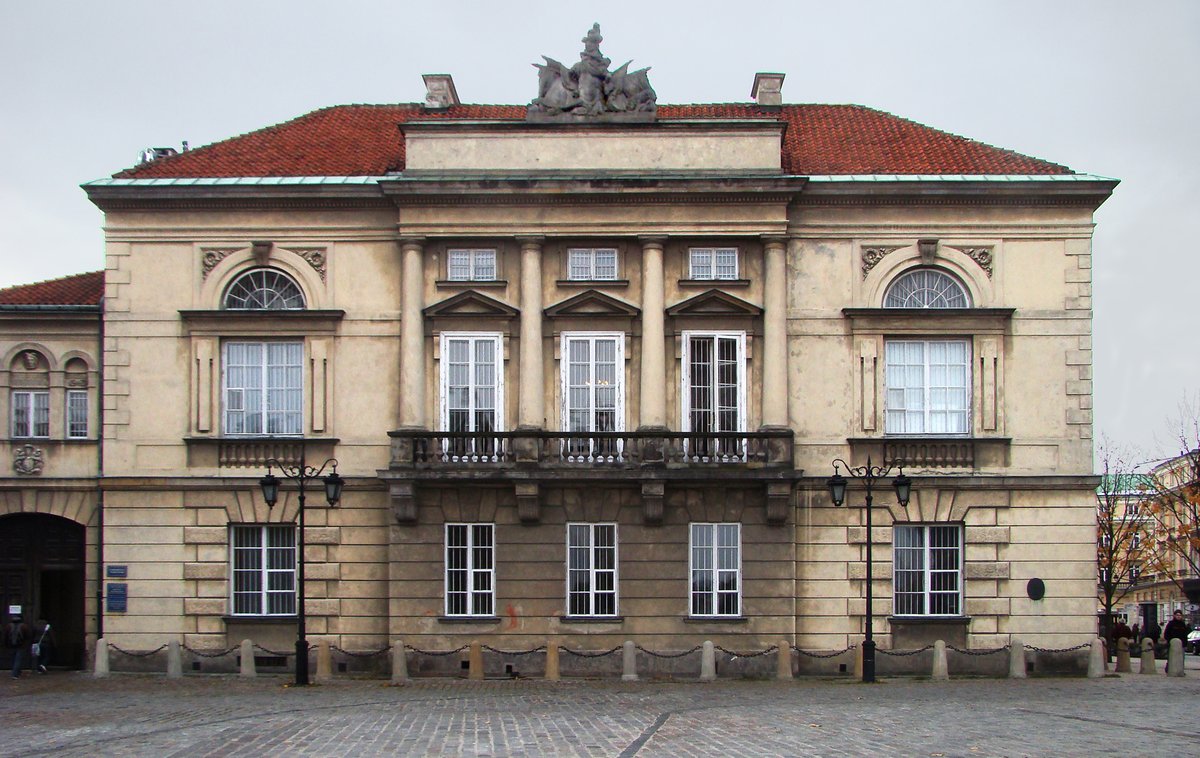
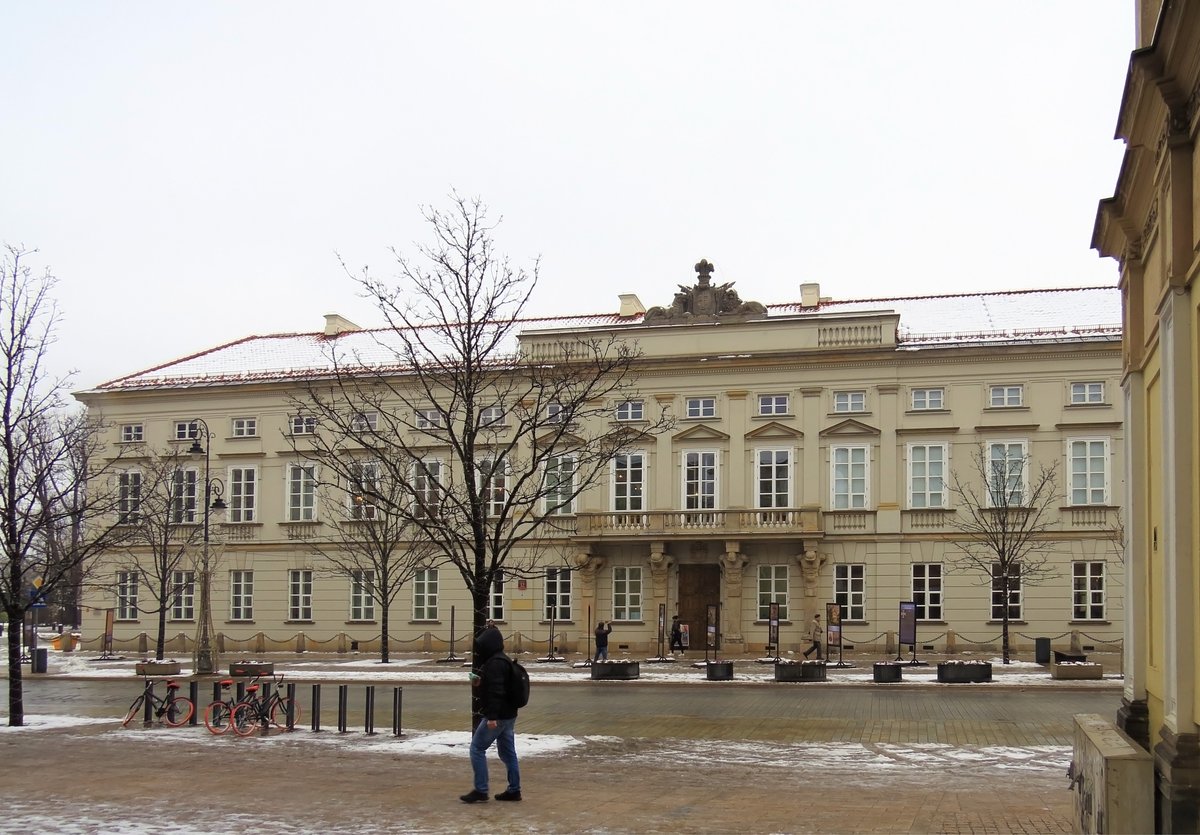
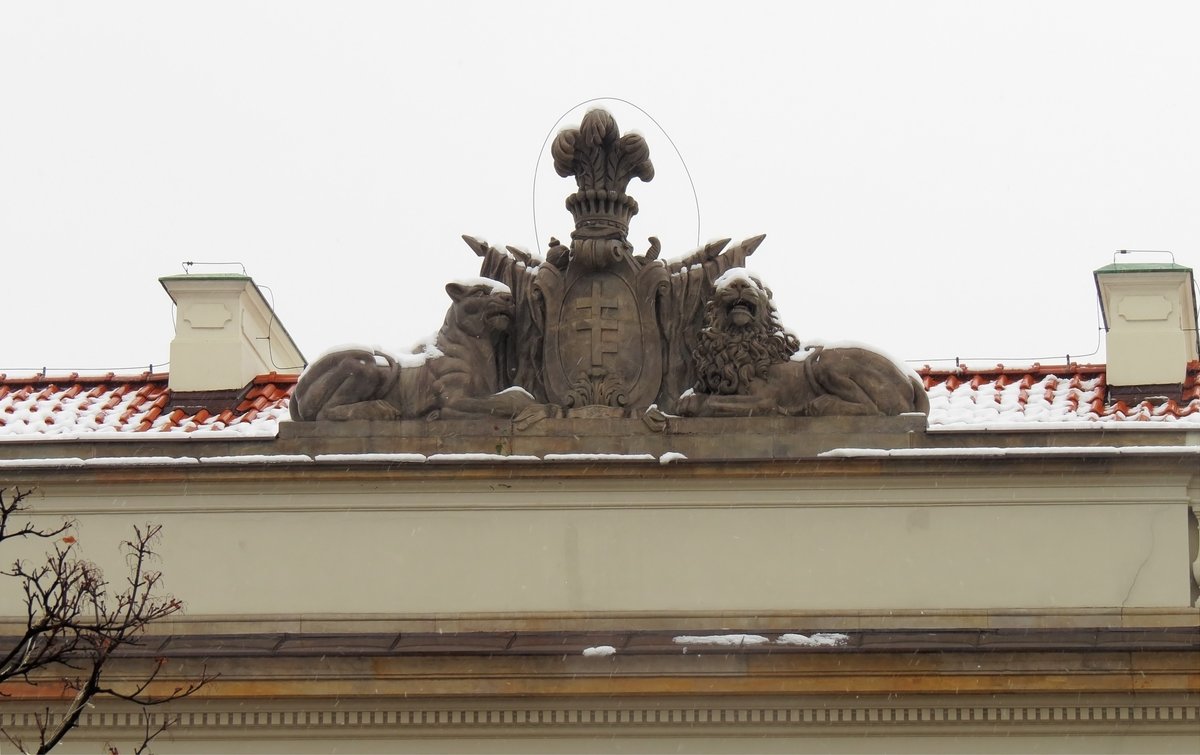
The palace’s primary façade on Krakowskie Przedmieście features a central balcony supported by four monumental Atlantes—sculpted by André Le Brun in 1787. The sandstone cartouche displays the Potocki family coat of arms, a relic from 19th-century ownership. Symmetrical pilasters and window arrangements embody neoclassical ideals (Culture.pl).
Layout:
The building forms a U-shaped enclosure around an intimate internal courtyard. Originally, the palace complex included stables and an orangery, lost during WWII.
Palace Interiors and Restoration
Entrance Hall and Main Staircase:
A classicist entrance hall with sandstone details leads to a reconstructed staircase, welcoming visitors into the building.
Notable Rooms:
- Pompeian-Style Decorations: The Billiard Room, Dining Room, and Guest Room showcase stucco work inspired by archaeological discoveries in Pompeii, crafted by Paolo Casasopra and Giuseppe Amadio.
- Oval (Column) Room: This octagonal ground-floor room in the north wing features bas-reliefs of Polish poets and a rare red marble Rococo fireplace.
- Drawing Room: Designed for intimate gatherings rather than grand balls, highlighting the understated elegance of the palace.
Restoration:
While WWII obliterated much original interior decoration, careful postwar restoration preserved surviving stuccoes and architectural details, especially in the entrance hall and north wing (University of Warsaw Museum).
Visiting Information: Hours, Tickets, Accessibility
Museum Opening Hours (June 2025):
- Exhibition Spaces: Monday to Friday, 10:00 AM – 4:00 PM (last admission 30 minutes before closing)
- Museum Office: Monday to Friday, 9:00 AM – 5:00 PM
- Closed: Weekends and public holidays
(Always check the official website for current schedules.)
Admission and Ticketing:
- General admission is free or low-cost; special exhibitions may have separate fees.
- Tickets are available on-site or online.
- Guided tours and group visits require advance booking (official information).
Accessibility:
- The main entrance and exhibition areas are wheelchair accessible. Some historic rooms may have limited access; contact the museum in advance for assistance.
Guided Tours and Special Events
- Guided Tours: Available in Polish and English upon prior request. Tours emphasize architectural details, art collections, and the palace’s historical significance.
- Special Events: The palace hosts academic conferences, exhibitions, and cultural initiatives, including family-friendly educational programs like “In the Land of Archeology at the University of Warsaw.”
- Virtual Tours: Check the museum website for multimedia and virtual tour offerings.
Travel Tips and Nearby Attractions
- Location: Krakowskie Przedmieście 32/34, 00-927 Warsaw, Poland
- Public Transport: Multiple bus and tram lines stop nearby; Metro Line M1’s Centrum station is within walking distance.
- Parking: Limited—public transport is recommended.
Nearby Historical Sites:
- Presidential Palace
- St. Anne’s Church
- Royal Castle
- University of Warsaw Main Campus
Frequently Asked Questions (FAQ)
Q: What are the Tyszkiewicz Palace visiting hours?
A: Museum exhibitions are open Monday to Friday, 10:00 AM – 4:00 PM. Last admission is 30 minutes before closing.
Q: How much do tickets cost?
A: Most entries are free or low-cost; special exhibitions may have separate fees. Check the museum website for details.
Q: Can I book guided tours in English?
A: Yes, guided tours in English are available; advance booking is recommended.
Q: Is the palace wheelchair accessible?
A: Exhibition areas are accessible, but some historic rooms have limited access. Contact the museum for assistance.
Q: Is photography permitted?
A: Photography is generally allowed in public areas, but restrictions apply in some rooms. No flash or tripods.
Q: What nearby attractions can I visit?
A: The palace is near the Presidential Palace, St. Anne’s Church, Royal Castle, and the University of Warsaw campus.
Summary Timeline
| Year(s) | Event/Development |
|---|---|
| 1785–1792 | Construction for Ludwik Tyszkiewicz |
| 1840 | Purchased and renovated by Potocki family |
| 1944 | Damaged during Warsaw Uprising |
| 1951 | Became property of University of Warsaw |
| 1951–Present | Museum and cultural venue |
Listen to the full story in the app
The whole Tyszkiewicz Palace,
told well.
Audio guides for 1,100+ cities across 96 countries. History, stories, and local insight — offline ready.
Verified, and shown.
Researched and written by the Audiala editorial team from historical records, architectural archives, and local expertise.
Researched from Wikidata, Wikipedia & official sources · fact-checked · How we make our guides →