Plan and listen to Tęcza with Audiala.
Audio guide in your pocket, itinerary in your browser. Built for the way you actually visit.
Introduction: Tęcza—A Symbol of Hope and Diversity in Warsaw
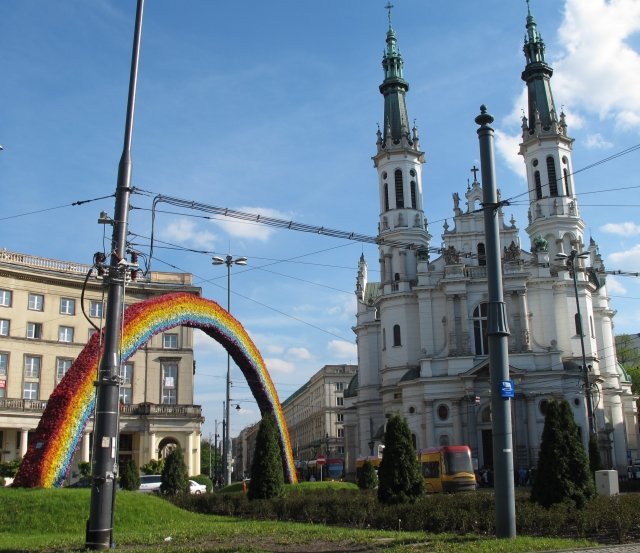
Tęcza, which translates to “Rainbow” in Polish, is one of Warsaw’s most resonant public art installations. Conceived by artist Julita Wójcik, this arch of vibrant artificial flowers was first displayed in Brussels (2011) before finding its iconic home in Plac Zbawiciela (Savior Square) in 2012. Meant to embody universal themes of hope, renewal, and peace, Tęcza soon became an evolving emblem of diversity and inclusion—particularly for the LGBTQ+ community—catalyzing cultural dialogue and civic engagement in Poland.
Although the original installation was dismantled in 2015, Tęcza’s legacy endures through temporary recreations, ongoing debates, and proposals for a new, permanent monument. This comprehensive guide covers Tęcza’s artistic journey, symbolism, controversies, visitor information, and practical tips for experiencing this important chapter in Warsaw’s cultural landscape.
For more on Tęcza’s story and related projects, refer to the Adam Mickiewicz Institute, the Nowa Tęcza Project, and the Centre for Contemporary Art Ujazdowski Castle.

History and Development of Tęcza
Tęcza began as a temporary public artwork, first displayed in front of the European Parliament in Brussels in 2011 as part of Poland’s EU presidency celebrations. Its second and most impactful version was erected on June 8, 2012, at Plac Zbawiciela, a bustling roundabout in the heart of Warsaw. The installation, commissioned by the Adam Mickiewicz Institute, featured a steel frame covered with thousands of artificial flowers, quickly becoming a much-photographed landmark and a touchstone of city life.
Artistic Vision and Symbolism
Artist Julita Wójcik envisioned Tęcza as an apolitical, universal symbol of optimism, hope, and renewal. The rainbow, a motif rich in global mythology, was chosen to convey inclusivity and positive change. Its form complemented the surrounding curves of Plac Zbawiciela, making the square more welcoming and visually distinctive. Over time, Tęcza’s rainbow became closely associated with the LGBTQ+ community, giving it additional social resonance.
Controversy and Social Impact
Despite its intended neutrality, Tęcza’s six-color design and prominent location in front of the Church of the Holiest Saviour sparked public debate. Conservative groups, especially from the Law and Justice party, viewed it as provocative due to its perceived alignment with the LGBT pride flag. The installation ignited national conversations about tolerance, faith, and the meaning of public space in contemporary Poland.
Vandalism and Community Response
From 2012 to 2015, Tęcza suffered repeated vandalism, including at least seven arson attacks—the most infamous during Poland’s Independence Day in 2013. However, each act of destruction was met with public solidarity. Volunteers, residents, and city officials rallied to restore the rainbow, turning it into a symbol of resilience and the ongoing pursuit of inclusivity in Polish society.
Removal and Future Plans
On August 27, 2015, the original Tęcza was dismantled following the end of the Adam Mickiewicz Institute’s agreement with the city. The structure was transferred to the Centre for Contemporary Art Ujazdowski Castle for renovation and potential future use. Since then, Tęcza has inspired temporary installations, including a holographic version using light and water vapor. In 2025, a proposal for a permanent, indestructible rainbow monument by architect Marcin Osiecki was submitted to Warsaw’s participatory budget, signifying renewed commitment to the site’s message of openness.
Visiting Tęcza’s Site Today
Although the original installation is gone, Plac Zbawiciela remains a vibrant gathering spot, offering visitors a chance to connect with the spirit of Tęcza and explore Warsaw’s dynamic city life.
Getting There
- Public Transport: Plac Zbawiciela is easily accessed by tram and bus, with Politechnika metro station about a 10-minute walk away.
- By Car: Limited parking is available, so public transport is recommended.
- On Foot: The square is within walking distance of key Warsaw attractions, but take care crossing the busy roundabout.
Nearby Attractions
- Church of the Holiest Saviour: Historic neo-baroque church adjacent to the square.
- Nowy Świat Street: Bustling thoroughfare full of shops, restaurants, and nightlife.
- Warsaw University of Technology: Recognized for its grand architecture.
Accessibility
While the square itself is open to all, the central island (where Tęcza stood) is surrounded by traffic, which may pose challenges for visitors with limited mobility. Sidewalks and nearby businesses are wheelchair accessible.
Events and Related Exhibitions
Cultural events inspired by Tęcza, including art installations and participatory happenings, are occasionally held in Warsaw—especially during the annual Parada Równości (Equality Parade). For current information, check the Centre for Contemporary Art Ujazdowski Castle and Nowa Tęcza Project.
Frequently Asked Questions (FAQ)
Q: Is Tęcza still on display?
A: No, the original was dismantled in 2015, but the site is open, and new projects may restore a rainbow monument.
Q: What are the visiting hours for Plac Zbawiciela?
A: Plac Zbawiciela is a public space open 24/7.
Q: Are tickets or guided tours required?
A: No tickets are needed. Some city tours include the site; check with local operators.
Q: Is the square wheelchair accessible?
A: Surrounding areas are accessible, but crossing to the center requires care due to traffic.
Q: When is the best time to visit?
A: Daytime for sightseeing, evenings during special events for the best atmosphere.
Discover More
Tęcza’s story is a testament to Warsaw’s evolving identity—a blend of artistic innovation, social resilience, and civic dialogue. While the rainbow arch no longer stands, its symbolism endures, inspiring new projects and energizing debates on diversity and public space. Plac Zbawiciela remains a lively crossroads of history and culture, well worth including in your Warsaw itinerary.
Ready to discover more?
- Download the Audiala app for curated walking tours and up-to-date event listings.
- Follow #VisitWarsaw and #TęczaRainbow on social media.
- Explore more about Warsaw’s heritage in our Warsaw City Guide and contemporary art insights in Poland’s Contemporary Art Scene.
Key Facts at a Glance
- Artist: Julita Wójcik
- Warsaw Installation: June 8, 2012 – August 27, 2015
- Location: Plac Zbawiciela, Warsaw
- Materials: Steel frame, artificial flowers
- Number of Arson Attacks: At least 7
- Original Ownership: Adam Mickiewicz Institute; now Centre for Contemporary Art Ujazdowski Castle
- Future Plans: Proposal for a new permanent rainbow in 2026 (Nowa Tęcza Project)
Listen to the full story in the app
The whole Tęcza,
told well.
Audio guides for 1,100+ cities across 96 countries. History, stories, and local insight — offline ready.
Verified, and shown.
Researched and written by the Audiala editorial team from historical records, architectural archives, and local expertise.
Researched from Wikidata, Wikipedia & official sources · fact-checked · How we make our guides →