Introduction
Seven committees tried over two centuries to give Tadeusz Kościuszko a monument in the city he nearly died defending. All seven failed. The bronze that finally stands at Plac Żelaznej Bramy in Warsaw, Poland, went up in 2010 — making this tribute to an eighteenth-century revolutionary younger than the iPhone.
The monument sits in front of the Lubomirski Palace on Warsaw's Saxon Axis, the ceremonial east-west spine of the capital. A bronze equestrian figure, it replicates the Kościuszko statue that has stood in Washington, D.C. since 1910. The American original went up a full century before Warsaw managed its own. Let that sink in.
What you're looking at is not just a statue of a Polish-American revolutionary hero. The spot beneath Kościuszko's horse held a communist-era monument until 1991, then sat empty for nearly two decades — a void in the middle of one of Warsaw's most formal boulevards.
Come for the story more than the bronze. The monument is open-air and free, accessible day and night at Iron Gate Square. Bus lines 116, 175, and 190 stop at Królewska, a four-minute walk south. The nearest metro, Ratusz Arsenał on the M1 line, is about ten minutes on foot.
What to See
The Bronze Replica of the Washington Original
Warsaw waited 200 years for this statue. Seven committees tried and failed between 1817 and 2003, blocked by partition-era censors, world wars, and empty coffers. The monument that finally rose in 2010 is a faithful copy of Antoni Popiel's 1910 equestrian bronze in Washington, D.C. — cast at the Gliwickie Zakłady Urządzeń Technicznych foundry in Upper Silesia, funded by a million-złoty cheque from Citibank Handlowy. Kościuszko sits astride his horse in full military dress, sword drawn, facing east toward the city he defended during the 1794 uprising. The pedestal carries his name and nothing more. No dates, no titles, no explanatory plaque — as if Warsaw assumes you already know who he is. And in Poland, that assumption is safe.
Look closely at the base and you'll spot the Citibank logo, a condition of the sponsorship. Corporate branding on a national hero's monument raised eyebrows, but after two centuries of failed attempts, pragmatism won. The bronze catches morning light well; late afternoon pushes the figure into silhouette against the Lubomirski Palace behind it.
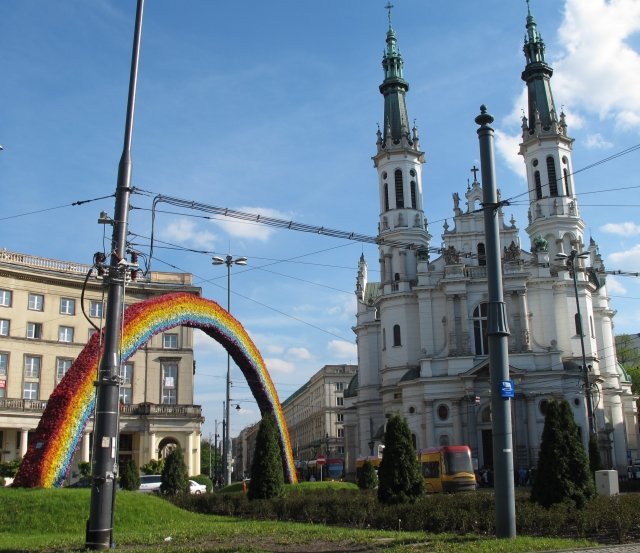
Plac Żelaznej Bramy and the Lubomirski Palace
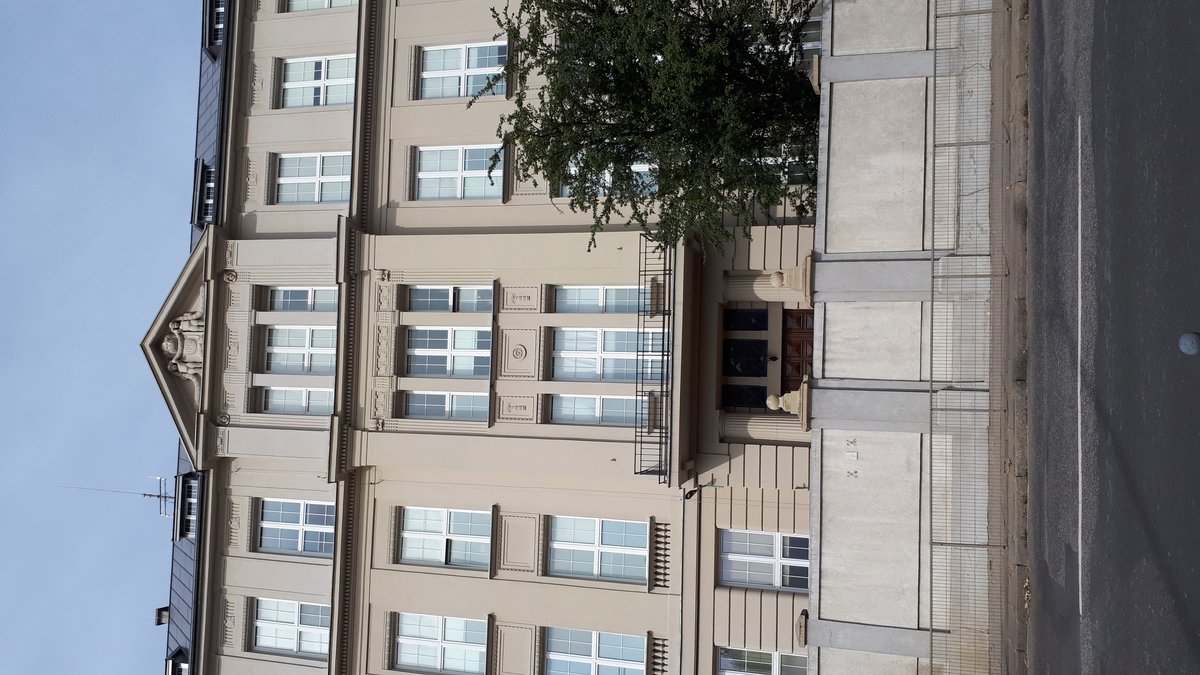
The square's name — Iron Gate — remembers a gate that hasn't existed since the 18th century, when it marked the western boundary of Warsaw's old town fortifications. What stands here now is layered history compressed into a single city block. Behind the monument, the Lubomirski Palace anchors the view with its neoclassical facade, one of the few buildings on Warsaw's Saxon Axis that survived the war with original walls intact. The square itself sat empty for nearly two decades after the 1991 demolition of a communist-era obelisk honoring those who died "in the service and defense of the Polish People's Republic" — a monument nobody much missed.
The open space around the Kościuszko statue gives it room to breathe, which is unusual for central Warsaw. On weekday mornings the square belongs to commuters cutting through on foot. Saturdays bring a different crowd: the nearby Hala Mirowska market, a 120-year-old ironwork market hall two blocks north, pulls in shoppers hunting for produce and flowers. The contrast is pure Warsaw — a national hero in bronze, a bank logo at his feet, and someone hauling cabbages past him.
A Walk Along the Saxon Axis
The Kościuszko Monument sits on Warsaw's main ceremonial east–west line, the Saxon Axis, which runs from the Saxon Garden through Piłsudski Square to the Royal Route. Start at the statue, then walk east for ten minutes to reach Piłsudski Square and the Tomb of the Unknown Soldier — the three surviving arcades of the Saxon Palace, destroyed by German troops in December 1944. From there, the Saxon Garden opens behind the colonnade: Warsaw's oldest public park, laid out in 1727, where gravel paths crunch underfoot and elderly men play chess on stone benches regardless of season. The full walk from Iron Gate Square to the garden's eastern exit covers about 1.2 kilometres — shorter than a lap around a standard running track doubled — and connects three centuries of Polish history without crossing a single major road. Do it in the morning, when the garden's lime trees throw long shadows and the tour groups haven't arrived.
Photo Gallery
Explore Tadeusz Kościuszko Monument in Pictures

The historic Tadeusz Kościuszko Monument stands prominently in a landscaped park in Warsaw, Poland, under a clear blue sky.
DavidConFran · cc by-sa 3.0
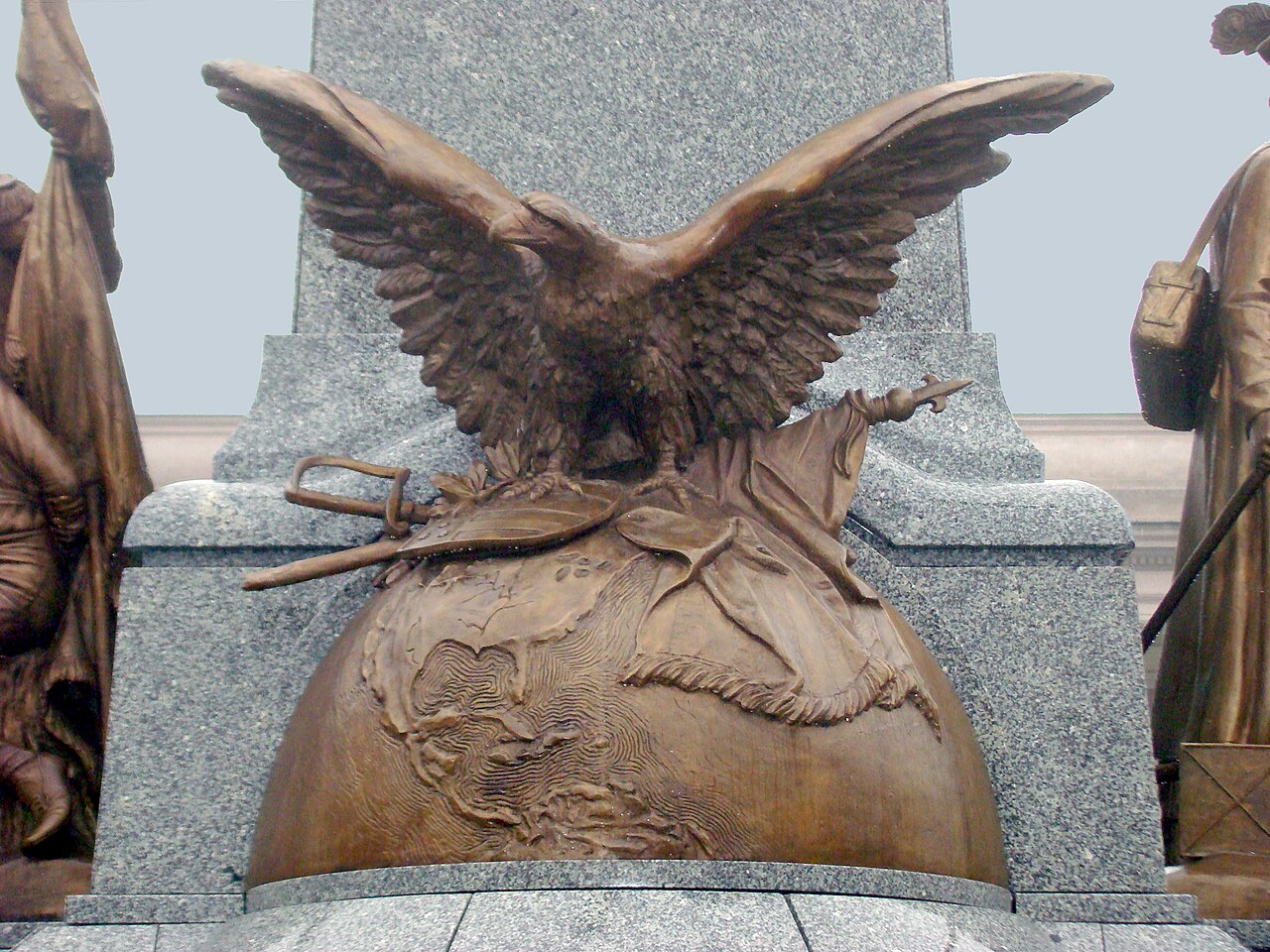
A detailed view of the bronze eagle sculpture atop the Tadeusz Kościuszko Monument, located in Warsaw, Poland.
Szczebrzeszynski · public domain

The bronze Tadeusz Kościuszko Monument stands prominently in Warsaw, Poland, adorned with commemorative floral wreaths.
Szczebrzeszynski · public domain

A bronze statue of Tadeusz Kościuszko stands prominently on a granite pedestal in Warsaw, Poland, commemorating the national hero.
Szczebrzeszynski · public domain

The bronze Tadeusz Kościuszko Monument stands prominently in Warsaw, Poland, decorated with numerous floral wreaths at its base.
Szczebrzeszynski · public domain

A detailed view of the bronze Tadeusz Kościuszko Monument in Warsaw, Poland, depicting a dramatic scene of a fallen soldier.
Szczebrzeszynski · public domain

The Tadeusz Kościuszko Monument stands prominently in front of the neoclassical palace in Warsaw, Poland, adorned with commemorative floral wreaths.
Szczebrzeszynski · public domain

A detailed view of the bronze statue of Tadeusz Kościuszko, a national hero of Poland, standing proudly on its stone pedestal in Warsaw.
Szczebrzeszynski · public domain

The historic Tadeusz Kościuszko Monument stands prominently in front of a grand neoclassical building in Warsaw, Poland.
Z thomas · cc by-sa 4.0

A detailed view of the bronze eagle and snake sculpture atop the Tadeusz Kościuszko Monument in Warsaw, Poland.
Szczebrzeszynski · public domain

The bronze Tadeusz Kościuszko Monument sits prominently in a Warsaw square, framed by a grand neoclassical building under an overcast sky.
Raf24 · cc by-sa 3.0

A detailed bronze sculpture depicting a soldier assisting a wounded comrade, part of the historic Tadeusz Kościuszko Monument in Warsaw, Poland.
Szczebrzeszynski · public domain
Look closely at the monument's base for the Citibank Handlowy logo — a condition of the PLN 1,000,000 sponsorship that made the monument possible after two centuries of failed fundraising. It's a quietly controversial detail most visitors walk past without noticing.
Visitor Logistics
Getting There
The monument stands on Plac Żelaznej Bramy (Iron Gate Square) in central Warsaw. Bus stop Królewska (lines 116, 175, 190, 503, 518) is a four-minute walk away; tram stop Hala Mirowska (lines 4, 15, 17) about seven minutes on foot. Metro stations Ratusz Arsenał (M1) and Świętokrzyska (M1/M2) are each roughly a ten-to-twelve-minute walk — not the closest metro ride, but an easy stroll through Śródmieście.
Opening Hours
As of 2026, the monument is an open-air sculpture on a public square — accessible 24 hours a day, 365 days a year, with no entry fee. No closures, no seasonal restrictions. The square is lit after dark, so evening visits work fine.
Time Needed
Five to ten minutes if you're stopping to read the inscriptions and circle the plinth. Fifteen to twenty if you want to photograph it from multiple angles and sit on one of the nearby benches to absorb the square's atmosphere. The monument itself is a single bronze equestrian statue — this is a pause on a walk, not a destination that fills an hour.
Accessibility
The monument sits on flat, paved ground at street level with no steps or barriers. Wheelchair users can approach from any direction across the square. The surrounding pavement is smooth enough for mobility aids, though watch for uneven cobblestones on the square's outer edges.
Tips for Visitors
Best Photo Angle
Shoot from the southeast in the morning, when the sun hits the bronze at a low angle and the Lubomirski Palace forms a clean backdrop. The statue faces outward along Warsaw's Saxon Axis, so positioning yourself along that sightline gives the most dramatic perspective.
Combine Your Walk
Iron Gate Square sits between Hala Mirowska (Warsaw's surviving 19th-century market hall — worth ducking into for cheap lunch) and the Saxon Garden, Poland's oldest public park. String all three together for a satisfying ninety-minute loop through the city center.
Eat Nearby
Hala Mirowska and the adjacent Hala Gwardii food hall, a two-minute walk north, serve everything from budget Polish pierogi to mid-range craft burgers. For something more deliberate, Elixir by Dom Wódki on nearby Wierzbowa serves upscale Polish cuisine — expect to spend around 80–120 PLN per person.
Read the Plaque
The monument's inscription won't tell you this: Warsaw waited 200 years to build it. Seven committees tried and failed between 1817 and 2003, blocked by occupying powers and empty coffers. Citibank Handlowy finally footed a million złoty in 2009. The irony — that the city Kościuszko defended in 1794 was the last major Polish city to honor him — makes the statue land differently.
Best Time to Visit
Late afternoon on a weekday, when office workers thin out and the western light warms the bronze. Avoid November 11 (Polish Independence Day) unless you want crowds — the square draws patriotic gatherings in the days around it.
Historical Context
Two Centuries of Empty Pedestals
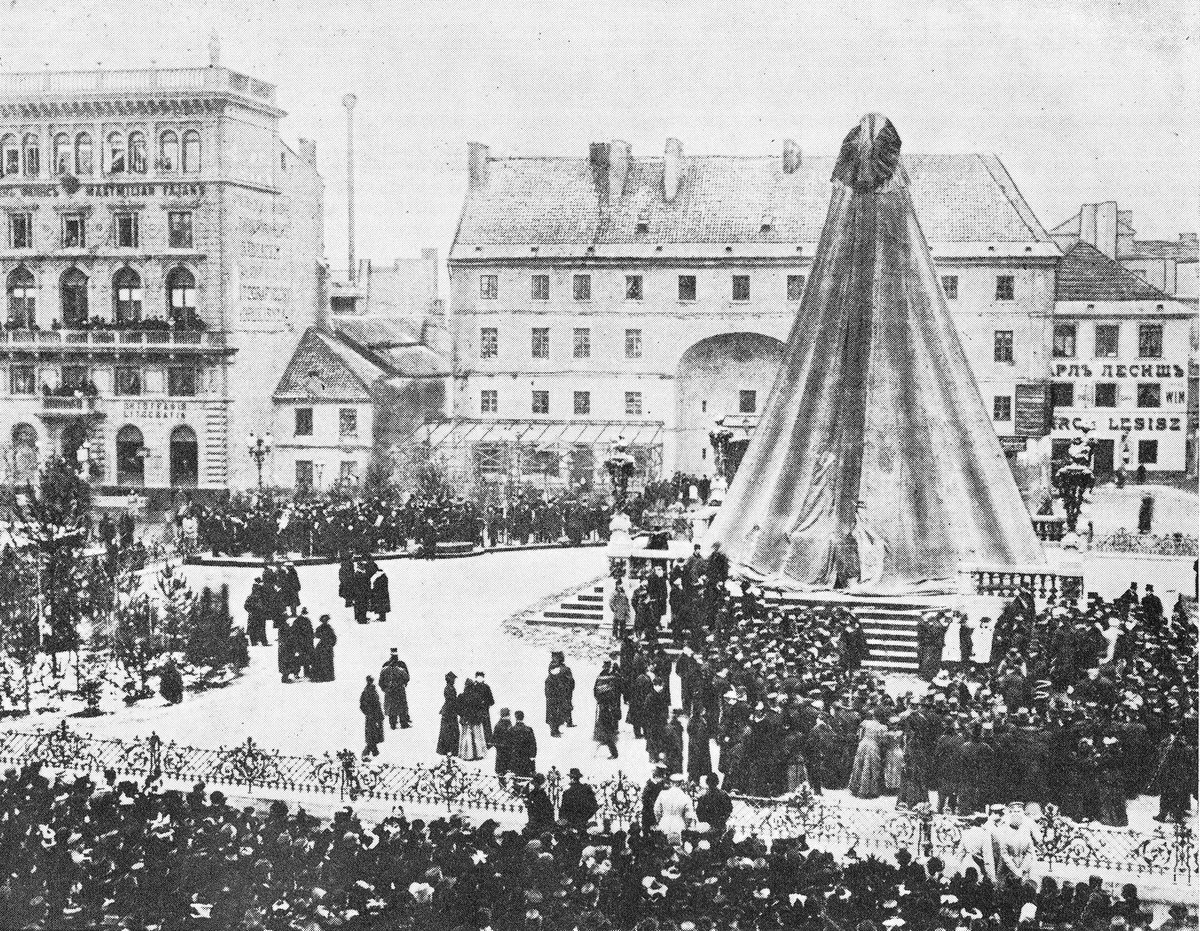
The first proposal for a Kościuszko monument in Warsaw appeared in 1817, the year after the general's death. Warsaw was then under Russian partition, and the occupying authorities had no appetite for celebrating a man who had led an armed insurrection against them thirteen years earlier. That refusal set a pattern that would repeat for the next 193 years.
Every generation tried. According to historical accounts, seven successive committees formed, raised funds, commissioned designs, and collapsed — blocked by partition-era censorship, wartime destruction, or communist indifference. The city that Kościuszko defended with barricades and blood in 1794 became the last major European capital to raise a monument in his name.
Kościuszko's Last Stand and Warsaw's Long Silence
On April 4, 1794, Tadeusz Kościuszko — a military engineer who had designed fortifications for George Washington at West Point — launched an insurrection against Russian control of Poland. He had everything at stake: his reputation, his freedom, his life. For five months he held together a ragged coalition of regular troops and peasant volunteers armed with war scythes, winning an improbable victory at Racławice before turning his attention to Warsaw.
Warsaw rose in his name. On April 17, the city's citizens stormed the Russian garrison in street fighting that killed over 2,000 Russian soldiers. Kościuszko didn't lead that battle personally, but Warsaw fought under his banner and for his cause. The insurrection held through the summer. Then on October 10, Russian forces crushed his army at Maciejowice. Russian soldiers captured Kościuszko on the battlefield, wounded, and imprisoned him for two years. Poland vanished from the map entirely the following year.
Here is the bitter punch line: Washington, D.C. erected a monument to Kościuszko in 1910. Kraków had one since 1900. Even Solothurn, the tiny Swiss town where he died, keeps a memorial plaque. Warsaw — the city that bled for him — waited until November 16, 2010, when workers unveiled the current bronze replica at Plac Żelaznej Bramy. The 200-year gap between proposal and pedestal is not a bureaucratic footnote. It is the history of Poland compressed into a single empty square.
The Ghost on Iron Gate Square
Before Kościuszko's horse claimed this patch of ground, a very different monument stood here. During the 1980s, the communist government erected a memorial to those who died "in the service and defense of the Polish People's Republic." Workers tore it down in 1991, two years after the fall of communism. For the next nineteen years the plinth sat bare — a gap in the city's official memory that mirrored the longer, two-century failure to honor Kościuszko. Warsaw knows how to wait.
A Statue Paid for by a Bank
The breakthrough came not from the state but from a corporation. In 2009, Citibank Handlowy — Citigroup's Polish subsidiary — put up PLN 1,000,000 (roughly €250,000) to finance the monument, on two conditions: the statue had to be an exact replica of the 1910 Washington, D.C. original, and the bank's logo had to appear on it. The Warsaw City Council added PLN 936,042. Foundry workers at Gliwickie Zakłady Urządzeń Technicznych in Gliwice — a factory better known for industrial equipment than public art — cast the bronze. Corporate sponsorship gave Warsaw what two centuries of civic committees could not.
Listen to the full story in the app
Your Personal Curator, in Your Pocket.
Audio guides for 1,100+ cities across 96 countries. History, stories, and local insight — offline ready.
Audiala App
Available on iOS & Android
Join 50k+ Curators
Frequently Asked
Is the Tadeusz Kościuszko Monument in Warsaw worth visiting? add
Yes, but more for the story than the statue itself. Warsaw waited 200 years to build this — seven committees tried and failed between 1817 and 2003, blocked by occupying powers and empty coffers. The monument is a replica of the one in Washington, D.C., which makes it a strange and telling artifact: Poland's capital had to copy an American statue of its own national hero.
Can you visit the Kościuszko Monument in Warsaw for free? add
Completely free, 24 hours a day. The monument stands in the open at Plac Żelaznej Bramy, with no fences or tickets. It's the kind of stop you fold into a walk rather than plan a trip around.
How do I get to the Kościuszko Monument from Warsaw city centre? add
Take bus 116, 175, or 503 to the Królewska stop — it's a four-minute walk from there. Tram lines 4, 15, and 17 stop at Hala Mirowska, about seven minutes on foot. Metro stations Ratusz Arsenał (M1) and Świętokrzyska (M1/M2) are both within a 10- to 12-minute walk.
How long do you need at the Kościuszko Monument in Warsaw? add
Ten to fifteen minutes is plenty. The bronze is handsome but not complex — read the inscriptions, take in the setting on the Saxon Axis, and move on. Pair it with the nearby Lubomirski Palace facade for context.
What is the history of the Kościuszko Monument in Warsaw? add
The idea was first floated in 1817, the year after Kościuszko's death, and it took until November 16, 2010 for a monument to actually stand in Warsaw. Every attempt over those two centuries collapsed under occupation politics or lack of funds. The breakthrough came when Citibank Handlowy put up PLN 1,000,000 on one condition: it had to be an exact replica of the 1910 statue in Washington, D.C., and the bank's logo had to appear on it.
What was at the Kościuszko Monument site before? add
A communist-era monument to those who died defending the Polish People's Republic stood here through the 1980s. Workers demolished it in 1991 after the regime fell, and the spot sat empty for nearly two decades before the Kościuszko bronze took its place in 2010.
Why is the Warsaw Kościuszko Monument a replica of the Washington one? add
Money talks. Citibank Handlowy agreed to finance the monument only if it replicated the 1910 Washington, D.C. original by Antoni Popiel and Kazimierz Chodziński. The bronze elements were cast at Gliwickie Zakłady Urządzeń Technicznych in Gliwice, Upper Silesia. The result is an oddity — a Polish hero, on Polish soil, in a pose designed for Lafayette Park.
What should I not miss at the Kościuszko Monument in Warsaw? add
Look for the Citibank logo — it's the most honest thing about the monument, a corporate stamp on 200 years of national longing. Stand back and notice the alignment along Warsaw's Saxon Axis, the old ceremonial route. The Lubomirski Palace behind the statue gives the scene its architectural weight.
Sources
-
verified
Wikipedia (English) — Tadeusz Kościuszko Monument, Warsaw
Basic facts, unveiling date, foundry details, history of the communist-era predecessor monument
-
verified
Wikipedia (Polish) — Pomnik Tadeusza Kościuszki w Warszawie
Detailed Polish-language article covering financing by Citibank Handlowy, city council contribution, cornerstone date, and casting location
-
verified
Dzieje.pl
Historical context on the 200-year effort to build a Kościuszko monument in Warsaw, including the seven successive committees and the 2003 association
-
verified
Portal Samorządowy
Reporting on funding difficulties faced by the monument association and the Citibank Handlowy sponsorship deal
Last reviewed: