Plan and listen to Saxon Palace with Audiala.
Audio guide in your pocket, itinerary in your browser. Built for the way you actually visit.
Introduction: Saxon Palace—History and Cultural Significance
The Saxon Palace (Pałac Saski) is one of Warsaw’s most emblematic landmarks, woven deeply into the fabric of Polish history. Originating in the late 17th century as the Morsztyn Palace, it was transformed by Augustus II the Strong into a grand Baroque royal residence and later evolved into a neoclassical masterpiece. The palace has served as a royal home, educational institution, and military headquarters, witnessing centuries of cultural and political developments. Its iconic colonnade shelters the Tomb of the Unknown Soldier, a national monument dedicated to those who gave their lives for Poland’s freedom (Disappointed Tourist, Poland at War Tours).
The palace was deliberately destroyed by German forces in 1944, leaving only a portion of the colonnade and the Tomb of the Unknown Soldier. This destruction became a symbol of the broader devastation Warsaw suffered during World War II and sparked decades of debate about the palace’s possible reconstruction (Springer).
Today, while the palace itself is closed for an ambitious reconstruction project (slated for completion by 2030), visitors can explore the adjacent Saxon Garden and the Tomb of the Unknown Soldier year-round. The restoration, led by WXCA and supported by the Polish government, aims to faithfully restore the palace’s grandeur while integrating modern accessibility and cultural functions (WXCA, PalacSaski.pl). Understanding the Saxon Palace’s history enhances any visit to Warsaw and offers insight into the resilience and evolving identity of Poland.




Early Origins and Royal Patronage
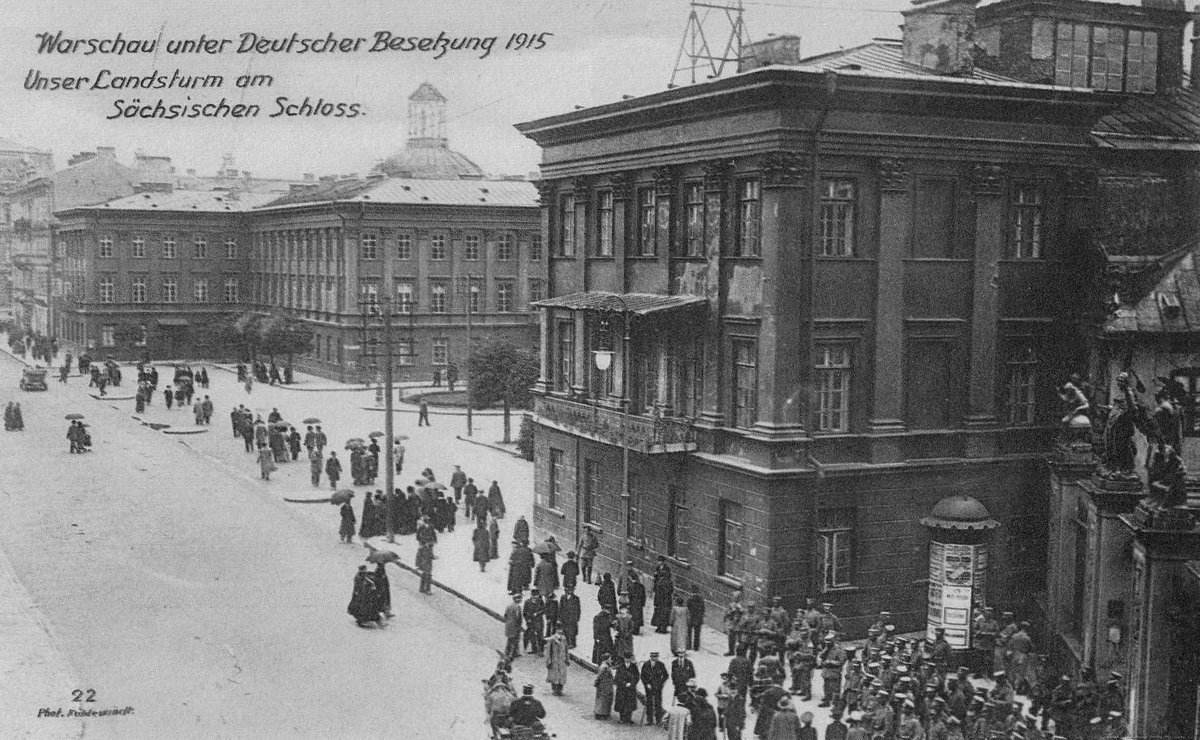
Constructed as the Morsztyn Palace in the late 17th century, the property was purchased by Augustus II the Strong in 1714 and transformed into a magnificent Baroque residence. Subsequent expansions under Augustus III further elevated the palace’s status as a symbol of royal authority and cosmopolitan culture. The adjacent Saxon Garden, one of Europe’s oldest public parks, featured ornate Baroque statues and fountains, becoming a center for social and political life (Where in the World is Tosh).
19th Century: Educational and Military Functions
After Poland’s partitions, the palace assumed new roles. It housed the Warsaw Lyceum, where Nicolas Chopin taught, and later became the seat of the Polish General Staff following independence in 1918. Its architecture evolved with neoclassical influences, reflecting Enlightenment ideals (Disappointed Tourist).
Interwar Period and the Tomb of the Unknown Soldier
In 1925, the Tomb of the Unknown Soldier was established within the palace’s colonnade, honoring those who sacrificed their lives for Poland’s freedom. This addition made the site a central landmark for national memory and ceremonies (Poland at War Tours).
World War II: Destruction and Loss
The palace was seized by German forces during WWII and ultimately demolished in 1944. Only the central colonnade, housing the Tomb of the Unknown Soldier, survived—a symbol of both loss and resilience (Springer).
Postwar Era: Memory and Debates
The ruins became sites of national mourning and sparked ongoing debates over reconstruction, reflecting Poland’s complex relationship with its architectural heritage (Springer).
21st Century: Reconstruction
Reconstruction efforts accelerated in the 21st century, with government initiatives and public campaigns pushing to restore the palace. Official plans now aim for completion by 2030, with designs by WXCA selected for their balance of historic accuracy and modern relevance (WXCA, PalacSaski.pl).
Architectural and Cultural Significance
Saxon Axis and Urban Context
The palace was the centerpiece of the Saxon Axis, an urban development plan that linked the palace, Saxon Gardens, and Piłsudski Square, anchoring Warsaw’s ceremonial and social life.
Architectural Evolution
The palace evolved from Baroque to neoclassical styles, characterized by symmetrical design, imposing columns, and restrained elegance. Its complex included the Brühl Palace and elegant townhouses, forming a harmonious ensemble along Piłsudski Square.
The Reconstruction Approach
The current project aims to faithfully recreate the 1939 neoclassical façade using traditional materials and techniques, while incorporating archaeological fragments and ensuring full accessibility. The restoration will feature vibrant public spaces, government offices, and cultural venues (WXCA, PalacSaski.pl).
Visiting the Saxon Palace Today
Accessibility, Visiting Hours, and Tickets
- Saxon Palace: Closed for reconstruction; not open to public tours as of 2025.
- Saxon Garden: Open daily from dawn until dusk; hours may vary seasonally.
- Tomb of the Unknown Soldier: Accessible 24/7; ceremonial changing of the guard takes place daily at noon.
- Tickets: No tickets are required to visit the Saxon Garden or Tomb of the Unknown Soldier.
Guided Tours and Virtual Experiences
While the palace itself is closed, guided walking tours of Warsaw often include the Saxon Palace site, the Tomb of the Unknown Soldier, and the Saxon Garden. Virtual tours and online exhibitions are available through official tourism websites and platforms (Lonely Planet).
Accessibility
All areas are wheelchair accessible, with paved paths and ramps. For more specific needs, consult official Warsaw tourism resources.
Travel Tips and Nearby Attractions
Getting There
Centrally located on Piłsudski Square, the site is easily accessible by tram, bus, or Metro. The “Królewska” and “Plac Piłsudskiego” stops are closest (Finding Poland).
Key Features and Memorials
- Tomb of the Unknown Soldier: Poland’s most significant military memorial, featuring a ceremonial guard and hourly changing.
- Saxon Garden: Historic park with Baroque statues, fountains, tree-lined paths, and a water tower inspired by ancient Rome.
- Historical Markers: Informational plaques detail the palace’s history, destruction, and significance, available in Polish and English.
Events and Ceremonies
The square hosts national ceremonies, especially on Independence Day (November 11) and Constitution Day (May 3). During events, some areas may be restricted for security.
The Reconstruction Project
Vision, Timeline, and Design
The restoration is part of a national initiative to revive Warsaw’s pre-war heritage. Managed by Pałac Saski Sp. z o.o. and led by WXCA, the project will recreate the neoclassical palace, integrate preserved archaeological remains, and provide new public, cultural, and governmental spaces (Orla.fm, British Poles, Whitemad).
Community Involvement
Public engagement initiatives, such as collecting family photographs and stories, contribute to the authenticity of the reconstruction (PalacSaski.pl).
Frequently Asked Questions (FAQ)
Q: What are the Saxon Palace visiting hours?
A: The palace is closed for reconstruction. The Saxon Garden is open from dawn until dusk; the Tomb of the Unknown Soldier is accessible 24/7.
Q: Are tickets required?
A: No tickets are needed for the Saxon Garden or Tomb of the Unknown Soldier.
Q: Is the site wheelchair accessible?
A: Yes, the area features flat, paved paths and ramps.
Q: Are guided tours available?
A: Yes, many Warsaw walking tours include the Saxon Palace site and adjacent memorials.
Q: When will the palace reopen?
A: The reconstruction is targeted for completion by 2030.
Discover More
The Saxon Palace remains a powerful symbol of Warsaw’s history, resilience, and cultural identity. Although its original structure is gone, the site’s enduring spirit is preserved through the Tomb of the Unknown Soldier and the Saxon Garden. The forthcoming reconstruction promises to revive the palace’s grandeur and provide vibrant spaces for public life and national remembrance.
Plan your visit to experience this living monument. Download the Audiala app for audio guides, virtual tours, and real-time updates. Explore our related posts and follow us on social media to stay informed on Warsaw’s historical sites and cultural events.
Listen to the full story in the app
The whole Saxon Palace,
told well.
Audio guides for 1,100+ cities across 96 countries. History, stories, and local insight — offline ready.

Verified, and shown.
Researched and written by the Audiala editorial team from historical records, architectural archives, and local expertise.
Researched from Wikidata, Wikipedia & official sources · fact-checked · How we make our guides →