Plan and listen to Powązki Cemetery with Audiala.
Audio guide in your pocket, itinerary in your browser. Built for the way you actually visit.
Introduction
Powązki Cemetery (Cmentarz Powązkowski), established in 1790 in Warsaw’s Wola district, is among Poland’s most significant historical and cultural landmarks. Known as "Stare Powązki" or Old Powązki, it serves not only as a vast necropolis—housing over one million burials—but also as an open-air museum, reflecting Poland’s national identity, artistic heritage, and turbulent past. Spanning approximately 43 hectares, the cemetery is home to architectural marvels such as the neoclassical Saint Charles Borromeo Church, catacombs, and numerous memorials commemorating national heroes, cultural icons, and pivotal historical events. Its grounds are deeply intertwined with the story of Polish resilience, having played roles during World War II as a clandestine arms depot and site of resistance.
Powązki Cemetery offers travelers and history enthusiasts a deeply reflective and educational experience. This guide provides detailed insights into its history, notable graves, visitor information—including free admission, year-round access from 7:00 AM to 8:00 PM—and tips for respectful visitation. Whether you wish to stroll the Avenue of the Distinguished, attend All Saints’ Day commemorations, or discover nearby sites like the Military Powązki Cemetery and Warsaw Rising Museum, this comprehensive overview will help you appreciate this iconic Warsaw landmark. For planning, official resources and maps are available on the Powązki Cemetery website, and audio tours can be accessed through apps like Audiala. (Stone and Dust; Nomadic Matt; Go2Warsaw)


Historical Development of Powązki Cemetery
Powązki Cemetery was established on November 4, 1790, on land donated by Melchior Szymanowski and consecrated in 1792 (official Powązki Cemetery website). Initially covering 2.5 hectares, it has expanded to about 43 hectares, now containing roughly 180 sections and over one million burials. Originally serving all social classes in Warsaw, Powązki evolved into the city’s principal resting place for nobility, artists, writers, and national heroes—a silent witness to Poland’s evolving national identity.
During the 19th century, when Poland was partitioned and under foreign rule, Powązki became a symbolic space for patriotic gatherings and the preservation of Polish culture. Funerals of prominent individuals often transformed into demonstrations of national unity and longing for independence (Nomadic Matt).
Architectural Landmarks and Artistic Heritage
Saint Charles Borromeo Church
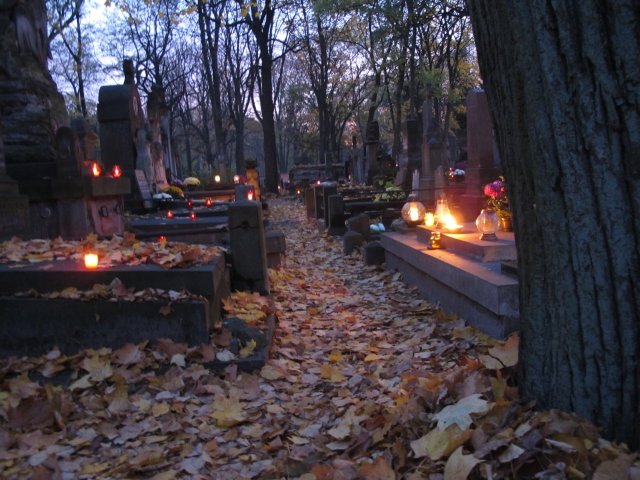
Constructed in 1792 by royal architect Dominik Merlini, the neoclassical Saint Charles Borromeo Church stands at the cemetery's northern edge. It remains a focal point for religious ceremonies, especially during All Saints’ Day and All Souls’ Day, when thousands of candles illuminate the grounds.
Catacombs and Historic Gates
The oldest sections include the catacombs—burial chambers for distinguished figures—accessible from St. Honorata’s Gate. This solemn area honors social activists and intellectuals.
Avenue of the Distinguished (Aleja Zasłużonych)
Established in 1925 to honor Nobel laureate Władysław Reymont, this avenue is dedicated to Poland’s eminent cultural figures, such as Maria Rodziewiczówna and Stanisław Moniuszko.
Funerary Art and Monumental Tombs
The cemetery is renowned for its diverse funerary art, with styles ranging from neoclassicism to modernism. Monuments such as the Ogiński family tomb and symbolic graves of figures like Antoni Malczewski highlight the site’s artistic and historical significance.
Memorials and Modern Additions
Modern memorials include the monument for the victims of the 2010 Smolensk air disaster, crafted from white granite, as well as memorials to the Katyn Massacre and the Righteous Among the Nations.
Military Cemetery and “Gloria Victis” Obelisk
Adjacent to the main cemetery, the Military Cemetery (established in 1912) honors soldiers from key conflicts. The "Gloria Victis" Obelisk is a focal point for commemorations, especially on August 1, marking the Warsaw Uprising (en.wikipedia.org).
Notable Graves and Sections
Avenue of the Distinguished
This section includes graves of:
- Władysław Reymont (Nobel Prize-winning author)
- Jan Parandowski (writer and essayist)
- Leopold Staff (poet)
- Czesław Niemen (singer and composer)
- Jan Kiepura (tenor and actor)
Prominent Individuals
Other notable graves include:
- Parents of Fryderyk Chopin (Justyna and Mikołaj Chopin)
- Zbigniew Herbert (poet)
- Witold Lutosławski (composer)
- Krzysztof Kieślowski (film director)
- Jan Nowak-Jeziorański (WWII courier)
- Irena Sendler (rescuer of Jewish children during the Holocaust)
- Marie Skłodowska-Curie’s relatives (inyourpocket.com)
Artistic and Historic Tombs
- The Catacombs: Late 18th-century burial chambers for prominent residents.
- Family Mausoleums: Skłodowska and Szymanowski family tombs.
WWII and Political History
- Graves of Warsaw Uprising fighters
- Mass graves of civilian victims
- Sections for political prisoners executed during the Stalinist era
Practical Visitor Information
Location and Access
- Address: Powązkowska 14, 01-797 Warsaw
- Public Transport: Bus 180 stops at the main entrance; multiple tram lines serve nearby Okopowa Street (Stone and Dust; Go2Warsaw)
- Parking: Limited street parking available; public transportation is recommended, especially on holidays.
Visiting Hours
- April–September: 7:00–20:00
- October–March: 7:00–18:00
- All Saints’ Day and major holidays: Extended hours (Stone and Dust)
Admission and Tickets
- Entry: Free year-round
- Guided Tours: May require booking and a fee via local agencies or tourism platforms
Facilities
- Restrooms: Located near the main entrance
- Shops: Flower stalls and kiosks outside the cemetery
- Maps: Available at the entrance or downloadable from the official website
Accessibility
- Paths: Mostly flat and accessible, though some older sections are uneven
- Wheelchair access: Main avenues are suitable; assistance recommended for less-accessible parts
Cultural and Historical Significance
Powązki Cemetery is more than a burial ground; it is a symbol of Polish resilience and memory. During WWII, it functioned as an arms depot and smuggling route for the resistance. Funerals of national heroes became patriotic demonstrations, reinforcing its importance as a space for remembrance and unity (War Relics Forum).
Commemoration and Rituals
All Saints’ Day (November 1) is the most significant event at Powązki. Thousands visit to light candles, transforming the cemetery into a sea of light and reinforcing the bond between the living and the dead (AB Poland). Official state ceremonies and commemorations also take place on anniversaries of major historical events, such as the Warsaw Uprising.
Preservation and Contemporary Role
Efforts to preserve Powązki’s monuments are ongoing, supported by government agencies, cultural organizations, and grassroots initiatives. The cemetery faces challenges such as environmental effects, vandalism, and urban development, but remains a vital cultural institution (AB Poland).
Powązki is also an important site for the Polish diaspora and international visitors, offering a space for reconnection with roots and a deeper understanding of Poland’s journey.
Visitor Etiquette
- Maintain silence and respect
- Dress modestly
- Photography: Permitted for personal use; avoid photographing mourners or ceremonies
- Candles and flowers: Traditional, especially during All Saints’ Day
- Stay on paths: Avoid walking on graves or monuments
- No recreational activities or littering
Frequently Asked Questions (FAQ)
Q: What are the visiting hours?
A: 7:00–20:00 (April–September), 7:00–18:00 (October–March); check for special holiday hours.
Q: Is entry free?
A: Yes, entry is free; guided tours may require a fee.
Q: Are guided tours available?
A: Yes, in various languages via local agencies or booking platforms.
Q: Is the cemetery accessible for those with disabilities?
A: Main paths are accessible; some sections may be uneven.
Q: Can I take photographs?
A: Yes, for personal use and with respect to privacy.
Listen to the full story in the app
The whole Powązki Cemetery,
told well.
Audio guides for 1,100+ cities across 96 countries. History, stories, and local insight — offline ready.

Verified, and shown.
Researched and written by the Audiala editorial team from historical records, architectural archives, and local expertise.
Researched from Wikidata, Wikipedia & official sources · fact-checked · How we make our guides →