Historical Significance and Symbolism
The Peasant Battalions (Bataliony Chłopskie)
Formed in 1940, the Bataliony Chłopskie became Poland’s second-largest underground armed force during Nazi occupation, with up to 170,000 members at their peak. Rooted in the countryside, they carried out thousands of sabotage operations and battles to protect Polish villages and disrupt enemy control (Institute of National Remembrance).
The People’s Union of Women (Ludowy Związek Kobiet)
Established in 1942, the LZK mobilized rural women for critical roles in nursing, intelligence, logistics, and direct resistance. Their “Green Cross” network provided medical aid and support, playing a vital part in the survival and effectiveness of the resistance movement (zielonysztandar.com.pl).
Artistic Design
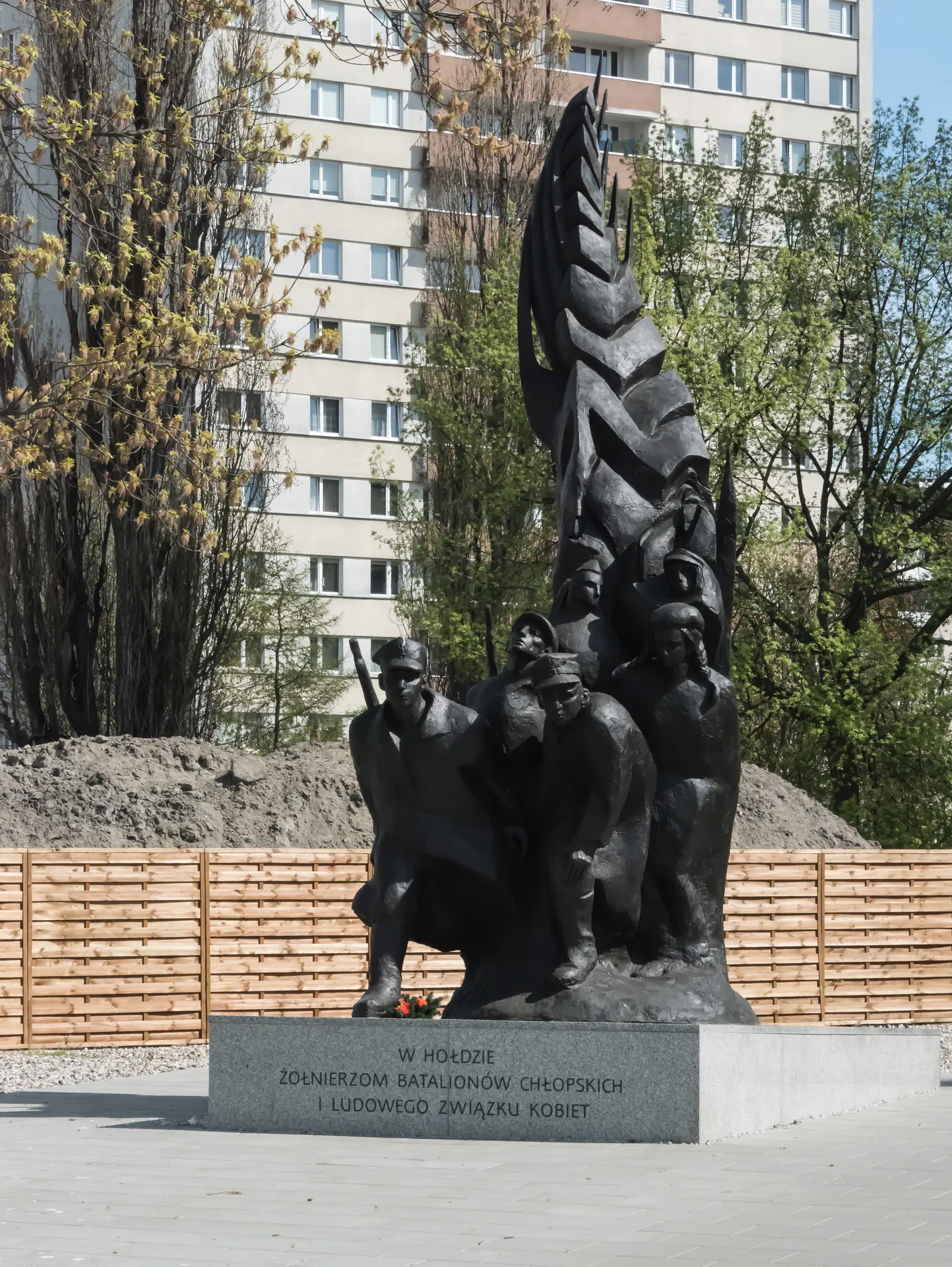
The monument’s sculptural group features soldiers and female medics progressing forward, blending into a monumental ear of grain—a symbol of rural unity, resilience, and the cyclical nature of struggle. The wheat motif also evokes the agricultural heritage and the inseparable bond between the people and the land (Wikipedia).
Visiting Information
Location and How to Get There
- Address Intersection of Czerniakowska Street and Polski Walczącej Avenue, Mokotów district, Warsaw, Poland (Google Maps)
- Public Transport Accessible by tram lines 10, 14, and 18 (Czerniakowska stop) and bus routes nearby
- Parking Limited street parking; public transport is advised
- Cycling Bike paths and city bike-sharing system (Veturilo) available (Veturilo Info)
Hours and Admission
- Hours Open-air monument, accessible 24/7 all year
- Admission Free; no tickets required
Accessibility
- Wheelchair accessible with paved paths and gently sloped walkways
- Benches nearby for resting
- Guide dogs welcome; pets must be leashed
Facilities
- No on-site restrooms; nearby options available in parks and shopping centers (e.g., Wola Park)
- Cafés, shops, and public amenities within a short walk
Special Events and Commemorations
Each year on October 8th, official ceremonies mark the anniversary of the Peasant Battalions’ founding. Activities include:
- Wreath-laying and the Apel Pamięci (Roll Call of Remembrance)
- Military honors and speeches by officials and veterans
- Mass and religious observances at nearby churches
- Educational and cultural events for the public (psl.pl)
Visitor Etiquette
- Maintain quiet and respectful behavior, especially during commemorations
- Photography is allowed; drone use requires city authorization
- Flowers and candles may be placed as tributes
Nearby Attractions
- Warsaw Uprising Museum Immersive exhibits on the 1944 uprising (Warsaw Uprising Museum)
- Powązki Military Cemetery Graves of resistance fighters (Powązki Cemetery)
- Mokotów Field Park Large green space for relaxation
- Świątynia Opatrzności Bożej Church of Divine Providence, a site of religious and historical significance
Frequently Asked Questions (FAQ)
Q: What are the opening hours of the monument?
A: The monument is accessible 24/7, year-round.
Q: Is there an entrance fee or ticket required?
A: No, visiting the monument is free.
Q: Is the monument wheelchair accessible?
A: Yes, with paved paths and curb cuts.
Q: Are guided tours available?
A: Yes, through local tour operators and during special events.
Q: Can I take photographs at the monument?
A: Yes, photography is allowed.
Q: Are there restrooms nearby?
A: Public restrooms are available in nearby parks and shopping centers.
Practical Tips for Your Visit
- Dress appropriately for weather; surfaces may be slippery when wet
- Bring water, as there are no on-site fountains
- Use public transport to avoid parking challenges
- Respect the monument as a site of remembrance
- Share your visit on social media using #BatalionyChłopskie and tag @warsawtour