Plan and listen to Monument To Prince Józef Poniatowski In Warsaw with Audiala.
Audio guide in your pocket, itinerary in your browser. Built for the way you actually visit.
Introduction
The Monument to Prince Józef Poniatowski in Warsaw is a symbol of Polish resilience, national pride, and the enduring spirit of independence. Located in front of the Presidential Palace on Krakowskie Przedmieście, one of Warsaw’s most prestigious historic streets, this neoclassical equestrian statue commemorates one of Poland’s most celebrated military leaders. Whether you are a history enthusiast, an art lover, or a traveler seeking to connect with Warsaw’s cultural heritage, the monument is a must-see landmark. This guide provides comprehensive details on the monument’s history, visiting hours, accessibility, travel tips, nearby attractions, and its ongoing cultural significance.
For the most up-to-date information, visit the Warsaw Tourism Board and Wikipedia.


Historical Background: Prince Józef Poniatowski
Early Life and Heritage
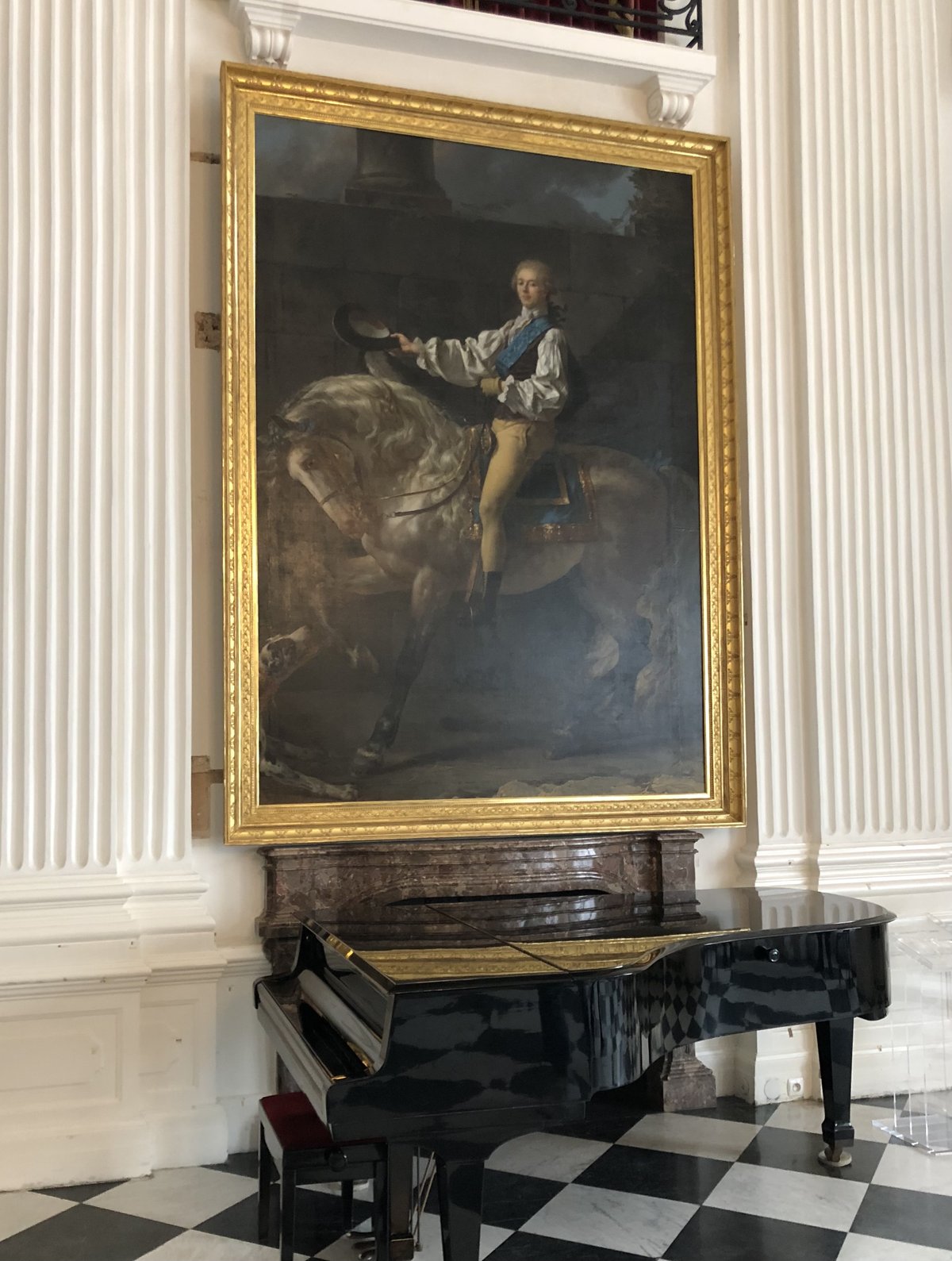
Prince Józef Antoni Poniatowski was born in 1763 in Vienna, into a prominent European aristocratic family. His uncle, Stanisław August Poniatowski, was the last king of Poland-Lithuania, which deeply influenced Józef’s Polish identity and patriotic dedication (warhistory.org, polishhistory.pl).
Military Career and Legacy
Initially trained and serving in the Austrian Army, Poniatowski later joined the Polish military at his uncle’s request. He actively defended the Constitution of 3 May 1791 and fought in key conflicts, including the Polish-Russian War of 1792 and the Kościuszko Uprising of 1794 (en.wikipedia.org). Reemerging during the Napoleonic era, he became Minister of War and Commander-in-Chief of the Duchy of Warsaw. His leadership during the Austro-Polish War of 1809 and loyalty to Napoleon—culminating in his death at the Battle of Leipzig in 1813—cemented his stature as a national hero. He is interred at Wawel Cathedral, a resting place for Poland’s greatest figures.
The Monument: Design, Destruction, and Reconstruction
Artistic Vision
Commissioned in 1817 and completed in 1826 by Danish sculptor Bertel Thorvaldsen, the monument depicts Poniatowski as a Roman general, inspired by the ancient statue of Marcus Aurelius. This neoclassical approach symbolizes timeless virtues of courage and leadership, linking Poland’s struggle for independence to broader European traditions (en.wikipedia.org, everything.explained.today, equestrianstatue.org).
Turbulent History
The statue’s journey reflects Poland’s turbulent past. Its unveiling was delayed due to political repression, and it was relocated multiple times. During World War II, the original was destroyed by German forces, but a new casting was gifted by Denmark in 1951, based on Thorvaldsen's original model. After being temporarily placed in Łazienki Park, the monument was installed in front of the Presidential Palace in 1965 (zabytek.pl).
Visiting Information
Location
The monument stands in the open courtyard of the Presidential Palace at 46/48 Krakowskie Przedmieście, central Warsaw. Its central location places it within easy walking distance of the Royal Castle, Warsaw Old Town, and other major historical sites (zabytek.pl, hyroxy.com).
Visiting Hours and Tickets
- Monument Access: The monument is outdoors and accessible 24/7, year-round. No tickets or fees are required to visit or photograph the statue (zabytek.pl).
- Presidential Palace Interior: Access is limited to special guided tours by prior arrangement, typically on weekdays. These free tours do not provide closer access to the monument than what is available in the courtyard (its-poland.com).
Accessibility
The area is fully accessible for visitors with limited mobility. The courtyard and surrounding sidewalks are paved and wheelchair-friendly. Public transport options (tram, bus, and metro) serve the area, and parking is available nearby, though public transport is recommended due to traffic restrictions.
Travel Tips
- Best Time to Visit: Early mornings and late afternoons offer optimal lighting and fewer crowds.
- Amenities: Numerous cafes, restaurants, and souvenir shops are within walking distance.
- Safety: The area is secure, with visible security presence due to the Presidential Palace. Occasional access restrictions may occur during state events.
- Photography: Photography is encouraged, but drones and professional equipment may be restricted for security reasons.
Guided Tours
Many Warsaw walking tours and historical excursions include the monument as a highlight. Local guides provide valuable context on Poniatowski’s role in Polish history and the monument’s artistic significance. Official tourism resources and operator websites list available tours (Warsaw Tourism Board).
Nearby Attractions
- Presidential Palace: Adjacent to the statue, Poland’s seat of government.
- Royal Castle: A short walk away, featuring historical exhibitions.
- Old Town and Krakowskie Przedmieście: Lined with monuments, churches, and vibrant architecture.
- Other Monuments: Adam Mickiewicz, Tadeusz Kościuszko, Nicolaus Copernicus, and more (Trek Zone).
- Church of the Holy Cross and the University of Warsaw: Key sites on the Royal Route.
Cultural and Political Significance
The Monument to Prince Józef Poniatowski is more than a work of art—it is a living symbol of Polish courage and unity. It serves as a focal point for patriotic ceremonies, national holidays such as Constitution Day (May 3) and Independence Day (November 11), and public gatherings. The statue’s neoclassical style and resilient history make it a powerful emblem of Warsaw’s—and Poland’s—endurance and aspirations (Travelling Camera).
Frequently Asked Questions (FAQ)
Q: Do I need a ticket to visit the Monument to Prince Józef Poniatowski?
A: No, access to the monument is free and available at all times.
Q: What are the visiting hours?
A: The monument is outdoors and accessible 24 hours a day, every day.
Q: Is the monument wheelchair accessible?
A: Yes, the courtyard and surrounding pavements are suitable for wheelchairs and strollers.
Q: Are guided tours available?
A: Yes, many city and historical tours include the monument. Check with local tour operators and official tourism resources.
Q: Can I take photos?
A: Photography is permitted, but drone use is prohibited due to palace security.
Q: What nearby sites can I visit?
A: The Royal Castle, Old Town, University of Warsaw, and several other monuments are nearby.
Listen to the full story in the app
The whole Monument To Prince Józef Poniatowski In Warsaw,
told well.
Audio guides for 1,100+ cities across 96 countries. History, stories, and local insight — offline ready.
Verified, and shown.
Researched and written by the Audiala editorial team from historical records, architectural archives, and local expertise.
Researched from Wikidata, Wikipedia & official sources · fact-checked · How we make our guides →