Plan and listen to Institute Of Cardiology with Audiala.
Audio guide in your pocket, itinerary in your browser. Built for the way you actually visit.
Introduction
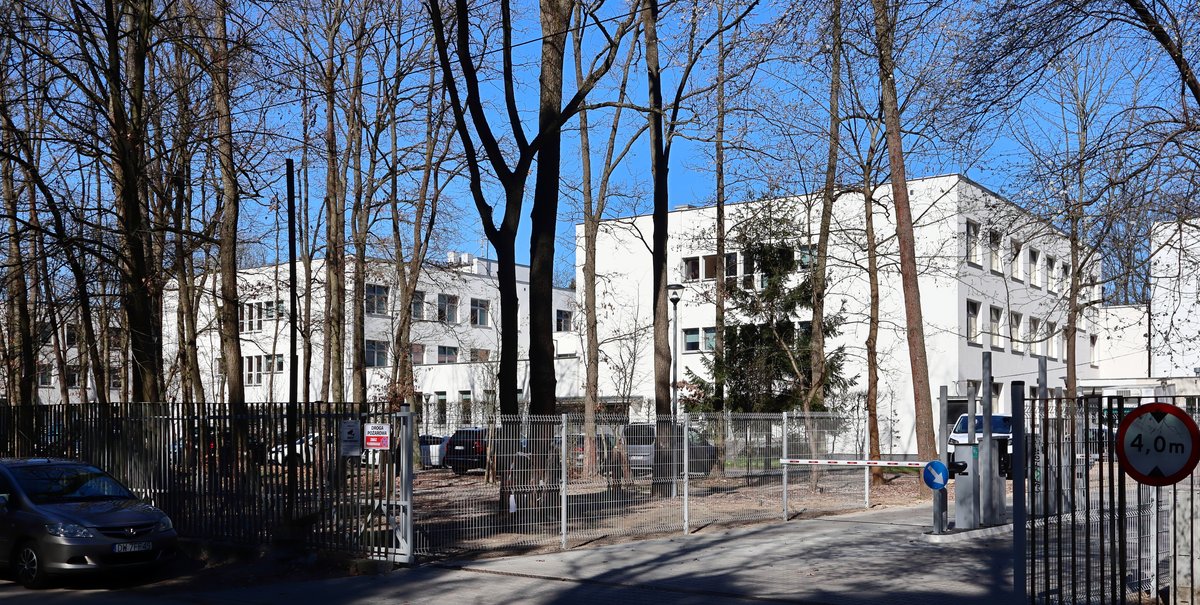
The National Institute of Cardiology Stefan Cardinal Wyszyński in Warsaw stands as Poland's foremost center for cardiovascular care, research, and education. Founded in the post-war era to address the rising incidence of heart diseases, the Institute has evolved into a multidisciplinary hub known for groundbreaking medical advancements and exemplary patient care. Located in the serene Anin district, it serves both local and international communities, acting as a beacon for patients, medical professionals, and those interested in Poland’s medical heritage.
This comprehensive guide provides detailed information on the Institute’s historical significance, innovative contributions, visiting hours, access guidelines, and practical tips for both domestic and international visitors. For the most current updates, always refer to the official Institute website and trusted medical sources (DI Cardiology, ELSO Center Details).

Historical Development of the Institute of Cardiology
Foundation and Early Years
Established in the aftermath of World War II, the Institute of Cardiology addressed the pressing need for specialized cardiovascular care in Poland. Strategically set in the Anin district, it quickly became a reference center by integrating patient care, research, and education (ELSO Center Details).
Growth and International Leadership
Through the 1970s and 1980s, the Institute expanded its expertise with dedicated departments in adult and pediatric cardiology, cardiac surgery, electrophysiology, and interventional cardiology. Collaborations with leading Polish medical universities reinforced its role in postgraduate education and research. The attainment of ISO 9001:2000 certification highlighted its ongoing commitment to clinical excellence (ELSO Center Details).
Medical Innovations
A defining achievement came in April 2022, with the Institute becoming the first hospital in Poland—and among the first in Europe—to employ the Genesis Robotic Magnetic Navigation (RMN) system by Stereotaxis for the treatment of arrhythmias (DI Cardiology). This technology greatly enhances procedure precision and safety, benefitting the millions of Poles affected by heart rhythm disorders.
Research and Academic Contributions
The Institute is a leader in clinical trials, epidemiological research, and translational science. Its faculty regularly publish in top international journals and contribute to the formation of national and European cardiovascular guidelines. The Institute hosts fellowships, workshops, and conferences, attracting participants from around the world (ELSO Center Details).
Recent Infrastructure Developments
Located at Alpejska 42, the Institute’s campus is being further modernized with the construction of the Ambulatory Cardiology Centre. This state-of-the-art development, with sustainable features like photovoltaic installations, is scheduled for completion by October 2025 (Adamietz Warsaw).
Institutional Impact and Recognition
The Institute has played a pivotal role in reducing cardiovascular mortality in Poland and Europe, introducing minimally invasive procedures, and advising the Ministry of Health on public health initiatives. It is a member of international organizations such as the Extracorporeal Life Support Organization (ELSO) and partners with industry leaders like Stereotaxis (ELSO Center Details, DI Cardiology).
Visitor Information
Location and Accessibility
- Address: Alpejska 42, 04-628 Warsaw, Poland
- The Institute is situated in the tranquil Anin district, southeast of central Warsaw.
- Easily accessible via city buses and suburban trains; limited on-site parking is available (Adamietz Warsaw).
- Taxis and ride-sharing services are widely used in the area (tripindicator.com).
Visiting Hours and Access
- General Visiting Hours: Typically permitted in the afternoon and early evening; exact times vary by department and are subject to change due to health protocols or special circumstances.
- Appointments: Required for non-patient visits, guided tours, or educational events.
- Public Access: Restricted to protect patient privacy and safety; guided tours may be arranged for academic or professional groups with advance notice.
- Contact to Confirm Hours: Always verify the latest visiting hours via phone or the official Institute website.
Tickets and Fees
- No entrance fees or tickets are required—the Institute operates as a healthcare facility.
- Visits are generally limited to patients’ families, authorized individuals, or participants in scheduled events.
Language and Communication
- Polish is the primary language; English is spoken in most academic and specialized departments.
- International visitors are advised to arrange for an interpreter if detailed discussion or medical consultation is expected.
Nearby Attractions
- The peaceful Anin district offers green spaces for relaxation.
- Quick access to central Warsaw’s key sites:
- Old Town (UNESCO World Heritage)
- Royal Castle
- Copernicus Science Center
- Warsaw Uprising Museum
- Łazienki Park
(Nomadic Matt’s Warsaw Guide, awaytothecity.com)
Health, Safety, and Accessibility
- The Institute is fully accessible, with elevators, ramps, and adapted restrooms. Notify staff in advance for special assistance.
- Follow posted hygiene and infection control protocols; masks may be required in clinical areas.
- Emergency number in Poland: 112.
- Warsaw is a safe city, but take standard precautions with valuables (travellikeaboss.org).
- Pharmacies and emergency services are readily available.
Practical Tips
- Bring valid identification, appointment confirmations, and all relevant medical documentation, ideally in Polish or English.
- Carry some Polish złoty for incidental expenses.
- Download or print a Warsaw transport map for convenience (tripindicator.com).
- Consider travel insurance covering medical emergencies.
Contact Information
- Phone: +48 22 343 4487 / (+48) 22 343 42 58
- Email: [email protected] / [email protected]
- Official Website: https://www.ikard.pl/
- abm.gov.pl
Frequently Asked Questions (FAQ)
Q: What are the visiting hours at the Institute of Cardiology Warsaw?
A: Visiting hours typically occur in the afternoon and early evening but vary by department and health regulations. Confirm with the Institute before visiting.
Q: Are tickets required?
A: No, the Institute does not require tickets for entry. Visits are limited to patients’ families and authorized persons.
Q: How do I book an appointment or guided tour?
A: Appointments and tours can be arranged by contacting the Institute via phone or email.
Q: Is the Institute accessible for people with disabilities?
A: Yes, the facility is equipped for visitors with mobility challenges. Notify staff in advance for additional assistance.
Q: Are language services available?
A: English is widely spoken in specialized departments, but non-Polish speakers may benefit from an interpreter.
Q: What are the current COVID-19 protocols?
A: While restrictions have eased, masks may still be required in clinical settings. Check for updates before your visit.
Listen to the full story in the app
The whole Institute Of Cardiology,
told well.
Audio guides for 1,100+ cities across 96 countries. History, stories, and local insight — offline ready.
Verified, and shown.
Researched and written by the Audiala editorial team from historical records, architectural archives, and local expertise.
Researched from Wikidata, Wikipedia & official sources · fact-checked · How we make our guides →