Plan and listen to Fort Tsche with Audiala.
Audio guide in your pocket, itinerary in your browser. Built for the way you actually visit.
Introduction to Fort Tsche and Its Historical Significance
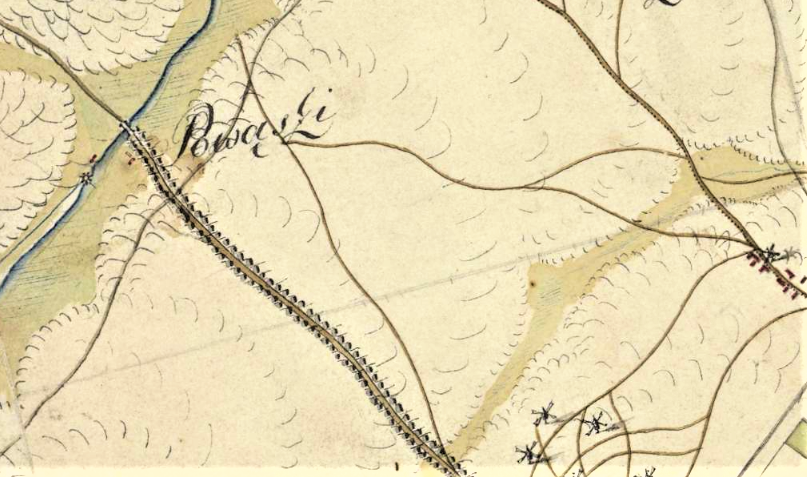
Fort Tsche, also known as Fort M-Tsche or Fort M-Che, is a unique historical landmark woven into the fabric of Warsaw’s rich urban and military heritage. Originally built between 1883 and 1890 as part of the Warsaw Fortress system by the Russian Empire, the fort was intended to secure the city after the November Uprising. Today, while much of the original structure has vanished beneath urban development—most notably transformed into Dreszer Park—remnants and the historical footprint of Fort Tsche still offer a compelling glimpse into Warsaw’s layered past.
This detailed guide provides essential information for visitors, including current site status, accessibility, how to get there, and practical travel tips. It also explores Fort Tsche’s broader historical context, architectural features, and its role within the evolution of Warsaw’s defensive network. Whether you are a dedicated history enthusiast, an architecture aficionado, or a casual traveler, this guide will help you make the most of your visit to Fort Tsche and nearby historical attractions. For up-to-date details, consult Warsaw’s official tourism resources (Wikipedia; Polen Travel; Touropia).
Fort Tsche was commissioned as part of the expansive Warsaw Fortress system after the November Uprising of 1830–1831. The construction of the Warsaw Citadel in 1832 marked the start of a new era of military control over the city. Over the subsequent decades, this defensive ring was expanded to include more than 20 forts, with Fort Tsche built between 1883 and 1890 in the Mokotów district near what is now Odyńca and Czeczota Streets (Wikipedia; Polen Travel).
The fort was designed with advanced 19th-century military engineering, featuring earthworks, reinforced brick and concrete structures, and a polygonal layout to maximize defensive coverage. Underground passages, barracks, magazines, and artillery emplacements were integral to its function.
Architectural Features and Military Role
Fort Tsche exemplified late-19th-century defensive architecture, with:
- Polygonal layout for overlapping artillery fields of fire
- Thick ramparts and moats constructed of brick, stone, and concrete
- Casemates and underground tunnels for troop movement
- Barracks, command posts, and magazines supporting daily operations
- Neoclassical decorative details in the gatehouse and main entrances
Its primary military role was to secure Warsaw’s western and southern approaches, serving as both a deterrent to foreign invasion and a means of controlling internal unrest (Polen Travel; Tourist Places Guide).
The Fate of Fort Tsche: World Wars and Urban Integration
By the early 20th century, advances in warfare had rendered many of Warsaw’s forts obsolete. Fort Tsche was decommissioned in 1909 and largely deconstructed during the 1920s. During WWI and WWII, some surviving fortress structures across Warsaw were briefly reactivated or repurposed by occupying armies, but Fort Tsche’s remains were gradually absorbed into the growing city (Wikipedia; Warsaw.net).
Today, the fort’s original footprint is visible mainly in street layouts and the green expanse of Dreszer Park. This transformation reflects Warsaw’s approach to integrating historical memory into the modern urban environment (polen.travel).
Visiting Fort Tsche Today
Visiting Hours and Tickets
- Site Access: The grounds of the former Fort Tsche, now part of Dreszer Park, are freely accessible at any time, year-round.
- Tickets: No entry fee or ticket is required; the area functions as a public park.
Nearby preserved forts such as the Warsaw Citadel and Fort Mokotów operate as museums with regular opening hours (typically 10:00–18:00) and may require tickets for entry. Check official websites for current prices and schedules.
Directions and Transport
- Location: Mokotów district, near Czeczota and Odyńca Streets
- Public Transport: Easily reached by tram and bus lines from central Warsaw; the nearest metro station is Wierzbno (Line M1).
- On Foot or Bike: The park is accessible via walking and cycling paths from surrounding neighborhoods.
Accessibility and Facilities
- Terrain: Well-maintained walking paths and green lawns, suitable for most visitors.
- Accessibility: Wheelchair access is available in most outdoor areas, although some original ramparts or slopes may be uneven.
- Facilities: Benches, shaded areas, and open lawns are available, but there are no dedicated restrooms or visitor centers specific to the fort.
- Interpretive Signage: Limited on-site; digital guides or thematic walking tours are recommended for historical context (insiderfandom.com).
Preservation and Commemoration
While Fort Tsche’s physical form has largely disappeared, its historical importance is preserved through:
- Integration into Dreszer Park: Providing recreational space and a living memorial
- Historical street names and plaques: Marking the fort’s former boundaries
- Digital archives and local history initiatives: Offering maps, virtual tours, and educational resources
- Inclusion in thematic walking tours: Exploring Warsaw’s military and urban transformation (go2warsaw.pl)
Other Warsaw Fortress sites (e.g., the Warsaw Citadel, Fort Traugutt, Fort Sokolnicki) have been more extensively preserved and host exhibitions, guided tours, and cultural events.
Nearby Attractions
Enhance your visit by exploring these nearby sites:
- Warsaw Citadel: Central fortress with a museum and exhibitions
- Fort Mokotów: Well-preserved, with guided tours
- Warsaw Uprising Museum: Context on the city’s 20th-century military history
- Old Town and Royal Castle: Easily reached by public transport
For more ideas, browse Tourist Places Guide and related travel resources.
Frequently Asked Questions (FAQ)
Q: What are the visiting hours for Fort Tsche?
A: Dreszer Park, the site of the former fort, is open year-round with no official restrictions.
Q: Is there an entrance fee?
A: No, access to the park and site is free.
Q: How do I get there?
A: Use public transport to reach Mokotów, near Czeczota and Odyńca Streets.
Q: Are guided tours available?
A: The site itself does not offer dedicated tours, but walking tours of Warsaw’s fortifications often include it.
Q: Is the site accessible for people with limited mobility?
A: Most outdoor areas are accessible, though some uneven ground may pose challenges.
Q: Is on-site information available?
A: Signage is minimal; use digital guides or join a historical tour for details.
Practical Visitor Tips
- Best time to visit: Spring and early autumn for mild weather; the park is busiest in summer (travellersworldwide.com).
- What to bring: Comfortable walking shoes, water, and a camera.
- Facilities: Limited—plan ahead for restroom needs.
- Combine your visit: Pair with a trip to the Warsaw Citadel or nearby museums for a comprehensive experience.
Listen to the full story in the app
The whole Fort Tsche,
told well.
Audio guides for 1,100+ cities across 96 countries. History, stories, and local insight — offline ready.

Verified, and shown.
Researched and written by the Audiala editorial team from historical records, architectural archives, and local expertise.
Researched from Wikidata, Wikipedia & official sources · fact-checked · How we make our guides →