Plan and listen to Bank Of Poland with Audiala.
Audio guide in your pocket, itinerary in your browser. Built for the way you actually visit.
Introduction
The Bank of Poland, locally known as Bank Polski or Narodowy Bank Polski (NBP), is one of Warsaw’s most significant historical and architectural landmarks. With roots stretching back to the early 19th century, it stands as a testament to Poland’s evolving financial system, neoclassical design, and resilience through turbulent historical events. Today, it not only serves as a symbol of Poland’s economic sovereignty but also welcomes visitors as a museum and cultural hub. Whether you’re an architecture enthusiast, history buff, or a curious traveler, this comprehensive guide covers everything you need to know about visiting the Bank of Poland in Warsaw—including its history, visiting hours, ticketing, accessibility, and tips for making the most of your visit.


Table of Contents
- Origins and Architectural Design
- Historical Events and Early Functions
- Architectural Changes and Restoration
- WWII Damage and Preservation
- Modern Role and Cultural Importance
- Architectural Highlights
- Visitor Information: Hours, Tickets, and Accessibility
- Frequently Asked Questions (FAQ)
- Key Historical Milestones
- Practical Travel Tips
- Nearby Attractions and Suggested Itineraries
- Conclusion
1. Origins and Architectural Design
Construction of the Bank of Poland building began in 1825, during a period of modernization and urban expansion in the Congress Kingdom of Poland. Designed by renowned Italian architect Antonio Corazzi with input from Jan Jakub Gay, the building exemplifies neoclassical style and helped shape the urban character of Plac Bankowy (Bank Square) (zabytek.pl; whitemad.pl).
The main building was completed in 1828, with a pavilion added on Elektoralna Street. The architectural centerpiece is a grand rotunda crowned with a domed drum adorned with bas-reliefs by Ludwig Kauffmann, symbolizing prosperity and commerce.
2. Historical Events and Early Functions
Initially, the building hosted both the Warsaw Stock Exchange and the Bank of Poland, cementing its place as a cornerstone of the nation’s financial sector. During the November Uprising of 1830, it became a hub for insurgent activities, and in the January Uprising of 1863, it hosted assemblies pivotal to the resistance (zabytek.pl). Its dual role as a commercial and political center highlights its importance in Polish history.
3. Architectural Changes and Restoration
Over the 19th and early 20th centuries, the building underwent various expansions and renovations to better accommodate the growing demands of the financial sector. Notable changes include the installation of a clock and thermometer in 1830 and the enclosure of arcades for additional office space. Major restoration led by architect Marian Lalewicz in the early 20th century preserved its neoclassical integrity (wikipedia).
4. WWII Damage and Preservation
The building sustained significant damage during World War II, particularly in the 1939 siege of Warsaw and the 1944 Uprising. Despite these hardships, its robust structure allowed for postwar restoration. Architect Piotr Biegański led reconstruction works between 1950 and 1954, ensuring the building’s survival for future generations (wikipedia).
Some parts of the original Bank of Poland at ul. Bielańska 10 remain preserved as ruins and serve as a poignant memorial to Warsaw’s wartime experience (theuniquepoland.com; Warsaw City Archives).
5. Modern Role and Cultural Importance
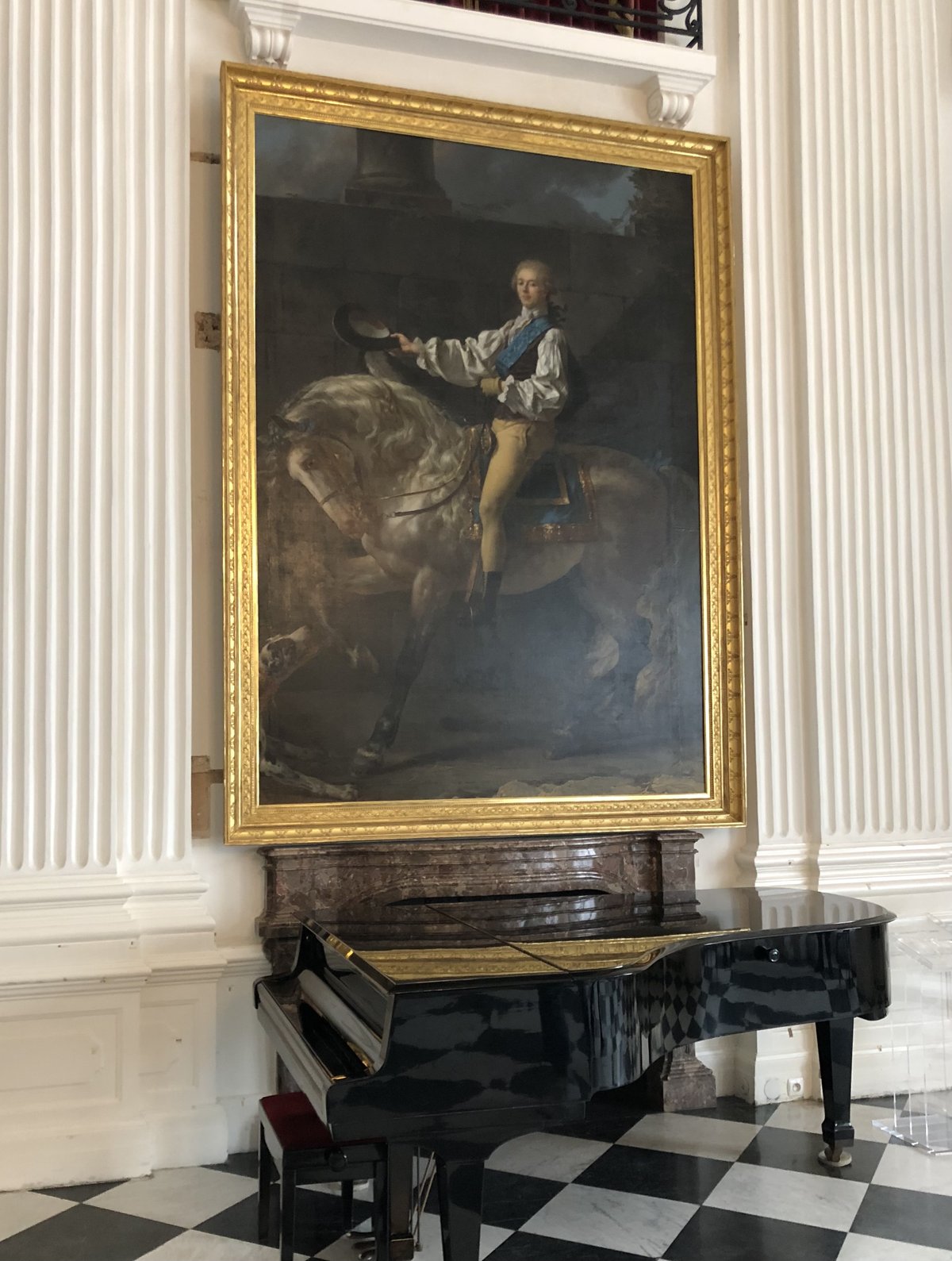
Today, the restored Bank of Poland building at Plac Bankowy 1A houses the Museum of John Paul II Collection, showcasing around 400 works of art, and serves as a venue for cultural events (evendo.com). The ruins at ul. Bielańska 10 are integrated into Warsaw’s urban landscape as a protected monument and cultural venue, especially during events like the Night of Museums (Warsaw City Events).
The NBP headquarters at Świętokrzyska 11/21 remains Poland’s central bank, known for its modernist architecture and role in producing commemorative coins and educational programs (NBP Official; NBP Money Centre).
6. Architectural Highlights
- Rotunda & Dome: The iconic rotunda, topped with a dome featuring allegorical bas-reliefs, is a hallmark of neoclassical design (whitemad.pl).
- Façade Installations: A clock and thermometer installed in 1830 serve both functional and decorative purposes (wikipedia).
- Wartime Ruins: The partial ruins at ul. Bielańska 10 are preserved as a memorial and integrated into modern city life.
7. Visitor Information: Hours, Tickets, and Accessibility
Bank of Poland Museum (Plac Bankowy 1A)
- Opening Hours: Tuesday–Sunday, 10:00 AM–6:00 PM. Closed on Mondays.
- Tickets: Adults 20 PLN; Students/Seniors 10 PLN; Children under 7 free.
- Guided Tours: Available by appointment in multiple languages.
- Accessibility: Wheelchair accessible. Contact in advance for accommodations.
- Getting There: Metro: Ratusz-Arsenał; multiple tram and bus lines nearby.
Bank of Poland Ruins (ul. Bielańska 10)
- Hours: Open to the public during daylight hours. Access to interiors may be limited to special events or tours (Warsaw City Archives).
- Admission: Exterior viewing is free; fees may apply for special events.
- Accessibility: Partial—some uneven surfaces; accessible paths provided.
NBP Headquarters (Świętokrzyska 11/21)
- NBP Money Centre Hours: Tuesday–Sunday, 10:00 AM–6:00 PM; closed Mondays and holidays.
- Admission: Free; book guided tours in advance (NBP Money Centre).
8. Frequently Asked Questions (FAQ)
Q: What are the visiting hours for the Bank of Poland?
A: Main museum: Tuesday–Sunday, 10:00 AM–6:00 PM; closed Mondays. Ruins: generally open during daylight hours.
Q: Are tickets required?
A: Yes, for the museum; ruins are free to view from outside.
Q: Are guided tours available?
A: Yes, at both the museum and ruins (for special events). Book in advance.
Q: Is the building wheelchair accessible?
A: Yes, but some historic areas may have limited access.
Q: What else is nearby?
A: Warsaw Old Town, Royal Castle, POLIN Museum, and numerous other landmarks.
9. Key Historical Milestones
- 1825–1828: Construction of main building and pavilion
- 1830: Site of key administrative activity during the November Uprising
- 1863: Used by insurgents in the January Uprising
- 1919–1921: Major renovation by Marian Lalewicz
- 1939–1944: Damaged in WWII and Warsaw Uprising
- 1950–1954: Postwar restoration
- Present: Houses Museum of John Paul II Collection; ruins serve as cultural site
10. Practical Travel Tips
- Currency: Polish złoty (PLN) only; ATMs widely available (Poland Travel Expert).
- Language: Polish is official, but English is widely spoken at tourist sites.
- Transport: Use the Jakdojade app for public transport.
- Weather: Best visited in late spring or early autumn for mild weather.
- Safety: Warsaw is safe, but standard precautions are advised.
11. Nearby Attractions and Suggested Itineraries
- Warsaw Old Town: UNESCO World Heritage, rebuilt after WWII (Touropia).
- Royal Castle: Iconic royal residence (Najlepsze w Warszawie).
- Łazienki Park: Famous for summer concerts (The Crazy Tourist).
- POLIN Museum: Modern museum of Jewish history (Najlepsze w Warszawie).
- Museum of Warsaw: Local history and culture (bucketlistly.blog).
Combine your visit to the Bank of Poland with these sites for a fulfilling day in Warsaw.
Listen to the full story in the app
The whole Bank Of Poland,
told well.
Audio guides for 1,100+ cities across 96 countries. History, stories, and local insight — offline ready.

Verified, and shown.
Researched and written by the Audiala editorial team from historical records, architectural archives, and local expertise.
Researched from Wikidata, Wikipedia & official sources · fact-checked · How we make our guides →