Plan and listen to Adam Mickiewicz Monument, Warsaw with Audiala.
Audio guide in your pocket, itinerary in your browser. Built for the way you actually visit.
Introduction
The Adam Mickiewicz Monument in Warsaw stands as a powerful emblem of Poland’s literary legacy and national endurance. Erected in 1898 to mark the centenary of Adam Mickiewicz’s birth—Poland’s iconic Romantic poet and national bard—the monument is more than a work of public art: it is a symbol of cultural resistance and resilience. Set along Krakowskie Przedmieście, one of the city’s most historic boulevards, the monument draws visitors into a narrative of artistic grandeur, patriotic fervor, and the ongoing relevance of Polish identity.
This guide delivers an in-depth overview of the Adam Mickiewicz Monument, exploring its historical context, design, symbolism, and present-day significance. It further provides practical information for visitors, including accessibility, visiting hours, ticketing, nearby attractions, and tips for enriching your visit. Whether you are a history buff, literature enthusiast, or a curious traveler, the monument serves as a gateway to the heart of Warsaw’s cultural tapestry.
For additional information and cultural context, visit:
polishhistory.pl | warsawvisit.com | Culture.pl

Historical Background
Origins and Political Context
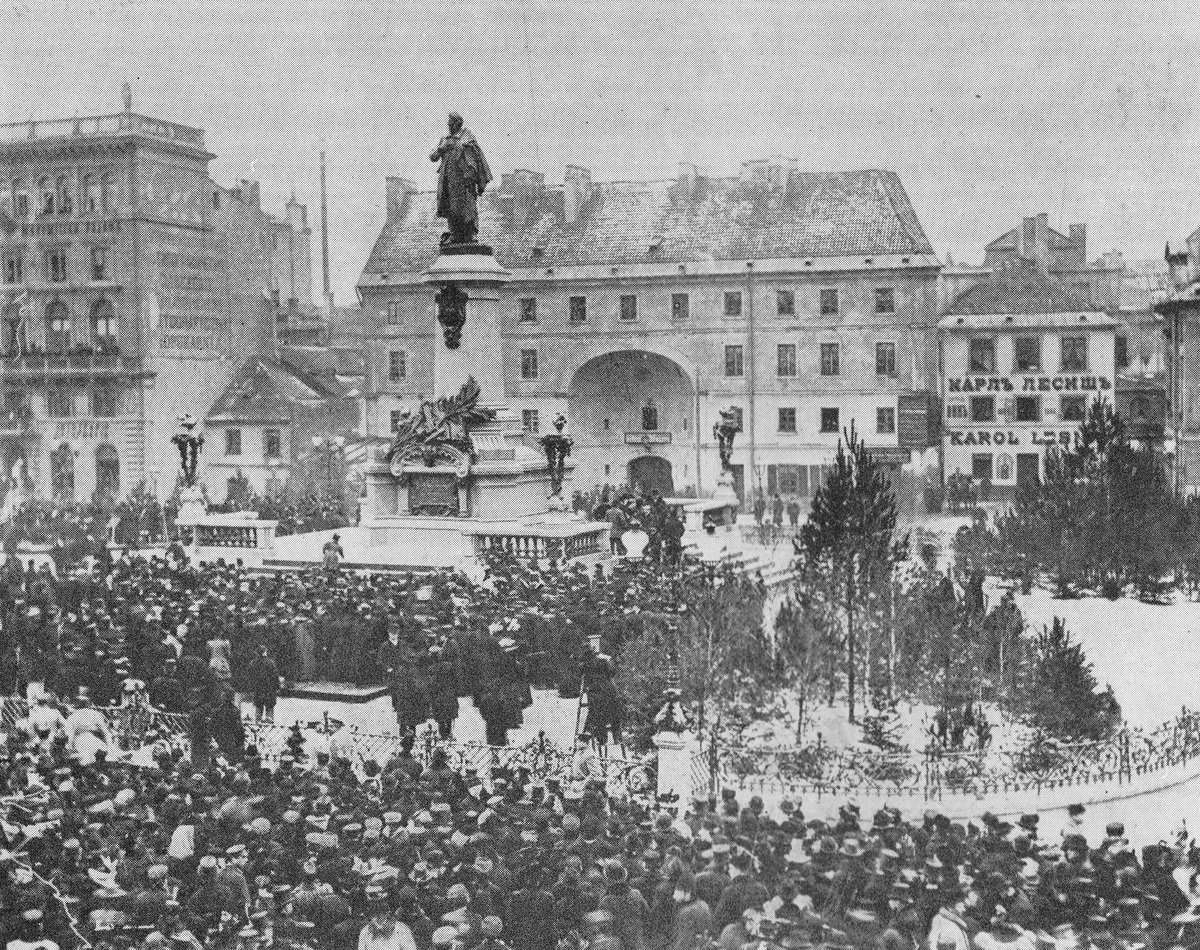
The Adam Mickiewicz Monument was conceived during a period of intense political repression. Following the partitions of Poland, Warsaw was under Russian control, and expressions of Polish identity were often forbidden. Yet, as the centenary of Mickiewicz’s birth approached in the late 19th century, a committee of citizens—supported by public donations—set out to create a monument that would honor the poet and quietly defy the occupying authorities. This act of collective will and cultural assertion made the monument’s very existence a form of peaceful resistance (polishhistory.pl).
Unveiling and Early Significance
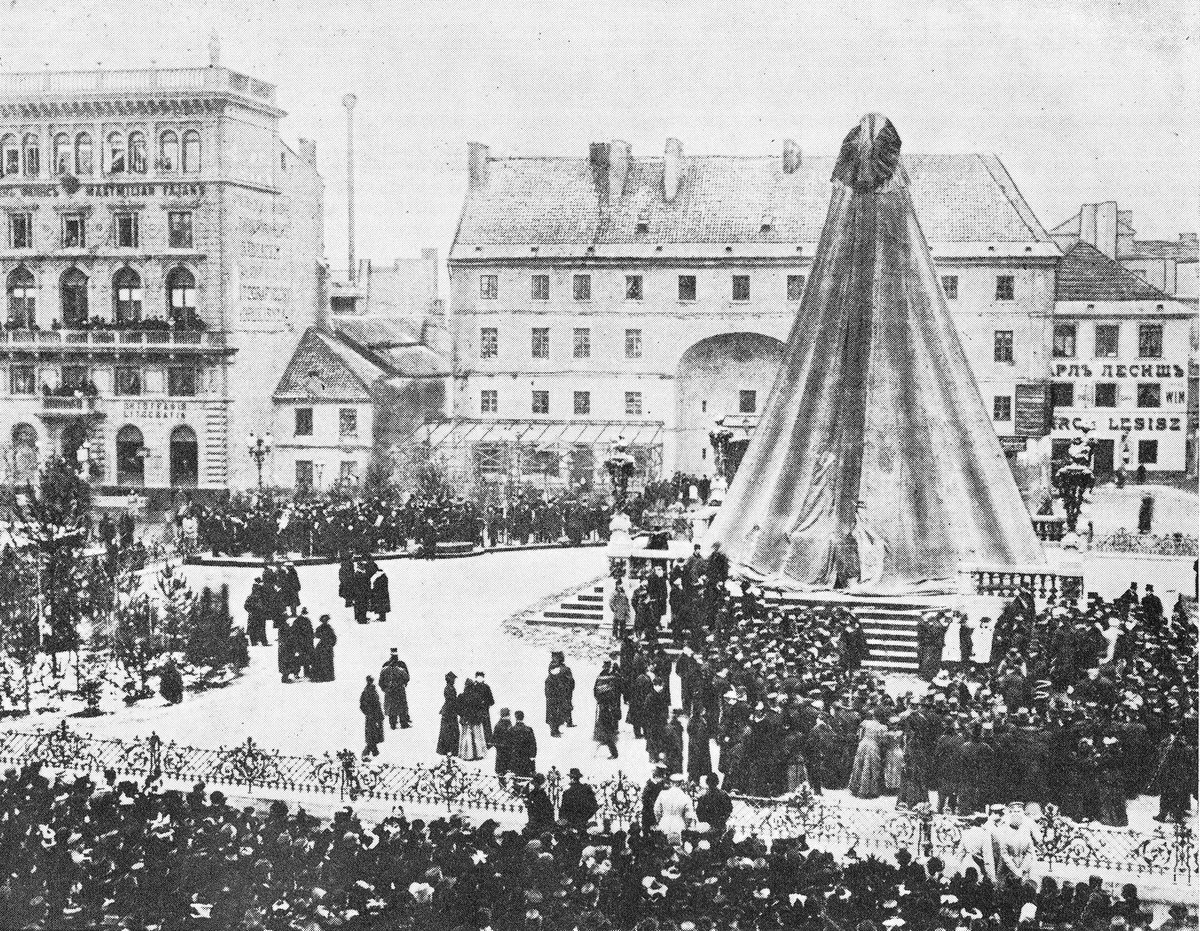
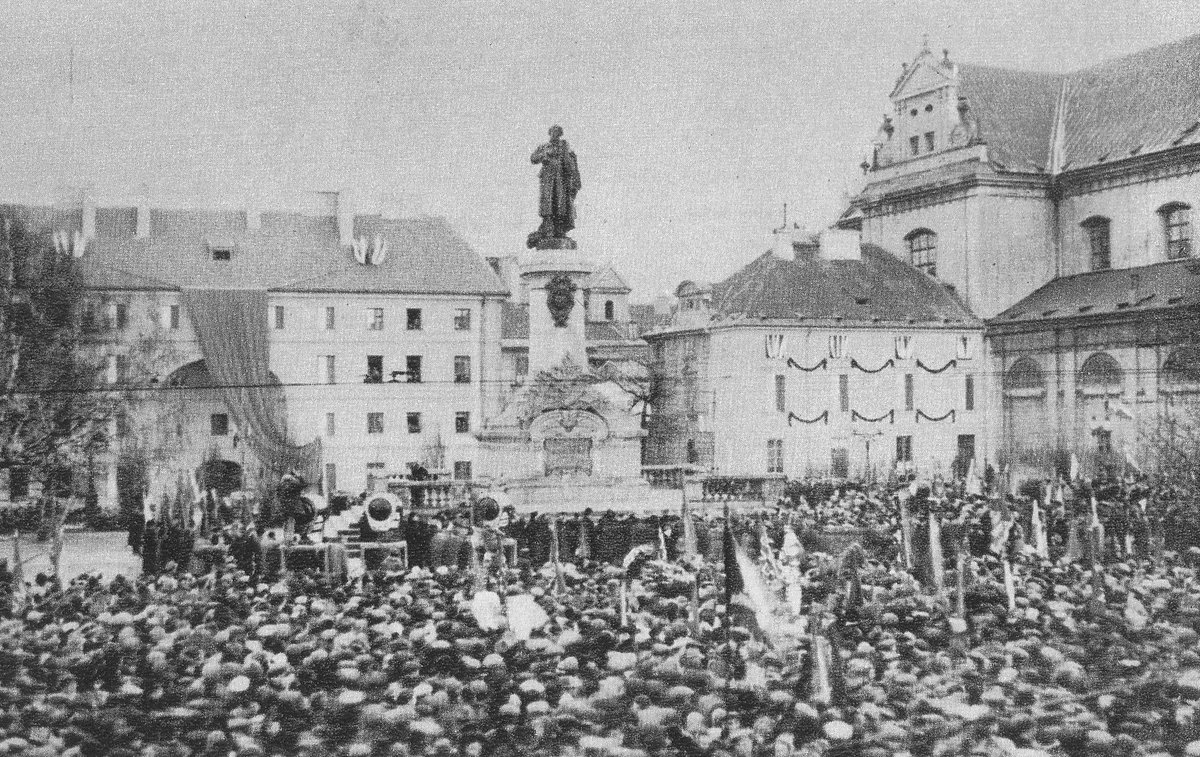
Unveiled on December 24, 1898, the monument quickly became a locus of Polish patriotism. The ceremonial unveiling, attended by thousands despite official restrictions, was accompanied by music from Stanisław Moniuszko and was seen as a moment of quiet defiance and unity among Poles living under foreign rule (polishhistory.pl).
Design and Symbolism
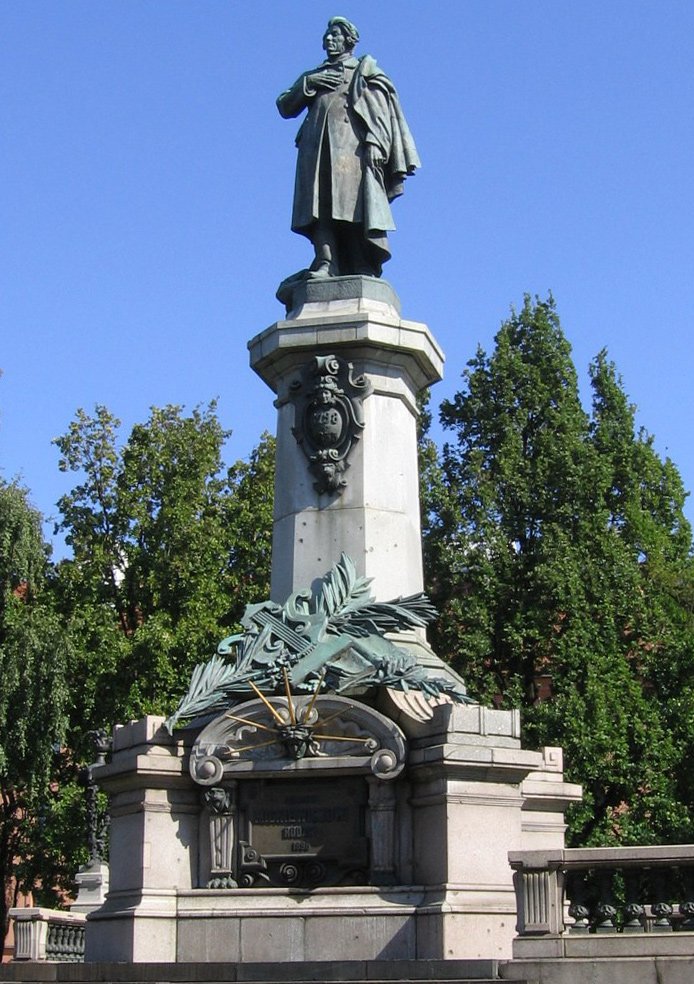
Cyprian Godebski, a distinguished Polish sculptor, was commissioned to design the monument. The four-meter bronze statue depicts Mickiewicz in a long frock coat, his right hand resting on his chest—a gesture symbolizing patriotic devotion and poetic inspiration. The simplicity and dignity of the design were deliberate, reflecting both Mickiewicz’s own preferences and the political sensitivities of the Russian authorities. The pedestal bears the inscription: “To Adam Mickiewicz – his compatriots.”
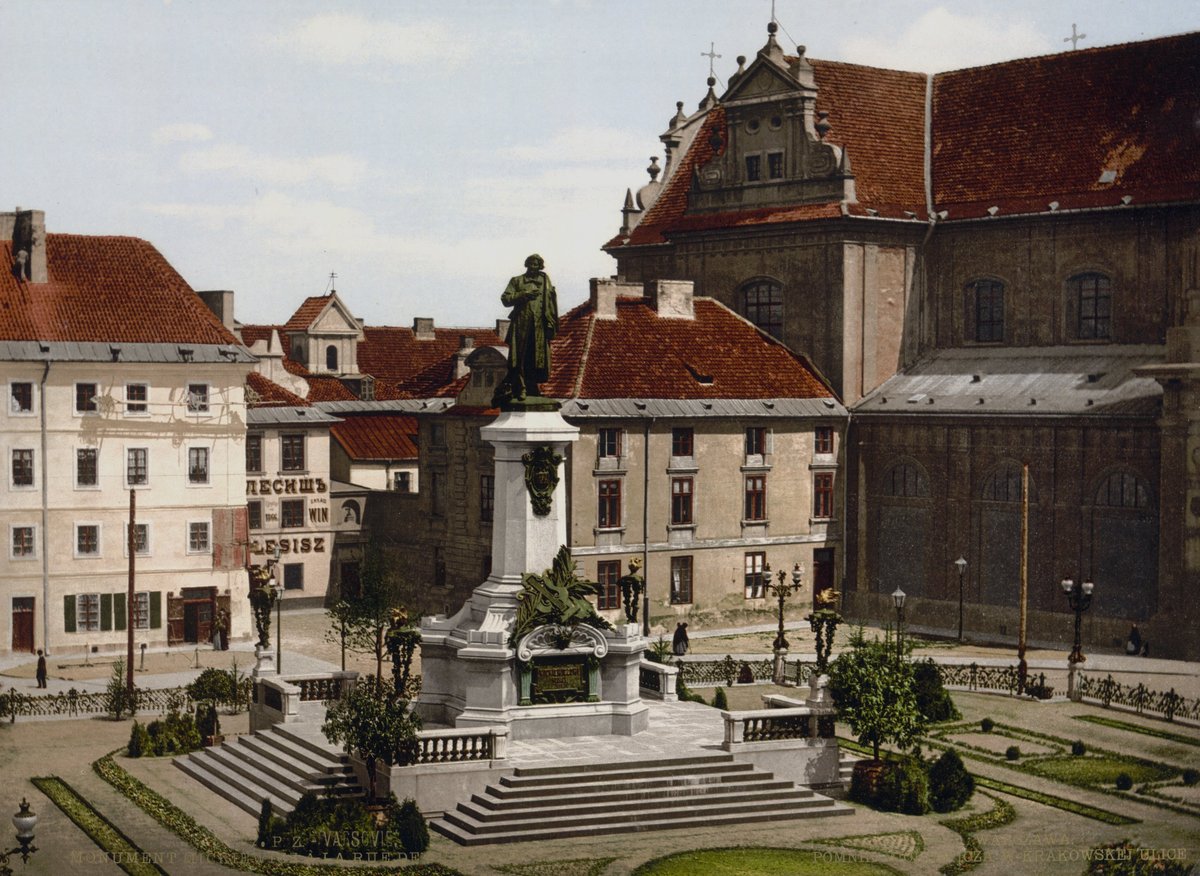
The statue’s placement along the Royal Route, surrounded by palaces, churches, and academic institutions, was a conscious urban and artistic decision, ensuring the monument would be both highly visible and harmoniously integrated into Warsaw’s historic heart (warsawvisit.com).
Wartime Destruction and Restoration
During World War II, the monument was deliberately destroyed by German occupiers—part of a campaign to erase Polish cultural symbols. In 1942, the statue was dismantled and melted down. Postwar efforts by Warsaw’s citizens led to its careful reconstruction, using surviving fragments and archival documentation. In 1950, the monument was reinstalled in its original location, symbolizing the city’s—and the nation’s—resilience and commitment to cultural restoration (polishhistory.pl).
The Monument’s Role in Polish Memory
Beyond its artistic merit, the Adam Mickiewicz Monument has served as a focal point for civic engagement and national remembrance. It has witnessed major historical events, including student protests in 1968 opposing the banning of Mickiewicz’s play Dziady, and continues to be a gathering place for commemorations, literary celebrations, and political demonstrations. The monument is affectionately known as “Adaś” by locals, reflecting its ongoing presence in Warsaw’s public life (polishhistory.pl).
Location, Visiting Hours, and Visitor Information
Exact Location and Accessibility
- Address: Krakowskie Przedmieście 46/48, 00-071 Warszawa, Poland
- District: Śródmieście (City Center)
- Coordinates: At the intersection of Krakowskie Przedmieście and Adam Mickiewicz Square
The monument is centrally located on the Royal Route, within walking distance of the Old Town, the University of Warsaw, and other major landmarks (Wikipedia).
Getting There:
- Public Transport: The “Uniwersytet” tram/bus stop is nearby; the Świętokrzyska metro station is about a 10–15 minute walk.
- On Foot: Easily accessible from the Old Town Market Square and the Royal Castle.
- By Bicycle: City bike stations (Veturilo) are available along Krakowskie Przedmieście.
- By Car: Paid parking lots are available within a 10-minute walk, though the area is best explored on foot (MappyTravel).
Visiting Hours and Tickets
- Monument Access: Open 24/7, year-round; no entrance fee or ticket required.
- Nearby Sites: Museums and churches nearby may have specific opening hours and ticket policies.
Accessibility
- The monument area is flat, paved, and wheelchair accessible. Benches and shaded areas are available for rest.
Nearby Attractions and Cultural Sites
- Presidential Palace: Steps away, the official residence of the President of Poland.
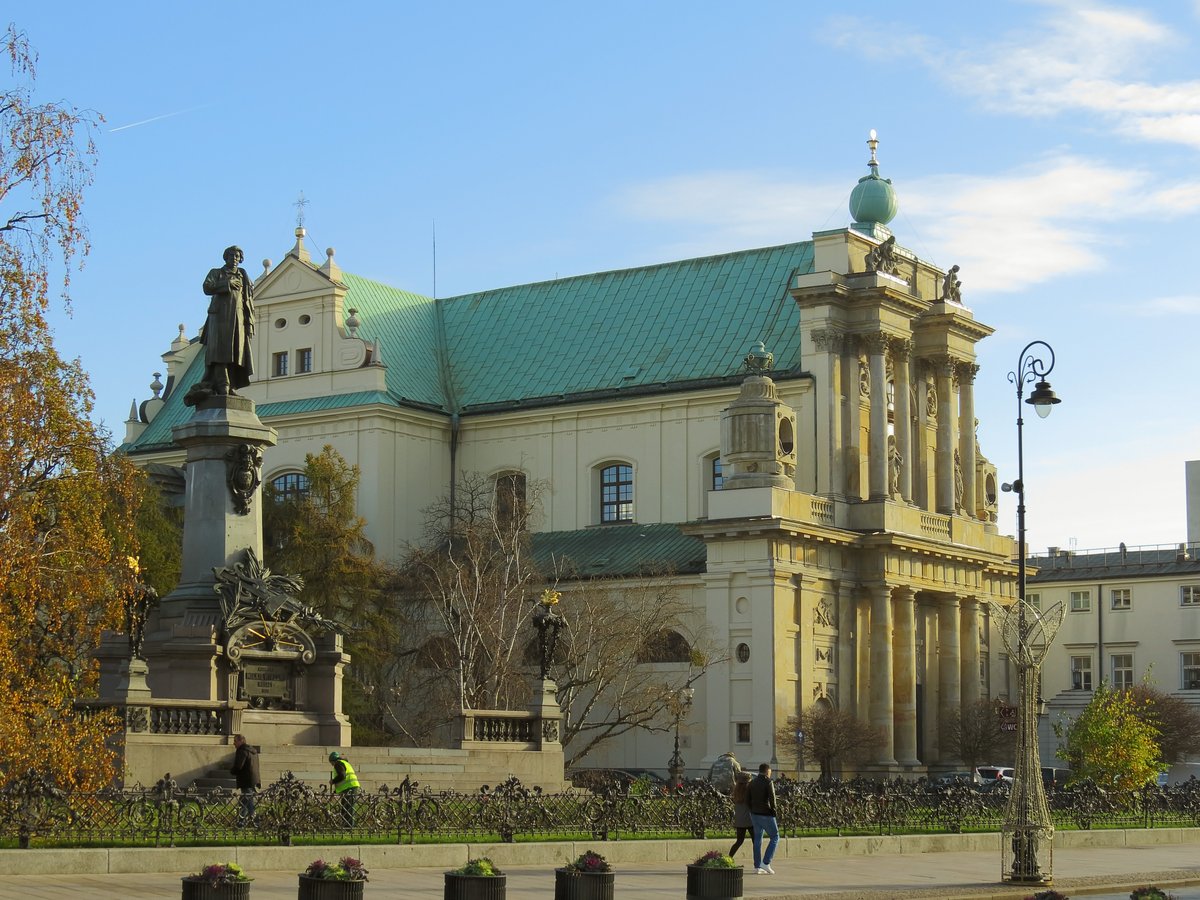
- Carmelite Church: Adjacent to the monument, known for its neoclassical façade and vibrant musical events.
- University of Warsaw: Historic buildings and cultural vibrancy.
- St. Anne’s Church & Viewing Platform: Offers panoramic views of the Old Town and Vistula River.
- Old Town Market Square: A UNESCO World Heritage site, just 500 meters north.
- Adam Mickiewicz Museum of Literature: A short walk away, with rich exhibits on Mickiewicz’s life and works (wanderlog.com).
For more inspiration, see:
Royal Route in Warsaw | Warsaw Historical Sites | Polish National Monuments
Photography Tips
The monument provides excellent photographic opportunities, especially during early morning or late afternoon (the “golden hour”) when soft light highlights its neoclassical form against the historic backdrop of Krakowskie Przedmieście. Nighttime illuminations add a dramatic effect, and the area’s seasonal decorations—especially during winter festivals—create memorable scenes.

Visitor FAQs
Q: What are the visiting hours?
A: The monument is outdoors and accessible 24/7, every day of the year.
Q: Is there an entrance fee?
A: No, the monument is free to visit.
Q: Are guided tours available?
A: Yes, many walking tours of Warsaw’s Royal Route include the monument. Audio guides are available through mobile apps.
Q: Is the monument wheelchair accessible?
A: Yes, the area is flat, paved, and accessible for wheelchairs.
Q: Are there nearby attractions worth visiting?
A: Absolutely—Presidential Palace, Carmelite Church, University of Warsaw, St. Anne’s Church, and the Old Town Market Square are all within walking distance.
Practical Tips
- Best Time to Visit: Spring and summer offer the most pleasant weather. Early mornings and late evenings are quieter for reflection and photography.
- Events: The monument is a focal point for national celebrations (e.g., Independence Day, Constitution Day) and cultural events throughout the year.
- Amenities: Benches, public toilets (in nearby cafes and the university), and plenty of dining options are available.
- Safety: The area is well-patrolled and considered very safe, even at night.
Summary Table: Key Facts
| Feature | Details |
|---|---|
| Address | Krakowskie Przedmieście 46/48, 00-071 Warszawa, Poland |
| District | Śródmieście (City Center) |
| Nearest Public Transport | Uniwersytet (bus/tram), Świętokrzyska (metro, 10–15 min walk) |
| Distance to Old Town Square | ~500 meters |
| Nearby Landmarks | Presidential Palace, Carmelite Church, University of Warsaw, St. Anne’s |
| Accessibility | Wheelchair accessible, pedestrian-friendly |
| Amenities | Benches, cafes, public toilets nearby |
| Safety | High, well-patrolled, well-lit |
Listen to the full story in the app
The whole Adam Mickiewicz Monument, Warsaw,
told well.
Audio guides for 1,100+ cities across 96 countries. History, stories, and local insight — offline ready.
Verified, and shown.
Researched and written by the Audiala editorial team from historical records, architectural archives, and local expertise.
Researched from Wikidata, Wikipedia & official sources · fact-checked · How we make our guides →