Introduction
Dworek Jana Matejki w Krzesławicach is a remarkable 19th-century manor located in the Krzesławice district of Kraków. Renowned as the summer residence and creative retreat of Jan Matejko, Poland’s most esteemed historical painter, the manor stands as a living testament to the nation’s cultural, artistic, and intellectual legacy. The estate’s traditional Polish architecture, restored interiors, and expansive landscape park present a unique window into the country’s past, while its evolving role as a museum and cultural center continues to inspire visitors today.
This comprehensive guide details the manor’s history, architectural and natural features, museum collections, and practical information—such as visiting hours and ticketing—making it an essential resource for anyone planning to explore Kraków’s historical sites.
History and Cultural Significance
Medieval Roots and Early Ownership
Krzesławice’s history dates back to the 12th century, with its earliest recorded owners being the Gryfici knights, who in 1198 donated the estate to the Order of the Holy Sepulchre in Miechów (odtur.pl). Over the centuries, the area saw stewardship by various notable institutions, including the Kraków Academy (now Jagiellonian University), reflecting its longstanding role in Poland’s intellectual and religious history (dnidziedzictwa.pl).
The Enlightenment Era: Hugo Kołłątaj
A pivotal chapter in the manor’s history unfolded under Hugo Kołłątaj, renowned Enlightenment reformer and co-author of the Polish Constitution of 3 May 1791. Kołłątaj acquired Krzesławice in 1788, transforming the estate into a hub of progressive thought and educational reform. However, following the downfall of the constitutional movement, the estate was confiscated, marking a period of adversity (karnet.krakowculture.pl).
19th Century: Jan Matejko’s Acquisition
The current manor was constructed in 1826 by the Kirchmayer family, replacing Kołłątaj’s wooden residence (dnidziedzictwa.pl). In 1876, Jan Matejko purchased the estate, seeking both a family home and an environment conducive to his artistic pursuits. He personally designed the prominent wooden porch and added a painting studio, infusing the building with his distinctive aesthetic (karnet.krakowculture.pl).
Matejko created several significant works here, including sketches for “Kościuszko pod Racławicami,” often using local peasants as models. The manor also became a center for social and educational engagement, with Matejko founding a school that now serves as a youth center (karnet.krakowculture.pl).
Architectural Features and Preservation
Dworek Jana Matejki is a classic example of a Polish rural manor, featuring a single-story, elongated wooden structure with a gabled roof covered in traditional shingles (visitmalopolska.pl). The manor’s most distinctive exterior element is the wooden porch (ganek) designed by Matejko, with ornate balustrades and columns under a gable pediment.
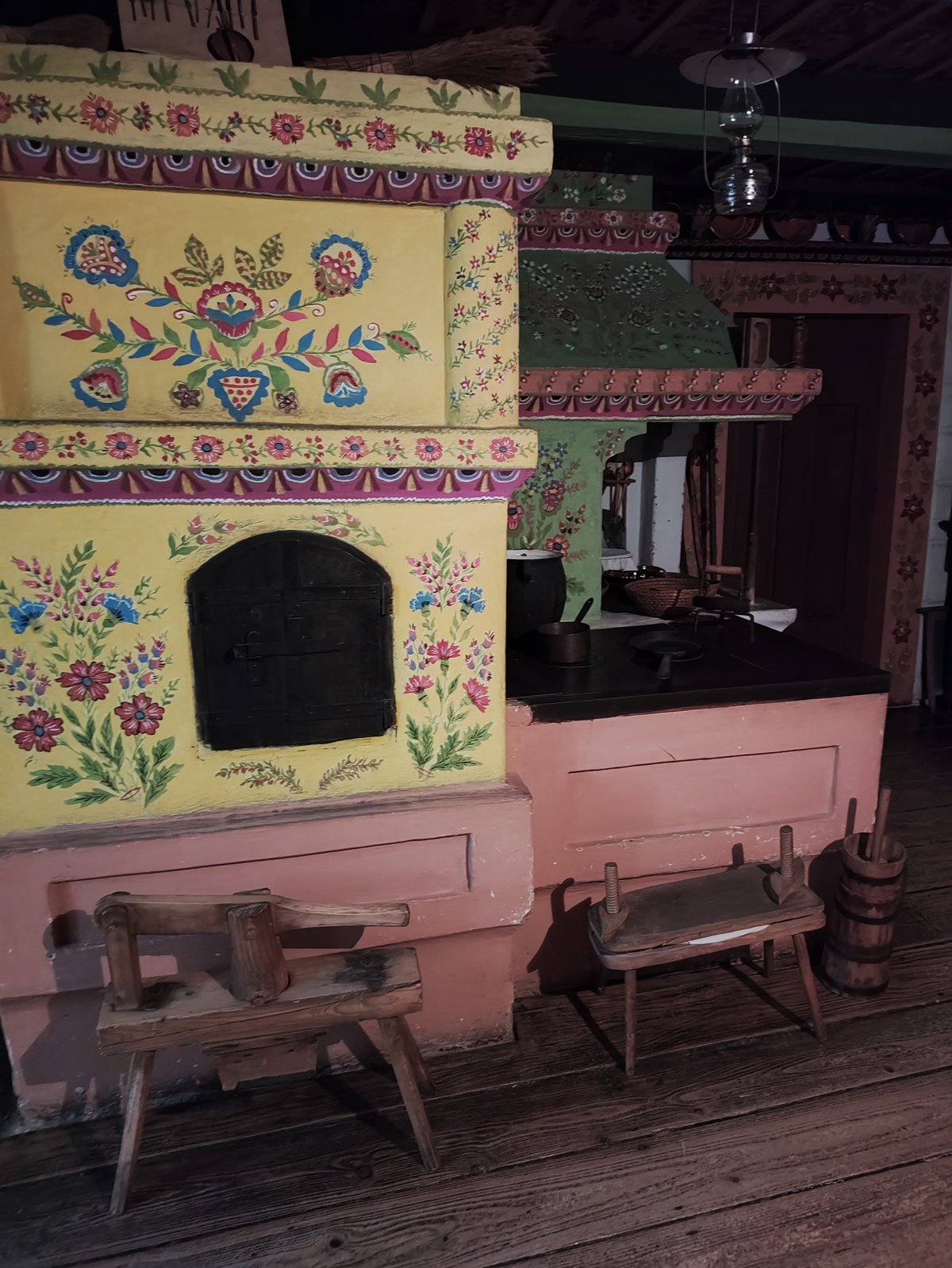
Inside, the layout is faithful to 19th-century noble residences, with a central hallway, salons, bedrooms, and Matejko’s studio. Period furnishings, including Matejko’s easel and grand piano, along with portraits of Polish monarchs painted by his students, set the atmosphere of his era (visitmalopolska.pl).
After suffering neglect during and after World War II, the manor was restored in the 1960s and opened as a museum in 1966, preserving both its architectural and cultural significance (dnidziedzictwa.pl).
The Landscape Park and Surroundings
The manor is set within a four-hectare landscape park designed in the Romantic style, with winding paths, open lawns, and clusters of ancient trees (visitmalopolska.pl). Remnants of historic orchards and kitchen gardens remain visible, and the proximity to the Dłubnia River adds to the picturesque setting. The park is a tranquil retreat, offering a peaceful escape from urban Kraków.
Adjacent to the manor is a 17th-century wooden church, relocated from Jawornik, further enriching the site’s historical context (karnet.krakowculture.pl).
Museum Collections and Exhibitions
Permanent Collections
The museum’s permanent collection centers on Matejko’s legacy:
- Original Artifacts: Matejko’s easel, period furniture, the grand piano of his wife, and other personal effects (kawiarniany.pl).
- “Gallery of Polish Kings and Princes”: An oil painting cycle by Matejko’s students, based on his sketches, depicting Polish monarchs (nocowanie.pl).
- Kołłątaj Room: Dedicated to Hugo Kołłątaj, featuring 18th-century furniture and portraits (museo.pl).
Temporary Exhibitions and Cultural Events
The manor hosts rotating art exhibitions, concerts (including the Summer Jazz Festival Kraków), literary readings, and educational workshops (palac-sztuki.krakow.pl). Guided tours often conclude with live music, enhancing the visitor experience (nocowanie.pl).
Notable Highlights
- Matejko’s Veranda (Ganek): A unique, intricately carved wooden porch (mmz.info.pl).
- Commemorative Bust and Plaque: Honoring Matejko’s artistic contributions.
- Landscaped Park: Free for public walks, with rare trees and scenic views.
Visiting Information
Hours, Tickets, and Accessibility
- Opening Hours: Tuesday–Sunday, 10:00 AM–5:00 PM (closed Mondays and some holidays). Seasonal adjustments may occur; always check the official website for updates.
- Tickets: Standard: 15–20 PLN; Reduced: 10–15 PLN; Family ticket: 45 PLN; children under 7 enter free. Guided tours are often included in admission.
- Location: ul. Melchiora Wańkowicza 25, 31-752 Kraków, Poland.
- Accessibility: The manor and park are mostly wheelchair accessible, though some thresholds and rooms may present minor challenges.
Guided Tours and Events
Guided tours are available in Polish and English, offering deep insights into the manor’s history, architecture, and collections. Many tours include live accordion performances. Advance booking is recommended, especially for groups.
Nearby Attractions and Travel Tips
- How to Get There: The manor is accessible by public transport from Kraków’s city center (trams and buses to Krzesławice). Parking is available for drivers.
- Nearby Sights: The landscaped park, the adjacent 17th-century wooden church, Nowa Huta district, Wawel Castle, and the Old Town Market Square.
- Photography: Allowed without flash in most areas.
Frequently Asked Questions (FAQ)
Q: What are the opening hours?
A: Tuesday–Sunday, 10:00 AM–5:00 PM; closed Mondays.
Q: How much are tickets?
A: 15–20 PLN for adults, 10–15 PLN for students and seniors, free for children under 7; family ticket 45 PLN.
Q: Are guided tours available?
A: Yes, guided tours are included in the ticket price; booking in advance is recommended.
Q: Is the manor accessible for people with disabilities?
A: The manor is mostly accessible, with some historical constraints; please inquire in advance for specific needs.
Q: What else can I see nearby?
A: The park, the historic wooden church, and other Kraków landmarks.
Listen to the full story in the app
Your Personal Curator, in Your Pocket.
Audio guides for 1,100+ cities across 96 countries. History, stories, and local insight — offline ready.
Audiala App
Available on iOS & Android
Join 50k+ Curators
Sources
- verified
- verified
- verified
- verified
- verified
- verified
- verified
- verified
- verified
Last reviewed: