Introduction
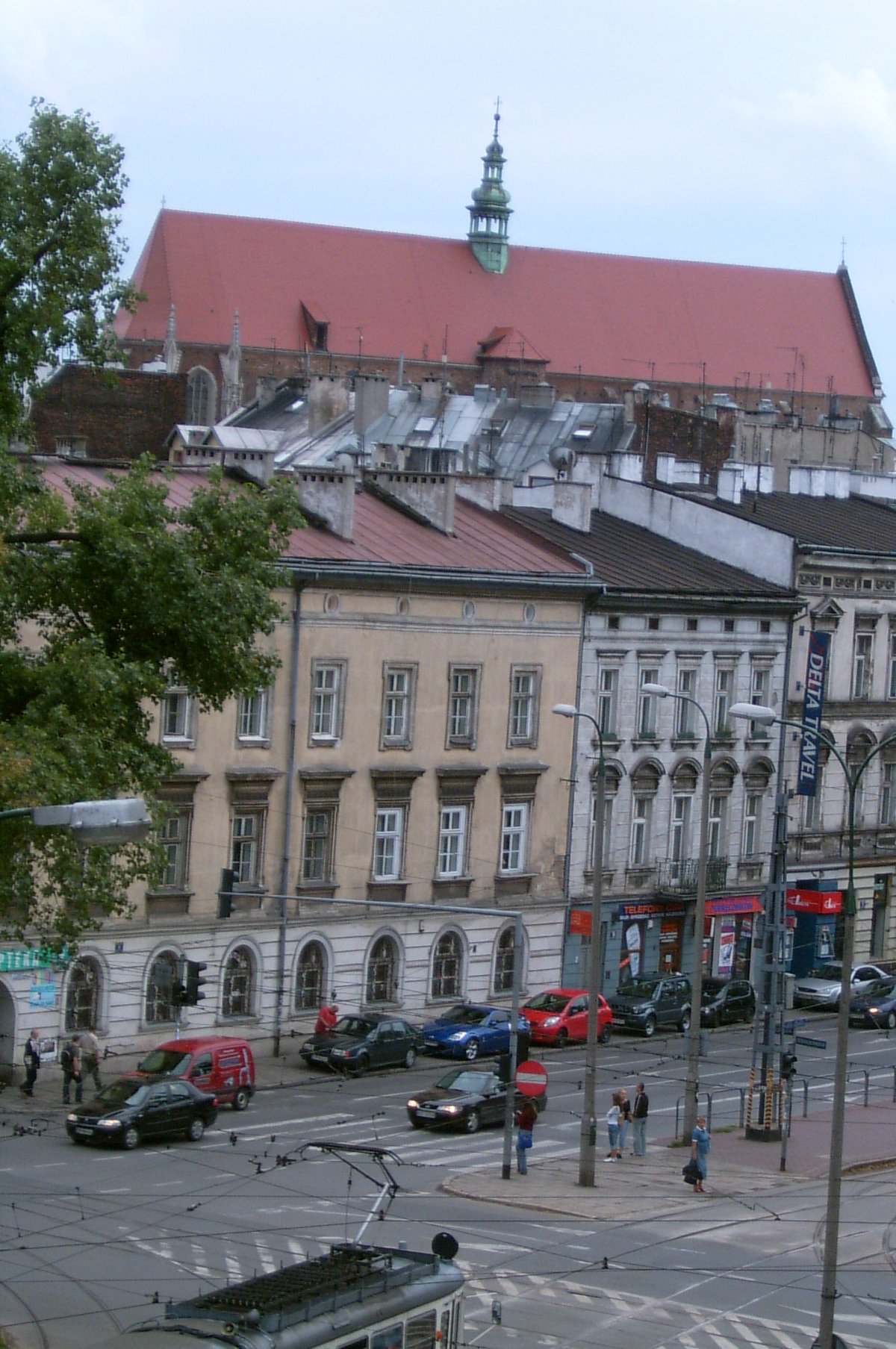
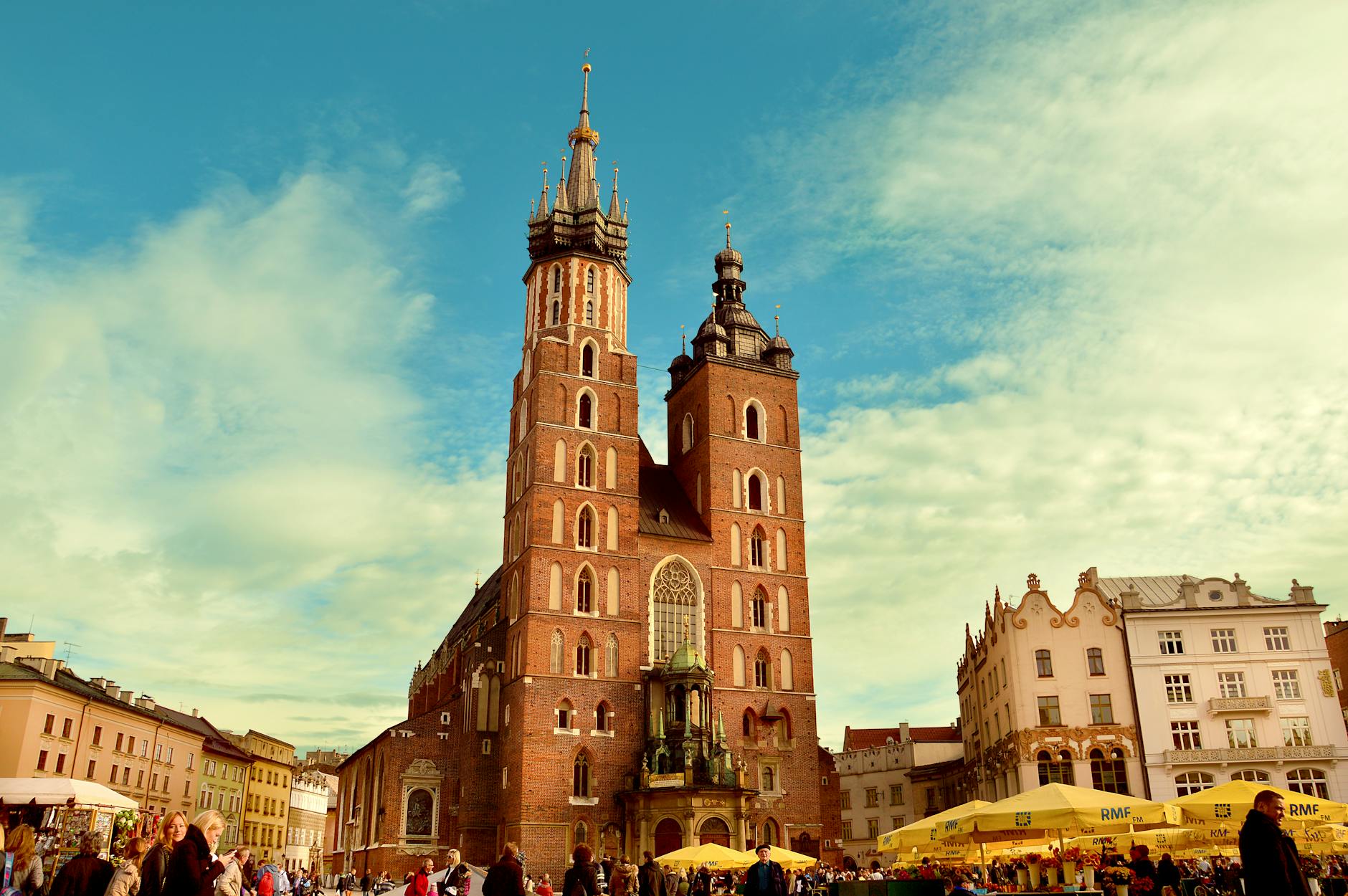
Stand on Kraków’s Main Market Square at dusk and you’ll hear the same five-note bugle call that has echoed from St. Mary’s Basilica every hour for centuries, abruptly cut short mid-phrase in memory of a 13th-century watchman killed by a Tatar arrow. That single, haunting sound captures the city better than any guidebook: Kraków is a place where the past refuses to stay politely in the past. In Poland’s former royal capital, layers of royal pomp, Jewish memory, academic rigor and Soviet-era steel still sit within a walkable medieval grid that somehow never feels like a theme park.
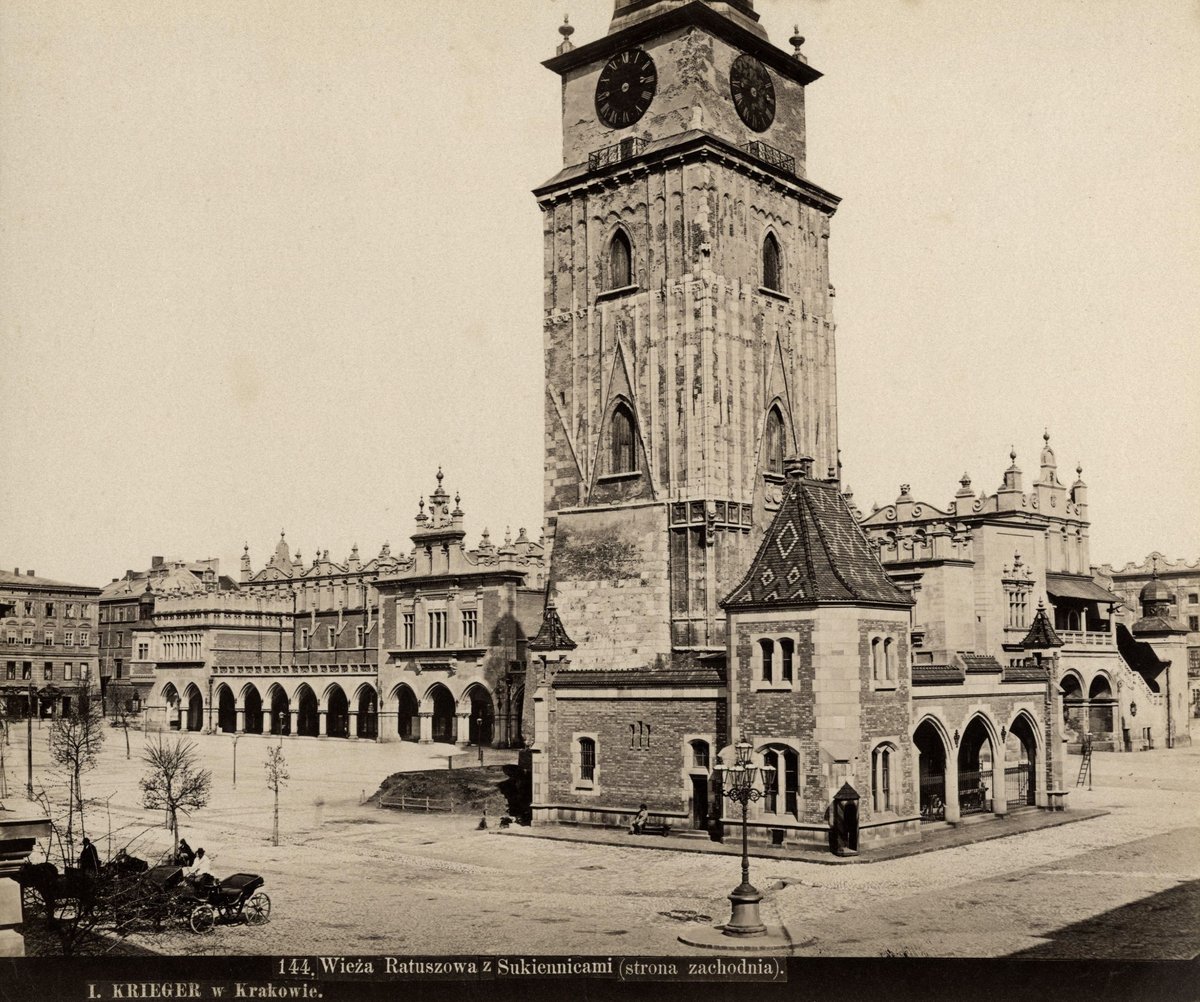
The city’s genius lies in its legibility. Within a few square kilometres you can move from the Renaissance arcades of the Cloth Hall to the hushed Gothic interior of Wawel Cathedral where Polish kings are buried, then cross the Vistula to the brick smokestacks of Nowa Huta, built as a deliberate socialist riposte to all that aristocratic heritage. Kazimierz, once the vibrant Jewish quarter, now pulses with late-night bars and the smell of grilled oscypek, while the quarried cliffs of Zakrzówek offer wild swimming just fifteen minutes from the Rynek.
Yet Kraków is far more than beautiful ruins and tragic history. It remains a living university town whose Jagiellonian scholars have shaped European thought for six centuries, and a place where contemporary art, experimental theatre and Michelin-starred Polish cooking thrive alongside medieval traditions. The same city that reverently displays Leonardo’s Lady with an Ermine also serves sausage from a blue communist-era van at midnight and hosts one of Europe’s most respected experimental music festivals.
Come for the postcard perfection of the UNESCO-listed Historic Centre, but stay for the conversations in smoke-filled cellars, the scent of warm obwarzanek from street carts, and the quiet realisation that this is one of the few European cities where the 21st century has not yet managed to erase the previous seven.
Places to Visit
The Most Interesting Places in Kraków
Old Town Market Square in Krakow
Discover the heart of Kraków's Old Town - Rynek Główny, a square steeped in history and brimming with modern-day charm.
Wawel Cathedral
Perched majestically atop the historic Wawel Hill in Kraków, Poland, Wawel Cathedral—officially known as the Archcathedral Basilica of Saints Stanislaus and…
Wawel Castle
Wawel Castle, majestically situated atop Wawel Hill overlooking the Vistula River, is a cornerstone of Poland’s rich historical and cultural heritage.
National Museum in Kraków
Nestled in the heart of Kraków, Poland, the National Museum in Kraków (Muzeum Narodowe w Krakowie, MNK) stands as a monumental custodian of Polish art,…
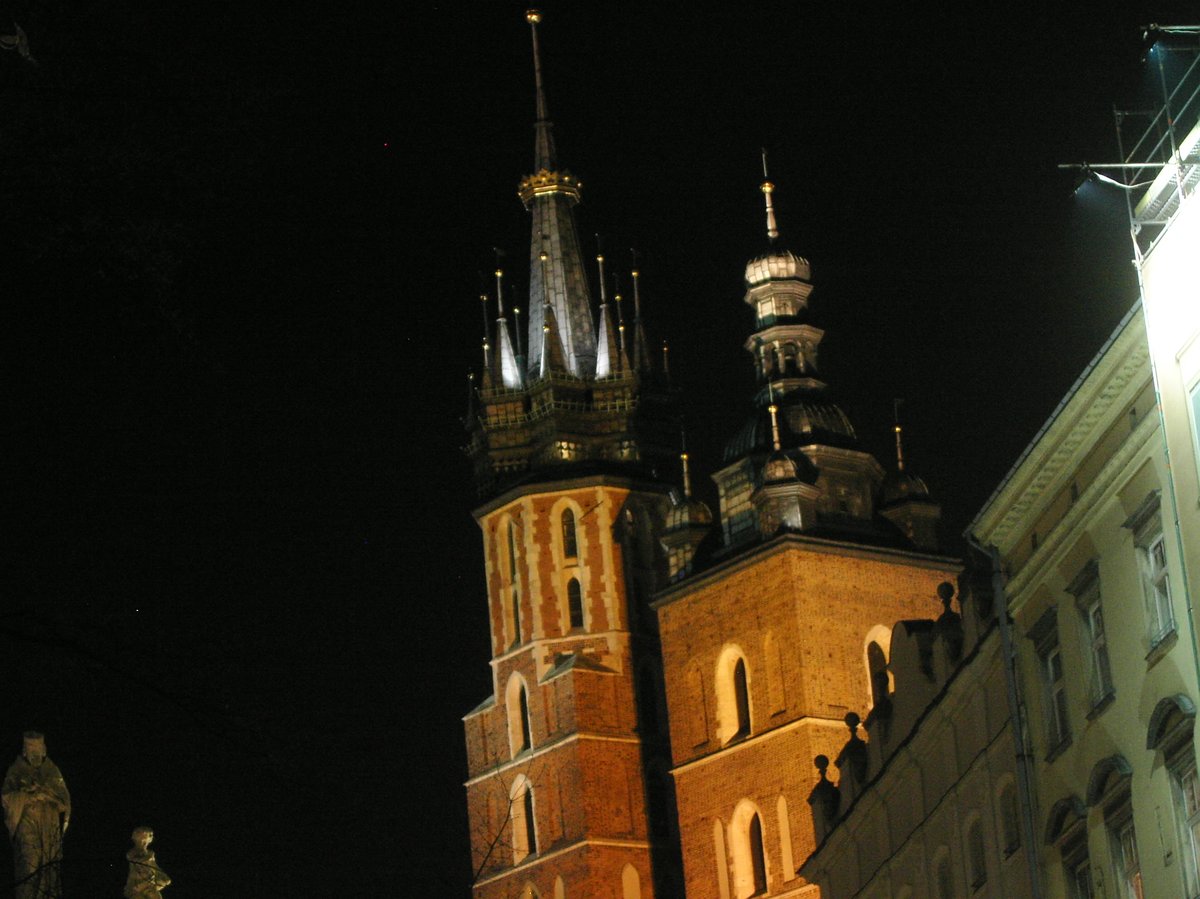
St. Mary'S Basilica
Nestled in the heart of Kraków's Old Town, St.
Old Town
Kraków's Old Town, a gem in the heart of Poland, is a UNESCO World Heritage Site renowned for its historical significance, architectural splendor, and vibrant…
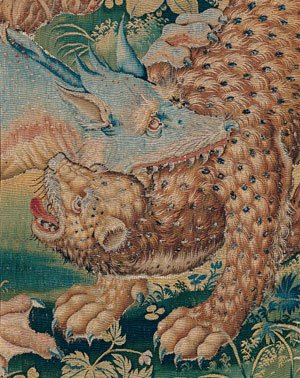
Smok Wawelski
The Wawel Dragon, or "Smok Wawelski," is an enduring symbol of Kraków, Poland, blending rich history, folklore, and modern culture into a captivating narrative.
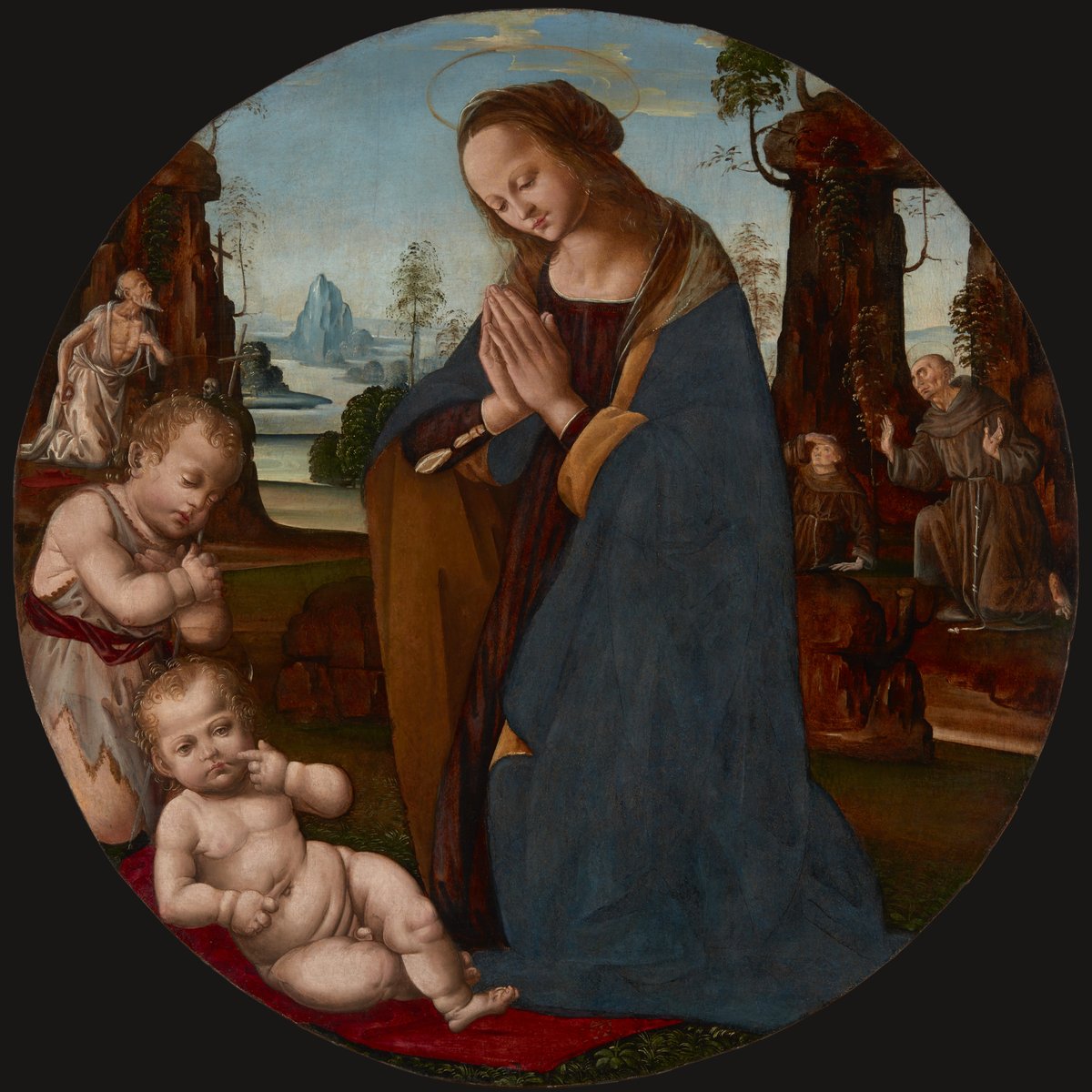
Czartoryski Museum
Nestled in the historic heart of Kraków, Poland, the Czartoryski Museum stands as a venerable institution preserving not only Polish national heritage but…
Juliusz Słowacki Theatre
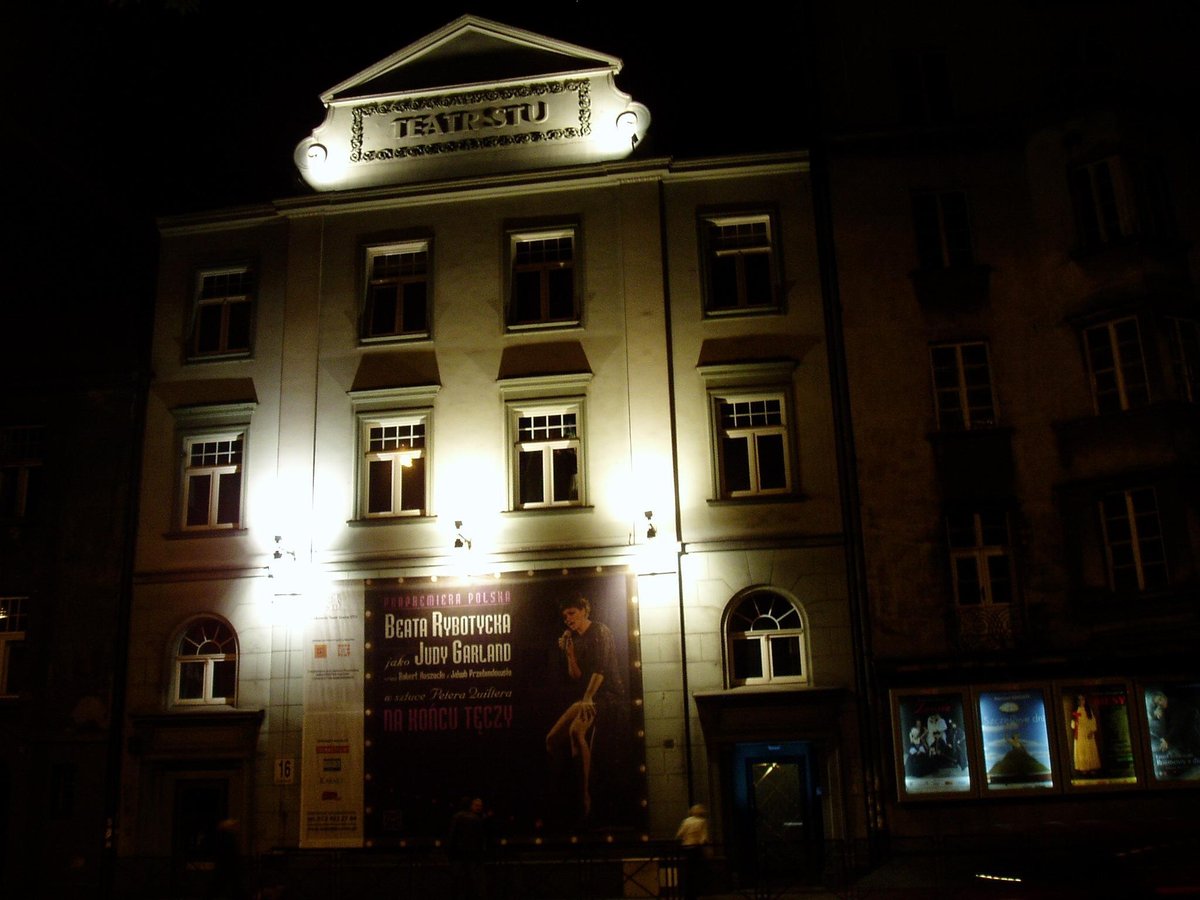
The Juliusz Słowacki Theatre in Kraków stands as a monumental testament to Poland’s rich theatrical heritage and national identity.
Market Square in Kleparz, Kraków
Old Kleparz, locally known as Stary Kleparz, is a historic market square in Kraków, Poland, dating back to the 14th century.
Helena Modrzejewska National Old Theater in Kraków
Nestled in the heart of Kraków’s UNESCO-listed Old Town, the Helena Modrzejewska National Old Theater (Narodowy Stary Teatr im.
Museum of Kraków
The Museum of Kraków, formerly known as the Historical Museum of the City of Kraków, stands as a vibrant testament to the rich and multifaceted history of one…
What Makes This City Special
Layered on Wawel Hill
Wawel Royal Castle and Cathedral sit on a limestone outcrop that has served as royal residence, necropolis, and symbol of Polish statehood for a thousand years. Walk the hill in early morning and you’ll have the arcades, Renaissance courtyard, and dragon’s den almost to yourself before the crowds arrive.
Kazimierz Memory
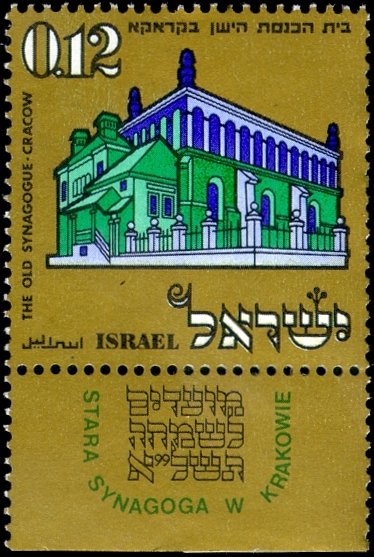
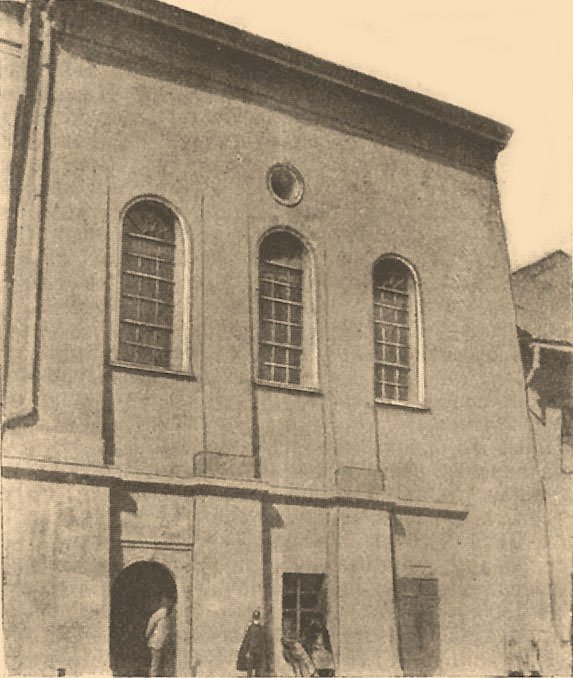
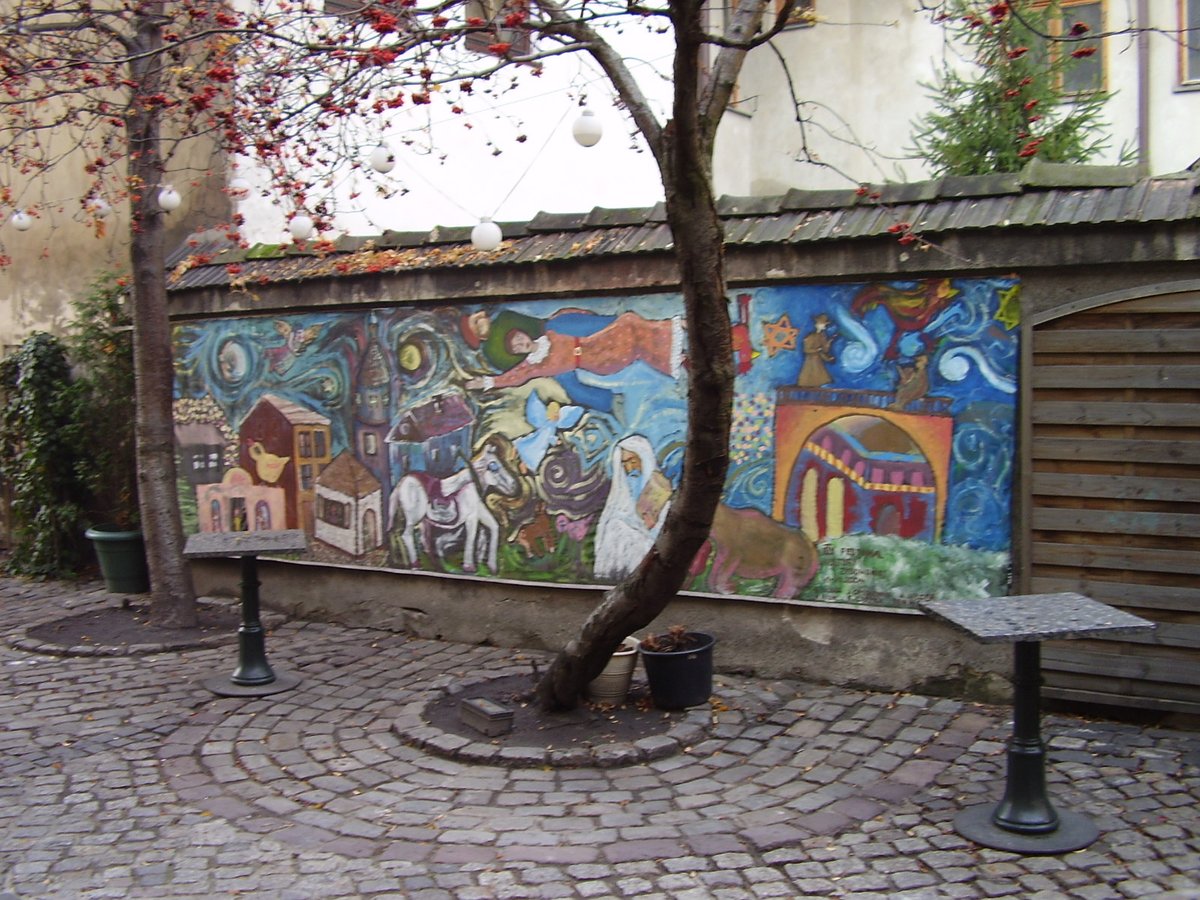
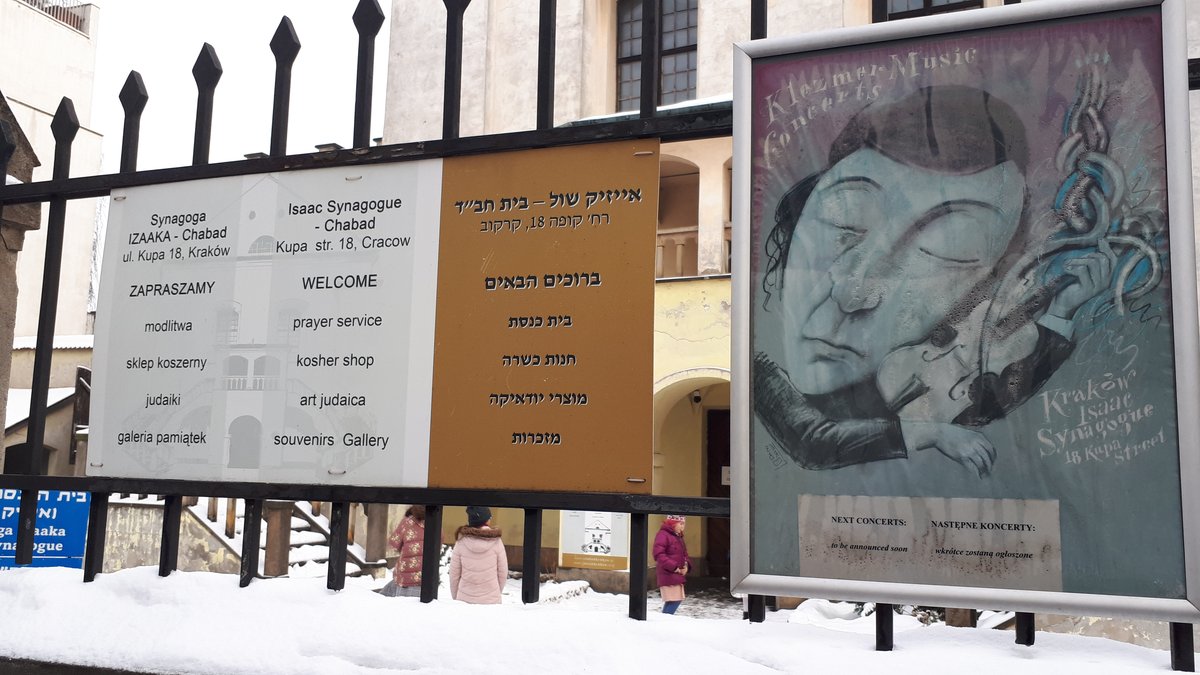
The former Jewish district holds an intact ensemble of synagogues, including the 15th-century Old Synagogue now housing a poignant museum. The layered streets carry both pre-war life and post-war absence; the contrast between daytime quiet and evening buzz in Plac Nowy is one of Kraków’s most honest experiences.
Unexpected Art & Design
From Leonardo’s Lady with an Ermine in the Czartoryski Museum to Wyspiański’s stained-glass windows in the Franciscan Church, and on to the post-industrial MOCAK and Cricoteka, Kraków refuses to be only a medieval museum piece. The city’s creative life runs deeper and more contemporary than most visitors expect.
Mounds and Wild Edges
Four mysterious prehistoric and patriotic mounds rise above the city. Climb Kościuszko Mound at golden hour for the best panorama, or visit the more atmospheric Krakus Mound in Podgórze at sunset; both reveal a Kraków that feels surprisingly green and geological.
Historical Timeline
From Wawel Hill to the World: Kraków’s Layered Centuries
A city that refused to forget who it was
First Footprints on Wawel
Stone Age hunters and early Slavic settlers built a fortified refuge on the limestone outcrop of Wawel Hill. The Vistulans turned this easily defended height into a tribal stronghold overlooking the Vistula River. Centuries before any written record, the hill already carried the scent of woodsmoke, iron, and ritual.
First Written Mention
Arab traveler Ibrahim ibn Yaqub described Kraków as a bustling commercial center. By then the settlement was already trading furs, slaves, and amber along routes connecting Prague, Kiev, and the Baltic. The city’s long life as a crossroads had officially begun.
Mieszko Claims Kraków
Duke Mieszko I folded the Vistulan stronghold into the young Polish Piast state. The political marriage of hillfort and dynasty gave Kraków its first taste of royal importance. Within a generation the hill would carry both pagan shrines and the first Christian structures.
Bishopric & First Cathedral
After the Congress of Gniezno, Kraków received its own bishop. A stone cathedral rose on Wawel beside a small rotunda from the 970s. The hill now spoke in both the language of power and the language of the Church.
Kraków Becomes Royal Seat
After Bohemian invaders burned the first cathedral, Kraków replaced Gniezno as the main seat of the Polish ruler. The city would remain the political heart of Poland for the next five and a half centuries.
Mongol Invasion & Destruction
Tatar horsemen swept through Kraków, leaving the city in ashes. The catastrophe cleared the ground for something new. When the survivors returned, they would build a city governed by written law rather than custom.
Magdeburg Rights Granted
Prince Bolesław V the Chaste issued the city charter on 5 June. The great rectangular Main Market Square and grid of streets were laid out almost overnight. German, Polish, and Jewish merchants arrived to repopulate the ruins. Kraków was reborn as a planned European trading city.
Kazimierz Founded
King Casimir the Great chartered a new town south of Kraków named after himself. Intended as a rival commercial center, Kazimierz would instead become the vibrant heart of Jewish life in the region for the next six centuries.
University & Golden Age Begin
Casimir the Great founded the University of Kraków, the second oldest in Central Europe. That same year the Gothic Wawel Cathedral was consecrated and the king hosted European monarchs at the Congress of Kraków. The city stepped into its intellectual prime.
Veit Stoss Arrives
The German sculptor Veit Stoss settled in Kraków and spent the next twelve years carving the monumental high altar for St. Mary’s Basilica. When the limewood altarpiece was installed in 1489, it became the artistic heartbeat of the city.
Nicolaus Copernicus Enters University
A quiet 19-year-old from Toruń began his studies at Kraków’s university. The city’s astronomers and mathematicians shaped the young Copernicus far more than any single lecture. The intellectual soil that later produced heliocentrism was prepared here.
Prussian Homage in the Market Square
In front of the Cloth Hall, Albrecht Hohenzollern knelt before King Sigismund I and accepted Prussia as a Polish fief. The theatrical moment, watched by thousands, marked the high point of Kraków’s diplomatic prestige.
Sigismund’s Chapel Completed
The golden-domed Renaissance chapel at Wawel Cathedral, designed by Bartolomeo Berrecci, was finished. It remains the most perfect piece of Italian Renaissance architecture north of the Alps and the final resting place of the Jagiellonian kings.
Royal Court Moves to Warsaw
After yet another devastating fire on Wawel, King Sigismund III Vasa officially transferred the royal residence to Warsaw. Kraków lost its status as permanent capital but kept its crown: every Polish king would still be crowned and buried here.
Swedish Deluge
Swedish troops captured and looted Kraków during the devastating Deluge. The city’s churches were stripped, its population halved by war and plague. Recovery would take generations.
Kościuszko’s Uprising Begins
Tadeusz Kościuszko stood in the Main Market Square and swore the oath that launched the national insurrection against Russia and Prussia. The square that once witnessed royal homage now heard the call for Polish freedom.
Free City of Kraków Created
The Congress of Vienna created the tiny Republic of Cracow, a strange semi-independent city-state under the protection of three empires. For thirty years it became a beacon of Polish culture and conspiracy.
The Great Fire
On 18 July a fire destroyed nearly ten percent of the city in a single night. The disaster cleared medieval clutter and accelerated Kraków’s transformation into a consciously preserved historic city under Austrian rule.
Poland Regains Independence
With the collapse of Austria-Hungary, Kraków became part of the reborn Second Polish Republic. The city that had guarded Polish memory through 123 years of partitions could finally breathe as a free Polish city again.
Nazi Occupation Begins
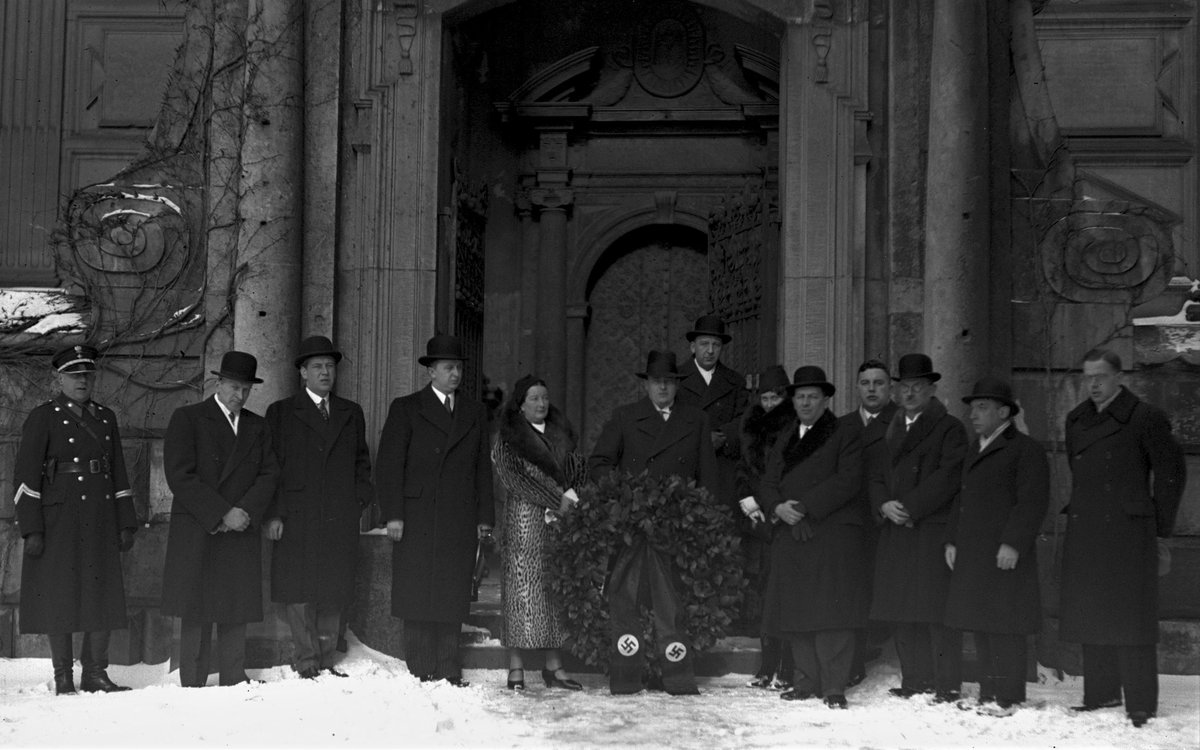
German troops entered Kraków on 6 September. Five weeks later the city became the capital of Hans Frank’s General Government. The systematic destruction of Polish and Jewish Kraków had begun.
Kraków Ghetto Established
In March the Germans sealed 15,000–20,000 Jews into the Podgórze district. Two years of unimaginable suffering followed before the ghetto’s final liquidation in March 1943. The city’s centuries-old Jewish community was almost entirely erased.
Liberation from Nazi Rule
Soviet troops entered Kraków on 19 January. Remarkably, the historic center survived almost intact. Unlike Warsaw, Kraków would enter the postwar era with its medieval bones still standing.
Nowa Huta Steelworks Founded
Communist authorities began building an enormous socialist industrial city on Kraków’s eastern edge. The steelworks were deliberately placed to create a loyal proletarian counterweight to “bourgeois” and “clerical” Kraków.
UNESCO World Heritage
The Historic Centre of Kraków, including Wawel and Kazimierz, was inscribed on the first UNESCO World Heritage List. The city that had survived Mongols, Swedes, Nazis, and Communists was finally recognized as one of humanity’s irreplaceable treasures.
Karol Wojtyła’s Legacy
When Pope John Paul II died, the city that had shaped him mourned as few others could. The former Archbishop of Kraków had helped bring down communism and returned Kraków to the world’s attention.
UNESCO City of Literature
Kraków joined the UNESCO Creative Cities Network as a City of Literature. From the 16th-century printing houses to the Nobel laureates Szymborska and Miłosz, the city’s literary tradition had earned its place among the world’s great literary capitals.
Notable Figures
Stanisław Lem
1921–2006 · Science-fiction writerAfter moving to Kraków in 1946, Lem studied at Jagiellonian University and spent most of his life writing in this city. The streets around his apartment saw him develop the ideas that became Solaris. He would probably be amused that tourists now photograph the same medieval towers he walked past daily while inventing distant planets.
Wisława Szymborska
1923–2012 · PoetSzymborska lived, studied, and wrote in Kraków for over eighty years, turning the ordinary details of city life into Nobel-winning poetry. You can still imagine her buying flowers at Stary Kleparz or drinking coffee in Kazimierz. Her clear-eyed gaze on everyday Kraków continues to shape how thoughtful visitors see the city.
Oskar Schindler
1908–1974 · IndustrialistSchindler arrived in Kraków in 1939, took over an enamelware factory in Zabłocie, and gradually used it to protect over 1,000 Jewish workers. Today the factory museum stands as quiet testimony in the same industrial building. He would likely find it strange that the city now remembers him far more than the goods his factory once produced.
Veit Stoss
c. 1447–1533 · Gothic sculptorVeit Stoss spent nearly twenty years in Kraków carving the enormous altarpiece that still dominates St. Mary’s Basilica. The intensity of those wooden figures suggests he absorbed something of the city’s medieval intensity. Standing before his work today, you sense the same craftsman who once walked these streets half a millennium ago.
Plan your visit
Practical guides for Kraków — pick the format that matches your trip.
Photo Gallery
Explore Kraków in Pictures
Contemporary office architecture in Kraków, Poland, featuring a unique skybridge connecting two modern glass-facade buildings.
Raymond Petrik on Pexels · Pexels License
A striking contrast between modern residential buildings and historic industrial architecture in a sunny neighborhood of Kraków, Poland.
SHOX ART on Pexels · Pexels License
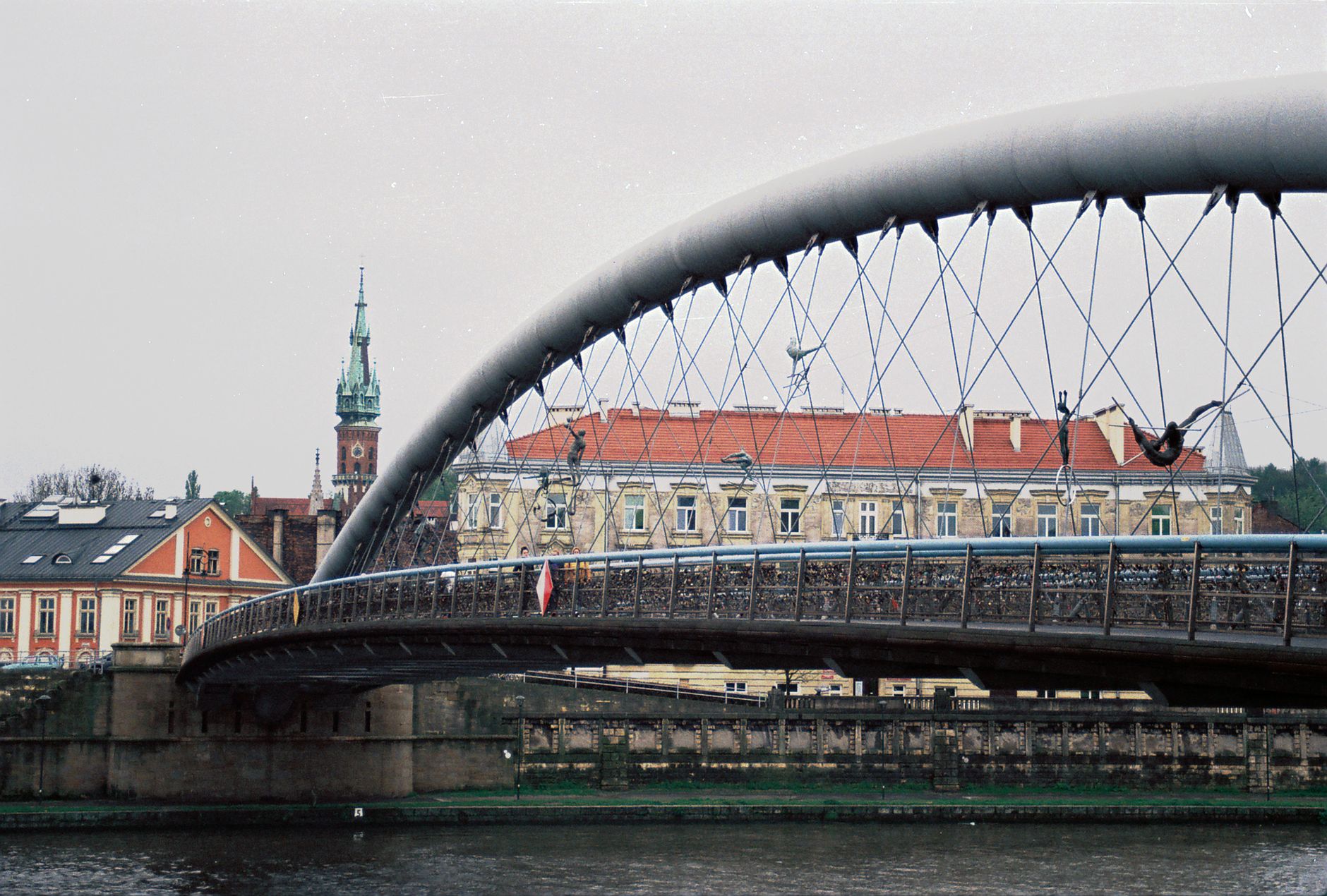
The Father Bernatek Footbridge, famous for its acrobatic sculptures, spans the Vistula River in the heart of Kraków, Poland.
Anna Stepko on Pexels · Pexels License
A blue street sign for Aleja inż. Nowotarskiego mounted on the textured stone facade of a historic building in Kraków, Poland.
Aleksander Dumała on Pexels · Pexels License
Practical Information
Getting There
Kraków Airport (KRK) lies 11 km west of the centre. The SKA1 regional train reaches Kraków Główny in 20 minutes for 20 PLN (timetable valid March–June 2026). Bus 300 runs by day and 902 at night; official Kraków Airport Taxi ranks are clearly signed outside arrivals.
Getting Around
Kraków has no metro but an extensive tram and bus network operated by ZTP/KMK. A 24-hour Zone I ticket costs 17 PLN, 72-hour Zone I+II+III is 50 PLN. The Park-e-Bike free seasonal e-bike scheme operates from March 2026 with 143 bikes; the historic centre is compact and best explored on foot.
Climate & Best Time
May–June and September offer the best balance: average highs of 17–20 °C with moderate rain. July and August are warmest (19–22 °C) but wetter and busiest. Winters are cold (January average –1.6 °C) with occasional snow; the city feels atmospheric but many outdoor sites close earlier.
Language & Currency
Polish is the official language, but English is widely spoken in tourist areas, museums, and transport. Currency is the Polish złoty (PLN); 1 EUR ≈ 4.27 PLN as of March 2026. Contactless cards work almost everywhere, but carry some cash for smaller cafés and market stalls.
Where to Eat
Don't Leave Without Trying
Piwnica Pod Baranami
local favoriteOrder: Order żurek in bread and whatever wild game is on the menu — this is where locals come for proper traditional Polish cooking in a centuries-old cellar setting.
A Kraków institution in the heart of the Main Square with over 4,500 reviews, this is where the city eats when it wants authentic old-school Polish food without pretension. The medieval cellar atmosphere is the real deal.
C.K. Browar | Bar & Restaurant | Est. 1996
local favoriteOrder: Get the house-brewed beer and a plate of traditional Polish comfort food — the pork knuckle and pierogi are reliable choices that pair perfectly with their own ale.
Operating since 1996, this brewpub has become a Kraków staple with nearly 8,100 reviews. It's where locals go for honest food, excellent beer, and a genuine neighborhood vibe without the Old Town tourist crush.
Queen Boutique Hotel
quick biteOrder: This is a hotel restaurant with 24-hour service — ideal for late arrivals or early breakfasts. Order seasonal Polish dishes or international options depending on your mood.
A reliable, well-regarded spot for hotel guests and locals alike, with the convenience of round-the-clock service. The 4.8 rating reflects consistent, solid cooking.
LOKATOR coffee & books
cafeOrder: A coffee and a pastry in a quiet corner with a good book — this is a proper neighborhood cafe where you'll actually see locals reading, not posing for Instagram.
This intimate coffee shop combines quality espresso with curated books and a genuinely local clientele. It's where Kraków comes to slow down, away from the Old Town crush.
Chimney Cake Bakery
quick biteOrder: The chimney cakes — a Kraków street-food classic. Get them warm with your choice of toppings, whether you go traditional or adventurous.
With nearly 1,800 reviews, this is the go-to for one of Kraków's most iconic pastries. It's a quick, satisfying bite that captures the city's casual food culture.
Zakątek Cafe & Wine bar
cafeOrder: A glass of wine and a light plate — this is a cafe for lingering, not rushing. The wine selection is thoughtful and the vibe is intimate.
Tucked on Grodzka Street in the Old Town, this small wine bar and cafe is where locals escape for a quieter afternoon or evening. It's the opposite of the tourist trap.
Kurant
cafeOrder: Coffee and a pastry overlooking the Main Square — you're paying a bit for the location, but the quality justifies it. A solid spot for a proper break.
Right on the Rynek Główny with a 4.7 rating, Kurant offers a cafe experience that's actually decent despite its tourist-adjacent location. Good coffee, good pastries, good views.
Hotel Polski pod Białym Orłem
local favoriteOrder: Classic Polish dishes in a historic hotel setting — order whatever is listed as a traditional specialty. The 24-hour service means you can eat properly at any hour.
A historic hotel restaurant with 24-hour service and nearly 950 reviews, this is reliable Polish cooking in an Old Town location that feels less manufactured than the average tourist spot.
Dining Tips
- check Kazimierz, the Old Town, and Podgórze are the strongest food neighborhoods — don't eat only in the Rynek Główny.
- check Stary Kleparz market (Rynek Kleparski 20) is the oldest continuously operating market in Kraków — go early for the best produce and local dairy.
- check Plac Nowy in Kazimierz is the place for late-night zapiekanka (open-faced bread) — it's an iconic local move, especially on weekends.
- check Book ahead for sit-down restaurants if you want a table at dinner; Kraków eats well and popular spots fill up.
- check Street food and quick bites are excellent and cheap — obwarzanek, chimney cakes, and zapiekanka are worth trying from licensed vendors.
Restaurant data powered by Google
Tips for Visitors
Eat Like a Local
Skip the Main Square restaurants and head to Kazimierz for dinner. Try maczanka krakowska at Andrus or pierogi at Starka — the real Kraków flavors are found away from the Cloth Hall.
Buy Warm Obwarzanek
Get your obwarzanek krakowski straight from a blue street cart while it’s still warm. This braided ring bread with PGI status is Kraków’s true edible symbol, far better than any pre-packed version.
Time Your Basilica Visit
Visit St. Mary’s Basilica between liturgies to see the Veit Stoss altarpiece. The hourly bugle call from the tower sounds best from the square at the top of the hour.
Night Food Rules
Save zapiekanka at Plac Nowy and kiełbaski from the blue Nysa van for after dark. These are late-night Kraków institutions, not daytime tourist meals.
Mind Your Polish Thanks
When paying in cash, avoid saying “dziękuję” while handing over money — it signals you want to keep the change. Rounding up or 5-10% is the normal tipping range.
Walk the Planty
Follow the Planty Park ring instead of cutting straight through the Old Town. This green belt on the line of the former city walls gives you breathing space and reveals quieter monuments.
Explore the city with a personal guide in your pocket
Your Personal Curator, in Your Pocket.
Audio guides for 1,100+ cities across 96 countries. History, stories, and local insight — offline ready.
Audiala App
Available on iOS & Android
Join 50k+ Curators
Frequently Asked
Is Kraków worth visiting? add
Yes, Kraków is worth visiting. Its UNESCO-listed historic centre packs medieval squares, Wawel Hill, Kazimierz, and layers of Jewish and royal history into one remarkably walkable area. The city also offers strong contemporary culture, green spaces, and contrasts like Nowa Huta that make it far more than a pretty historic backdrop.
How many days do you need in Kraków? add
Three to five days is ideal for Kraków. This gives you time for the Main Market Square, Wawel, Kazimierz, Schindler’s Factory, and at least one deeper experience like Nowa Huta or the mounds. Two days feels rushed if you want to absorb the city’s academic, Jewish, and 20th-century layers.
Is Kraków safe for tourists? add
Kraków is generally safe for tourists. The main risks are standard big-city pickpocketing in crowded areas around Rynek Główny and occasional overcharging in tourist restaurants. Kazimierz and Podgórze feel relaxed at night, though it’s wise to stick to well-lit streets after bar closing time.
When is the best time to visit Kraków? add
Spring (April-May) and early autumn are the best times to visit Kraków. You’ll avoid the summer crowds and winter cold while catching events like Misteria Paschalia or the Jewish Culture Festival. June’s Wianki celebration on the river is particularly atmospheric.
How do you get from Kraków airport to the city centre? add
The train from Kraków Airport to the main station takes 17 minutes and runs every 30 minutes. From there it’s a 15-minute walk to the Main Market Square. Taxis and rideshares are straightforward but agree on price or use a trusted app to avoid surprises.
Sources
- verified UNESCO World Heritage Centre - Historic Centre of Kraków — Core information on the UNESCO listing and the compact heritage area including Wawel, Kazimierz, and the medieval city.
- verified Visit Kraków Official Tourism Site — Neighbourhood guides, attraction details, opening hours, and practical visitor information for Kraków and surrounding areas.
- verified Kraków Heritage - Intangible Heritage — Details on local foods including obwarzanek krakowski and other Kraków-specific dishes.
- verified In Your Pocket Kraków — Local insights on food institutions, markets, bars, and non-touristy Kraków experiences.
Last reviewed: