Quezon City
Philippines Updated Apr 2026
The jeepney in front of me is painted the color of a neon sunrise and smells of diesel and banana-cue. Its chrome horses rear under Quezon City’s sodium streetlights while the driver sings along to a remix of a 1976 Manila Sound hit—louder than the engine, louder than the rain. This is the Philippines’ largest city by daylight population, yet nobody hands you a map; they just point toward the nearest merienda stall and say “follow the smoke.”
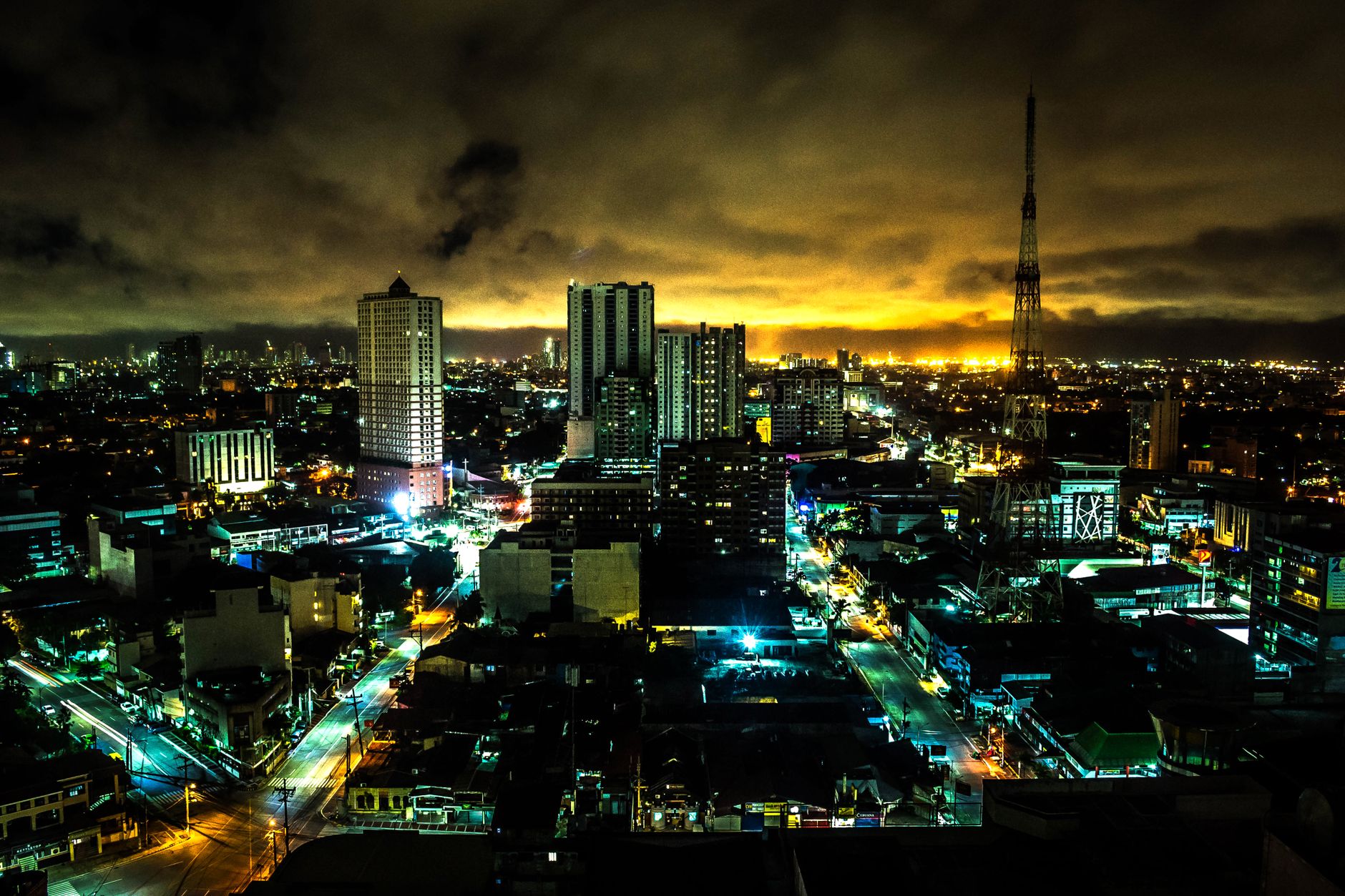 Photo: Picasso Dela Cruz / Pexels
- Attractions
- 12
- Audio
- 3 h 14 min
- Trip length
- 2–3 days
- Best season
- January–March (cool & dry)
Why Quezon City
Built from cited sources · see the method · How we make our guides →
QC, as locals call it, was meant to replace Manila as capital in 1948 and never quite abdicated the role. The presidential palace never moved, but the city kept the ambition: 66-meter Art-deco pylons skewer the sky above Quezon Memorial Circle, the shrine-museum holds the embalmed Packard that ferried Manuel Quezon to exile in 1944, and the new Tandang Sora Women’s Museum opens Tuesday-to-Sunday debates on who gets written into history. Walk three blocks and you’re on Maginhawa Street where student murals fade into espresso steam, or inside Araneta City’s coliseum where 15,000 people still call out “Laban!” every time a boxing underdog lands a punch.
The city’s gravity is sideways. Sidewalks end in vegetable gardens, universities spill into food parks, and a 2025 pedestrian bridge now arcs from the shrine straight into the Wildlife Center so you can contemplate revolution and then watch a Philippine duck dive in the same hour. If Metro Manila feels like a centrifuge, Quezon City is the rim where things slow enough to taste: sizzling sisig on a cast-iron plate at 1 a.m., lemongrass-laced kare-kare served under a 1950s Arturo Luz mural, halo-halo shaved so fine it disappears before the ice cream melts. Come for the museums, stay because someone handed you a plastic stool and refused to let you pay for the beer.
Monumental Core
Quezon Memorial Shrine’s 66-meter Art-Deco pylons pierce the skyline like three exclamation marks above the city founder’s sarcophagus. Inside the newly declared National Cultural Treasure, the elevator still smells of machine oil and 1953 ambition.Green Corridors
A landscaped footbridge now arcs from Quezon Memorial Circle straight into Ninoy Aquino Parks and Wildlife, turning two separate parks into a single 60-hectare lung you can walk without crossing traffic. Kingfishers dive over the lake at 7 a.m.; the city’s honk fades to a rumor.UNESCO Film City
QCinema screens premiere Filipino indie films inside Gateway Mall’s black-box cinemas every October, part of the city’s UNESCO Creative City of Film mandate. Post-credit discussions spill onto Araneta City’s neon arcade where film students argue over cinematography and sisig.Heritage Houses in the Wild
Mira-Nila, a 1930s Italianate mansion on a quiet Cubao hill, opens only by appointment; ring the bell and a caretaker unlocks rooms frozen with terno gowns and first-edition Rizals. Bahay Modernismo, tucked inside the Memorial Circle, does the opposite—free entry, air-conditioned, mid-century furniture you can sit on.
Neighborhoods
Where to wander, by quarter — each with its own rhythm.
Diliman
The campus that ate a forest. University of the Philippines’ 493 hectares hide brutalist chapels designed by National Artist Leandro Locsin, a 1949 oblation statue that faces due west so sunrise hits the bronze buttocks first, and the Vargas Museum where Juan Luna’s rotting masterpiece is kept at 18 °C and 45 % humidity. After sunset the academic bubble leaks into Maginhawa Street: neon milk-tea, indie bookshops that double as gin bars, and a weekend flea where you can buy a 1998 Nokia faceplate or a hand-bound zine on Marxist beekeeping.Cubao
Art-deco bus terminals, 1950s dream of empire converted into a 24-hour carnival. Araneta Coliseum—nicknamed the Big Dome—still smells of 1960 boxing sweat; beside it, New Frontier Theater’s 2,500 seats were re-upholstered in cobalt velvet for K-pop lightsticks. Below ground, Cubao Expo keeps 1970s shopfronts selling vinyl, surplus camo, and a café that brews coffee with cacao tablea. At 2 a.m. the same alley serves kimchi ramen under a single red bulb; the security guard knows your order before you speak.Maginhawa Food Area
A grid of residential streets that surrendered to appetite. Painted garage doors become menus: paella cooked in a wok, vegan adobo that smokes with coconut charcoal, milkshakes topped with entire slices of ube cheesecake. During the twice-yearly Maginhawa Arts & Food Festival the road closes at 4 p.m.; by 8 p.m. you’re ankle-deep in banana-cue sticks while a brass band covers Eraserheads. Bring cash, bring patience, bring stretchy pants.Tomas Morato & Timog Avenue
The city’s open-air living room. Korean grill smoke drifts past 1980s comedy bars where stand-ups still roast politicians by surname. Dress codes vary: board shorts at the sisig place that never closes, leather shoes at the speakeasy hidden behind a 24-hour laundromat. Karaoke starts polite at 9 p.m.; by midnight someone is crying into a microphone, consoled by a stranger who knows the next harmony.New Manila
Quiet money and older trees. Here the Quezon Heritage House—transplanted plank by plank from wartime rubble—sits across from Art-Nouveau gates hiding swimming pools shaped like pianos. Walk further and you’ll hit Bahay Nakpil-Bautista’s 1914 narra floorboards, still creaking with revolution gossip. The air smells of sampaguita and newly painted basketball courts; tricycles charge P30 to carry you past mansions turned into Montessori schools and one convent that sells homemade yema.La Mesa Watershed Edge (Fairview)
Where the city exhales. The 33-hectare Eco Park is the public slice of Metro Manila’s last remaining forest watershed; admission is P20 if you’re not a QC resident, free if you can pronounce “barangay” without accent. Rent a bamboo raft for P60 and float above water so clean it reflects only sky and the occasional brahminy kite. On weekends mountaineers practice rappel on a 50-ft wall; their carabiners clink like wind chimes above the cicadas.Banawe (QC Chinatown)
Eight blocks of Fujianese hardware stores, acupuncture clinics, and bakeries that sell mooncakes year-round because “mid-autumn is a feeling.” Duck porcelain hangs beside brake pads; an herbalist will write your prescription on yellow paper then point you to a noodle house where the broth has simmered since 1987. During the Mooncake Festival dragon dancers thread through traffic, their drums syncing with jeepney horns at the intersection labeled Welcome Rotonda—technically the border, but nobody stops dancing to check the map.Vertis North
The newest strip of glass trying to look like a city. Solaire Resort’s 38-story curve opened in 2024 and drops LED fireworks every hour after dusk. Inside, Manyaman serves sisig on a skillet still sizzling as it passes the slot machines; upstairs, the infinity pool reflects the Quezon Memorial pylons so they look like candles. Cross the footbridge to Trinoma mall and you’ll find commuters napping on faux-grass, shoes off, earbuds in, dreaming of somewhere cheaper.
Plan your trip
Before you go
- Getting There
- Ninoy Aquino International Airport (MNL) Terminal 3 sits 16 km south; take the UBE Express P2P bus (₱100) direct to Araneta City Cubao in 60–90 min depending on EDSA mood. Clark International Airport (CRK) is farther—80 km—but Genesis shuttle runs to Diliman for north-side stays. No passenger trains serve QC; main hubs are bus terminals at Cubao and Kamias.
- Getting Around
- MRT-3 slices north-south through QC with five stations from North Avenue to Santolan; buy a Beep card (₱100 with ₱50 load) and tap ₱13–28 per ride. EDSA Carousel busway runs parallel 24/7 at ₱15–₹75. Jeepneys and modern PUVs fan into barangays—flag the latter if you want air-con and exact change. No city bike-share; bring your own wheels to UP Diliman’s car-free Academic Oval on Sunday mornings.
- Climate & Best Time
- Dry season stretches November–April: 22–33 °C, humidity drops to 69 %, only 2–6 rainy days a month. February is gold—27 mm rain, two wet days, 29 °C highs. Monsoon hits May–October; July peaks at 474 mm and 21 deluge days, flooding Commonwealth underpasses. Book January–March for outdoor walks and open-air cafés without portable umbrellas.
- Safety
- Stick to lit commercial strips—Tomas Morato, Eastwood, Araneta City—where 24-hour guards patrol. Pickpockets work crowded MRT cars and jeepneys; keep phones in front pockets. Avoid flood-prone Commonwealth and Tandang Sora underpasses during July–September storms; knee-deep water rises in 15 minutes.
A Capital That Refused to Stand Still
From cogon grass to concrete, a city that keeps re-inventing itself
- c. 3000 BCE
Austronesians Paddle Up the Marikina
The first rice farmers beach their outriggers along the creeks that will later be swallowed by culverts. They name the ridge Tandang Sora would defend 4,800 years later. Pottery shards found beneath Commonwealth Avenue still carry the paddle-mark patterns.
- 1571
Spanish Boots March Over the Ridge
Legazpi’s soldiers claim the high ground northeast of Manila for grazing cattle and growing tobacco. The land is recorded as sitios of Caloocan, San Juan, and Mariquina—names that will linger on street signs long after the farms are gone. Augustinian friars measure the first dirt road that will become EDSA.
- 1812
Melchora Aquino Is Born in Balintawak
The woman who will outlive three colonial masters arrives in a bamboo house that still stands—re-assembled inside a city that didn’t exist in her lifetime. By 84 she’s hiding revolutionaries in her store-room and being exiled to Guam for her trouble. Locals still leave pandesal at her shrine when they need favors.
- August 23, 1896
Cry of Pugad Lawin
Andrés Bonifacio slashes his cedula beneath a mango tree whose roots now curl under a 7-Eleven parking lot. The shout tears through Caloocan barrio and into textbook eternity. Paper confetti drifts into the creek; nobody yet knows the creek will be renamed after a future senator assassinated on a tarmac.
- October 12, 1939
Quezon Signs His Own City Into Being
Commonwealth Act 502 carves 7,000 hectares out of five sleepy towns to build a capital that would breathe. Frost’s master plan shows wide radial avenues ending in rotundas—drawn with American confidence on land where carabao still wallow. The first survey pegs are hammered in fields of cogon taller than the engineers.
- 1949
UP Diliman Opens, Brain-Drain Begins
The national university abandons crowded Ermita for raw grassland still grazed by cows. Professors complain about the mud, then stay for the sunsets. Within a decade the campus becomes the country’s largest think-factory, its Oblation statue staring toward a horizon that keeps adding high-rises.
Show the full timeline (17 moments)
- October 12, 1949
QC Becomes the Capital—Briefly
President Quirino plants a cornerstone for a Capitol that will never rise. Manila sulks; Quezon City balloons with civil-service housing and movie studios chasing tax breaks. The move lasts only 27 years—long enough to plant seeds of gridlock that still flower every rush hour along EDSA.
- March 19, 1964
Quezon Memorial Shrine Inaugurated
Three Art-Deco pylons—each 66 meters, one for every year of Quezon’s life—pierce the skyline above unfinished radial roads. His remains travel from Arlington Cemetery to a marble sarcophagus cooled by whispering vents. At night the monument’s uplights attract bats and lovers in equal numbers.
- November 7, 1975
Metro Manila Commission Swallows the City
Marcos folds Quezon City into a super-region, stripping it of capital status with a single decree. The Batasang Pambansa stays, leaving QC both pregnant and orphaned—seat of parliament, no longer seat of power. The city learns to flex without a crown, growing denser, louder, more itself.
- August 21, 1983
Ninoy Aquino’s Last Ride Home
The opposition leader is shot on the tarmac, but his funeral cortege starts from Times Street in Quezon City where his mother still keeps the light on. Millions walk behind the coffin under a typhoon sky; the route becomes pilgrimage trail. A wildlife center and a boulevard will later bear his name, though nothing marks the exact moment the city’s conscience cracked open.
- February 22-25, 1986
People Power Occupies EDSA
Between Camp Crame and Camp Aguinaldo, nuns hold flowers against tanks and the world watches on Betamax. Quezon City’s main artery becomes an open-air living room where strangers share rice and radio updates. When the helicopters finally lift Marcos out, the asphalt is littered with yellow confetti and discarded fear.
- December 29, 1993
Ozone Disco Fire
A spark from faulty wiring turns a Timog Avenue nightclub into an oven, killing 162 young revelers—many still clutching their high-school graduation tickets. The smell of melted vinyl lingers for weeks; the building’s shell stands for years as a grim cautionary exhibit. Fire exits become gospel in every city inspection thereafter.
- 2005
Alexandra Eala Is Born
In a city of 2.6 million, a girl takes her first swing with a plastic racket in a barangay covered court. Eighteen years later she lifts the US Open girls’ doubles trophy, the first Filipino to etch Quezon City’s name on a Grand Slam shield. The covered court still floods every monsoon, but kids now hit forehands dreaming of Flushing Meadows.
- September 26, 2009
Typhoon Ondoy Drowns the City
In six hours a month’s worth of rain falls, turning Katipunan Avenue into a brown river where cars float like toys. Residents scramble to second floors, then roofs, then Twitter. The flood recedes leaving mud lines on walls and a new vocabulary: ‘Ondoy level’ becomes shorthand for anything apocalyptic.
- February 27, 2015
Anti-Discrimination Law Passes
Quezon City writes the country’s first local ordinance protecting citizens on the basis of sexual orientation and gender identity—before Congress can even spell SOGIE. Fines start at ₱1,000; reputational damage lasts longer. The rainbow pedestrian crossing near City Hall becomes selfie central every Pride March.
- 2023
Shrine Declared National Treasure
The 66-meter pylons of Quezon Memorial Shrine graduate from city icon to official National Cultural Treasure—equal status to the San Agustin Church. Restoration crews repoint every grout line; selfie sticks multiply like antennae. The monument finally looks as permanent as the traffic circling beneath it.
- 2026
Elevated Promenade Links Two Lungs
A 300-meter landscaped bridge now lets joggers run from Quezon Memorial Circle to Ninoy Aquino Parks without dodging Commonwealth traffic. Sunrise joggers trade smog for banyan scent; fruit-bats still commute overhead. It’s the first time the city has built something explicitly slow in a century of rushing forward.
Who lived here
-
Revolutionary matriarch · 1812–1919
Melchora Aquino
Lived in Balintawak, now part of QC
She fed and healed Katipunan rebels in her backyard nipa house. Today her shrine sits beside a Jollibee—she’d probably laugh and order peach-mango pie for the students.
-
11th President of the Philippines · 1933–2009
Corazon Aquino
Quezon City resident; led People Power from Times St.
Cory prayed the rosary on EDSA while tanks idled outside. The same avenue now hosts 24-hour buses—she’d still walk the pedestrian bridge, unarmed and unafraid.
-
Grand Slam tennis champion · born 2005
Alexandra Eala
Born in Quezon City
She first swung a racket at the QC Tennis Center before winning the 2021 US Open girls’ doubles. The courts still flood during typhoons—kids play barefoot between puddles.
-
National Artist for Sculpture · 1930–2018
Napoleon Abueva
Long-time QC resident and professor at UP
He carved molten-looking figures from hard volcanic rock in a modest campus studio. Students pass his sculptures daily, rarely noticing the fingerprints frozen in bronze.
-
Broadway & Netflix actor · born 1966
Jon Jon Briones
Born in Quezon City
He sang in Manila bars before landing Miss Saigon in London. Return tickets sell out fast—old neighbors still call him ‘Ernani’ and ask how the West End compares to karaoke on Morato.
Where to Eat
Where locals actually book dinner — not the tourist menus.
Insider tips
Small things that change how the city treats you.
Beat the Rain
Visit January–March when Quezon City averages only 2–3 rainy days per month. Flood-prone streets become impassable during July–September monsoons.Airport Bus Hack
Skip taxi queues. UBE Express P2P bus runs NAIA Terminal 3 → Araneta-Cubao in 60–90 min for under ₱100, luggage included.Rice Is Not Optional
Filipino meals assume rice; asking for a dish ‘without rice’ often confuses servers. Order extra if you’re hungry—it’s cheaper than adding another ulam.Weekend Car-Free Oval
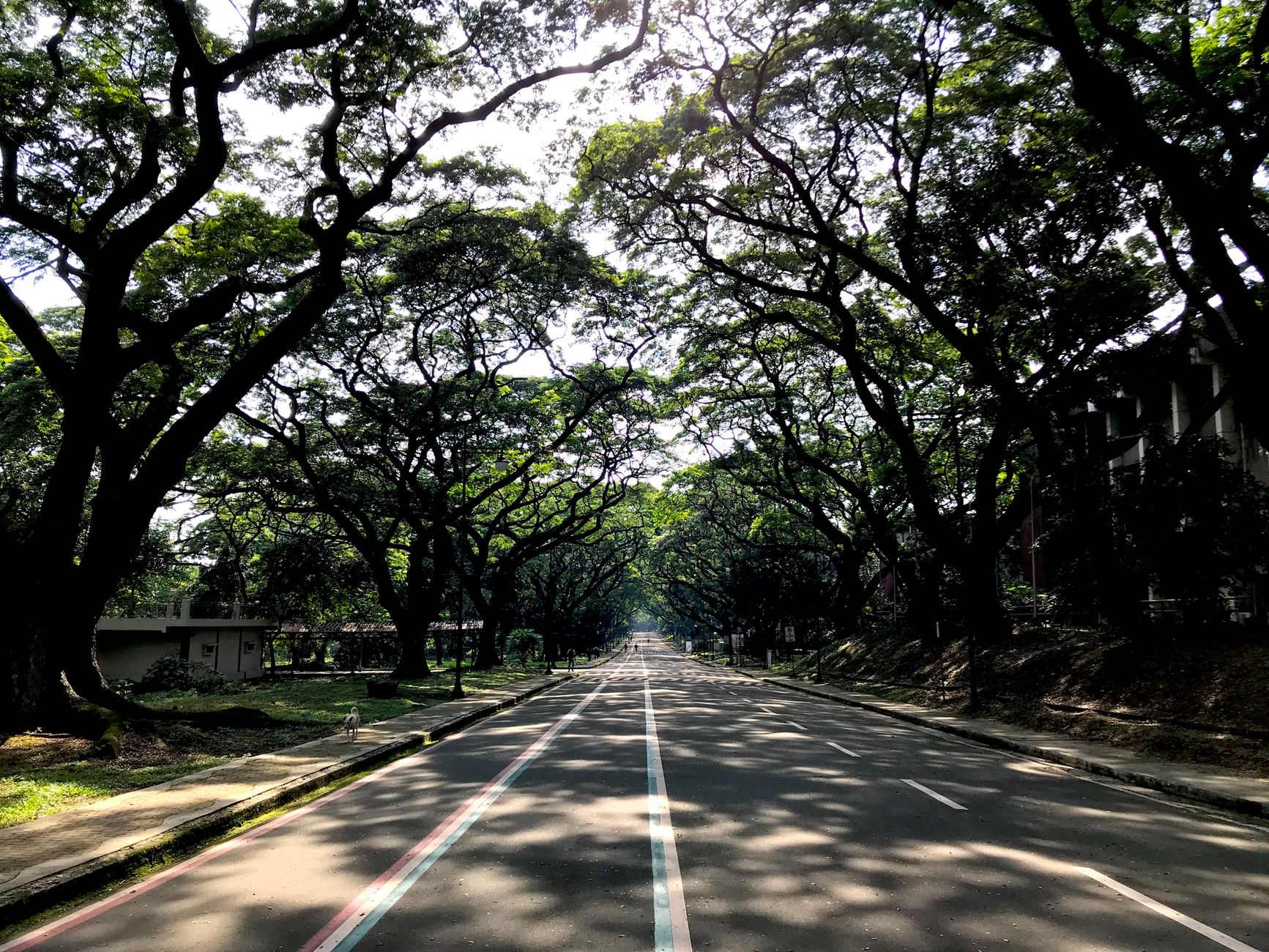
UP Diliman’s Academic Oval closes to traffic on Sunday mornings. Cyclists and joggers get a 2 km loop under giant acacia trees—best light for photos before 8 a.m.Carry Small Bills
Jeepney fares start at ₱12, tricycles at ₱20. Vendors and drivers rarely break ₱500 or ₱1,000 notes; change is your responsibility.Cross Commonwealth Carefully
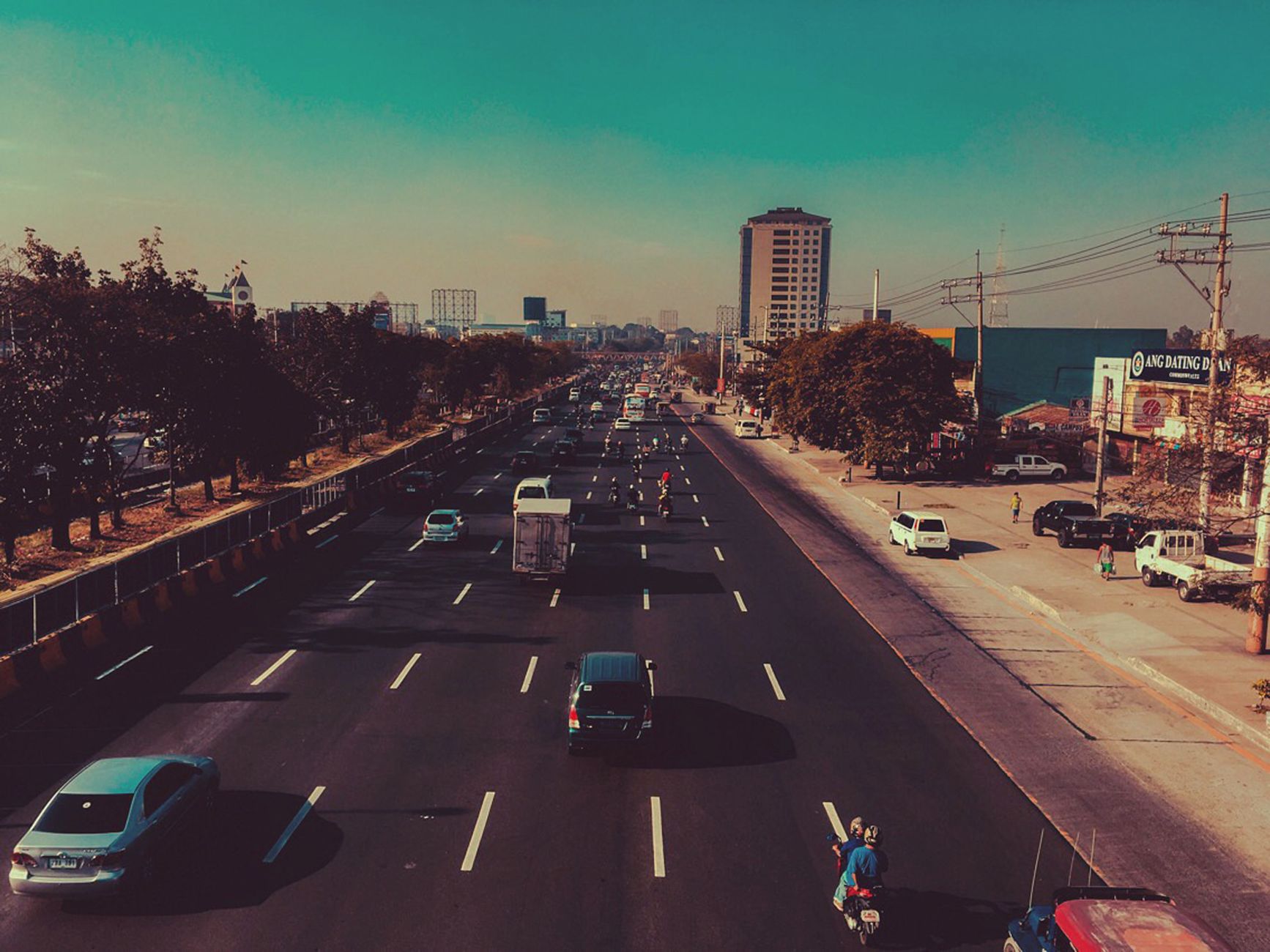
The 12-lane avenue is notorious for high-speed buses. Use footbridges—even locals wait for the green man rather than chance it.
Gallery
The city, as it actually looks.



Frequently asked
Is Quezon City worth visiting?
Yes—if you want real Metro Manila street life without Makati price tags. QC delivers revolutionary shrines, 24-hour food strips, and the country’s largest state university campus, all reachable by ₱30 train rides.
How many days should I spend in Quezon City?
Plan 2–3 full days. One for the Quezon Memorial Circle–Ninoy Aquino Parks green corridor, one for Maginhawa-Tomas Morato food crawl, and an optional day for UP Diliman museums plus Araneta concert or sports event.
What’s the cheapest way from NAIA to Quezon City?
Take the UBE Express P2P bus from Terminal 3 to Araneta-Cubao for ₱75–100. From Cubao, hop on the MRT-3 or a ₱20 jeepney to reach most QC districts within 15 minutes.
Is Quezon City safe for solo female travelers?
Commercial hubs like Cubao, Eastwood, and UP Diliman are well-lit and patrolled. Use Grab after 10 p.m. instead of hailing street taxis, and avoid dim side streets in residential Project areas.
Do I need a special transit card?
A Beep card (₱100 plus load) works on MRT-3, EDSA Carousel bus, and modern jeepneys. It saves exact-change hassle and shaves minutes off every ride—buy at any MRT station.
When do restaurants actually serve dinner?
Kitchens open around 6 p.m., but the atmosphere peaks 7:30–9 p.m. Many Filipino spots stay lively past midnight—especially along Tomas Morato and Maginhawa strips.
Pick up where you left off
Saved and recently read places — kept on this device only.
Photo credits (8)
- Picasso Dela Cruz — Pexels License (https://www.pexels.com/license/) — Source: https://www.pexels.com/photo/185797/
- Sheila Condi — Pexels License (https://www.pexels.com/license/) — Source: https://www.pexels.com/photo/731222/
- Jona — Pexels License (https://www.pexels.com/license/) — Source: https://www.pexels.com/photo/7832459/
- Charles Edward Cansino — Pexels License (https://www.pexels.com/license/) — Source: https://www.pexels.com/photo/33779566/
- alex — Pexels License (https://www.pexels.com/license/) — Source: https://www.pexels.com/photo/14256739/
- Ck Lacandazo — Pexels License (https://www.pexels.com/license/) — Source: https://www.pexels.com/photo/2887890/
- Jeffrey Ligan — Pexels License (https://www.pexels.com/license/) — Source: https://www.pexels.com/photo/29168786/
- Ferdie Cayanga — Pexels License (https://www.pexels.com/license/) — Source: https://www.pexels.com/photo/13546265/
Photos may have been resized or cropped.