
Place
Philippines Updated Apr 2026
The first thing that hits you in Manila is the smell of jeepney exhaust mixed with frying garlic and incense from a street-side santo. This chaotic capital of the Philippines refuses to be one thing. Spanish stone walls stand beside brutalist concrete, while a calesa horse clops past skyscrapers that appeared overnight. The city has been razed and rebuilt so many times it now wears its scars like badges.
 Photo: Jose Daniel Araneta Domingo / Pexels
Built from cited sources · see the method · How we make our guides →
At its heart lies Intramuros, the 0.67 km² walled city the Spanish laid out in 1571 according to the Laws of the Indies. Its cannonball-scarred bastions and San Agustin Church, with its seismic buttresses and trompe l'oeil ceiling, remain the clearest footprint of the galleon trade that once linked this harbor to Acapulco. Walk these streets at golden hour and the light catches coral limestone the exact color of dried blood.
Yet the real Manila lives outside those walls. In Binondo, the world's oldest Chinatown, where 400-year-old noodle houses serve siopao to the descendants of merchants who survived every occupation. In Poblacion, where former red-light bars have become listening rooms playing obscure Filipino post-punk at volumes that make your teeth hum. The city doesn't just survive. It metabolizes its own history and serves it back to you with chili vinegar.
What changes you is the bay at dusk from the CCP promenade. The same water that carried silver, missionaries, and invading armies now reflects the lights of a metropolis that still believes tomorrow will be different. Manila doesn't ask you to love it. It dares you to keep up.
Not every monument, just the ones we'd walk you past ourselves.
Where to wander, by quarter — each with its own rhythm.
Before you go
From riverside kingdom to scarred capital of resilience
The Laguna Copperplate Inscription mentions the Manila area by name. A debt release recorded in Old Malay, it reveals a sophisticated network of Southeast Asian trade already thriving along the Pasig River. The smell of mangrove and woodsmoke would have hung over stilt houses that rose and fell with the tides.
Tagalog rajahs built a fortified trading polity on the south bank of the Pasig. Rajah Matanda and Rajah Sulayman III controlled the river mouth, trading indigo, gold and slaves with Chinese junks and Brunei merchants. Wooden palisades bristled with captured bronze cannon.
Martin de Goiti's men torched the wooden city after a short, sharp battle. The rajahs had scorched their own houses rather than surrender them. Smoke drifted across the river for days. The Spanish smelled opportunity in the ashes.
On 24 June Miguel López de Legazpi declared the ruined settlement capital of the Spanish East Indies. Within months Chinese and Mexican silver began flowing through what would become the galleon trade. The grid of Intramuros was staked out according to the Laws of the Indies.
The oldest stone church in the Philippines rose inside the new walls. Massive buttresses of volcanic tuff were built to survive earthquakes that regularly reduced other buildings to rubble. Its cool interior still carries the faint scent of incense and old wax.
During the Seven Years' War a British fleet seized the city after a two-week siege. They ruled through the Archbishop while Spanish forces regrouped in the provinces. The occupation lasted barely two years yet left lasting bitterness and some very English surnames.
The last Manila galleon docked in Acapulco. For 250 years these enormous ships had carried Mexican silver to Asia and Chinese silk back to New Spain. Their departure marked the slow unravelling of Spanish power in the Pacific.
Born in Santa Cruz district, Anacleto del Rosario would become the first director of Manila's Municipal Laboratory. He perfected a method of producing pure alcohol from nipa palm wine that won a gold medal in Paris in 1889. The city’s water and its cholera outbreaks occupied much of his short life.
At dawn on 30 December José Rizal was shot by firing squad on the Luneta. His final walk across damp grass is still remembered. The execution transformed a reformist doctor into a national martyr and lit the fuse for revolution.
Commodore Dewey’s squadron destroyed the Spanish fleet in a morning’s work. The guns of Cavite echoed across the bay while Manila’s residents watched from rooftops. Spanish colonial rule in the Philippines effectively ended that day.
Born inside the old walled city, Fe del Mundo would found the Philippines’ first pediatric hospital in Manila. She designed a bamboo incubator for rural villages without electricity. The city’s children, rich and poor, became her life’s work.
Japanese forces entered Manila on 2 January. They declared it an open city to avoid destruction, then spent three years squeezing it dry. The smell of fear replaced the scent of street food.
From February to March American and Japanese forces fought house-to-house. Artillery and flame reduced Intramuros to rubble. Between 100,000 and 240,000 civilians died. Manila became the second most devastated city of the entire war after Warsaw.
Born months after the battle that destroyed much of his future workplace, Augusto Villalon would spend his life fighting to save what remained. The architect became the father of heritage conservation in the Philippines and spent decades protecting the wounded stones of Intramuros.
The flamboyant former journalist took office and began cleaning up a ruined city. His administration is still remembered as Manila’s golden age of municipal government. He fought both corruption and the evening traffic with equal passion.
Presidential decree created the region of Metro Manila, binding seventeen cities and municipalities under one planning authority. The old boundaries of Manila proper suddenly felt too small for the sprawling megacity it had become.
After decades of neglect and illegal settlers, the government finally mandated serious restoration of the walled city. What the Japanese and Americans could not entirely destroy, time and indifference almost finished. The walls began their long return.
Hundreds of thousands gathered on Epifanio de los Santos Avenue. Nuns faced down tanks. Marcos fled. The scenes were broadcast around the world and Manila became shorthand for peaceful democratic change.
The conservationist died in Manila having secured UNESCO tentative listing for Intramuros and Corregidor. His lifelong argument that the past must have a future finally seemed to be winning. The city he loved still bears his quiet fingerprints.
Pediatrician · 1911–2011
Born in Intramuros, worked entire career in Manila
Born inside the old walled city in 1911, Fe del Mundo watched children die from simple infections and decided to do something about it. She opened the country’s first pediatric hospital in Manila and, during power cuts, invented a bamboo incubator that kept premature babies alive. Walk through Intramuros today and you pass the ghost of the house where a woman who refused to leave patients behind quietly changed medicine.
Chemist · 1860–1895
Born and worked in Manila
Santa Cruz district raised him, Ateneo and Santo Tomas trained him, and Binondo’s San Fernando Street housed his pharmacy. Anacleto del Rosario figured out how to turn nipa palm wine into pure alcohol good enough to win first prize at the 1889 Paris fair. He then ran the Municipal Laboratory of Manila, testing the city’s water during cholera outbreaks. The man who gave the Philippines its first taste of laboratory science died at 34, but the streets he walked still smell of street food and possibility.
Architect and heritage conservationist · 1945–2018
Died in Manila, led preservation efforts there
For twenty-five years Augusto Villalon fought to stop Manila from demolishing itself. He pushed Intramuros onto UNESCO’s radar, helped write the country’s first heritage law, and stood between wrecking balls and 400-year-old churches. He died in the city he spent his life trying to save. Stand on the battlements of Fort Santiago at dusk and you’re seeing the Manila he won back—one restored balustrade at a time.
Where locals actually book dinner — not the tourist menus.
Chopped pork face, ears and liver sizzled on a hot plate with onions, chilli and calamansi. The sound alone pulls you in; the perfect late-night beer food found at any decent carinderia.
Thick rice noodles dyed orange by annatto, loaded with smoked fish flakes, shrimp, tinapa and crushed chicharrón. Binondo’s version tastes like the entire history of the galleon trade in one plate.
Shaved ice layered with ube, jackfruit, sweetened beans, leche flan and a scoop of purple yam ice cream. The only correct response to Manila heat.
Grilled chicken intestines on bamboo sticks, dipped in vinegar with raw garlic and chilli. Costs almost nothing and somehow improves any evening stroll.
Deep-fried pork belly cooked until the skin shatters like glass. Pair it with rice and a vinegar dip at any neighbourhood eatery and you’ll understand why Filipinos argue about whose version is best.
Small things that change how the city treats you.
The city, as it actually looks.


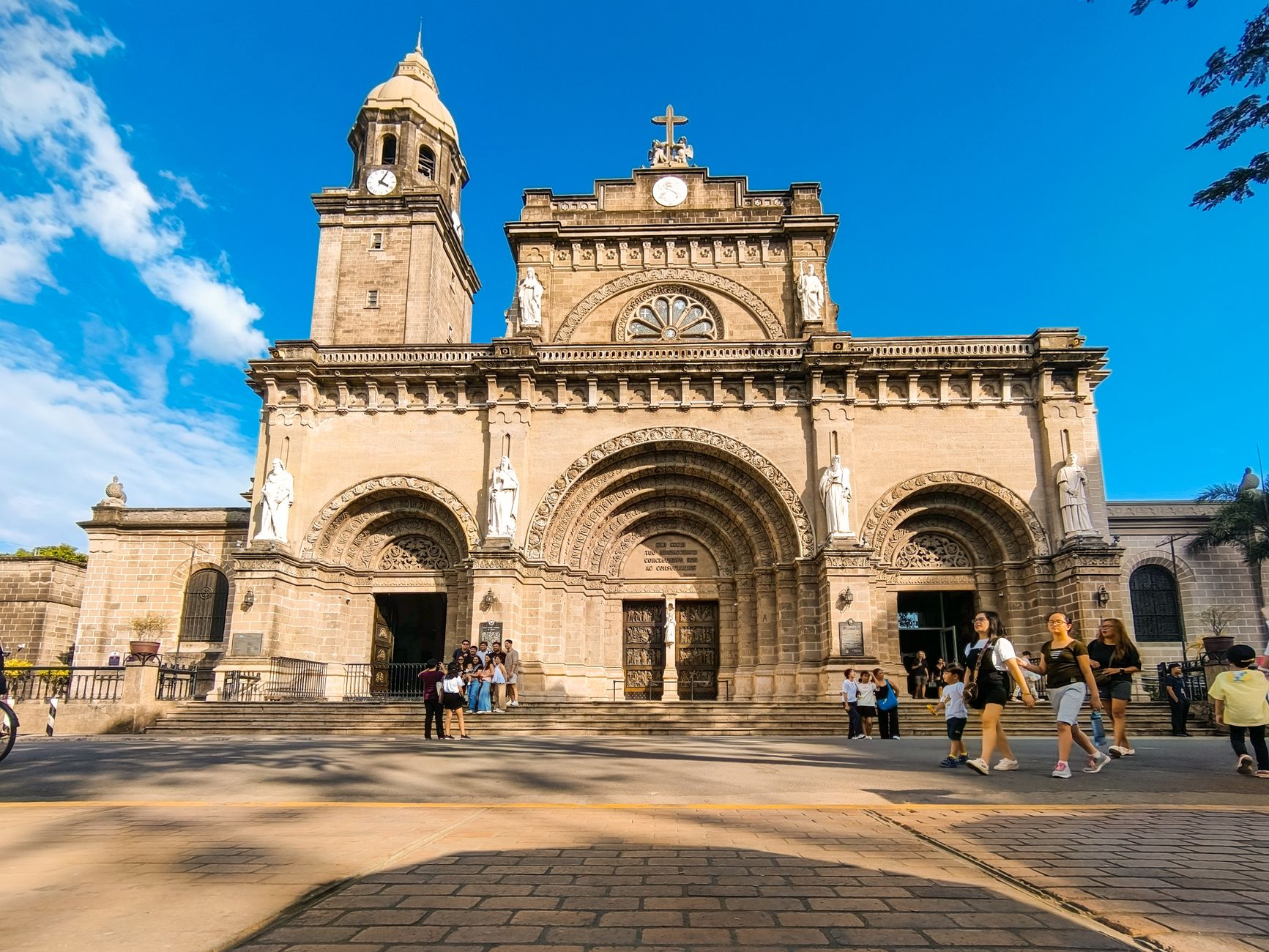

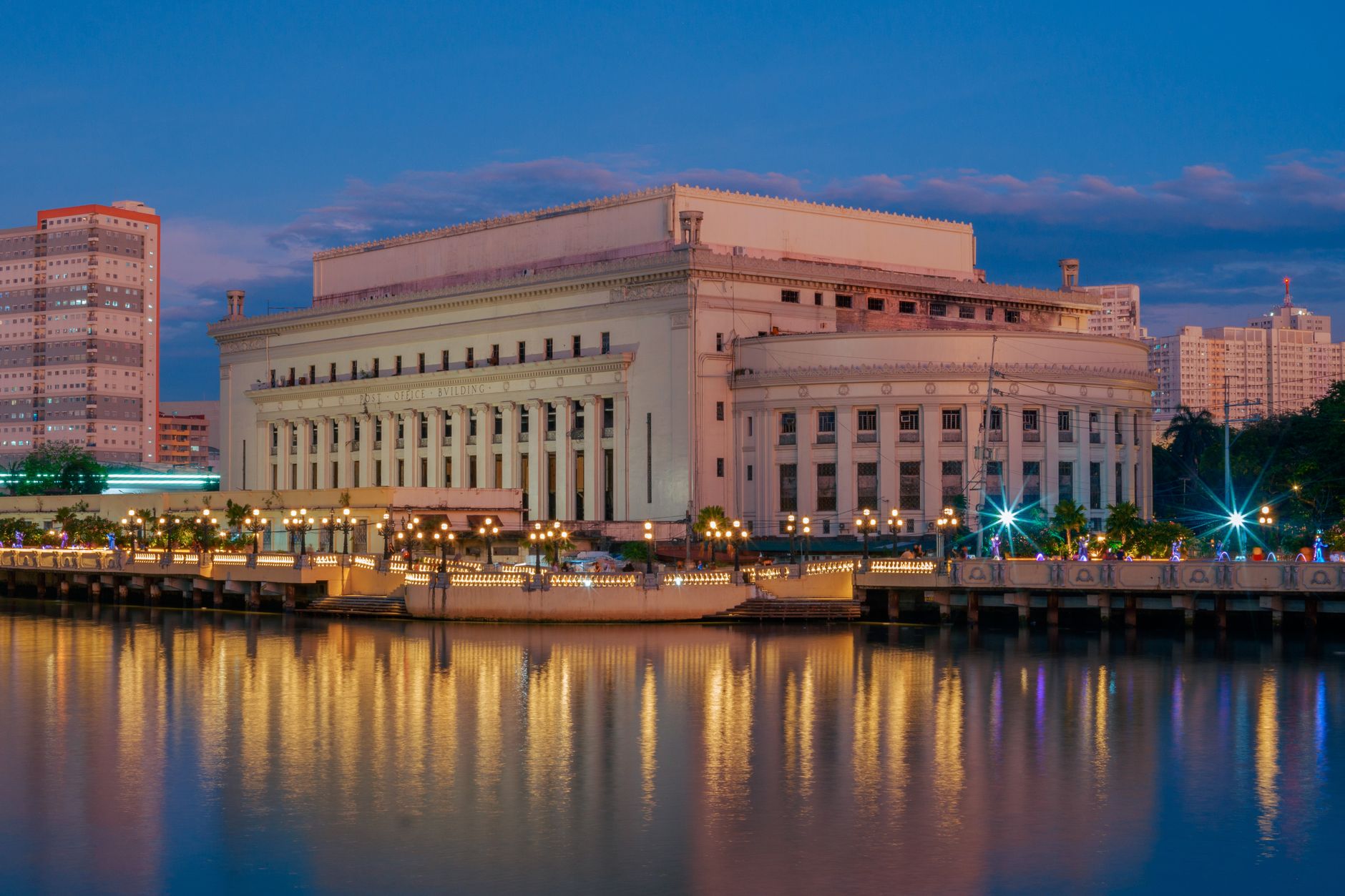
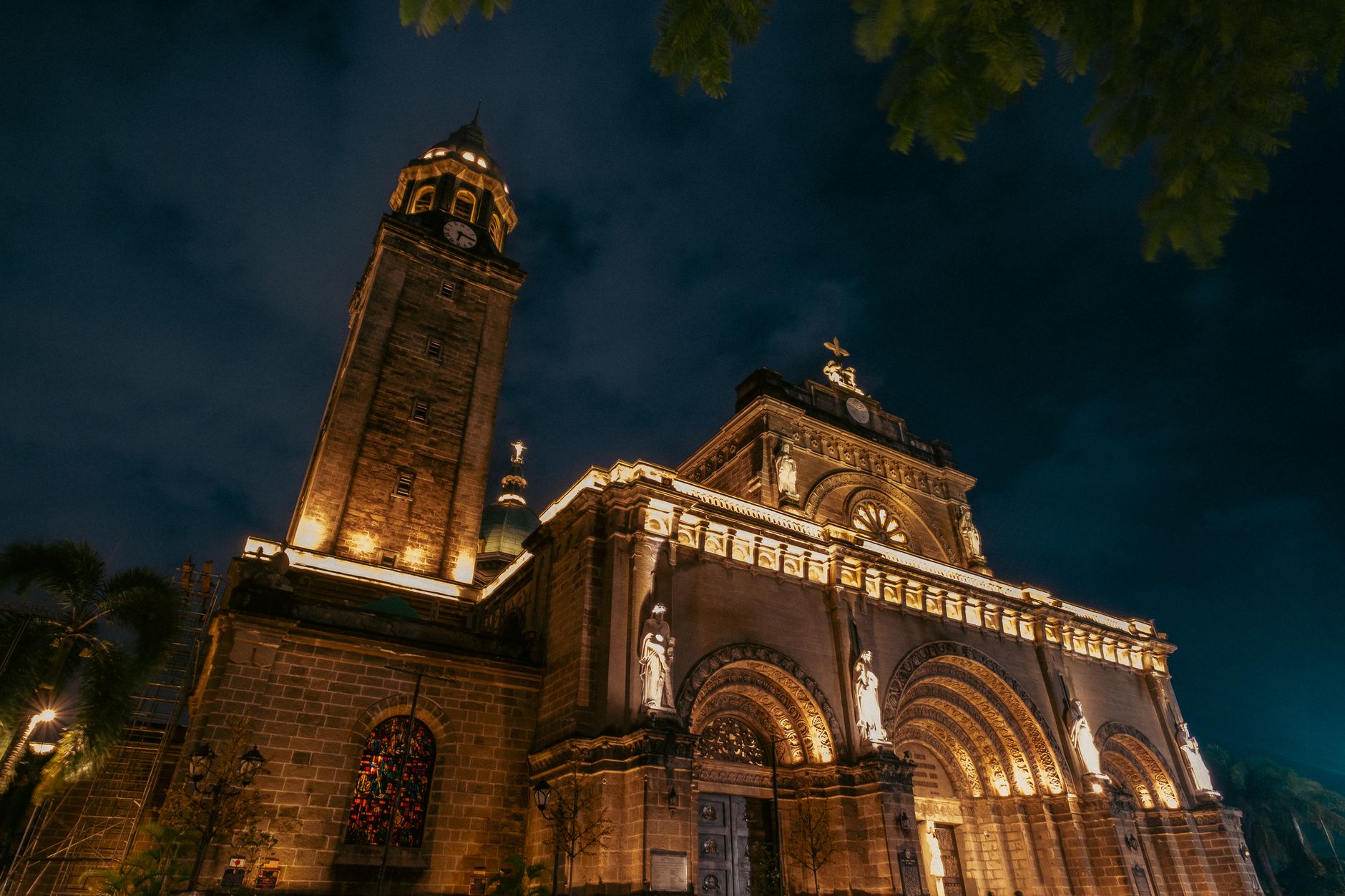

Yes, if you like layers. The city wears its scars openly: Spanish walls, American boulevards, Japanese bunkers and Chinese noodle shops all within a few square kilometres. Spend three days and you’ll understand why Filipinos call it home despite the traffic.
Three full days works. One for Intramuros and Rizal Park, one for Binondo and markets, one for the Cultural Center complex or a Corregidor day trip. Add two more if you want Tagaytay or Pagsanjan Falls.
Grab is simplest. Look for the numbered pillars outside arrivals, open the app, and pay ₱250–₱600 to Makati. P2P buses cost ₱150 but only run to specific hubs. Yellow airport taxis are reliable but cost more.
It’s safer than its reputation if you stay alert. Avoid flashing phones in Malate or Intramuros after dark, use hotel safes, and base yourself in Makati or BGC. Standard big-city rules apply.
December to February brings cooler temperatures and almost no rain. February and March are ideal before the heat and humidity ramp up in April.
Only after you’ve watched locals do it first. Flag one down, shout your stop, and drop coins in the can. Grab or the MRT-3 is less stressful for first-timers.
Saved and recently read places — kept on this device only.
Photos may have been resized or cropped.