Introduction
Smoke from chicken inasal grills, sweet cane in the air, and jeepney horns at dusk: Bacolod, Philippines announces itself through smell and sound before skyline. What surprises first-time visitors is the contrast—this is a city built by sugar fortunes, yet its most famous symbol is a smiling mask born from collective grief. Come for the food and festivals, yes, but stay long enough and Bacolod reveals a deeper story of resilience, art, and regional pride.
Bacolod calls itself the City of Smiles, and that tagline has teeth. MassKara began in 1980 after a brutal sugar crash and the MV Don Juan ferry tragedy, when locals chose public celebration over paralysis. That history still shapes the city’s tone: warm without being naive, festive without forgetting what it has survived. Around San Sebastian Cathedral, Gaston Park, and the Capitol Lagoon, daily life moves at a generous pace—morning walkers, evening families, and street vendors serving food that tastes like memory.
The city’s old wealth is visible in fragments: colonial-era bank facades on Lacson, heritage shophouses on Lopez Jaena Street, convent walls beside the cathedral, and hacienda houses scattered in outer barangays. Then there are the surprises most guides skip, like the fierce modernist 'Angry Christ' mural in nearby Victorias and the industrial ghosts of the old railway and sugar port zones. Bacolod works best when you read it as both city and gateway—urban core first, then short day trips that explain how sugar built an entire province.
And the food scene is reason enough to book the flight. Inasal is the headline at Manokan Country, but locals will steer you to kansi, a sour-spicy beef marrow soup sharpened with batwan fruit. Dessert is serious business too: piaya, napoleones, barquillos, and cake counters with weekend lines. Ride a motorela at least once, learn a few Hiligaynon words, and Bacolod shifts from 'easy stopover' to one of the Philippines’ most quietly rewarding cities.
Places to Visit
The Most Interesting Places in Bacolod

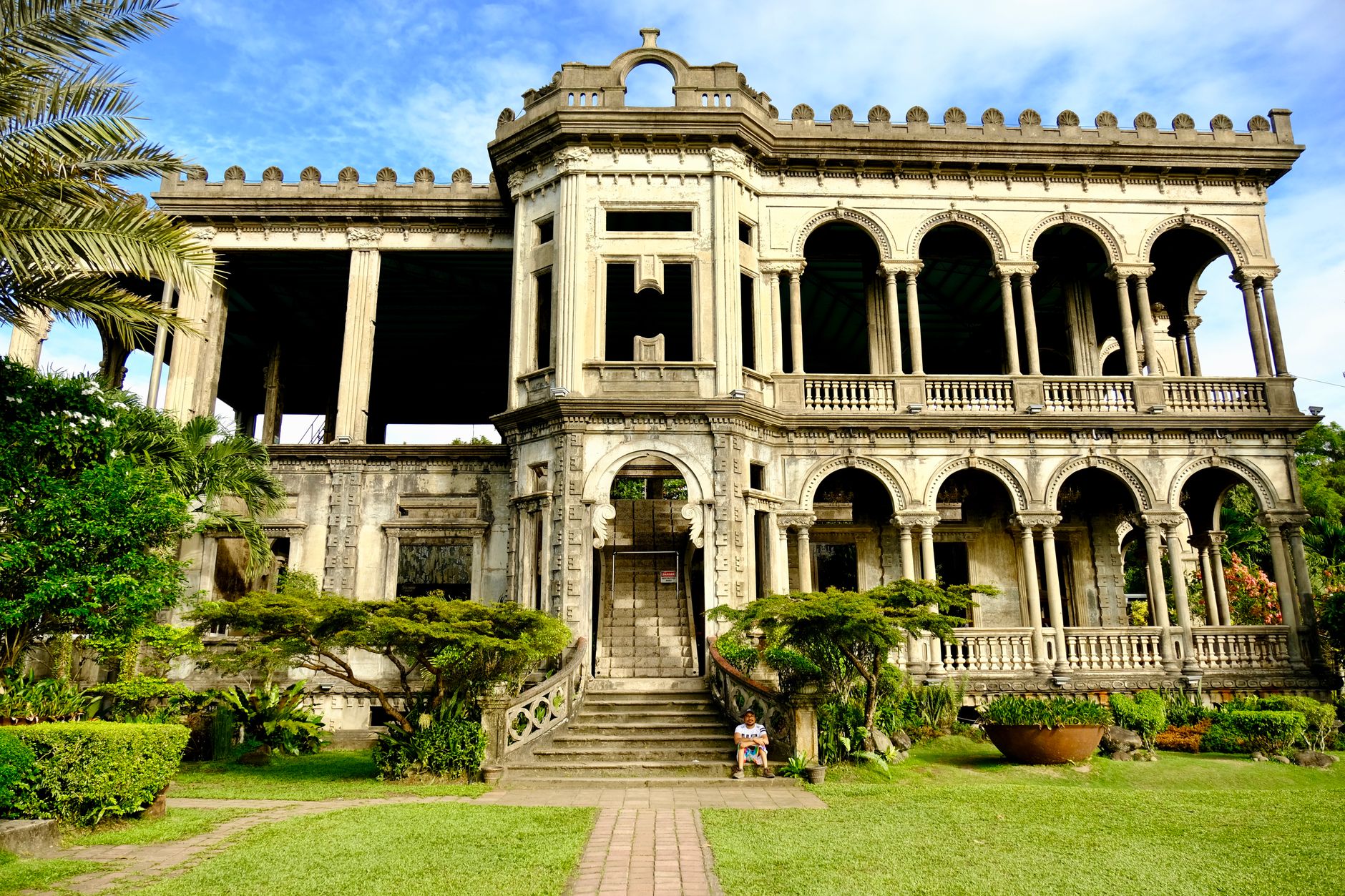
The Ruins
Burned in 1942 to keep out Japanese troops, this shattered mansion now catches Negros sunsets, wedding flashes, and the weight of sugar history today.
San Sebastian Cathedral
San Sebastian Cathedral, often referred to as Bacolod Cathedral, is one of Bacolod City's most iconic landmarks.
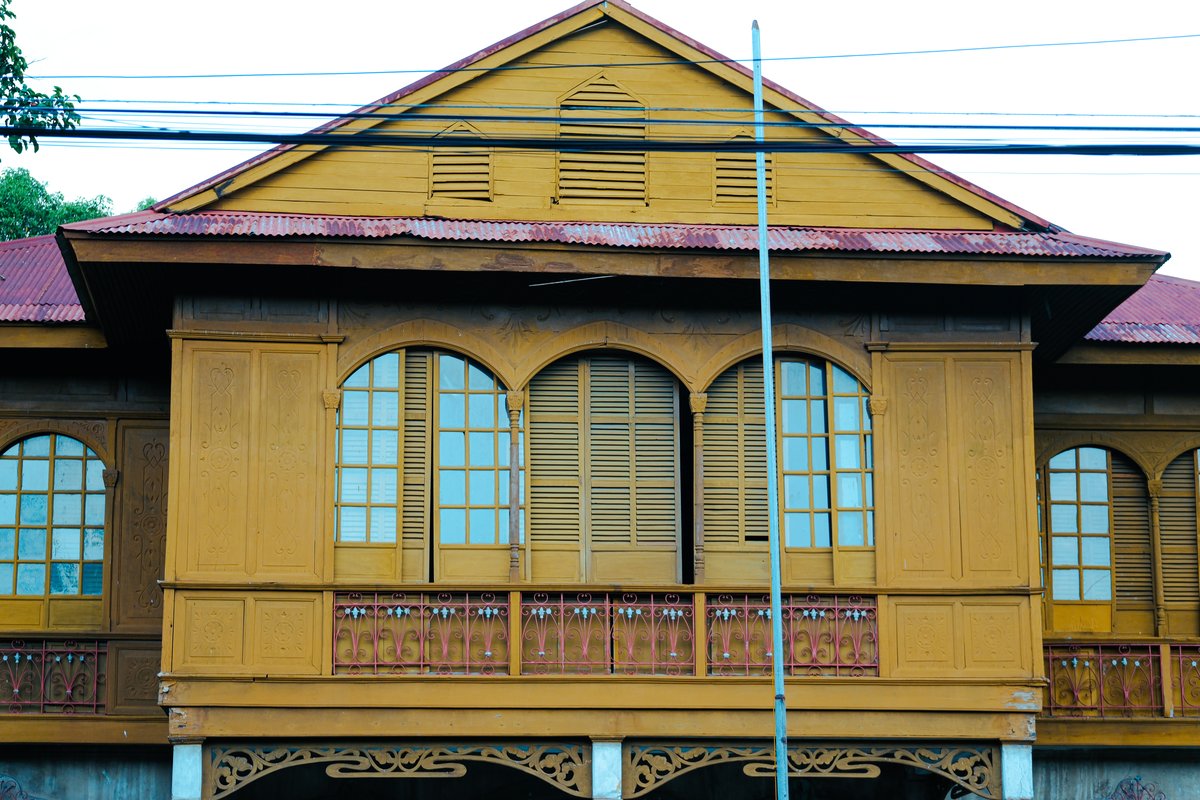
Balay Negrense
Balay Negrense, also known as the Victor Fernandez Gaston Ancestral House, is a prominent historical and cultural landmark located in Silay City, Negros…
Negros Museum
Located in Bacolod City, Philippines, The Negros Museum is a treasure trove of cultural and historical artifacts that capture the rich heritage of Negros…

Hofileña Ancestral House
Built in 1934 and opened as Silay's first public ancestral house in 1962, this art-packed family home turns a sugar-town stop into something stranger.
University of St. La Salle
Nestled in the heart of Bacolod City, Negros Occidental, the University of St.

Panaad Stadium
Nestled in Barangay Mansilingan, Bacolod City, Panaad Stadium stands as a vibrant symbol of Negros Occidental’s rich cultural heritage and sporting excellence.
What Makes This City Special
City of Smiles, Built from Grit
MassKara wasn’t born as a party; it began in 1980 as a civic answer to economic collapse and tragedy, which is why the smiling masks still feel earned. Come in October and you’ll see street dance, drumlines, and a city that wears resilience openly.
Sugarlandia’s Architecture
Bacolod’s story is written in sugar money: San Sebastian Cathedral and convento, the Neoclassical PNB building, and nearby hacienda legacies like The Ruins in Talisay. The best off-radar detour is the 1948–50 'Angry Christ' mural in Victorias—one of the most startling religious artworks in the Philippines.
Inasal Is Just the First Course
Yes, eat chicken inasal at smoky Manokan Country, brushing rice with orange chicken oil and calamansi-vinegar. But the deeper local signature is kansi, a bone-marrow beef soup soured with batwan fruit—sharp, rich, and distinctly Negrense.
Nature in Easy Day Trips
Within an hour you can soak in Mambukal’s hot-spring pools, hike toward seven waterfalls, then wait at dusk for bats to pour from the cave mouth. Bacolod’s flat city grid quickly gives way to cane fields, foothills, and cooler highland air.
Historical Timeline
Sugar, Smoke, and Smiling Masks
From a hilltop Visayan settlement to the resilient capital of Negros Occidental
Buglas Settlements Take Root
Long before church bells and cane mills, Hiligaynon-speaking communities lived on the low rises that gave Bacolod its name: bakolod, a hill or mound. River mouths and coastal inlets linked them to Panay, Cebu, and wider Malay-Chinese trade circuits. The city’s oldest instinct—outward-looking, sea-connected, practical—starts here.
Spanish Reach Enters Negros
After Legazpi’s foothold in Cebu, Spanish authority slowly extended toward Negros, more aspiration than control at first. Missionary routes and tribute networks followed coastlines before they reached interiors. Bacolod’s future would be shaped by this gradual layering of empire rather than a single conquest moment.
Bacolod Appears in Records
By the late 17th century, Bacolod is documented as a distinct barrio in Spanish records. That paper trace matters: once a place is named, it can be taxed, mapped, and governed. A settlement on a mound was becoming a town in the colonial imagination.
Pueblo and Parish Established
Bacolod was recognized as a formal pueblo, with a parish dedicated to San Sebastian emerging in the same period. The plaza-church-government pattern that still frames downtown began to harden into place. Faith, administration, and daily market life were now physically stitched together.
Bacolod Becomes Provincial Capital
When Bacolod became capital of Negros Occidental, power moved with it—clerks, judges, military officers, and merchants. The decision transformed a provincial town into the island’s political stage. Streets, offices, and social hierarchies reorganized around that new status.
Sugar Boom Ignites Region
The opening of Iloilo to foreign trade turned Negros cane into global commodity. Credit from foreign firms fueled mills, haciendas, and export chains, and Bacolod became the coordinating brain of this sugar frontier. Wealth accumulated fast—and so did inequality that would echo for generations.
Aniceto Lacson Is Born
Born into the sugar elite, Aniceto Lacson would later help steer Bacolod through the collapse of Spanish rule. His life captures the city’s paradox: landed power could be both revolutionary and conservative. In Bacolod, political change often came through families who already held economic command.
San Sebastian Cathedral Completed
The present cathedral rose in coral stone and lime, anchoring the plaza with late-colonial confidence. Its facade became Bacolod’s visual center of gravity, where processions, funerals, feast days, and protests crossed paths. Even now, the building reads like a ledger of faith and civic memory.
Magdalena Jalandoni’s Generation Emerges
Magdalena Jalandoni, born in nearby Silay, belonged to the literary world orbiting Bacolod’s print and cultural circles. Writing in Hiligaynon, she gave Negrense life a local voice at a time when Manila dominated prestige narratives. Her work helped prove that regional language could carry modern fiction and social critique.
Negros Revolution Takes Bacolod
On November 5, local revolutionary forces under Aniceto Lacson and Juan Araneta forced the Spanish garrison’s surrender in a near-bloodless takeover. Bacolod changed flags with astonishing speed and little urban destruction compared with many Philippine battle sites. The city discovered a political style it would repeat: decisive, elite-led, and pragmatic.
Cantonal Government Submits to U.S.
Only months after expelling Spain, Negros leaders accepted American sovereignty. For Bacolod’s hacendero class, U.S. order looked safer than uncertain revolutionary land politics. The move tied the city’s economy even tighter to export markets and imperial tariff policy.
Tariff Access Supercharges Sugar
The Payne-Aldrich Tariff opened favorable U.S. access for Philippine sugar, and Bacolod felt the surge in warehouses, rail links, and commercial houses. Money from cane financed schools, mansions, and politics. It also deepened labor precarity in fields far from the city lights.
Municipal Reorganization Formalized
Under American administration, Bacolod’s municipal structure was formalized and bureaucratically modernized. Census routines, English-language schooling, and new civic offices expanded state presence in everyday life. The city began to look and function like a modern provincial capital.
Diocese of Bacolod Created
Rome established the Diocese of Bacolod, separating it from Jaro’s ecclesiastical jurisdiction. That gave the city a stronger religious institutional center and wider influence across Negros Occidental. Cathedral, plaza, and bishop’s authority became even more entwined in public life.
Occupation and the Mansion Fire
Japanese forces occupied Bacolod, and wartime scarcity hollowed out city routines. In nearby Talisay, the Lacson mansion was deliberately burned to prevent Japanese use, leaving the dramatic shell now called The Ruins. Smoke and strategy turned private grief architecture into a public war monument.
Liberation from the South
U.S. and Filipino forces landed at Pulupandan in March and pushed north, liberating Bacolod by late March or early April. The city was freed, but mountain fighting across Negros remained brutal for weeks. Liberation here was a doorway, not the end of danger.
Chartered City at Last
Republic Act No. 1515 elevated Bacolod from municipality to chartered city on October 19. The legal shift unlocked stronger local governance, urban planning, and fiscal capacity. In civic memory, this is the hinge between old provincial town and modern city.
Bishop Fortich Takes the Pulpit
When Antonio Fortich became bishop of Bacolod, the diocese gained a fierce social conscience. From cathedral sermons to labor advocacy, he framed hunger and land inequality as moral emergencies, not rural background noise. During the coming sugar collapse, his voice would carry far beyond church walls.
University of St. La Salle Expands
USLS’s institutional growth in Bacolod strengthened the city as an educational magnet in Western Visayas. Classrooms trained teachers, engineers, accountants, and future civic leaders who would staff both sugar firms and post-sugar industries. Education became one of Bacolod’s quieter engines of resilience.
Roberto Benedicto’s Sugar Grip
With PHILSUCOM and NASUTRA under Marcos-era control, Negros sugar was funneled through centralized power tied to Roberto Benedicto of nearby Silay, deeply influential in Bacolod’s business-political world. Prices and profits became political instruments. In the city’s clubs and offices, everyone understood that sugar was no longer merely an agricultural commodity—it was a regime system.
Don Juan Tragedy and Price Collapse
The MV Don Juan sank after collision in Tablas Strait, killing hundreds, many from Negros families. In the same year, world sugar prices crashed, gutting livelihoods across haciendas and sending shock waves into Bacolod’s markets and neighborhoods. Grief and economic panic arrived together, and the city’s smile had to be invented against the odds.
MassKara Begins in Defiance
City leaders launched the first MassKara Festival in October, pairing choreography and smiling masks with a deeply wounded public mood. The masks weren’t denial; they were a public language for endurance. Bacolod’s identity shifted from sugar capital alone to a city that ritualized resilience.
People Power Reshapes Local Power
After EDSA, Bacolod’s political networks recalibrated as the Marcos system fell. Expectations for agrarian reform and fairer sugar structures rose, though outcomes stayed uneven. The city entered democracy’s noisy era with old elites challenged but not erased.
Call Centers Change the Night
BPO operations expanded rapidly in Bacolod, bringing graveyard shifts, fluorescent offices, and a new wage ladder for young workers. Cafes filled at midnight, and Lacson Street’s rhythm stretched beyond daylight commerce. The city learned to speak in American accents while keeping its Ilonggo warmth.
Yolanda Relief Hub Mobilizes
When Typhoon Yolanda devastated the central Philippines, Bacolod became a key logistics and relief staging point for operations to harder-hit islands. Warehouses, roads, and civic networks were tested in real time. The city’s role showed its regional importance beyond festival headlines.
MassKara Falls Quiet in Pandemic
For the first time in four decades, MassKara was cancelled or heavily restricted by COVID-19 protocols. Streets that usually throbbed with drums went oddly still. The interruption revealed how deeply the festival had become Bacolod’s civic heartbeat.
Festival Returns at Full Scale
By 2024, MassKara returned in full color, drawing dense crowds back to city streets and plazas. Recovery wasn’t just economic; it was emotional, a shared rehearsal of continuity after years of disruption. Bacolod’s old lesson held: the smile is strongest when it remembers what it survived.
Notable Figures
Jolina Magdangal
born 1978 · Singer and ActressLong before streaming playlists, Jolina's songs were already playing in jeepneys and sari-sari stores across Bacolod. Her career became part of everyday Filipino pop memory, and locals still claim her with pride. She would recognize the same warm, chatty city rhythm that shaped early family stories.
Maria Goretti 'Dulce' Buenaventura
born 1964 · OPM SingerDulce's powerhouse voice gave Bacolod one of its most respected names in Filipino music. In a city where karaoke is practically social glue, her legacy feels close, not distant. She would probably hear the same love for big vocals in neighborhood videoke nights.
Rufa Mae Quinto
born 1979 · Comedienne and ActressRufa Mae brought a distinctly Filipino comic style into mainstream TV and film, bold and self-aware at the same time. Bacolod's humor can be playful and quick, and her persona fits that social energy. If she walked Lacson today, she'd still find an audience ready to laugh loud.
Piolo Pascual
born 1979 · Actor and SingerPiolo's career helped define modern Philippine star culture, moving between film, television, and music with unusual staying power. Bacolod locals often mention him as proof that the city exports top-tier talent. He'd likely see a more modern skyline now, but the city's grounded pace would feel familiar.
Sunshine Dizon
born 1981 · Television ActressKnown for major teleserye roles, Sunshine Dizon is part of the generation that dominated evening Philippine TV drama. Her Bacolod connection matters because local audiences are intensely loyal to artists they consider their own. She would still find that same loyal crowd energy during festival season.
Gretchen Ho
born 1988 · Journalist and Former AthleteFrom elite volleyball to national journalism, Gretchen Ho's path reflects discipline across very different arenas. Bacolod's schools and sports culture helped normalize that ambition for many young locals. She would likely appreciate how the city now blends stronger media awareness with its old-school warmth.
Photo Gallery
Explore Bacolod in Pictures

The vibrant 'I Love Bacolod Boardwalk' neon sign lights up the night sky at this popular waterfront destination in Bacolod, Philippines.
Nuwordlife0rder · cc0

A detailed administrative map illustrating the various barangays and districts within Bacolod City, Philippines.
Anykykykkkk17 · cc by 4.0
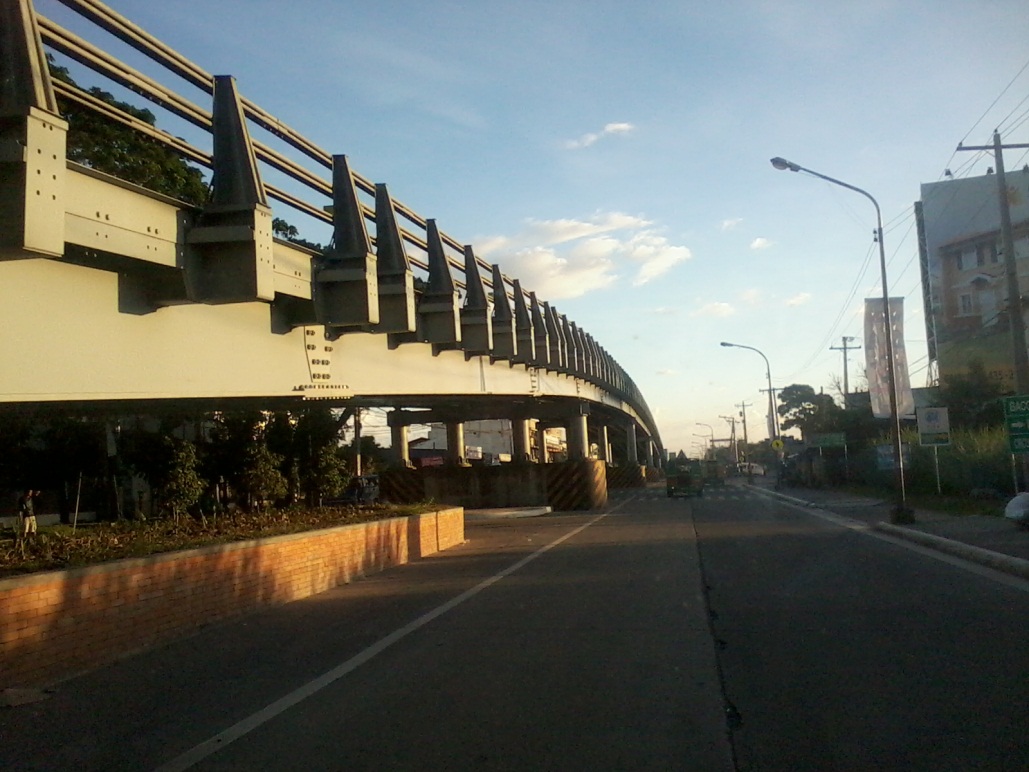
A scenic view of a steel flyover bridge infrastructure captured during the golden hour in Bacolod, Philippines.
D4e3px · cc by-sa 3.0

An aerial perspective of a modern electrical substation facility integrated into the rural landscape and sugarcane fields of Bacolod, Philippines.
Presidential Communications Office · public domain

Tourists gather at the iconic Bacolod Baywalk sign, which glows brightly against the scenic sunset backdrop in Bacolod, Philippines.
Nuwordlife0rder · cc by-sa 4.0

A vibrant and intricately decorated mask captures the festive spirit of the world-famous MassKara Festival in Bacolod, Philippines.
Masskara_2.JPG: John Albert Pagunsan / SnappyHip derivative work: Pbsouthwood · cc by-sa 3.0

A bright, sunny day at the Panaad Stadium parking area in Bacolod, Philippines, showcasing the stadium's grandstand architecture.
PDPNIR · cc by-sa 4.0

A modern JMC public transport jeepney navigates a busy street in Bacolod, Philippines, showcasing the city's evolving public transit system.
LMP 2001 · cc by-sa 4.0

A hearty serving of beef soup with bone marrow, accompanied by calamansi and chili, showcasing the rich culinary traditions of Bacolod, Philippines.
Spencer · cc by-sa 4.0

A yellow Ceres Liner bus parked along a roadside in Bacolod, Philippines, set against a backdrop of local commercial signage.
Kguirnela · cc by 3.0

A view of the CityMall Goldenfields complex in Bacolod, Philippines, featuring local taxis parked along the roadside.
Kingprince2424 · cc0

A street vendor sits under a vibrant umbrella in Bacolod, Philippines, showcasing traditional festival masks for sale to passersby.
Kramthenik27 · cc by-sa 4.0
Practical Information
Getting There
Fly into Bacolod-Silay International Airport (BCD), about 30–45 minutes from central Bacolod by car; Manila flights are typically about 1 hour. There is currently no active passenger rail station in Bacolod, so arrivals are by air, bus, ferry, or private vehicle. By road, the city links north via Bacolod North Road (toward Silay/Victorias/Cadiz) and south via Bacolod South Road (toward Bago/Kabankalan), with Ceres bus terminals serving both corridors.
Getting Around
As of 2026, Bacolod has no metro/subway system (0 lines) and no tram network; mobility relies on jeepneys, tricycles, multicabs, and app-based rides. Grab is widely usable in core districts, while motorelas and tricycles are the most local short-hop options; jeepney base fares are typically around PHP 13–15. There is no city tourist transport pass, so keep small cash for street transport and market trips.
Climate & Best Time
Bacolod is tropical year-round: roughly 24–30°C in Dec–Feb, 26–33°C in Mar–May, and 25–31°C in Jun–Nov with higher humidity and frequent rain. Rain peaks in the mid-year to early-typhoon months (especially Aug–Oct), while Jan–Mar is generally drier and easier for walking day-to-day. For 2026 planning, target January to March for weather, or October if you’re coming specifically for MassKara (book hotels early).
Language & Currency
The local language is Hiligaynon (Ilonggo), not Cebuano; a simple 'Salamat' (thank you) and 'Pila?' (how much?) go a long way. Currency is the Philippine Peso (PHP), and cash is still essential for jeepneys, public markets, and carinderias in 2026. Cards work in malls and major hotels, while foreign-card ATM fees commonly run around PHP 200–250 per withdrawal.
Safety
Bacolod is generally considered one of the safer Philippine cities for visitors, with most incidents limited to petty theft in crowded market and terminal areas. Use Grab or clearly marked transport at night, and avoid displaying phones or cameras on dim side streets. Keep your original passport secured at your hotel and carry a copy; national emergency number is 911.
Where to Eat
Don't Leave Without Trying
Calea Pastries & Coffee
cafeOrder: Go straight for cake: the signature chocolate cakes and cheesecake slices are the move with coffee.
This is Bacolod’s most dependable dessert institution, packed with locals at merienda and after dinner. If you only do one sweets stop in town, make it this one.
Diotay's Eatery
local favoriteOrder: Pick fresh seafood and have it cooked butter-garlic or grilled; shrimp, scallops, and lapu-lapu head sinigang are strong bets.
It delivers the real Bacolod seafood ritual: choose the catch first, then choose the cooking style. Great for groups who want variety without losing freshness.
McDonald's
quick biteOrder: Chicken McDo with rice if you need a familiar, fast, late-night meal.
Not a destination meal, but genuinely useful in a city where food runs can go late. Reliable 24/7 backup when local spots are closed between services.
Tom N Toms Coffee - Bacolod
cafeOrder: Pair a big coffee with one of their bakery items for a solid morning or late-night cafe stop.
One of the most dependable hangout cafes along the Lacson-Mandalagan strip. It works equally well for casual meetings, studying, or a long coffee break.
Starbucks
cafeOrder: Cold brew or a classic latte with a pastry when you want a no-surprises coffee stop.
Its Lacson location makes it a practical anchor between meals and meetings. Good choice for travelers who need stable Wi-Fi and predictable coffee quality.
Kuppa Coffee & Tea
cafeOrder: House coffee plus an all-day breakfast or hearty rice meal if you’re staying for a full sit-down.
A long-running Bacolod cafe with a loyal local crowd, especially around Capitol. It’s more than a coffee stop and works well as a full casual meal.
Shakey's Lacson Bacolod
quick biteOrder: Get a thin-crust pizza and Mojos for a classic group order.
A reliable Lacson group-meal spot when everyone wants different things. Useful for families and mixed-age groups who want easy, familiar food.
Tippy's Bistro
local favoriteOrder: Go for their bar bites and mains with cocktails; this is a stay-awhile dinner-and-drinks kind of place.
One of Lacson’s better evening spots when you want atmosphere without going overly formal. Great for a relaxed night that starts with dinner and stretches into drinks.
21 Restaurant
local favoriteOrder: Order the herb chicken, batchoy, chicken binacol, and adobadong alimasag/alimango when available.
This is one of Bacolod’s classic dinner institutions and still earns local recommendations. Best for big-table ordering so you can try both comfort dishes and house specialties.
Margie's
local favoriteOrder: Pick up cakes and classic pastries for merienda or pasalubong.
A long-time Bacolod pastry name that locals still trust for everyday celebrations. It’s an easy stop for quality sweets without the fuss.
The Coffee Bean & Tea Leaf
cafeOrder: Tea latte or espresso drinks with a light sandwich if you need a quieter cafe break.
A practical cafe option in central Bacolod when you want calmer pacing. Good for remote-work hours or an in-between-meals reset.
Chicken Deli Lacson
quick biteOrder: Get chicken inasal (pecho or paa) with rice and extra chicken oil.
When you want inasal without the Manokan crowds, this is a straightforward Lacson alternative. Solid for a quick, smoky Bacolod-style chicken fix.
Dining Tips
- check Lunch rush is real at popular local spots; aim for 11:00 AM sharp or after 1:30 PM.
- check Many Bacolod restaurants accept cards, but cash is still smart for smaller eateries and faster checkout.
- check For seafood pala-pala places, ask to see the catch first and confirm cooking style before they start.
- check Inasal orders are usually by cut (pecho, paa); ask for extra chicken oil and calamansi/soy setup.
- check Dinner peak is around 6:30-8:00 PM, especially along Lacson and seafood corridors.
- check Reservations are useful for group dinners and weekend evenings, but many casual places are still walk-in friendly.
- check Service charge is inconsistent; if none is added, a small tip or rounding up is appreciated.
- check Some kitchens close between lunch and dinner service, so check split hours before heading out.
Restaurant data powered by Google
Tips for Visitors
Chase Sunset Light
Go to The Ruins in late afternoon and stay after dark when the facade is lit; the photos are better and the heat is lower. Entrance is usually around PHP 100-150, with an on-site restaurant if you want dinner.
Try a Motorela
For short city hops, ride a motorela at local fares (often around PHP 15-25) instead of chartering tricycles. Keep small bills ready and confirm your drop-off point before boarding.
Order Inasal Right
Ask for paa (leg quarter) and request manok oil for your rice; that chicken-oil, calamansi, and vinegar mix is the Bacolod ritual. Manokan Country is usually cheaper than mall branches.
Use Grab Late
At night, use Grab instead of random street rides, especially around markets and quieter roads. Petty theft is uncommon but does happen, so keep phones and bags tucked away in busy terminals.
Plan Around Festivals
January-March gives the most comfortable weather for walking and day trips. October is excellent for MassKara, but book hotels 2-3 months ahead because central rooms sell out fast.
Speak Hiligaynon Basics
Use a few Hiligaynon words like 'Salamat' and 'Pila?' and you'll get warmer responses in markets and jeepneys. Bacolod is Hiligaynon-speaking, not Cebuano, and locals notice the difference.
Explore the city with a personal guide in your pocket
Your Personal Curator, in Your Pocket.
Audio guides for 1,100+ cities across 96 countries. History, stories, and local insight — offline ready.
Audiala App
Available on iOS & Android
Join 50k+ Curators
Frequently Asked
Is bacolod worth visiting? add
Yes, especially if you care about food and regional history. Bacolod gives you the famous inasal scene, but also sugar-era heritage, the dramatic Ruins, and underrated side trips like Victorias' Angry Christ mural. It feels less crowded and more local than many big Philippine city stops.
How many days in bacolod? add
Three to four days is the sweet spot for most travelers. That gives you time for city highlights, food crawls, and at least one day trip to places like The Ruins, Silay, or Mambukal. Stay 5 days if you want slower mornings at markets and multiple provincial excursions.
How do I get from Bacolod-Silay Airport to downtown Bacolod? add
The easiest option is Grab, usually around PHP 250-400 for 30-45 minutes depending on traffic. Metered taxis are available but often cost more. If your hotel offers a shuttle, arrange it before arrival for a smoother transfer.
Is bacolod safe for tourists? add
Generally yes; Bacolod is considered one of the safer Philippine cities for visitors. The main risks are petty theft in crowded areas like markets and terminals, plus occasional snatch-and-grab incidents on quiet roads at night. Stick to lit areas, use Grab after dark, and keep valuables discreet.
What is the cheapest way to get around bacolod? add
Jeepneys and motorelas are the cheapest daily options. Jeepney base fares are typically around PHP 13-15, while short motorela rides can be around PHP 15-25. For comfort and predictable pricing, mix cheap rides in daytime with Grab at night.
How much does a trip to bacolod cost per day? add
A budget traveler can get by on roughly PHP 1,800-3,000 per day with simple lodging, local meals, and public transport. Mid-range comfort is often around PHP 3,500-6,000 with better hotels and occasional car hire. Food can be very affordable if you eat at carinderias and Manokan Country.
When is the best time to visit bacolod? add
January to March is usually best for weather: drier days, less rain disruption, and easier day trips. October is ideal if you want MassKara energy, parades, and nightlife. August to October can bring heavier rain and typhoon effects, so keep plans flexible.
Sources
- verified Negros Museum Official Website — Used for museum background and confirmation of rotating exhibitions and visitor planning details.
- verified PHIVOLCS (Philippine Institute of Volcanology and Seismology) — Used for volcano safety context and alert-level checks relevant to Mt. Kanlaon excursions from Bacolod.
- verified PRRCF Danjugan Island — Used for access limits, booking guidance, and conservation-travel details for Danjugan day/overnight trips.
- verified Department of Tourism Philippines — Used as an official reference point for national tourism advisories and destination context.
- verified Negros Occidental Provincial Government — Used for provincial festival and destination context tied to Bacolod as regional hub.
Last reviewed: