sailing
Islands With Personality
Palawan, Boracay, Siargao, Bohol, and Camiguin do not blur into one tropical cliche. Each island group has its own sea color, weather pattern, transport logic, and social mood.
The Philippines makes more sense when you stop treating it like one trip. It is an archipelago of separate worlds linked by boats, flights, rice, and a talent for hospitality that never feels rehearsed.
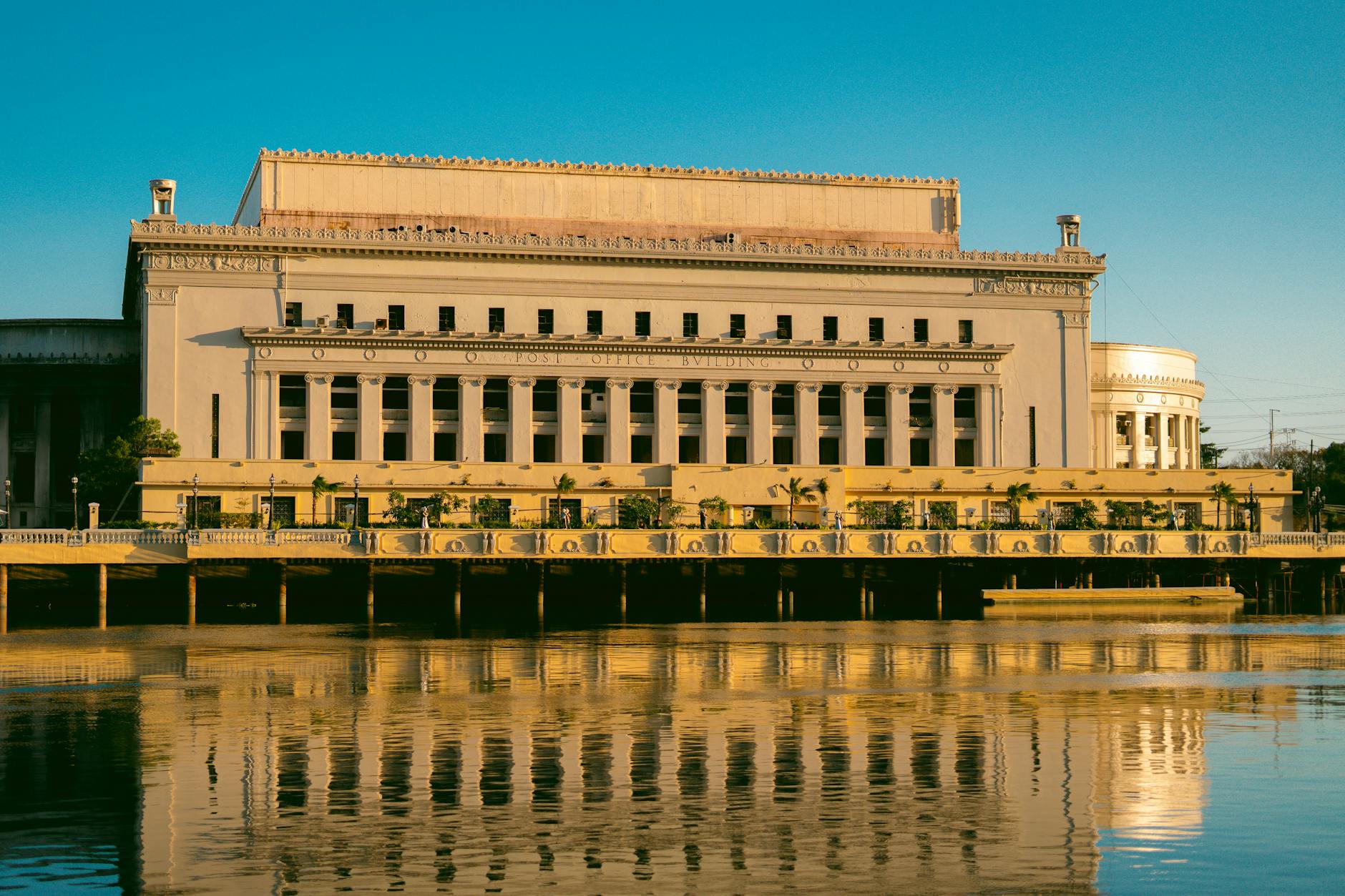 Philippines
Entry30-day visa-free for many passports; eTravel required
PThis Philippines travel guide starts with the fact that the country is not one destination but 7,641 islands, each with its own weather, food, and tempo.
The Philippines rewards travelers who plan by region, not by postcard. Start in Metro Manila, where Spanish walls, American-era boulevards, Chinese trading histories, and 21st-century traffic all press against each other at once. Manila is the gateway, but not the whole story. A short shift across the capital region takes you to Quezon City for museums and university life, Pasay for airport practicality and bay sunsets, and Taguig for the polished edge of contemporary urban Philippines. English is widely spoken, which lowers the friction. The country itself does not.
The real seduction is contrast. One week can hold baroque churches, jeepneys painted like fever dreams, rice terraces cut by hand two millennia ago, and a bowl of sinigang sharp enough to reset your afternoon. In bacolod, chicken inasal comes smoky, orange, and unapologetically messy; elsewhere the table turns toward adobo, kare-kare, kinilaw, and halo-halo. This is not mainland Southeast Asia with a different flag. Spanish Catholic ritual, Austronesian seafaring roots, American influence, and regional languages built a culture that feels stitched together in full view.
Before the Cross, c. 47000 BCE-1565
A thin sheet of copper, dated April 21, 900, nearly vanished into the scrap trade in Laguna. When scholars finally read it, the surprise was delicious: not a king's boast, not a battle hymn, but a debt pardon for a man named Namwaran, witnessed in a world that already spoke through Old Malay, Sanskrit, and Old Tagalog. Ce que l'on ignore souvent, c'est que this small legal document does more damage to colonial myth than any patriotic speech ever could.
Long before the churches of Metro Manila and before the bells of Intramuros, these islands were tied to Java, China, Borneo, and the Malay world by trade routes made of wind, nerve, and memory. Butuan on the Mindanao coast sent gold and goods to Song China; the Chinese court received envoys from Rajah Sri Bata Shaja in 1001 as one receives serious partners, not curiosities from the edge of the map. The Philippines, even then, was not isolated. It was busy.
The sea ruled everything. Austronesian sailors had crossed into the archipelago millennia earlier in outrigger boats, carrying rice, pigs, stories, and a talent for reading currents that would shame many modern navigators with GPS in hand. Their descendants built barangays rather than one grand empire, which explains a great deal about Philippine history: power was local, loyalties layered, and no single throne could speak for 7,641 islands.
Then come the almost theatrical figures. Sultan Paduka Pahala of Sulu traveled to the Ming court in 1417 and died in China, where the emperor granted him a royal tomb in Shandong; his descendants remained there for centuries, a Filipino dynasty folded into Chinese memory. And somewhere between archive and legend stands Princess Urduja, the warrior ruler Ibn Battuta may have heard of in the 14th century, refusing suitors unless they could defeat her. True? Perhaps. Revealing? Absolutely.
By the time Spain appeared on the horizon, the islands already had ports, goldsmiths, diplomats, debt records, Muslim sultanates in the south, and chiefs who understood alliance as well as anyone in Europe. That matters, because what came next was not the birth of history. It was the collision of one world with another.
Rajah Sri Bata Shaja appears less as a distant monarch than as a practical statesman who knew that protocol in the Chinese court could raise the value of every ship leaving Butuan.
The oldest written Philippine document is not a sacred text or a royal proclamation but a receipt for mercy: a debt cancelled in gold.
The Spanish Colony, 1521-1898
The scene is almost indecently vivid. On March 17, 1521, Ferdinand Magellan reached Homonhon under the Spanish flag, made common cause with Rajah Humabon of Cebu, and offered Christianity with the confidence of a man who thought history had chosen him personally. Humabon's court accepted baptism; the queen, remembered in later tradition as Hara Amihan, received the Santo Nino, that small carved Christ Child still venerated in Cebu with the tenderness usually reserved for family silver and state relics.
Then pride ruined everything. On April 27, 1521, Magellan landed on Mactan to punish Lapulapu, expecting a lesson in obedience; instead he staged his own downfall in shallow water. Antonio Pigafetta, who watched it, left one of those lines that never fade: Magellan kept turning to see whether his men had reached the boats. It is a soldier's death, a commander's vanity, and a tragic opera compressed into a few moments of surf and bamboo spears.
Spain returned in force in 1565, and from then on the islands were pulled into a global machine. Manila, later folded into what we now call Metro Manila, became the hinge of the galleon trade between Asia and the Americas: Chinese silk, Mexican silver, saints, spices, bureaucrats, friars, and gossip all passed through. Ce que l'on ignore souvent, c'est que the Philippines was governed for a long time not only from Madrid but through New Spain, meaning that Acapulco mattered almost as much as Castile.
The colony changed souls and streets. Churches rose in stone; processions filled plazas; local elites learned to work the imperial system while friars accumulated land and influence with a skill bordering on genius. Yet the story is never as simple as submission. The same Christian world that built the churches also produced resentment, satire, secular priests demanding dignity, women managing households and fortunes, and ordinary Filipinos paying the tax bill for empire in labor, tribute, and silence.
By the 19th century that silence had begun to crack. Education widened, trade opened, liberal ideas circulated, and the colony produced a class of Filipinos who could read Europe well enough to challenge it in its own language. Spain had given the islands a common religion, a capital, and a political frame. It had also trained the generation that would one day bring the empire down.
Lapulapu endures because he is not an abstract patriot invented after the fact but the local ruler who looked at foreign power, measured it, and refused to bend.
After Magellan's death, Rajah Humabon invited Spanish survivors to a banquet and had many of them killed, proving that diplomatic dinners in the 16th-century Visayas could end very badly indeed.
Revolution and Empire, 1896-1946
Picture a prison cell in Manila in December 1896, a physician-poet writing his last lines before dawn. Jose Rizal, novelist, ophthalmologist, impossible national conscience, was executed by firing squad on December 30 at Bagumbayan, the field later turned into Luneta and then Rizal Park in Metro Manila. He had not led an army. That was precisely the danger. He had armed a colony with thought.
His death lit the fuse. Andres Bonifacio and the Katipunan had already begun the revolution against Spain, but martyrdom gave the cause a face no censor could erase. Then came Emilio Aguinaldo, young, ambitious, politically agile, proclaiming independence on June 12, 1898, in Kawit with a flag, an anthem, and the confidence of a man convinced destiny had finally opened the right door.
Except another empire had entered the room. Spain lost the Philippines in the Spanish-American War, and the United States purchased the archipelago under the Treaty of Paris as though nations were estates to be transferred at a lawyer's table. The Philippine-American War that followed was savage, intimate, and often reduced in foreign memory to a footnote, which is an injustice. Villages burned, civilians suffered, and the new occupier spoke the language of tutelage while fighting a brutal colonial war.
And yet the American period also rearranged daily life in ways that lasted: public schools, English, electoral habits, new roads, new elites, and a different style of modernity. Filipinos did not simply absorb it. They adapted it, parodied it, used it, and prepared once more for self-rule. Then Japan invaded in 1941, Manila was shattered, and by the time liberation came in 1945, one of Asia's great cities had been turned into a cemetery of stone.
Formal independence arrived on July 4, 1946, but no country leaves three successive empires without scars. The republic inherited parliaments and plantations, English textbooks and mass graves, grand promises and old inequalities. That contradiction would shape every decade that followed.
Jose Rizal fascinates because beneath the bronze monument stands a meticulous, elegant, often melancholy man who believed the pen could shame an empire into reform and discovered that empires embarrass easily but rarely surrender gracefully.
Rizal's final poem, hidden in an alcohol stove and later known as 'Mi Ultimo Adios,' survived because his family knew exactly where to look after his execution.
Republic, Dictatorship, and People Power, 1946-present
Manila after the war looked less like a capital than like an accusation. Entire districts were flattened, families rebuilt from rubble, and the republic born in 1946 had to improvise normal life amid grief. The postwar decades brought elections, oligarchies, patronage, cinema, labor unrest, and a restless democratic culture that never quite trusted its own masters.
Then came Ferdinand Marcos, elected president in 1965 with polished rhetoric and a talent for turning biography into myth. In 1972 he imposed martial law, claiming order while concentrating wealth and fear in the hands of a ruling couple whose taste for spectacle was almost Bourbon in scale. Imelda Marcos, with her palaces, jewels, and those famous thousands of shoes, became the courtly face of a regime that jailed opponents, censored the press, and allowed torture to hide behind the curtains.
Ce que l'on ignore souvent, c'est que dictatorships depend not only on terror but on choreography. Marcos understood television, ceremony, uniform, and the persuasive force of a carefully staged nation. But the Philippines has always had a genius for turning public ritual against power. When Benigno Aquino Jr. was assassinated on the airport tarmac in 1983, the regime created not silence but mourning with a microphone.
His widow, Corazon Aquino, did not look like a revolutionary. That was her strength. In February 1986, millions gathered on Epifanio de los Santos Avenue, the broad spine of Metro Manila, carrying rosaries, food, flowers, and an astonishing steadiness. Nuns knelt before tanks, soldiers defected, and the Marcos court fled into exile. People Power entered the global political vocabulary because Filipinos made democracy visible in the street.
The decades since have been untidy, noisy, often disappointing, and unmistakably alive. Democratic institutions survive beside dynasties; economic ambition sits beside deep inequality; memory itself is contested in schoolbooks, speeches, and family tables. But that is precisely why this story matters: the Philippines did not move from colony to freedom in a straight line. It keeps arguing with its past, in public, and that argument is the republic.
Corazon Aquino changed history not by sounding like a caudillo but by standing, almost improbably calm, in the center of national grief until grief became political force.
The most famous relic of the Marcos years is not a decree or a crown jewel but a wardrobe: the thousands of shoes found in Malacanang after the family fled in 1986.
In Metro Manila, conversation behaves like traffic in a city that distrusts straight lines. English enters first, neat collar, office shoes, then Tagalog slips in with heat, mockery, tenderness, and suddenly the sentence has blood in it. A meeting can begin in polished corporate English and end in Taglish so supple that half the meaning lives in timing, eyebrow angle, and the tiny word "po," which can make a request bow before it lands.
The Philippines treats language less as a border than as a buffet table. Cebuano, Ilocano, Hiligaynon, Kapampangan, Waray: each one is a weather system, and Filipinos move among them with unnerving grace. I have heard people switch codes three times in one jeepney ride, not to impress anyone, simply because one language carries the joke, another the instruction, and a third the feeling that would suffocate if forced into the wrong grammar.
A country reveals itself in its untranslatable words. "Hiya" is not shame but the sting of having occupied too much space in another person's world. "Kilig" is the body's foolish electricity when charm attacks without warning. "Gigil" is what happens when affection grows teeth. The lexicon knows that feelings are physical events, and that seems to me one of the wisest things any civilization has admitted.
Filipino politeness is not decoration. It is a sensory organ. You notice it when a younger person says "opo" instead of "oo," when a hand is lifted to the forehead in "mano po," when someone refuses food once out of form and accepts on the second offer because ritual must do its work before appetite is allowed to speak.
The system looks gentle. It is in fact precise. Rank, age, debt, intimacy, fatigue, social weather: all are measured continuously, almost musically, and adjusted for in real time. A dinner table in Quezon City can sound full of laughter, teasing, and spoon-on-plate percussion, while underneath runs a fine architecture of respect so exact that the wrong tone, not the wrong word, becomes the true offense.
This is why directness, so admired elsewhere, can feel clumsy here. The admired skill is "pakikiramdam," the ability to sense what has not been said and answer it anyway. One does not charge at another person's dignity with boots on. One circles, offers rice, changes the subject, waits, and lets emotion arrive dressed for company. Form, in the Philippines, is not the enemy of feeling. It is the glove that lets feeling be touched.
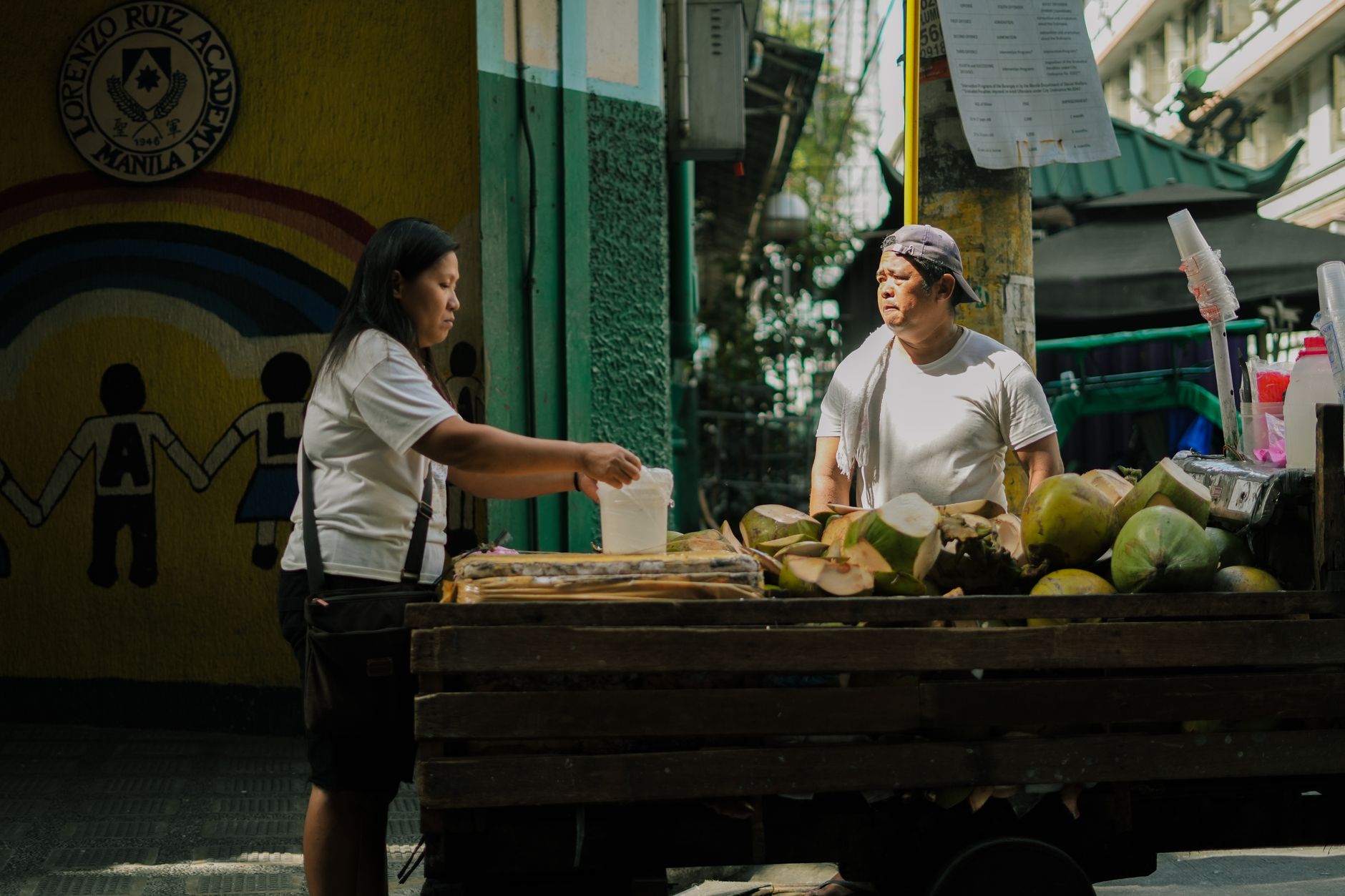
Filipino food does not ask to be admired. It asks whether you are honest enough for sourness. Adobo darkens in vinegar, soy, garlic, and bay until the sauce tastes like patience itself. Sinigang arrives steaming with tamarind acidity so bright it seems to clean the back of your throat. Rice sits beside everything, white and plain and sovereign, as if the meal were on trial and this bowl had the final vote.
The national genius lies in contrast. Pork skin shatters, broth consoles, shrimp paste behaves badly, calamansi cuts through fat like a razor with citrus perfume on it. Kare-kare without bagoong is incomplete; sisig without beer is a minor tragedy; halo-halo must be stirred into apparent ruin before it becomes itself. Civilization, one suspects, depends less on ideology than on knowing when to mix shaved ice, leche flan, beans, jackfruit, and ube with total commitment.
Regional pride sharpens the table. Bacolod grills chicken inasal over coals until the skin glows with annatto and smoke, then serves it with rice and little bowls of vinegar that smell of argument and appetite. Pampanga turns thrift into splendor with sisig. Batangas gives you bulalo, marrow and broth and pepper, the sort of soup that convinces you weather exists so that soup may answer it. A country is a table set for strangers, but the Philippines adds a second helping before you can pretend you are full.
Catholicism in the Philippines does not behave like a relic from Spain. It sweats, sings, bargains, queues, kneels, and keeps excellent company with traffic, karaoke, and market noise. Walk into a church in Metro Manila at noon and you may smell candle wax, sampaguita, perfume, wet shirts, and old stone cooling itself under electric fans. The sacred is not sealed off. It lives with everybody else.
What interests me is not piety as abstraction but piety as choreography. Processions move through streets with the gravity of opera and the practical complications of a city that still needs to cross the road. The Black Nazarene gathers bodies in January by the hundreds of thousands. In Cebu, the Santo Niño receives a devotion so fierce and old that one begins to suspect the carved child has his own diplomatic corps. Colonial history built the chapels. Filipinos supplied the voltage.
And yet religion here is never singular. Islam shapes Mindanao and the Sulu world with its own depth, cadence, and law; older animist habits still flicker inside mountain rituals and household cautions; Chinese altars and Catholic statues sometimes share a room without complaint. The Philippines has a talent for addition. It does not always resolve contradictions. It feeds them, dresses them, gives them feast days, and sends them out into the street.
Philippine architecture has learned the first law of the archipelago: build as if the earth may shake, the sky may flood, and history may arrive by ship with a flag. The old churches answer with thick walls, low profiles, buttresses like clenched fists, and bell towers that sometimes stand apart so one collapse does not take the nave with it. The Baroque churches are Spanish in ancestry, yes, but the adaptation is local and unsentimental. Earthquakes edit style.
In bacolor, where Mount Pinatubo buried streets under lahar in 1991, San Guillermo Church now appears half-sunk, as if the town had been lowered into the earth by a stern and patient god. The building did not vanish. It adjusted. That is a Filipino architectural sentence if ever one existed. A façade survives, stairs descend where they once rose, and catastrophe becomes part of the floor plan.
Then come the houses of daily improvisation: capiz-shell windows filtering light like diluted pearl, nipa and bamboo traditions tuned to heat and airflow, concrete homes with metal grilles, painted saints, water drums, and a basketball hoop claiming the last democratic square meter. In Metro Manila and Pasay, towers rise in glass while floodwater still remembers the old map below them. Architecture here is rarely pure. It is patched, borrowed, tropical, defensive, devout, and stubborn. Which is to say, alive.
Filipino music begins with the fact that no microphone remains alone for long. Karaoke is not a gimmick here. It is social grammar. Someone sings at a birthday, in a barangay hall, under a tarp in the rain, beside a videoke machine glowing like a small domestic altar, and the room reorganizes itself around courage, embarrassment, memory, and the terrifying democracy of key change.
The voice matters enormously. Ballads are not tossed away; they are inhabited. A love song is expected to suffer properly. A power ballad in the Philippines is less a genre than a civic duty, and even people who claim they cannot sing often possess a sense of phrasing that would make another country seem emotionally underfunded.
But the soundscape is wider than videoke. Jeepneys leak pop. Churches ring with choir harmonies. Gongs and kulintang traditions in Mindanao keep older rhythmic worlds alive, circular and metallic, with time behaving like water rather than a marching line. Then night falls in Taguig or Quezon City and a band somewhere begins covering everything from Journey to local indie songs while beer sweats on plastic tables. The nation does not separate performance from life with much enthusiasm. Wisely, I think.
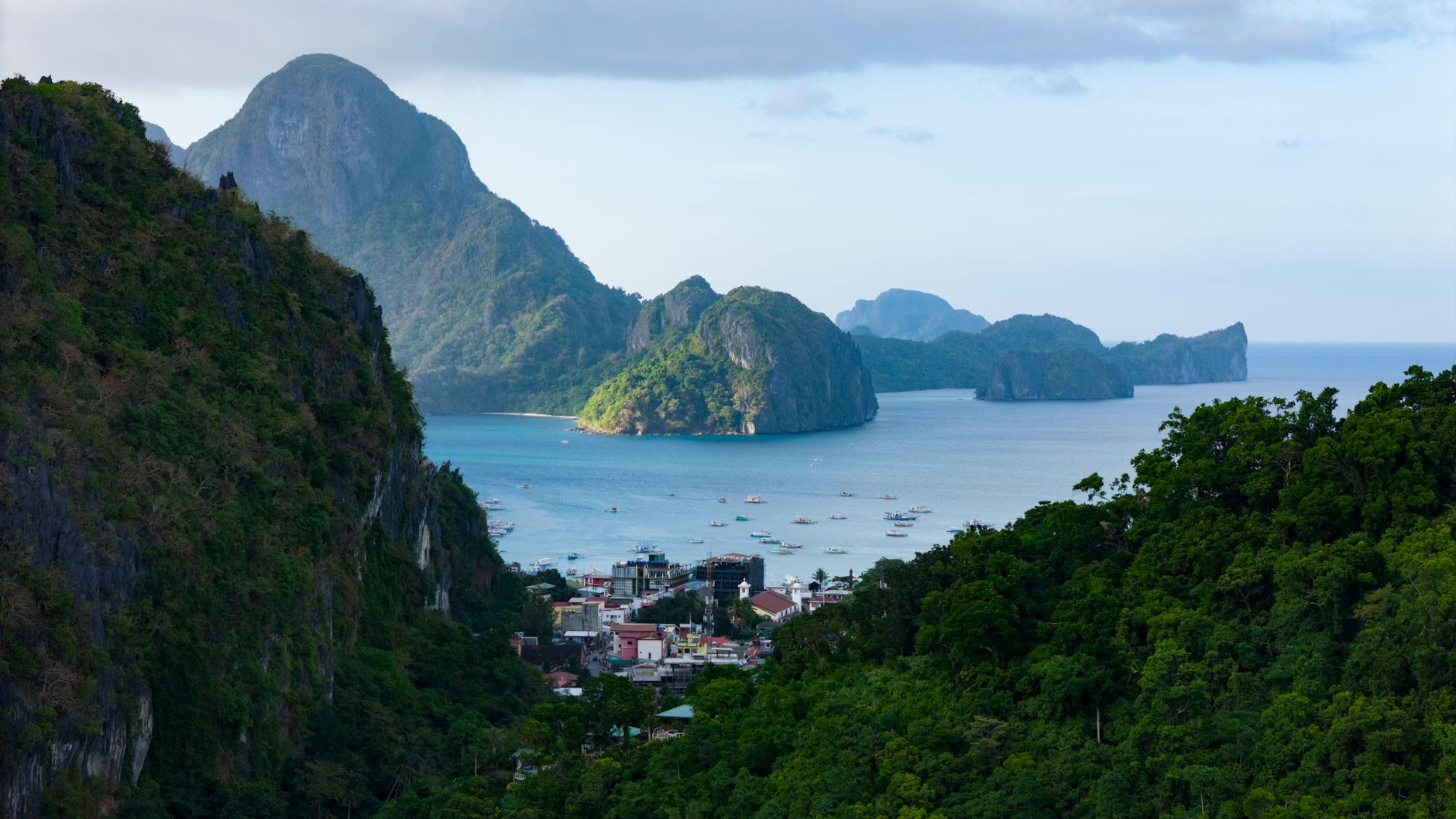
Palawan, Boracay, Siargao, Bohol, and Camiguin do not blur into one tropical cliche. Each island group has its own sea color, weather pattern, transport logic, and social mood.
Few countries wear their past so visibly. Precolonial trade, Spanish churches, American planning, and wartime scars sit close enough to read in a single day, especially around Metro Manila.
Filipino cooking likes sour against fat, smoke against sweetness, broth beside rice. Bacolod alone justifies an appetite, but the bigger revelation is how sharply food changes from one region to the next.
The marine life is the serious argument for coming. Tubbataha, Apo Island, Moalboal, and the Verde Island Passage draw divers who know exactly how rare healthy reef systems have become.
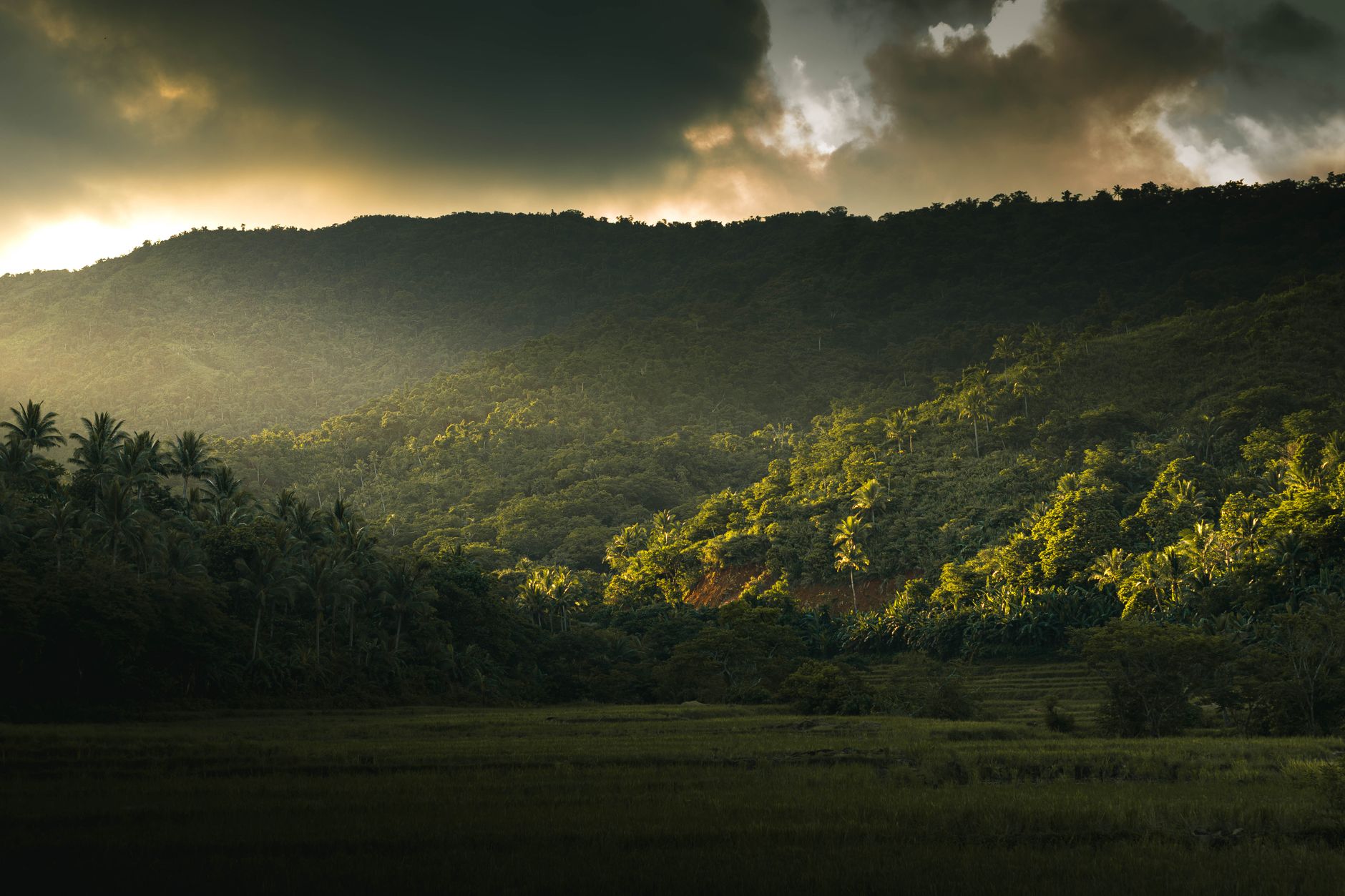
This is a country where the land still looks active, unstable, and hand-shaped. Mayon rises with almost insulting symmetry, while the Cordillera rice terraces prove that engineering can be older than empire.
Festivals here are not stage-managed folklore. Sinulog, Ati-Atihan, and MassKara turn faith, politics, family, noise, and heat into something larger than spectacle.
20 cities — start with the ones we'd send you to first.
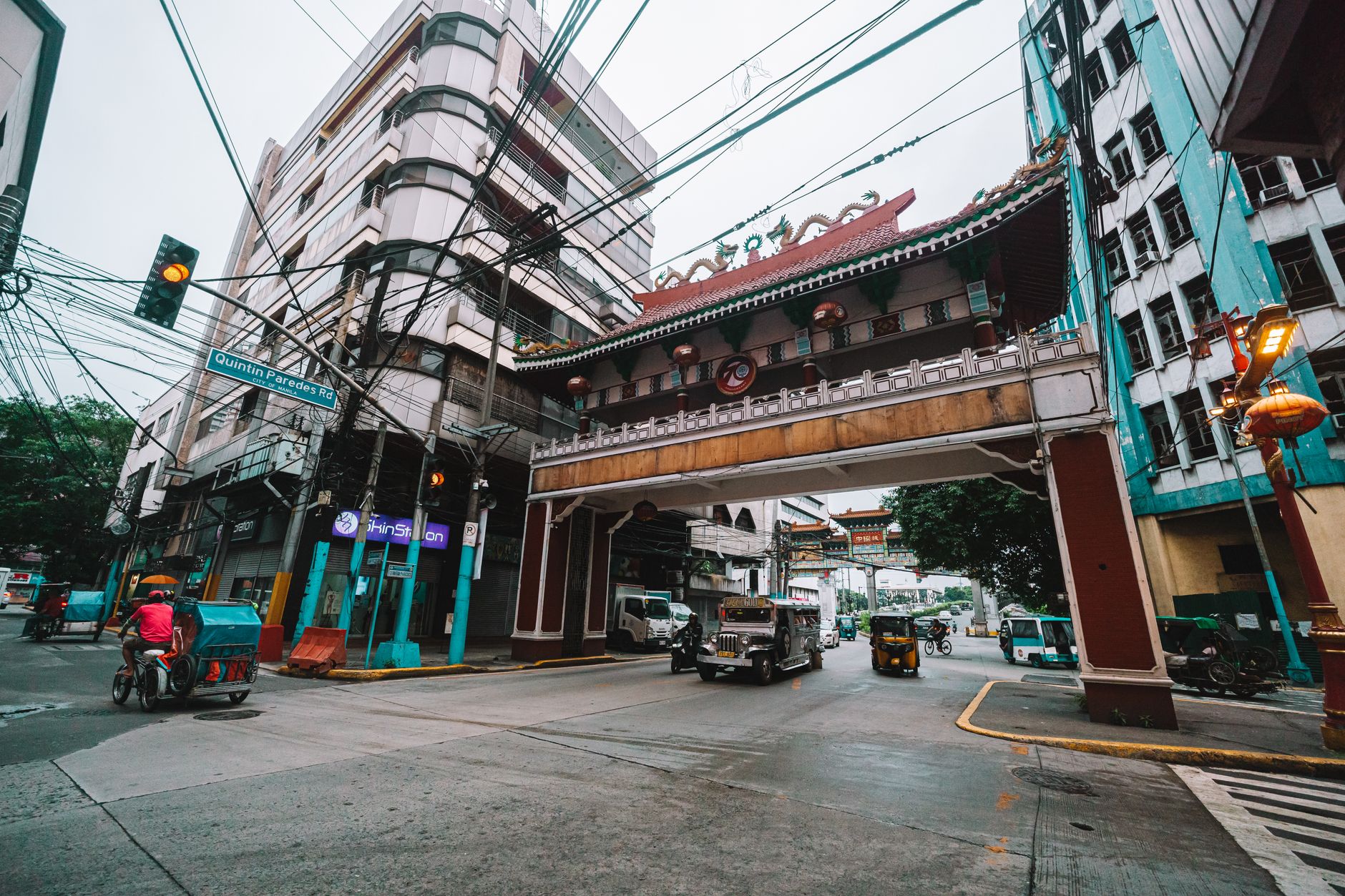
You can stand inside 16th-century Spanish walls in the morning and eat 400-year-old Chinese-Filipino recipes for lunch before riding past gleaming glass towers in the afternoon. That speed of change is Metro Manila.
Bacolod smells like charcoal smoke and warm sugar just before dusk, when the streets soften and everyone seems to know where the best grill is. Stay long enough, and the City of Smiles stops feeling like a slogan and sta…
A church doesn't just survive a disaster here — it wears it. Bacolor's San Guillermo stands in five meters of volcanic silence, choir loft at street level, and still holds Mass on Sundays.
General Trias surprises you quietly: church bells over old stone, steam from bilao valenciana near the market, then suddenly a new township road widening into tomorrow. It feels like a city negotiating with its own memor…
Taguig surprises in layers: glass towers catch the sunset while old church stones hold the day’s heat. Walk far enough and the city shifts from curated avenues to river memory and lake wind.
Stand in front of Saint John the Baptist Church at dawn and you're on the same road Philippine revolutionaries marched north to Malolos in 1899 — colonial stone, incense, and 400 years of an unbroken parish.
Nagcarlan doesn’t shout its history; it lets it echo off brick vaults underground and drift across a sunlit plaza. You come for a cemetery and leave thinking about revolution, faith, and silence.
Pasay hands you the archipelago the moment your plane descends—first the runway, then a bay sunset, then a violin concerto echoing off raw concrete built for a nation still inventing itself.
A city where you touch history with one hand and feel geothermal heat with the other—the past is enshrined in white stone, the present simmers just below the surface in a hundred private pools.
Metro Manila is not one city pretending to be many. It is many cities forced into one argument: old walls in Manila, polished towers in taguig, political muscle in Quezon City, airport pragmatism in Pasay. Give it a few days and the apparent chaos starts reading like a map of class, history, and appetite.
Central Luzon looks flat until history starts rising through it. Churches half-buried by lahar, old provincial capitals, and farm country north of the capital make bacolor one of those places that changes shape once you know what happened here after Pinatubo. This is not scenic in the postcard sense. It is better than that: scarred, specific, and legible.
North Luzon shifts from pine-cool ridges to coastal stone towns with unusual speed. Baguio gives you altitude and old summer-capital architecture; Vigan gives you one of the country's clearest Spanish street plans still standing. The region rewards travelers who like roads, weather changes, and architecture with a memory longer than the republic.
South of the capital, the Philippines becomes more domestic, more devotional, and often more interesting. Batangas City is the practical anchor, but the mood lives in towns like nagcarlan and Barandal where cemetery architecture, market routines, and weekend migration from the capital tell you how Luzon actually works.
Western Visayas is a region of sugar money, parish stone, and excellent lunches. Iloilo City has the most urban polish, while bacolod carries its own swagger through grill smoke, Hiligaynon warmth, and the kind of easy confidence that only shows up in places that know they feed people well.
Mindanao is too large and too politically uneven for lazy generalizations. Davao is the easiest entry point for most travelers, with better air links and a more settled urban rhythm, while Zamboanga City pulls the map west into a very different cultural register shaped by trade, language, and security realities. Plan carefully here; the rewards are real, but so are the regional contrasts.
Built from crushed dolomite on a contested stretch of Manila Bay, this urban beach draws sunset crowds, selfies, and political arguments at dusk.
Marikina's shoe industry is said to have started in this house in 1887, where a family residence became a school, a cultural center, and a city memory.
A national cemetery turned national argument, LNMB is where military honor, family grief, and the Philippines' unfinished history share ground.
Magellan was killed here in 1521 — then the Spanish built him a monument on the very soil where he fell.
Built in 1934 and opened as Silay's first public ancestral house in 1962, this art-packed family home turns a sugar-town stop into something stranger.
Independence was declared here from a window, not the famous balcony; inside, secret compartments and old rooms keep Cavite's arguments alive.
From prehistoric Luzon to People Power, the Philippines keeps remaking itself at the edge of Asia and the Pacific.
Human remains found in the Tabon Caves of Palawan point to very early modern human presence in the archipelago. Even at this depth of time, the islands were already part of the human story of movement, survival, and adaptation.
Seafaring communities from Taiwan and nearby regions moved south into the islands in outrigger boats. They brought farming, languages, and a maritime world that still echoes in Filipino culture today.
The earliest known written Philippine document records a debt pardon in a sophisticated trading world. Its very banality is the marvel: law, literacy, gold, and regional diplomacy were already alive in the islands.
Envoys from Butuan reached the Chinese court and were received as participants in Asian commerce and diplomacy. The mission confirms that the Philippines was tied to regional networks long before Spain arrived.
The ruler of Sulu traveled to the Ming court and died there, receiving an imperial tomb in Shandong. Few episodes capture the archipelago's outward-looking maritime aristocracy so vividly.
Ferdinand Magellan arrived under Spanish service and forged a temporary alliance in Cebu. His expedition marked the beginning of direct European intrusion into island politics.
On April 27, Lapulapu's forces killed Magellan in shallow water at Mactan. The encounter became one of the founding scenes of Philippine resistance memory.
Miguel Lopez de Legazpi established the first lasting Spanish settlement in Cebu. What had been an expedition became a colonial project that would endure for more than three centuries.
Spain founded Manila as the center of its Asian empire, linking the city to Acapulco through the galleon trade. The future Metro Manila was born as a global entrepot of silver, silk, and souls.
During the Seven Years' War, British forces captured Manila and briefly exposed the fragility of Spanish rule. Outside the capital, however, colonial authority did not collapse so neatly.
Fathers Gomez, Burgos, and Zamora were executed after the Cavite mutiny. Their deaths shocked the educated Filipino world and became a moral seed for later nationalism.
Jose Rizal created a reformist civic organization in Manila, hoping peaceful change was still possible. The colonial state answered with repression, and moderation began to look naive.
The Katipunan launched an armed uprising against Spain, turning conspiracy into open revolt. What had simmered in secret societies now burst into the countryside and the suburbs of Manila.
Rizal was shot at Bagumbayan on December 30, and the regime believed it had removed a problem. Instead it created a martyr whose death outlived the empire that ordered it.
Emilio Aguinaldo declared Philippine independence on June 12, raising a flag and announcing a republic before the old empire had fully let go. It was one of the country's great ceremonial acts of political self-assertion.
Spain ceded the archipelago to the United States after the Spanish-American War. Filipino aspirations were ignored at the negotiating table, and one colonial ruler simply replaced another.
Filipino forces fighting for independence clashed with American troops in a brutal war of conquest. The rhetoric of liberation gave way to occupation, counterinsurgency, and immense civilian suffering.
The United States established a semi-autonomous commonwealth as a step toward independence. Filipino leaders began governing more directly, though under an American constitutional umbrella.
Japanese forces invaded soon after Pearl Harbor, opening one of the most traumatic chapters in modern Philippine history. Occupation, hunger, guerrilla war, and atrocity reshaped the country.
The fight to retake Manila destroyed much of the city and killed vast numbers of civilians. One of Asia's great urban centers emerged from the war mutilated almost beyond recognition.
On July 4, formal independence from the United States was proclaimed. The republic began its life carrying the institutional habits of empire and the wreckage of war at the same time.
Ferdinand Marcos suspended democratic life in the name of order and national rescue. What followed was a long season of censorship, detention, corruption, and carefully staged spectacle.
Aquino was shot upon arrival at Manila International Airport, a killing so public it shattered any remaining pretense of normal politics. The opposition found, in grief, a new kind of strength.
Crowds filled EDSA in Metro Manila, confronting tanks with prayer, flowers, and numbers too large to ignore. The Marcos regime fell, and the Philippines offered the world a democratic revolution staged in broad daylight.
Corazon Aquino took office after the uprising and restored constitutional democracy. Her ascent gave the republic a maternal, moral center after years of theatrical authoritarianism.
Before the Cross
Rajah Sri Bata Shaja appears less as a distant monarch than as a practical statesman who knew that protocol in the Chinese court could raise the value of every ship leaving Butuan.
A thin sheet of copper, dated April 21, 900, nearly vanished into the scrap trade in Laguna. When scholars finally read it, the surprise was delicious: not a king's boast, not a battle hymn, but a debt pardon for a man named Namwaran, witnessed in a world that already spoke through Old Malay, Sanskrit, and Old Tagalog. Ce que l'on ignore souvent, c'est que this small legal document does more damage to colonial myth than any patriotic speech ever could.
Long before the churches of Metro Manila and before the bells of Intramuros, these islands were tied to Java, China, Borneo, and the Malay world by trade routes made of wind, nerve, and memory. Butuan on the Mindanao coast sent gold and goods to Song China; the Chinese court received envoys from Rajah Sri Bata Shaja in 1001 as one receives serious partners, not curiosities from the edge of the map. The Philippines, even then, was not isolated. It was busy.
The sea ruled everything. Austronesian sailors had crossed into the archipelago millennia earlier in outrigger boats, carrying rice, pigs, stories, and a talent for reading currents that would shame many modern navigators with GPS in hand. Their descendants built barangays rather than one grand empire, which explains a great deal about Philippine history: power was local, loyalties layered, and no single throne could speak for 7,641 islands.
Then come the almost theatrical figures. Sultan Paduka Pahala of Sulu traveled to the Ming court in 1417 and died in China, where the emperor granted him a royal tomb in Shandong; his descendants remained there for centuries, a Filipino dynasty folded into Chinese memory. And somewhere between archive and legend stands Princess Urduja, the warrior ruler Ibn Battuta may have heard of in the 14th century, refusing suitors unless they could defeat her. True? Perhaps. Revealing? Absolutely.
By the time Spain appeared on the horizon, the islands already had ports, goldsmiths, diplomats, debt records, Muslim sultanates in the south, and chiefs who understood alliance as well as anyone in Europe. That matters, because what came next was not the birth of history. It was the collision of one world with another.
The oldest written Philippine document is not a sacred text or a royal proclamation but a receipt for mercy: a debt cancelled in gold.
The Spanish Colony
Lapulapu endures because he is not an abstract patriot invented after the fact but the local ruler who looked at foreign power, measured it, and refused to bend.
The scene is almost indecently vivid. On March 17, 1521, Ferdinand Magellan reached Homonhon under the Spanish flag, made common cause with Rajah Humabon of Cebu, and offered Christianity with the confidence of a man who thought history had chosen him personally. Humabon's court accepted baptism; the queen, remembered in later tradition as Hara Amihan, received the Santo Nino, that small carved Christ Child still venerated in Cebu with the tenderness usually reserved for family silver and state relics.
Then pride ruined everything. On April 27, 1521, Magellan landed on Mactan to punish Lapulapu, expecting a lesson in obedience; instead he staged his own downfall in shallow water. Antonio Pigafetta, who watched it, left one of those lines that never fade: Magellan kept turning to see whether his men had reached the boats. It is a soldier's death, a commander's vanity, and a tragic opera compressed into a few moments of surf and bamboo spears.
Spain returned in force in 1565, and from then on the islands were pulled into a global machine. Manila, later folded into what we now call Metro Manila, became the hinge of the galleon trade between Asia and the Americas: Chinese silk, Mexican silver, saints, spices, bureaucrats, friars, and gossip all passed through. Ce que l'on ignore souvent, c'est que the Philippines was governed for a long time not only from Madrid but through New Spain, meaning that Acapulco mattered almost as much as Castile.
The colony changed souls and streets. Churches rose in stone; processions filled plazas; local elites learned to work the imperial system while friars accumulated land and influence with a skill bordering on genius. Yet the story is never as simple as submission. The same Christian world that built the churches also produced resentment, satire, secular priests demanding dignity, women managing households and fortunes, and ordinary Filipinos paying the tax bill for empire in labor, tribute, and silence.
By the 19th century that silence had begun to crack. Education widened, trade opened, liberal ideas circulated, and the colony produced a class of Filipinos who could read Europe well enough to challenge it in its own language. Spain had given the islands a common religion, a capital, and a political frame. It had also trained the generation that would one day bring the empire down.
After Magellan's death, Rajah Humabon invited Spanish survivors to a banquet and had many of them killed, proving that diplomatic dinners in the 16th-century Visayas could end very badly indeed.
Revolution and Empire
Jose Rizal fascinates because beneath the bronze monument stands a meticulous, elegant, often melancholy man who believed the pen could shame an empire into reform and discovered that empires embarrass easily but rarely surrender gracefully.
Picture a prison cell in Manila in December 1896, a physician-poet writing his last lines before dawn. Jose Rizal, novelist, ophthalmologist, impossible national conscience, was executed by firing squad on December 30 at Bagumbayan, the field later turned into Luneta and then Rizal Park in Metro Manila. He had not led an army. That was precisely the danger. He had armed a colony with thought.
His death lit the fuse. Andres Bonifacio and the Katipunan had already begun the revolution against Spain, but martyrdom gave the cause a face no censor could erase. Then came Emilio Aguinaldo, young, ambitious, politically agile, proclaiming independence on June 12, 1898, in Kawit with a flag, an anthem, and the confidence of a man convinced destiny had finally opened the right door.
Except another empire had entered the room. Spain lost the Philippines in the Spanish-American War, and the United States purchased the archipelago under the Treaty of Paris as though nations were estates to be transferred at a lawyer's table. The Philippine-American War that followed was savage, intimate, and often reduced in foreign memory to a footnote, which is an injustice. Villages burned, civilians suffered, and the new occupier spoke the language of tutelage while fighting a brutal colonial war.
And yet the American period also rearranged daily life in ways that lasted: public schools, English, electoral habits, new roads, new elites, and a different style of modernity. Filipinos did not simply absorb it. They adapted it, parodied it, used it, and prepared once more for self-rule. Then Japan invaded in 1941, Manila was shattered, and by the time liberation came in 1945, one of Asia's great cities had been turned into a cemetery of stone.
Formal independence arrived on July 4, 1946, but no country leaves three successive empires without scars. The republic inherited parliaments and plantations, English textbooks and mass graves, grand promises and old inequalities. That contradiction would shape every decade that followed.
Rizal's final poem, hidden in an alcohol stove and later known as 'Mi Ultimo Adios,' survived because his family knew exactly where to look after his execution.
Republic, Dictatorship, and People Power
Corazon Aquino changed history not by sounding like a caudillo but by standing, almost improbably calm, in the center of national grief until grief became political force.
Manila after the war looked less like a capital than like an accusation. Entire districts were flattened, families rebuilt from rubble, and the republic born in 1946 had to improvise normal life amid grief. The postwar decades brought elections, oligarchies, patronage, cinema, labor unrest, and a restless democratic culture that never quite trusted its own masters.
Then came Ferdinand Marcos, elected president in 1965 with polished rhetoric and a talent for turning biography into myth. In 1972 he imposed martial law, claiming order while concentrating wealth and fear in the hands of a ruling couple whose taste for spectacle was almost Bourbon in scale. Imelda Marcos, with her palaces, jewels, and those famous thousands of shoes, became the courtly face of a regime that jailed opponents, censored the press, and allowed torture to hide behind the curtains.
Ce que l'on ignore souvent, c'est que dictatorships depend not only on terror but on choreography. Marcos understood television, ceremony, uniform, and the persuasive force of a carefully staged nation. But the Philippines has always had a genius for turning public ritual against power. When Benigno Aquino Jr. was assassinated on the airport tarmac in 1983, the regime created not silence but mourning with a microphone.
His widow, Corazon Aquino, did not look like a revolutionary. That was her strength. In February 1986, millions gathered on Epifanio de los Santos Avenue, the broad spine of Metro Manila, carrying rosaries, food, flowers, and an astonishing steadiness. Nuns knelt before tanks, soldiers defected, and the Marcos court fled into exile. People Power entered the global political vocabulary because Filipinos made democracy visible in the street.
The decades since have been untidy, noisy, often disappointing, and unmistakably alive. Democratic institutions survive beside dynasties; economic ambition sits beside deep inequality; memory itself is contested in schoolbooks, speeches, and family tables. But that is precisely why this story matters: the Philippines did not move from colony to freedom in a straight line. It keeps arguing with its past, in public, and that argument is the republic.
The most famous relic of the Marcos years is not a decree or a crown jewel but a wardrobe: the thousands of shoes found in Malacanang after the family fled in 1986.
In Metro Manila, conversation behaves like traffic in a city that distrusts straight lines. English enters first, neat collar, office shoes, then Tagalog slips in with heat, mockery, tenderness, and suddenly the sentence has blood in it. A meeting can begin in polished corporate English and end in Taglish so supple that half the meaning lives in timing, eyebrow angle, and the tiny word "po," which can make a request bow before it lands.
The Philippines treats language less as a border than as a buffet table. Cebuano, Ilocano, Hiligaynon, Kapampangan, Waray: each one is a weather system, and Filipinos move among them with unnerving grace. I have heard people switch codes three times in one jeepney ride, not to impress anyone, simply because one language carries the joke, another the instruction, and a third the feeling that would suffocate if forced into the wrong grammar.
A country reveals itself in its untranslatable words. "Hiya" is not shame but the sting of having occupied too much space in another person's world. "Kilig" is the body's foolish electricity when charm attacks without warning. "Gigil" is what happens when affection grows teeth. The lexicon knows that feelings are physical events, and that seems to me one of the wisest things any civilization has admitted.
Filipino politeness is not decoration. It is a sensory organ. You notice it when a younger person says "opo" instead of "oo," when a hand is lifted to the forehead in "mano po," when someone refuses food once out of form and accepts on the second offer because ritual must do its work before appetite is allowed to speak.
The system looks gentle. It is in fact precise. Rank, age, debt, intimacy, fatigue, social weather: all are measured continuously, almost musically, and adjusted for in real time. A dinner table in Quezon City can sound full of laughter, teasing, and spoon-on-plate percussion, while underneath runs a fine architecture of respect so exact that the wrong tone, not the wrong word, becomes the true offense.
This is why directness, so admired elsewhere, can feel clumsy here. The admired skill is "pakikiramdam," the ability to sense what has not been said and answer it anyway. One does not charge at another person's dignity with boots on. One circles, offers rice, changes the subject, waits, and lets emotion arrive dressed for company. Form, in the Philippines, is not the enemy of feeling. It is the glove that lets feeling be touched.
Filipino food does not ask to be admired. It asks whether you are honest enough for sourness. Adobo darkens in vinegar, soy, garlic, and bay until the sauce tastes like patience itself. Sinigang arrives steaming with tamarind acidity so bright it seems to clean the back of your throat. Rice sits beside everything, white and plain and sovereign, as if the meal were on trial and this bowl had the final vote.
The national genius lies in contrast. Pork skin shatters, broth consoles, shrimp paste behaves badly, calamansi cuts through fat like a razor with citrus perfume on it. Kare-kare without bagoong is incomplete; sisig without beer is a minor tragedy; halo-halo must be stirred into apparent ruin before it becomes itself. Civilization, one suspects, depends less on ideology than on knowing when to mix shaved ice, leche flan, beans, jackfruit, and ube with total commitment.
Regional pride sharpens the table. Bacolod grills chicken inasal over coals until the skin glows with annatto and smoke, then serves it with rice and little bowls of vinegar that smell of argument and appetite. Pampanga turns thrift into splendor with sisig. Batangas gives you bulalo, marrow and broth and pepper, the sort of soup that convinces you weather exists so that soup may answer it. A country is a table set for strangers, but the Philippines adds a second helping before you can pretend you are full.
Catholicism in the Philippines does not behave like a relic from Spain. It sweats, sings, bargains, queues, kneels, and keeps excellent company with traffic, karaoke, and market noise. Walk into a church in Metro Manila at noon and you may smell candle wax, sampaguita, perfume, wet shirts, and old stone cooling itself under electric fans. The sacred is not sealed off. It lives with everybody else.
What interests me is not piety as abstraction but piety as choreography. Processions move through streets with the gravity of opera and the practical complications of a city that still needs to cross the road. The Black Nazarene gathers bodies in January by the hundreds of thousands. In Cebu, the Santo Niño receives a devotion so fierce and old that one begins to suspect the carved child has his own diplomatic corps. Colonial history built the chapels. Filipinos supplied the voltage.
And yet religion here is never singular. Islam shapes Mindanao and the Sulu world with its own depth, cadence, and law; older animist habits still flicker inside mountain rituals and household cautions; Chinese altars and Catholic statues sometimes share a room without complaint. The Philippines has a talent for addition. It does not always resolve contradictions. It feeds them, dresses them, gives them feast days, and sends them out into the street.
Philippine architecture has learned the first law of the archipelago: build as if the earth may shake, the sky may flood, and history may arrive by ship with a flag. The old churches answer with thick walls, low profiles, buttresses like clenched fists, and bell towers that sometimes stand apart so one collapse does not take the nave with it. The Baroque churches are Spanish in ancestry, yes, but the adaptation is local and unsentimental. Earthquakes edit style.
In bacolor, where Mount Pinatubo buried streets under lahar in 1991, San Guillermo Church now appears half-sunk, as if the town had been lowered into the earth by a stern and patient god. The building did not vanish. It adjusted. That is a Filipino architectural sentence if ever one existed. A façade survives, stairs descend where they once rose, and catastrophe becomes part of the floor plan.
Then come the houses of daily improvisation: capiz-shell windows filtering light like diluted pearl, nipa and bamboo traditions tuned to heat and airflow, concrete homes with metal grilles, painted saints, water drums, and a basketball hoop claiming the last democratic square meter. In Metro Manila and Pasay, towers rise in glass while floodwater still remembers the old map below them. Architecture here is rarely pure. It is patched, borrowed, tropical, defensive, devout, and stubborn. Which is to say, alive.
Filipino music begins with the fact that no microphone remains alone for long. Karaoke is not a gimmick here. It is social grammar. Someone sings at a birthday, in a barangay hall, under a tarp in the rain, beside a videoke machine glowing like a small domestic altar, and the room reorganizes itself around courage, embarrassment, memory, and the terrifying democracy of key change.
The voice matters enormously. Ballads are not tossed away; they are inhabited. A love song is expected to suffer properly. A power ballad in the Philippines is less a genre than a civic duty, and even people who claim they cannot sing often possess a sense of phrasing that would make another country seem emotionally underfunded.
But the soundscape is wider than videoke. Jeepneys leak pop. Churches ring with choir harmonies. Gongs and kulintang traditions in Mindanao keep older rhythmic worlds alive, circular and metallic, with time behaving like water rather than a marching line. Then night falls in Taguig or Quezon City and a band somewhere begins covering everything from Journey to local indie songs while beer sweats on plastic tables. The nation does not separate performance from life with much enthusiasm. Wisely, I think.
Rizal did something empires fear more than rebellion: he made educated readers laugh at them. His novels 'Noli Me Tangere' and 'El Filibusterismo' exposed clerical abuse and colonial vanity so precisely that his execution in Manila turned him into the republic's most eloquent ghost.
Bonifacio was not a salon reformer but a warehouse clerk who understood secrecy, passwords, and the explosive power of insulted dignity. He started a revolution with pamphlets, blades, and nerve, then was pushed aside by rivals before the nation he helped awaken even existed.
Aguinaldo raised the flag of independence on June 12, 1898, in a scene designed for memory and argument alike. Brilliant, divisive, and still debated, he embodies the hard truth that founding fathers are often also factional politicians with very sharp elbows.
Lapulapu enters the historical stage with one magnificent refusal. He is remembered because he proved, on a beach in Mactan, that European steel and Christian certainty could be stopped by a local ruler who knew his waters better than any admiral.
Magellan changed Philippine history by misreading it. He arrived certain that conversion and alliance gave him authority; he died in the shallows, leaving behind the first great collision between European empire and island sovereignty.
Aquino looked, at first glance, too gentle for a duel with a dictatorship. That appearance deceived her enemies: she turned widowhood into moral authority and helped convert prayer, mourning, and street presence into one of the late 20th century's defining democratic revolts.
Marcos sold himself as the architect of discipline and national grandeur, then built a system of martial law, patronage, and fear. His story matters because it shows how quickly republican institutions can be draped in pageantry and hollowed out from within.
Imelda understood that power likes chandeliers, silk, and applause. Behind the shoes and gossip stood a formidable political operator who helped turn Malacanang into a tropical court where glamour softened the edges of repression without ever hiding it completely.
Aquino returned from exile knowing he might be killed, which gives his final journey the chill of Greek tragedy. His murder on the airport tarmac shattered the illusion that the regime still had limits, and it set the stage for the uprising his widow would lead.
This is the sharp, urban version of the Philippines: old power, new money, museums, food halls, and neighborhoods that change tone every few kilometers. Base yourself across Pasay, taguig, and Quezon City so you spend your time crossing eras rather than sitting in one loop of traffic.
Start in Manila, then move north through bacolor, Baguio, and Vigan for a route built on colonial stone, mountain air, and the long afterlife of empire. The order works because the road climbs gradually, and each stop changes the country without breaking the logic of the journey.
This route begins in Iloilo City, crosses to bacolod for grills and festival country, then finishes in Cebu City where ferries, churches, and flight connections make the end of the trip easy. It suits travelers who want food, manageable transfers, and a strong sense of regional difference without chasing five islands in ten days.
This is a slower, more local route through the belt south of Metro Manila: old churches, market towns, industrial edges, and lake-country detours that most foreign visitors never bother to join up. Starting in general trias and ending around nagcarlan and Barandal keeps the route compact, cheap, and realistic by road.
Hands wash. Rice lands. Chicken tears with spoon and fork. Vinegar drips. Smoke stays on the fingers. Bacolod knows the order.
Broth first. Rice next. Pork or shrimp after. Family table, rain outside, elbows close, silence during the first spoonful.
Beer arrives. Plate crackles. Calamansi squeezes. Pork face, onion, chili, talk, laughter, another beer.
Afternoon heat. Glass, spoon, crushed ice, beans, jackfruit, leche flan, ube. Stir everything. Eat fast.
Feast day, wedding, birthday, impossible Sunday. Skin cracks. Rice waits. Sauce debates begin. Children circle first.
Noodles for long life. Platters in the middle. Calamansi squeezes. Cousins gather. Someone insists on another serving.
Dawn mass ends. Charcoal heat rises. Rice cake, salted egg, cheese, butter, coconut. Coffee follows.
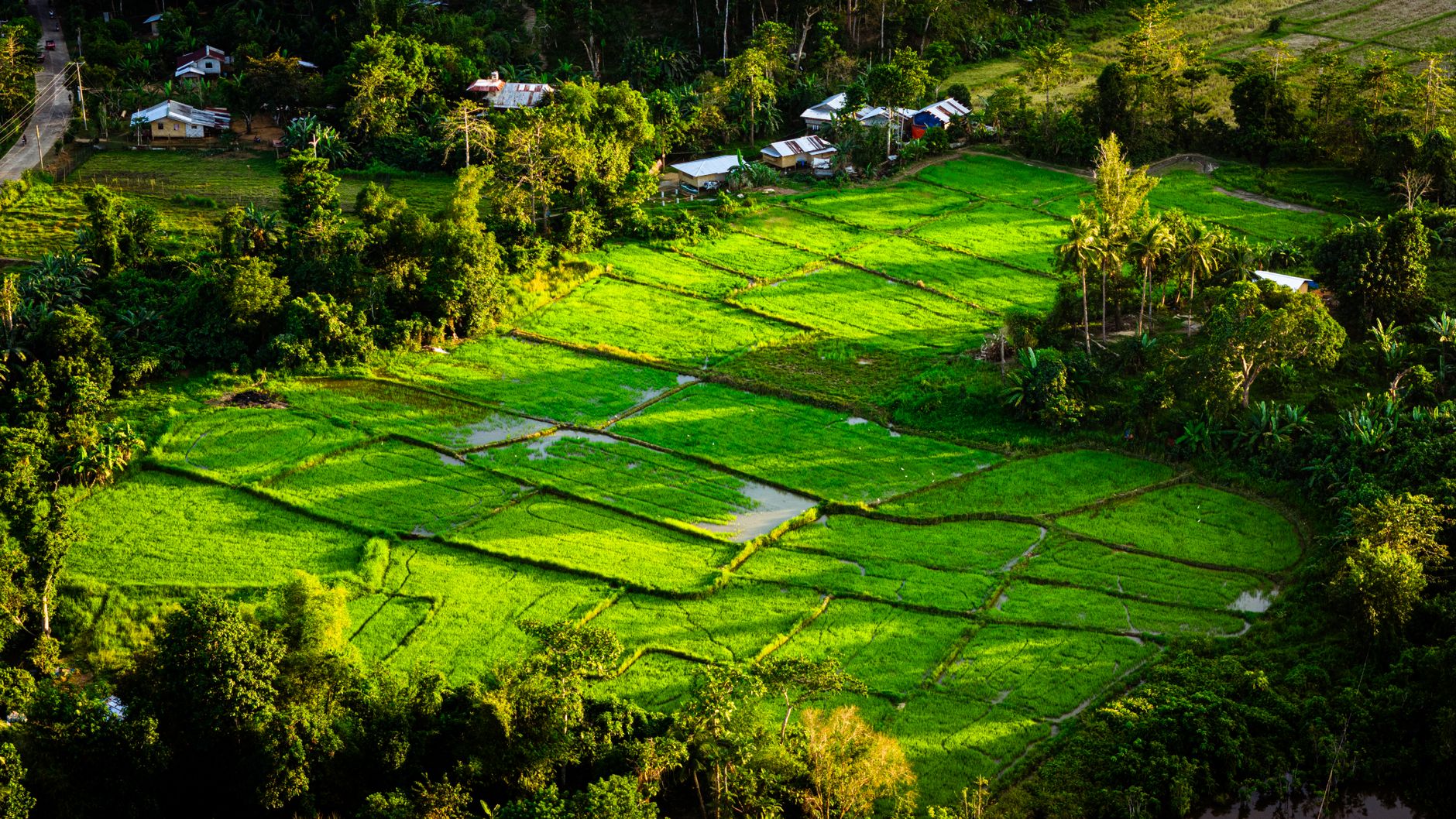


US, Canadian, UK, Australian, and most EU passport holders can enter visa-free for up to 30 days for tourism if the passport is valid for at least 6 months beyond the stay and you hold an onward or return ticket. Register on the official eTravel portal within 72 hours before arrival; the QR code is checked before boarding.
The currency is the Philippine peso, and cash still matters outside big malls, resort belts, and business districts in Metro Manila, taguig, and Cebu City. VAT is 12 percent, many hotels and smarter restaurants add a 10 percent service charge, and a small cash tip for drivers, porters, or housekeeping is normal rather than obligatory.
Most long-haul arrivals land in Manila, with Cebu City, Clark, and Davao as the next most useful gateways. If your first stop is Metro Manila, Pasay, or Quezon City, build in extra transfer time: airport distance means less than road time when traffic locks up.
Between islands, flights save days and usually save patience too; ferries make sense for short hops in settled weather, not heroic cross-country plans. In cities, use Grab where it operates, keep small notes for taxis and buses, and treat rail as a Metro Manila convenience rather than a national network.
December to May is the driest and easiest window for most routes, with January to March the sweet spot for heat, sea conditions, and lower storm risk. June to November is wetter and typhoon-prone, especially on eastern coasts, while Mindanao is usually less exposed than Luzon and the eastern Visayas.
A local SIM or eSIM is one of the best-value purchases in the country, especially if you are stitching together flights, ferries, and hotel pickups. 5G and LTE are solid in Metro Manila, taguig, Pasay, Quezon City, Cebu City, and Davao, then thinner on smaller islands and mountain roads, so download tickets and maps before travel days.
For most travelers, the everyday issues are traffic, petty theft, rough seas, and weather disruption, not street drama. Keep a close eye on official advisories for western and central Mindanao and the Sulu archipelago, use registered transport at airports, and do not plan tight same-day flight-to-ferry connections in storm season.
Carry enough pesos for one full travel day. Ferries, vans, market food, and smaller guesthouses often prefer cash even when the city you just left felt card-friendly.
Domestic airfares jump around holidays, Fridays, and school breaks. If a route matters to the shape of your trip, book it first and fit hotels around it.
Rail helps inside Metro Manila, especially between districts linked to LRT or MRT lines. It does not solve airport transfers, and it does not replace intercity planning.
Save boarding passes, hotel addresses, and ferry tickets before leaving big cities. Signal drops are common on island roads, in ports, and during weather disruptions.
Popular lunch spots in bacolod, Cebu City, and Metro Manila fill fast, then run out of the good stuff. The simple rule is old and reliable: eat early, especially for lechon, inasal, and market breakfasts.
Christmas, Holy Week, and long weekends push domestic demand hard. Rooms near beaches and transport hubs sell out long before foreign travelers expect them to.
A cancelled boat is not bad luck; it is a warning you should accept. Keep one buffer night before international departures if your trip includes ferries or small-island flights.
Politeness goes a long way here. A calm ask, a thank-you, and a little patience usually get better results than the hard-edged certainty some travelers mistake for efficiency.
Explore Philippines with a personal guide in your pocket
Audio guides for 1,100+ cities across 96 countries. History, stories, and local insight — offline ready.
Usually no, if you are visiting for up to 30 days for tourism and meet the standard conditions. Your passport should be valid for at least 6 months beyond the stay, you need an onward or return ticket, and you still have to complete eTravel before arrival.
Yes, it is still required for international arrivals. Register on the official portal within 72 hours before your flight and keep the QR code handy because airlines may check it before boarding.
January and February are the safest all-round bets for most itineraries. You get drier weather, slightly easier temperatures, and fewer storm problems than the June to November wet season.
Seven days is the minimum for a satisfying first trip, and ten to fourteen days is where the country starts making sense. Distances look modest on a map, but airports, ferries, and road transfers eat time fast.
It can be good value, but it is not as cheap as mainland Southeast Asia once you add island transfers. Food and local transport are affordable, while domestic flights, boats, and resort-area accommodation are what push the budget upward.
Yes, but you will lose a lot of time. Ferries and buses work for regional routes, yet flights are the sensible choice for most island-to-island jumps unless you are traveling slowly on purpose.
Yes, in major cities and the districts where most travelers actually need it. It is especially useful in Metro Manila, Pasay, taguig, Quezon City, Cebu City, and Davao, where it saves the haggling and route confusion that wear people down on day one.
Some parts are fine for ordinary tourism, but not all of Mindanao should be treated the same. Check current government advisories before locking in Zamboanga City or overland routes, and be far more cautious with western and central Mindanao than with Davao.
Last reviewed