Introduction
The Palacio Veneciano, once a distinguished landmark in Lima’s historic center, stands as a symbol of the city’s ambitious blend of European architectural inspiration and Peruvian cultural identity. Although the original structure was demolished in the mid-20th century, its influence is still felt within Lima’s UNESCO-listed historic core, surrounded by grand colonial mansions, baroque churches, and republican-era palaces. This comprehensive guide explores the history, architectural significance, visiting logistics, and conservation challenges associated with Palacio Veneciano, while offering practical tips for exploring Lima’s rich array of historical sites.
Historical Background of Palacio Veneciano and Lima’s Urban Heritage
Founded in 1535, Lima’s urban core was designed following Spanish colonial models, with a grid layout centered on the Plaza Mayor. Over the centuries, Lima’s architecture evolved, blending Spanish, Moorish, indigenous, and, by the late 19th and early 20th centuries, eclectic European influences. During this period, the city’s upper classes sought to demonstrate sophistication and modernity by commissioning remarkable residences, often inspired by European cities (LimaEasy; lacgeo.com).
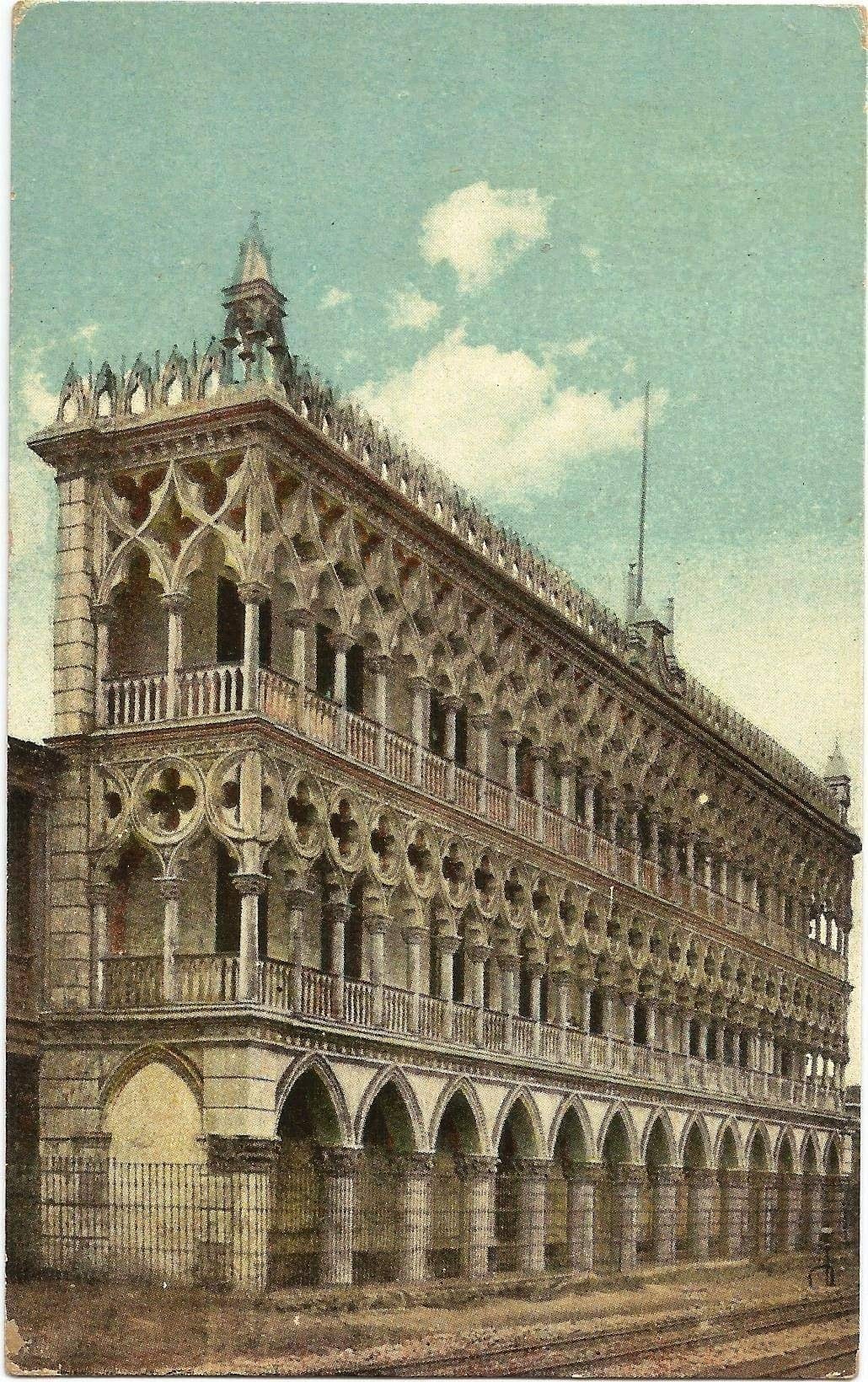
The Palacio Veneciano—also known as Casa Concha or Casa Concha Astete—epitomized this cosmopolitan spirit. Drawing directly from Venetian Gothic and Neoclassical styles, the palace’s design was a rare and ambitious statement in South America. It was especially noted for its façade inspired by Venice’s Doge’s Palace, and its unique orientation toward the Rímac River, reflecting Lima’s aspirations to emulate European grandeur (Wikipedia; Secret Attractions).
Architectural Design and Stylistic Influences
Venetian Gothic and Neoclassical Elements
Palacio Veneciano’s architecture was unique in Lima, characterized by a harmonious blend of Venetian Gothic details—such as pointed arches, elaborate tracery, and ornate balconies—with Neoclassical features like symmetrical layouts and restrained ornamentation. The rear façade, facing the Rímac River, was especially iconic, designed as part of a visionary (but unrealized) canalization project to transform the river into a Venetian-style waterway (Wikipedia; es.wikipedia).
Interior Features
Though detailed documentation is limited, period sources and archival photographs suggest that the palace’s interiors were lavishly appointed, with imported Italian marble, European woodwork, sweeping staircases, and ornate salons. These features reflected the wealth and cosmopolitan aspirations of Lima’s elite (Lima la Única).
Urban Context and Location
Setting in Historic Lima
The palace was located near Calle de los Polvos Azules, close to major landmarks such as the Government Palace and Puente de Piedra. This area was central to Lima’s political and social life, placing the palace at the heart of the city’s most prestigious neighborhood (PlanetWare).
Relationship to the Rímac River
Facing the Rímac River, the palace was both a scenic and symbolic statement. Its design was an integral part of Lima’s attempt to modernize and internationalize its urban landscape, even as the canal project ultimately remained unrealized (es.wikipedia).
Architectural Legacy and Demolition
Ownership and Demolition
Originally owned by the Vega del Ren family, the palace’s construction and grandeur reflected the social ambitions of Lima’s aristocracy. However, during the mid-20th century, under the government of Manuel A. Odría, the palace was demolished as part of urban renewal initiatives—an act now often cited as a cautionary tale in heritage conservation (Lima la Única).
Impact
The loss of Palacio Veneciano left a significant void in Lima’s architectural landscape. While other historic mansions like Casa Aliaga and Palacio Torre Tagle have survived, the demolition of Palacio Veneciano is frequently lamented by preservationists (TripSavvy).
Heritage Conservation Status
Legal Protection and Challenges
Though the original palace no longer exists, its former site remains within Lima’s protected historic center, covered by national and municipal heritage laws (whc.unesco.org). Conservation efforts in Lima face ongoing challenges, including:
- Environmental wear from humidity and salt-laden air
- Urban development pressures
- Limited conservation funding
Recent initiatives emphasize scientific analysis, community engagement, and international cooperation to preserve what remains of Lima’s eclectic architectural heritage (iccrom.org; lacgeo.com).
Visitor Experience: Practical Information
Can I Visit Palacio Veneciano?
As the palace has been demolished, visitors cannot tour the original building. However, its historic location in Lima’s center is accessible and surrounded by significant landmarks. Walking tours often include stories and historic context about the palace (e-a-a.com).
Nearby Attractions
- Plaza Mayor (Plaza de Armas): Heart of Lima’s historic district (Discover Walks)
- Government Palace: Noted for its changing of the guard
- Cathedral of Lima
- Casa Aliaga: One of the oldest continuously inhabited colonial mansions
- Convent of San Francisco: Baroque church and catacombs
- Barranco and Miraflores: Bohemian and seaside districts
Guided Tours
Several reputable operators offer guided walking tours in multiple languages, often referencing the Palacio Veneciano and its architectural context (Viator; Airbnb Experiences).
Visiting Hours and Tickets
While the palace itself cannot be visited, the surrounding historic center is open year-round. Most museums and historic houses are open from 9:00 AM to 5:00 PM, Tuesday to Sunday. Tickets for specific attractions can be purchased on-site or online; discounts are available for students and groups (Free Walking Tours Peru).
Accessibility
Lima’s historic center is largely pedestrian-friendly, though some cobblestone streets may be challenging for those with mobility issues. Many major sites offer ramps and accessible pathways.
Responsible Tourism and Visitor Tips
- Book tours in advance, especially during peak season (June–August) (Global Highlights).
- Dress respectfully and comfortably for walking on uneven streets.
- Respect all conservation rules and photography restrictions.
- Support local artisans and businesses nearby.
- Remain vigilant with personal belongings, particularly in crowded areas (Lonely Planet).
Safety and Etiquette
Lima’s historic center is generally safe during the day. Use official taxis or ride-sharing apps, avoid isolated areas after dark, and stay alert during political demonstrations (Salt in Our Hair).
Alternative Lima Historical Sites and Experiences
- Museo de Arte de Lima (MALI): Art from pre-Columbian to modern eras
- Museo Larco: Renowned for pre-Columbian treasures and lush gardens
- Magic Water Circuit: Illuminated fountains and family-friendly shows
- Huaca Pucllana: Pre-Inca pyramid in Miraflores
- Marcahuasi Stone Forest and Huacachina Oasis: Popular day trips for adventure seekers (Destinationless Travel)
Frequently Asked Questions (FAQs)
Can I visit the Palacio Veneciano today?
No, but you can explore its historic site and learn about its legacy through tours and exhibits in the area.
Are guided tours available that discuss the palace?
Yes, most guided tours of the historic center include information about the Palacio Veneciano.
What are the best months to visit Lima’s historic center?
May to October (dry season) offers the best weather for walking tours (Salt in Our Hair).
Are nearby sites accessible for visitors with mobility challenges?
Major museums and landmarks offer accessible entrances, though some streets are cobbled.
Is the area safe?
Lima’s center is safe during the day with standard precautions.
Listen to the full story in the app
Your Personal Curator, in Your Pocket.
Audio guides for 1,100+ cities across 96 countries. History, stories, and local insight — offline ready.
Audiala App
Available on iOS & Android
Join 50k+ Curators
Sources
- verified
- verified
- verified
- verified
- verified
- verified
- verified
- verified
- verified
Last reviewed:


