Plan and listen to Monument To César Vallejo with Audiala.
Audio guide in your pocket, itinerary in your browser. Built for the way you actually visit.
Introduction
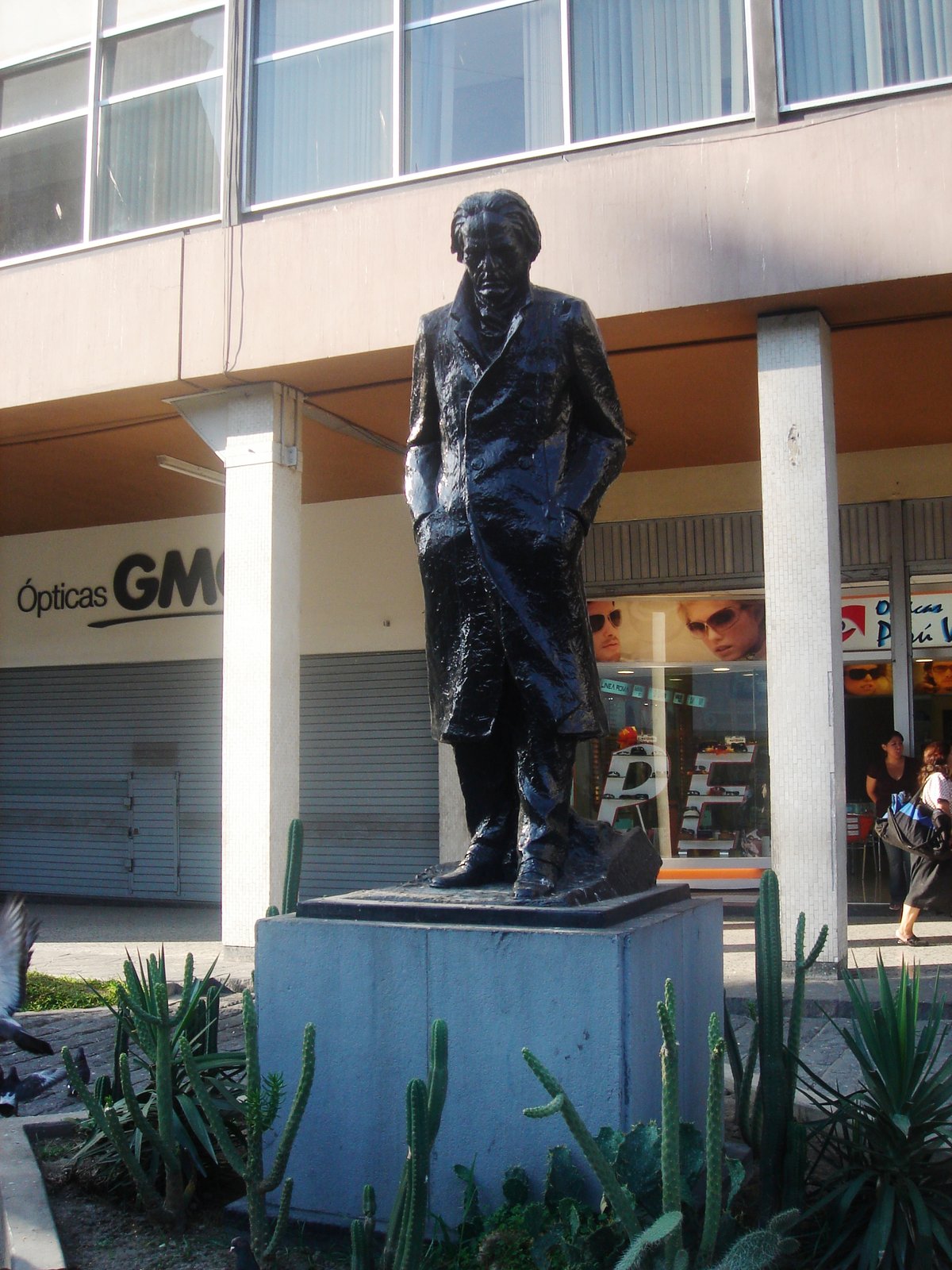
Located in the heart of Lima’s historic center, the Monument to César Vallejo pays homage to one of Peru’s most revered poets and a giant of global literature. César Vallejo (1892–1938) is celebrated for his innovative, humanistic poetry that resonates across cultures and generations. The monument itself, renowned for its modernist design by Basque sculptor Jorge Oteiza, stands as a powerful symbol of both Peru’s literary heritage and the dynamic artistic transformation of Lima. Whether you are a literary enthusiast, an art lover, or a cultural traveler, a visit to this monument offers rich historical context, artistic fascination, and an entry point to the broader tapestry of Lima’s vibrant urban life (El Comercio, El País).

Historical Background
The Monument to César Vallejo originated from a 1961 civic campaign led by Lima’s Instituto de Arte Contemporáneo and the city’s mayor, with significant support from the press and public (El Comercio). The campaign commissioned Jorge Oteiza, a Basque sculptor recognized for his avant-garde work, to create a monument that would express Vallejo’s poetic spirit in modern form. Installed in 1962 in the Plazuela de San Agustín, the monument marked a radical break from Lima’s tradition of figurative public art, introducing abstraction to Peru’s urban landscape (El País).
Over the decades, the monument became a centerpiece for literary gatherings and cultural homage, particularly on April 15, the Day of the Peruvian Poet. Its presence solidified Vallejo’s legacy as a symbol of both creative innovation and social conscience.
Design and Artistic Significance
Oteiza’s design is a hallmark of mid-20th-century modernism in Latin America. Rather than a realistic likeness, the sculpture features two imposing steel plates with “receptive voids”—openings that invite contemplation and interaction. The abstraction is intentional, reflecting Vallejo’s experimental poetry and his exploration of human suffering, solidarity, and hope. Oteiza aimed to channel “the spirit of Vallejo’s verse,” making the sculpture both a visual and intellectual challenge for viewers (El Comercio).
The monument’s installation was initially controversial, met with skepticism by those accustomed to more literal commemorations. Yet over time, it has come to represent the city’s embrace of artistic progress and dialogue between tradition and modernity.
Location and Urban Context
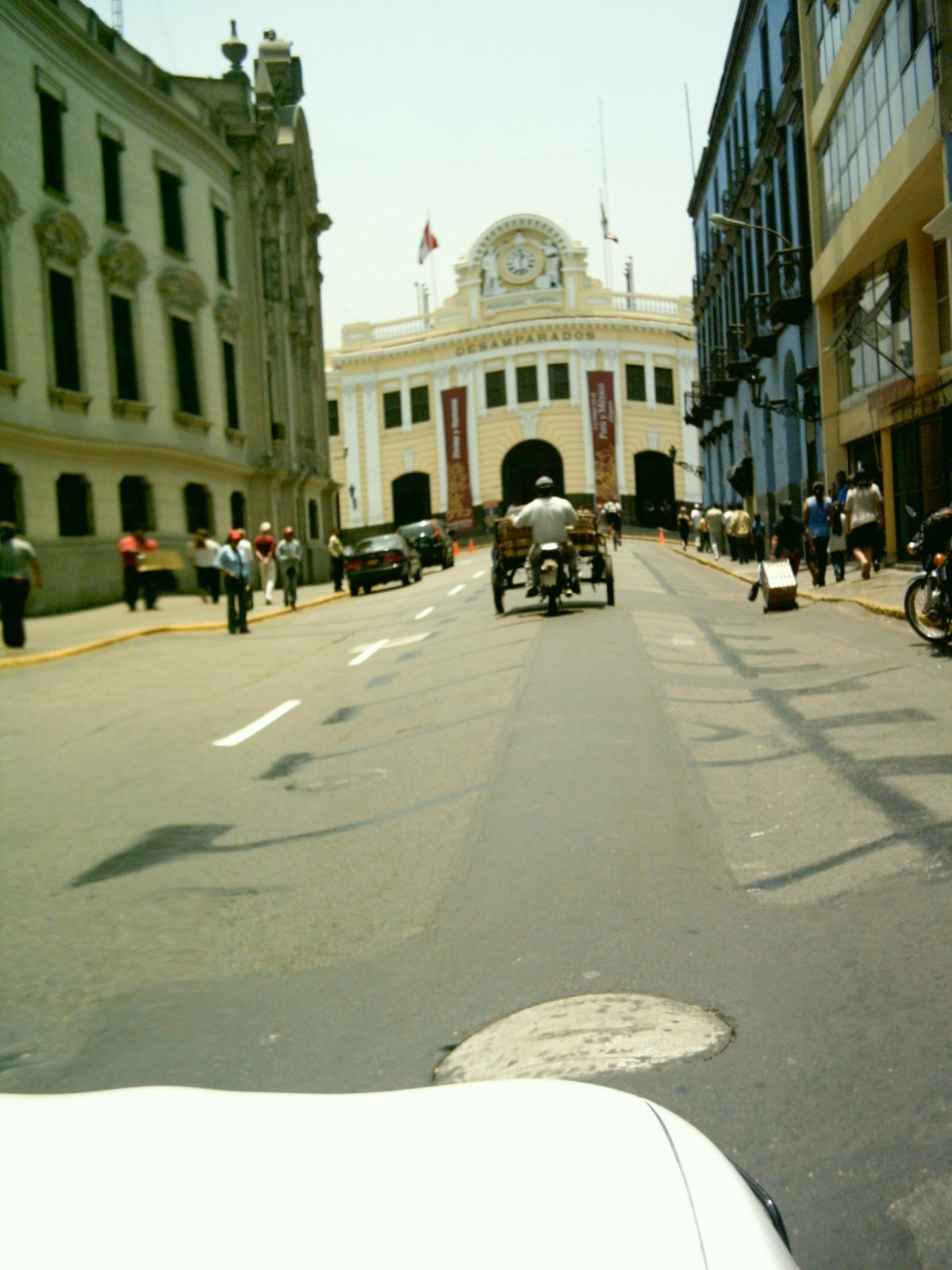
Historically, the monument stood in the Plazuela de San Agustín at the intersection of Jirón Ica and Jirón Camaná, a short walk from Lima’s Plaza Mayor and other colonial-era landmarks (El Comercio). The area, known for its architectural diversity and vibrant street life, provides a fitting backdrop for a monument dedicated to a poet who was deeply engaged in Lima’s intellectual circles.
As of 2025, the monument is temporarily inaccessible due to ongoing urban remodeling and has been removed from public view since 2021 (Infobae). For the most accurate updates, visitors should consult the Casa de la Literatura Peruana or the Peru Ministry of Culture.
Visiting Information: Hours, Tickets, and Accessibility
Hours and Admission
- Public Access: When installed, the monument is in a public plaza accessible 24 hours a day. There is no admission fee.
- Current Status: As of June 2025, the monument is not on display due to urban works. Confirm its status before planning your visit.
Accessibility
- Mobility: The historic center is mostly pedestrian-friendly but may feature uneven pavements. Accessibility for wheelchair users is generally good but can be limited in some areas.
- Safety: The plaza is safest to visit during daylight hours.
Getting There
- Public Transport: The Metropolitano bus system and Lima Metro offer easy access to the historic center. Stops like Estación Central or Plaza San Martín are within walking distance.
- Taxi/Rideshare: Readily available throughout the city.
- Walking: The monument’s historic location is easily reached on foot from major sites such as Plaza Mayor.
Nearby Attractions and Urban Experience
The monument’s location in Lima’s historic center makes it an ideal starting point for exploring:
- Plaza Mayor (Plaza de Armas): The city’s main square, surrounded by the Government Palace and the Cathedral of Lima.
- Teatro Segura: A historic theater directly across from the monument’s secondary installation (es.wikipedia.org).
- Casa de la Literatura Peruana: A hub for literary events and exhibitions (Casa de la Literatura Peruana).
- Museo de Arte de Lima (MALI): An extensive collection of Peruvian art.
- Jirón de la Unión: A lively pedestrian street with shops, cafes, and local culture.
Nearby, visitors can also experience Lima’s contemporary vibrancy in neighborhoods like Barranco and Miraflores, accessible via taxi or public transport (Lilla Green).
Cultural and Literary Significance
César Vallejo’s poetry, including works like Los heraldos negros and Trilce, broke new ground in Spanish-language literature, exploring themes of suffering, injustice, and human solidarity (Poetry Foundation, Britannica). The monument embodies not only his literary influence but also Peru’s aspirations to modernity and cultural renewal. Its creation was a collective act, funded by public subscription and reflecting a national desire to honor a poet whose voice resonates with universal concerns.
The monument has served as a focal point for literary festivals, public readings, and annual tributes, keeping Vallejo’s legacy alive in Lima’s cultural consciousness (Casa de la Literatura Peruana).
Recent Developments and Controversies
In 2021, the monument was removed from its site without prior notice due to urban remodeling. Its whereabouts and the timeline for reinstallation remain uncertain. This has sparked outcry among cultural organizations and intellectuals, who stress the monument’s importance as a symbol of cultural memory and civic pride (Infobae).
Public advocacy continues for the monument’s restoration, highlighting the broader challenges of preserving heritage amid urban change.
Visitor Tips and FAQs
Tips
- Best Time to Visit: Daytime for safety and optimal lighting.
- Photography: Capture the monument’s abstract forms and the interplay with Lima’s historic architecture.
- Local Events: Check cultural calendars for literary festivals and public events in the historic center.
FAQ
Q: Is there an entrance fee to visit the monument?
A: No, it is free to visit.
Q: Is the monument currently accessible?
A: As of 2025, the monument is temporarily removed due to urban works. Verify its status before your visit.
Q: Are guided tours available?
A: Many Lima city tours include the site; check with local operators or cultural institutions (Peru Ministry of Culture).
Q: Is the area wheelchair accessible?
A: Generally yes, though some historic pavements are uneven.
Q: What else should I see nearby?
A: Don’t miss Plaza Mayor, Teatro Segura, Casa de la Literatura Peruana, and the Museum of Art of Lima.
Listen to the full story in the app
The whole Monument To César Vallejo,
told well.
Audio guides for 1,100+ cities across 96 countries. History, stories, and local insight — offline ready.
Verified, and shown.
Researched and written by the Audiala editorial team from historical records, architectural archives, and local expertise.
Researched from Wikidata, Wikipedia & official sources · fact-checked · How we make our guides →