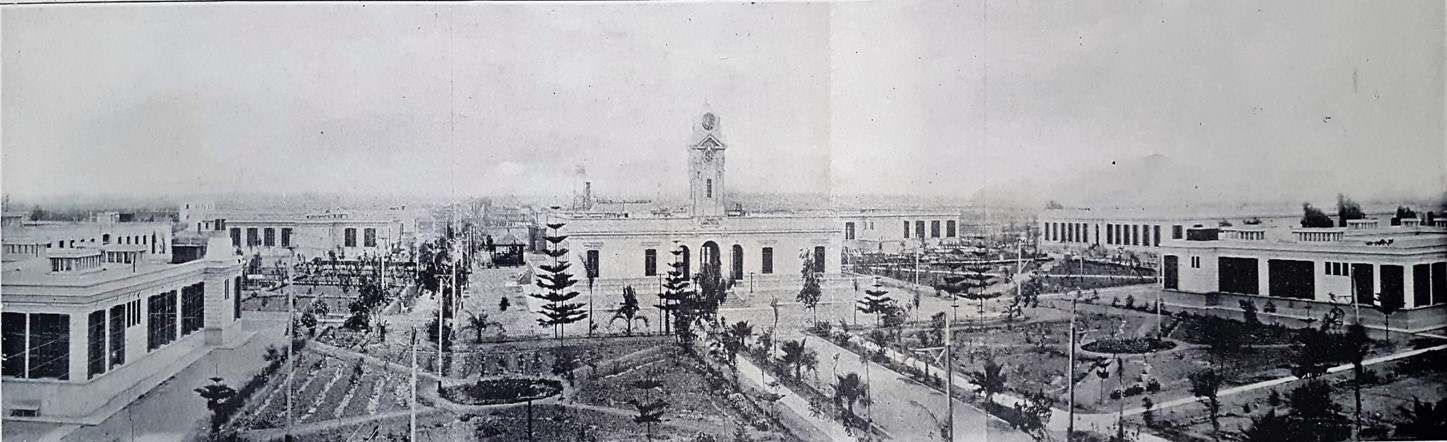
Introduction: History and Cultural Significance
The Fort of Santa Catalina (Fuerte de Santa Catalina) stands as a testament to Lima’s colonial military history and architectural resilience. Built between the late 17th and early 19th centuries, this fortification was a crucial component of the Spanish Viceroyalty’s defense network. Its strategic location near the Rímac River and the Pacific coast enabled it to guard against pirate raids, foreign invasions, and internal unrest. Designed with robust adobe and stone walls, angular bastions, and neoclassical touches, the fort reflects sophisticated military engineering tailored to Lima’s seismic and climatic conditions.
Today, visitors can explore restored sections like the Chapel of Saint Barbara and enjoy interpretive programs that illuminate Lima’s layered past. Modern accessibility features and comprehensive visitor services make the fort a top destination for history enthusiasts and cultural travelers alike (Lima Historical Sites, Academia.edu).
Historical Background
Origins and Construction
The fort was established in the early 19th century under Viceroy Fernando de Abascal y Souza, with Colonel Joaquín de la Pezuela overseeing construction. Built on land formerly belonging to Santa Catalina de Siena and La Concepción Monasteries, it was intended as an artillery stronghold, housing a large garrison with both regular soldiers and militia.
Military Role and Evolution
Throughout its operational life, the Fort of Santa Catalina played a pivotal part in Lima’s defense. It was active during the wars of independence, the War of the Pacific, and various political upheavals, including the Santa Catalina Mutiny of 1931. While urban development led to some demolition in the 20th century, significant restoration has preserved key features such as the main façade and the Chapel of Saint Barbara.
Architectural Context and Urban Role
Bastion Design and Materials
Constructed primarily from adobe and stone, the fort’s polygonal layout and angular bastions maximized defensive coverage. Walls over 2 meters thick provided resistance against both artillery and earthquakes (Academia.edu).
Integration with Lima’s Walls
Santa Catalina was part of Lima’s 11-kilometer city wall system, which featured 34 bastions and 5 gates. Its location allowed for the control of key river and city access points (pavsargonauta.files.wordpress.com).
Restoration and Monumentalisation
Post-1746 earthquake restoration improved the fort’s seismic resilience. In the late 20th and early 21st centuries, archaeological work in Parque de la Muralla revealed and preserved significant remains, integrating the fort into a vibrant urban park and museum (Academia.edu).
Visiting the Fort of Santa Catalina
Visiting Hours
- Tuesday – Sunday: 9:00 AM – 5:00 PM
- Monday & Public Holidays: Closed
- Note: Special events may affect hours. Confirm via official sources before visiting.
Tickets and Admission
- General Admission: 10–15 PEN
- Students/Seniors: Discounted rates
- Children under 12: Free
- Tickets available at the entrance or through the official Lima tourism website.
Guided Tours and Accessibility
- Guided Tours: Available daily in Spanish and English at 10:00 AM and 3:00 PM. Advance booking is advised.
- Accessibility: Ramps and accessible restrooms are provided, but some uneven or archaeological surfaces may require caution.
How to Get There
The fort is centrally located within Lima’s historic center, near Plaza Mayor. It is easily accessible by public transport (bus, Metropolitano) or taxi. The nearest metro station is about a 15-minute walk.
Nearby Attractions
- Plaza Mayor: Lima’s main square, surrounded by historic government and religious buildings.
- Convent of San Francisco: Famous for its catacombs and colonial art.
- Museo de Arte de Lima (MALI): A short taxi ride away, featuring extensive collections of Peruvian art.
- Barrios Altos District: Explore colonial streets, local markets, and eateries.
Special Events and Photo Opportunities
Cultural events and historical reenactments are held periodically, especially around Peru’s Independence Day (July 28). Photographers will appreciate the neoclassical façade at golden hour and detailed features within the chapel and ramparts.
Frequently Asked Questions (FAQ)
Q: What are the opening hours?
A: Tuesday to Sunday, 9:00 AM–5:00 PM. Closed Mondays and public holidays.
Q: How much do tickets cost?
A: General admission is 10–15 PEN, with discounts for students and seniors.
Q: Is the site accessible?
A: Yes, with ramps and restroom facilities, though some areas may be uneven.
Q: Are guided tours available?
A: Yes, daily tours are offered in Spanish and English.
Q: Can I take photos?
A: Personal photography is allowed; flash and tripods are restricted.
Q: How do I get there?
A: Easily reached by public transport, taxi, or a short walk from central Lima.
Preservation and Community Engagement
Protected by Peruvian heritage laws and managed by Lima’s Municipality, the fort benefits from ongoing restoration and community programs, including educational workshops and volunteer opportunities. Visitors are encouraged to respect the site and support conservation efforts (UNESCO).
Visuals and Media Recommendations
- Use high-resolution images of the fort’s exterior, bastions, chapel, and panoramic city views.
- Include an interactive map showing the fort’s location relative to nearby attractions.
- Consider embedding a brief video tour or 3D virtual walkthrough.
Listen to the full story in the app
Your Personal Curator, in Your Pocket.
Audio guides for 1,100+ cities across 96 countries. History, stories, and local insight — offline ready.
Audiala App
Available on iOS & Android
Join 50k+ Curators
Sources
- verified
- verified
- verified
- verified
- verified
- verified
Last reviewed: