Plan and listen to Arco Chino with Audiala.
Audio guide in your pocket, itinerary in your browser. Built for the way you actually visit.
Introduction: The Symbol of Lima’s Chinese-Peruvian Heritage
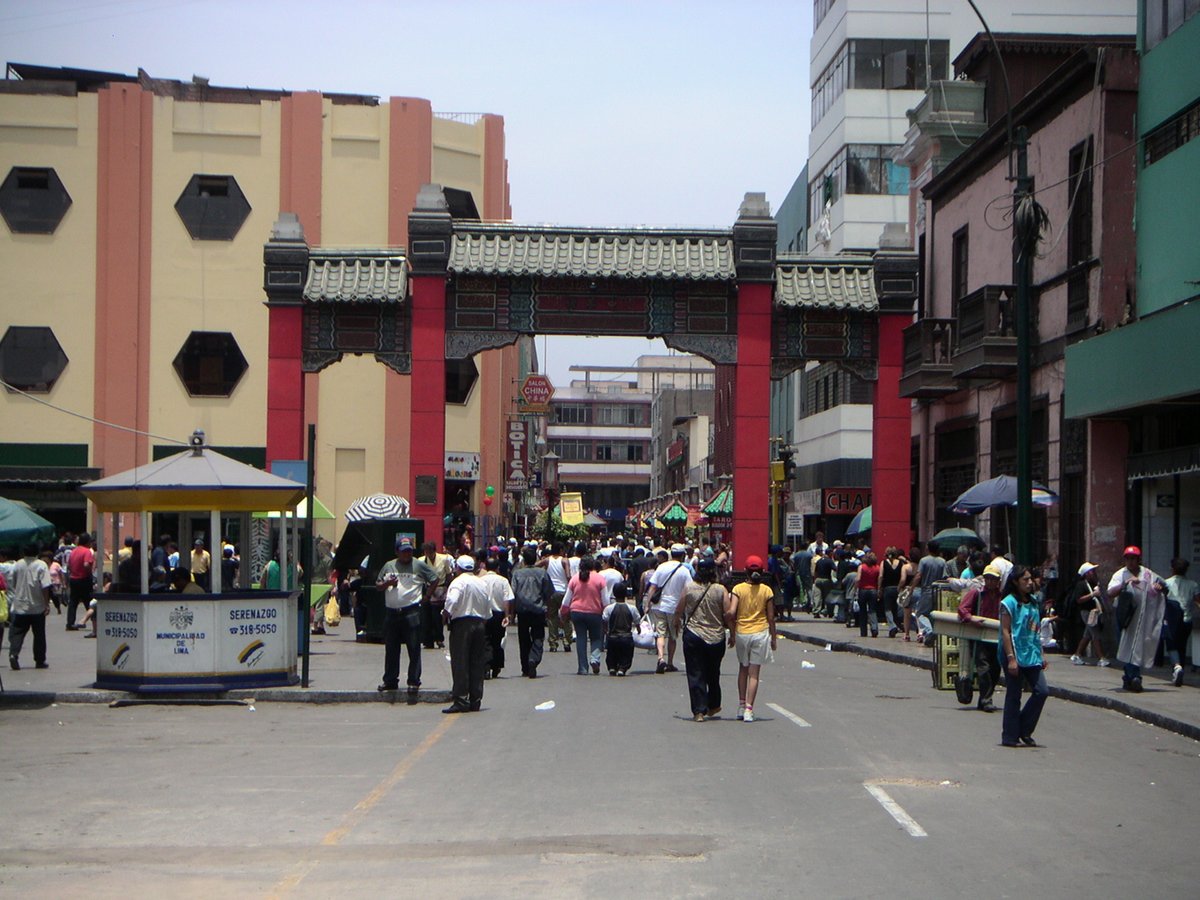
Lima’s Arco Chino, or "Portada China," is more than an architectural landmark—it serves as a dynamic gateway into the heart of Peru’s Chinese-Peruvian community and commemorates over 170 years of migration, adaptation, and cultural fusion. Located at the entrance to Barrio Chino (Chinatown) on Calle Capón, the Arco Chino is a vivid testament to the enduring legacy and integration of Chinese immigrants in Peru’s capital, celebrated since its inauguration in 1971 to mark the 150th anniversary of Peruvian independence (El Comercio; Wikipedia).
Surrounded by the lively streets of Barrio Chino, the arch welcomes visitors into a world where Chinese and Peruvian traditions blend seamlessly—evident in the area’s "chifa" cuisine, vibrant festivals, and spirited markets. This guide provides essential information on the Arco Chino’s history, design, visiting logistics, and its role as a living symbol of Lima’s multicultural identity (Evendo; Auri Peru).

History of Chinese Immigration and Barrio Chino
Chinese migration to Peru began in 1849, when laborers known as "culíes" arrived to work on plantations and in urban trades. Over the next decades, nearly 100,000 Chinese immigrants settled in Lima and nearby regions, establishing a vibrant enclave around Calle Capón (El Lobo Bobo). Despite periods of adversity, including social unrest and immigration bans, the Chinese-Peruvian community thrived, gradually integrating with Peruvian society while preserving distinctive cultural practices (Wikipedia).
By the mid-20th century, Barrio Chino had evolved into a bustling commercial district and a cultural crossroads for both Chinese and Peruvian residents.
The Arco Chino: Conception, Construction, and Symbolism
Origins and Construction
To honor the contributions of Chinese immigrants on the occasion of Peru’s sesquicentennial, Lima’s Chinese-Peruvian community gifted the Arco Chino to the city in 1971. The arch was inaugurated at the intersection of Jirón Ucayali and Jirón Andahuaylas, marking the ceremonial entrance to Calle Capón (Wikipedia). Its unveiling was celebrated with lion dances and festivities that showcased the unity of Lima’s diverse communities (El Comercio).
Architectural Features
Standing 8 meters high and 15 meters wide, the Arco Chino features red pillars, jade-green roof tiles, and ornate dragons—hallmarks of classical Chinese architecture. Inscriptions such as “Bajo el cielo todos los hombres somos iguales” (“Under heaven, all men are equal”) reflect the community’s values of equality and prosperity. In 2017, two traditional stone guardian lions ("shishi") were installed to reinforce the arch’s protective symbolism (Wikipedia).
Visiting the Arco Chino: Hours, Tickets, and Accessibility
- Visiting Hours: The Arco Chino and the surrounding streets are accessible 24/7 as part of Lima’s public urban landscape. Most shops and restaurants open from 10:00 AM to 10:00 PM (Evendo).
- Tickets: There is no entrance fee to visit the arch or walk through Barrio Chino.
- Accessibility: The area is pedestrian-friendly with paved walkways and ramps, though crowds may make navigation slower during peak hours. Some streets have uneven surfaces; visitors with mobility needs should plan accordingly.
- How to Get There: Located at Jr. Ucayali and Calle Capón, the arch is a short walk from Plaza Mayor. For convenience and safety, consider using registered taxi apps like Uber (Auri Peru).
What to See and Do: Culture, Cuisine, and Events
Explore Calle Capón
Passing through the Arco Chino, visitors enter Calle Capón—a lively pedestrian street decorated with lanterns, murals, and cultural motifs. The street is the epicenter of Lima’s Chinatown, lined with chifas (Chinese-Peruvian restaurants), bakeries, tea shops, and stores selling Asian groceries and crafts.
Operating hours: Most establishments open from 12:00 PM to 10:00 PM.
Chifa Cuisine
Indulge in chifa, a hallmark of Chinese-Peruvian fusion. Signature dishes include arroz chaufa (fried rice), wantán frito (fried wontons), and tallarín saltado (stir-fried noodles) (Vamos Expeditions). Meals are affordable, and renowned restaurants such as Wa Lok and San Joy Lao are popular with locals and tourists alike (Auri Peru).
Festivals and Cultural Events
The Arco Chino is the focal point of major cultural celebrations, especially Chinese New Year and the Mid-Autumn Festival. Expect lion and dragon dances, fireworks, and traditional parades that transform the neighborhood into a vibrant stage (Infotur Latam).
Shopping
Explore shops selling Chinese handicrafts, imported teas, specialty ingredients, and fusion souvenirs featuring both Chinese and Peruvian motifs.
Guided Tours
Several local agencies offer guided walking tours, which include historical insights and food tastings. These tours are recommended for deeper cultural understanding and safety.
Travel Tips and Safety
- Visit in the morning or on weekdays for fewer crowds and better photo opportunities.
- Stay alert for petty theft in busy areas; keep belongings secure.
- Carry cash in small denominations, although some shops accept credit cards.
- While the area is generally safe during the day, consider guided tours or visiting with a companion, especially during festivals or at night (Machu Travel Peru).
Nearby Attractions
- Plaza Mayor (Plaza de Armas): Lima’s main square and historic center, a 10-minute walk from the Arco Chino.
- Cathedral of Lima: A renowned colonial church, also nearby.
- Central Market: A bustling market for fresh produce and local goods.
- Basilica and Catacombs of San Francisco: Famous for its architecture and underground crypts (Along Sandy Beaches).
- Other Chinese Cultural Sites: Parque Chino de Miraflores and Parque Manuel Candamo (Infotur Latam).
Frequently Asked Questions (FAQ)
Q: What are the Arco Chino’s visiting hours?
A: The arch and surrounding neighborhood are open 24/7, though most establishments operate from 10:00 AM to 10:00 PM.
Q: Is there an entrance fee?
A: No, visiting the Arco Chino and Barrio Chino is free.
Q: Are there guided tours available?
A: Yes, several local agencies offer walking tours that include historical and culinary highlights.
Q: Is the area accessible for those with mobility needs?
A: The main streets are pedestrian-friendly but may have uneven surfaces; visitors should plan accordingly.
Q: When is the best time to visit?
A: Weekday mornings for a quieter experience, or during festivals for vibrant celebrations.
Summary and Final Travel Tips
The Arco Chino is a living testament to the enduring legacy and vibrancy of the Chinese-Peruvian community in Lima. Since 1971, it has welcomed visitors into Barrio Chino—a neighborhood alive with history, culture, celebration, and culinary delights (El Comercio; Medium). Renovations and community efforts have preserved its status as a symbol of multicultural harmony and urban renewal (Wikipedia; Auri Peru).
When visiting, immerse yourself in the rich tapestry of flavors, festivities, and traditions that define Barrio Chino. Take advantage of guided tours, explore nearby historical sites, and savor the unique blend of cultures that makes this neighborhood a must-see in Lima. For current events and travel updates, consider downloading the Audiala app and following local cultural channels (Infotur Latam; Evendo).
Listen to the full story in the app
The whole Arco Chino,
told well.
Audio guides for 1,100+ cities across 96 countries. History, stories, and local insight — offline ready.
Verified, and shown.
Researched and written by the Audiala editorial team from historical records, architectural archives, and local expertise.
Researched from Wikidata, Wikipedia & official sources · fact-checked · How we make our guides →