Pre-Hispanic Period
castle
c. 200 BCE
Adobe Pyramid Rises
On a sandy ridge above the Rímac flood-plain, Lima-culture masons begin stacking millions of hand-molded adobe bricks into Huaca Pucllana. The stepped pyramid—24 m high, 150 m long—becomes the city’s first skyline, its truncated summit flashing white in the coastal sun during priestly rituals that decide when to plant irrigated fields of maize and cotton.
swords
c. 1470 CE
Inca Pilgrims Reach the Coast
Inca engineers march into the valley, sling-stones clattering against cotton armor. They annex Pachacamac, turning the 1,000-year-old oracle into one of the empire’s four great shrines. From the adobe terraces, runners sprint 200 km to Cusco carrying knotted-quipu census tallies; coastal cotton and dried fish now flow east across the Andes in llama caravans.
Early Colonial Period
gavel
1535
Pizarro Founds Ciudad de los Reyes
Francisco Pizarro plants a cedar cross beside the Rímac and traces a 117-block grid with his sword tip. Within weeks, 200 Spanish households rise on stolen Inca labor, while thatched huts of the local chief Taulichusco smolder outside the new plaza. The city’s first Mass echoes inside a makeshift chapel of reed and mud—Lima is born as the sword-edge of Spain in South America.
swords
1536
Inca Siege Fails at the Walls
At dawn, 4,000 Inca warriors under Quizu Yupanqui surge across the Rimac bridge, screaming ‘Taki unquy!’—a messianic chant that Spanish horses answer with iron-shod panic. The 200 conquistadors lock shields inside palm-log barricades; after five months the attackers melt away, leaving Lima forever conscious that its survival is measured in powder and luck.
swords
1541
Pizarro Assassinated at Dinner
While tasting a bowl of chickpea stew in his palace on the plaza, Pizarro is stabbed fourteen times by Almagrist rivals. His blood splashes across the newly laid cedar floor; the city’s founder dies clutching a sword he never fully mastered. Lima’s first funeral procession—black velvet, tolling bells—sets the template for the baroque spectacle that will define viceregal life.
church
1546
Archdiocese Created
A papal bull raises Lima to metropolitan status, giving the city spiritual jurisdiction from Panama to Tierra del Fuego. Gold leaf arrives by mule train to gild the new cathedral’s retablo; confessionals fill with the whispered sins of 300 conquistadors who still smell of powder and Andean blood.
school
1551
University of San Marcos Opens
Royal charter transforms a Dominican cloister into the first university in the Americas. Lectures in Latin echo beneath open cedar beams; students copy Aristotle by candle while, outside, Andean market women sell freeze-dried potatoes that will one day be called ‘astronaut food’.
person
1579
Saint Martín de Porres Born
In a cramped tenement on the edge of the Afro-Peruvian barrio, a freed slave’s son takes his first breath. Martín will sweep the Dominican infirmary floors of Lima for 30 years, healing the sick with herbal poultices and a humility so absolute that even the viceroy’s horses kneel when he passes. His canonization in 1962 will make Lima the birthplace of the Americas’ first Black saint.
Viceregal Golden Age
local_fire_department
1687
Earthquake Cracks the Cathedral
At 2 a.m. the ground convulses for three minutes, toppling every tower and sending bronze bells rolling across the plaza like screaming moons. 600 die beneath collapsed adobe; viceroy Melchor de Navarra orders the cathedral rebuilt yet again, this time with wider buttresses and a vault stiff enough to echo the city’s growing arrogance.
local_fire_department
1746
Tsunami Erases Callao, Shatters Lima
A sub-sea fault snaps; the ocean pulls back, exposing shipwrecks, then returns as a 24-m wall that erases the port of Callao in four minutes. In Lima, 3 km inland, only 25 houses remain standing among 3,000. The air smells of salt and crushed lime; survivors pick through rubble that still holds the heat of the previous afternoon’s siesta.
Republican Birth
gavel
1821
San Martín Proclaims Independence
At noon on 28 July, José de San Martín steps onto the plaza’s wooden balcony, sun glinting off his sabre. ‘¡Perú, sea libre!’—the shout ricochets between newly whitewashed arcades, echoed by 6,000 Limeños who rip the Spanish coat of arms from the viceroy’s palace doors. For the first time in 286 years, the bells of San Marcos toll for a king no one in Lima has ever seen.
person
1833
Ricardo Palma Born
In a second-floor room overlooking the plaza where independence was shouted, a boy is born who will invent the short comic sketch of Peruvian history. Palma’s *Tradiciones peruanas* turn dusty archives into gossip overheard at a bar—Lima learns to laugh at its own legends, and the National Library he rebuilds after the Chilean occupation becomes the city’s secular cathedral.
swords
1881
Chilean Troops Occupy the Capital
After the battles of San Juan and Miraflores, blue-and-white Chilean helmets march down Avenida Colmena. They loot the National Library, carrying away 20,000 books like war trophies; officers dine on viceregal silver in the Palacio de Gobierno while Lima’s elite flee to the highlands. The occupation lasts two bitter years, scarring the city’s self-image forever.
Modern Metropolis
music_note
1920
Chabuca Granda Born
In the bohemian quarter of Barranco, a baby girl inhales the scent of sea-salt and jasmine. She will grow up to write ‘La flor de la canela,’ the waltz that turns Lima’s old wooden bridge into a global synonym for lost love. Her voice, gravelled by cigarettes and nostalgia, teaches the city to hear its own melancholy.
local_fire_department
1940
Earthquake Reboots the Capital
The 1940 quake kills 300 and snaps the cathedral’s new concrete dome like an egg. Reconstruction money pours in, funding Art-Deco cinemas and the first glass-fronted offices along Avenida Wilson. Lima discovers modernity in the rubble, widening streets to accommodate the 1950s influx of Chevrolet fleets and Andean migrants.
flight
1960
Jorge Chávez Airport Opens
Propellers give way to jet engines as Lima’s gateway shifts from dusty Limatambo to a reclaimed tidal flat in Callao. The new 3,400-m runway can finally land a Boeing 707; Lima’s isolation ends with the roar of turbines that bring Beatlemania, Peace Corps volunteers, and—soon—tourists hungry for ceviche.
public
1988
Historic Centre Declared World Heritage
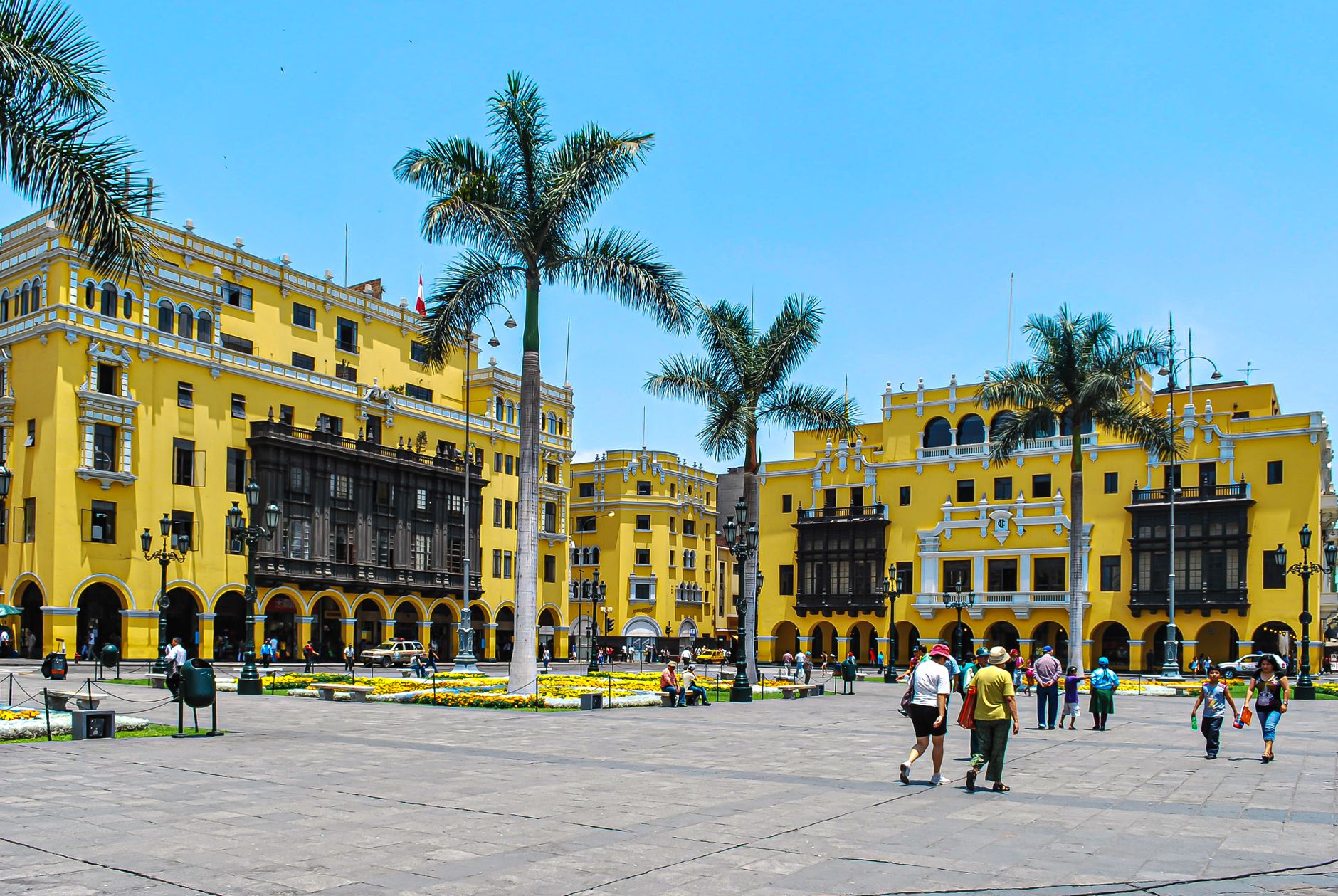
UNESCO’s plaque on the Plaza Mayor recognizes 600 years of layered history—Inca stones at the base, baroque balconies above, Art-Deco facades wedged in between. The listing saves dozens of mansions from demolition, but nightly chisels still echo as owners pry out colonial tiles to sell on the black market.
local_fire_department
1992
Tarata Street Bomb Shatters Miraflores
At 9:17 p.m. a Shining Path van explodes on leafy Tarata Street, killing 25 and blasting glass fronts of cafés where Limeños sipped espresso. The crater, 3 m wide, becomes a moral fault-line: Lima realizes terrorism can reach its most bourgeois neighborhoods. A memorial grove of 25 olive trees will later whisper with wind-chimes made of twisted car metal.
Contemporary Capital
palette
2007
Magic Water Circuit Opens
In the once-neglected Parque de la Reserva, 13 cybernetic fountains shoot 80-m jets choreographed to Peruvian waltzes. Families who fled the 1990s violence return en masse, their children darting through rainbow-lit mist. Lima reclaims public space with light and water, turning fear into spectacle.
flight
2011
Metro Line 1 Debuts
After 30 years of stalled plans, Lima’s first subway cars glide silently on elevated tracks above the clogged Pan-American Highway. The city’s Andean migrants—now 70 % of the population—gain a silver worm that cuts a 90-minute bus ride to 25 minutes, shrinking the desert capital at last.
public
2019
Lima Hosts the Pan American Games
Beach-volleyball courts bloom beside the Pacific fog, and Peruvians win their first-ever surfing gold at Punta Rocas. For 17 days, Limeños wave the red-and-white flag without irony; the city discovers it can choreograph more than just traffic jams.
flight
2025
New Airport Terminal Lands
A 660,000-m² glass wave rises beside the old Jurassic-era dunes, doubling passenger capacity to 40 million. Inside, a ceviche bar serves octopus beneath a living vertical garden of 3,000 orchids—Lima greeting the world with salt on its lips and jungle in its lungs.