Plan and listen to National Pantheon Of The Heroes with Audiala.
Audio guide in your pocket, itinerary in your browser. Built for the way you actually visit.
Introduction
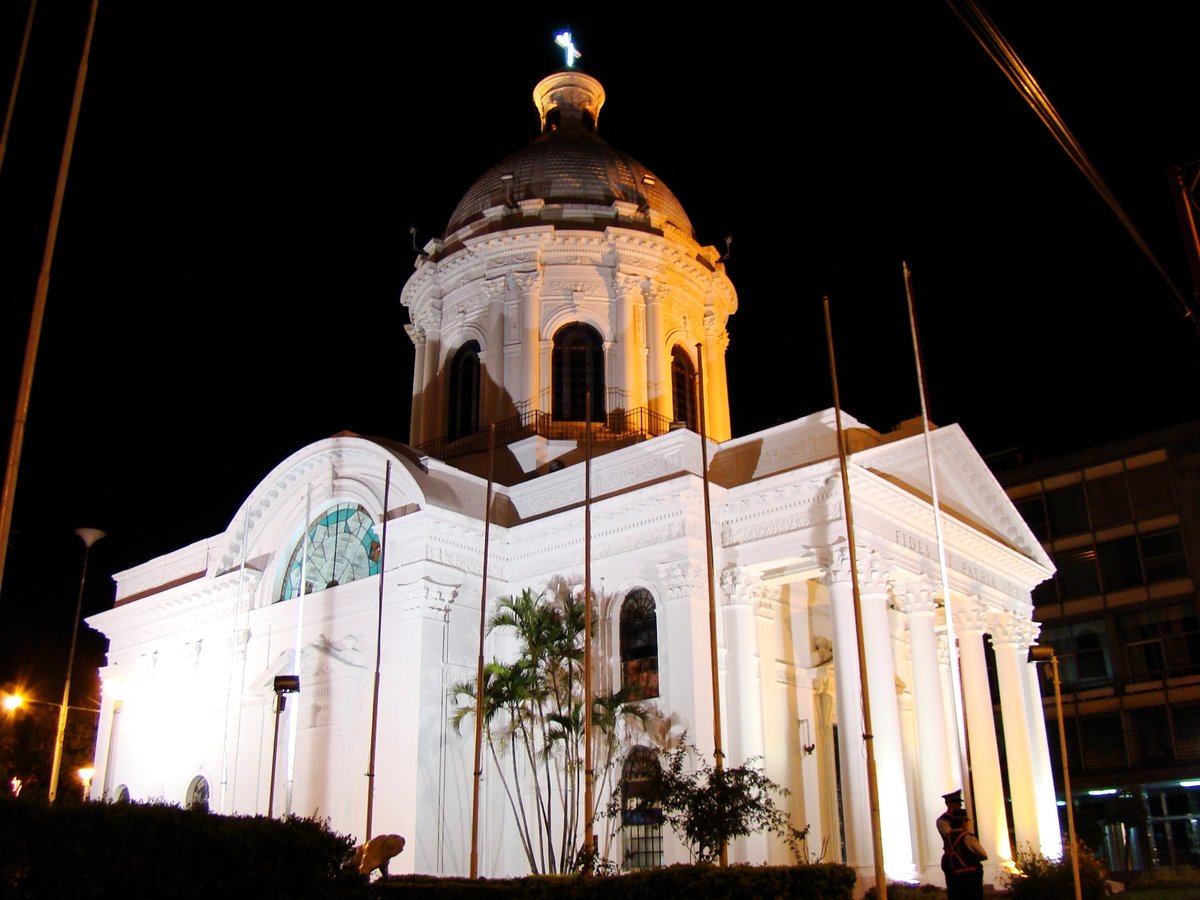
Nestled in the heart of Asunción, Paraguay, the National Pantheon of the Heroes (Panteón Nacional de los Héroes) stands as a monumental tribute to the nation’s most revered figures and pivotal moments in its history. Conceived in 1863 and completed in 1936 after the devastating interruption of the War of the Triple Alliance, this neoclassical landmark serves as both a mausoleum and a symbol of Paraguayan resilience, patriotism, and collective memory. Its imposing dome, classical columns, and ornate interior tell stories of heroism and national unity, while the surrounding plazas reinforce its role as a vibrant cultural hub. This guide provides all the essential information on visiting hours, accessibility, guided tours, and nearby attractions, helping you make the most of your visit to one of Paraguay’s most iconic sites (mexicohistorico.com; everaoh.com; evendo.com).

Historical Background
Origins and Historical Context
The Pantheon’s origins are deeply connected to the aftermath of the War of the Triple Alliance (1864–1870), one of the most catastrophic conflicts in South American history. Paraguay’s defeat led to the loss of over 60% of its population, imprinting a profound sense of collective memory and national healing (mexicohistorico.com).
Establishment and Construction
Construction began in 1863 as a chapel dedicated to the Virgin of the Assumption, designed by Italian architect Alejandro Ravizza. The war halted progress, leaving the structure unfinished for decades. In 1936, under President José P. Guggiari, it was finally completed and officially designated as the National Pantheon of the Heroes (immigraparaguay.com; mexicohistorico.com).
Architectural Significance
Neoclassical Foundations and Modern Adaptations
The Pantheon’s design draws inspiration from neoclassical European architecture, particularly the Hôtel des Invalides in Paris, featuring symmetry, grandeur, and a monumental dome (everaoh.com). Inside, contemporary materials and Paraguayan motifs fuse tradition with local identity (evendo.com).
Exterior Features and Surrounding Plazas
- Dome & Facade: The prominent dome and Corinthian columns dominate the intersection of Palma and Chile streets, making the Pantheon a visual anchor in downtown Asunción. The Latin inscription “Fides et Patria” (“Faith and Fatherland”) graces the facade (immigraparaguay.com).
- Plazas: Surrounded by Plaza de los Héroes, Plaza Juan E. O’Leary, Plaza de la Libertad, and Plaza de la Democracia, the Pantheon’s setting hosts public events and lively markets (adventuretoeverycountry.com).
Interior Layout and Decorative Program
- Central Chamber: The rotunda beneath the dome houses the tombs of Paraguay’s most illustrious figures, including Carlos Antonio López, Mariscal Francisco Solano López, José Félix Estigarribia, and Bernardino Caballero (adventuretoeverycountry.com).
- Murals and Artifacts: Historical murals, plaques, and a small museum area narrate Paraguay’s struggles and victories (evendo.com).
- Oratory: The adjacent Oratorio of the Assumption honors the building’s original religious intention (everaoh.com).
Role in National Identity and Memory
The Pantheon is more than a mausoleum—it is a living institution central to Paraguay’s national identity. It hosts state ceremonies, commemorations, and educational initiatives, promoting unity and national pride, especially during national holidays like Independence Day and Heroes’ Day (mexicohistorico.com).
Notable Figures and Symbolism
Among those interred are:
- Francisco Solano López: President and military leader during the War of the Triple Alliance.
- Carlos Antonio López: Paraguay’s first constitutional president.
- José Félix Estigarribia: Hero of the Chaco War and later president.
- Bernardino Caballero: Another influential leader and president.
The Pantheon also honors the children martyrs of Acosta Ñu, symbolizing ultimate sacrifice (aliki travel blog). The site’s classical forms, domes, and national symbols reinforce Paraguay’s resilience and patriotic values.
Practical Visitor Information
Visiting Hours and Tickets
- Hours: Open Tuesday through Sunday, from 7:00 AM to 5:00 PM (evendo.com).
- Admission: Free entry; donations are welcome.
Accessibility
- Physical Access: Ramps at the entrance and accessible restrooms. Assistance and guides are available upon request.
- Location: Centrally located at Palma and Chile streets, easily reachable by foot, public transport, taxi, or ride-hailing services (trek.zone).
Guided Tours and Special Events
- Tours: Guided tours in Spanish, English, and Portuguese are available and recommended during peak seasons (mexicohistorico.com). Tours can be booked in advance.
- Ceremonies: The changing of the guard occurs regularly, and national holidays feature official events.
- Educational Programs: Workshops and lectures are offered for school groups and the public.
Nearby Attractions and Travel Tips
- Nearby Sites: Casa de la Independencia, Cabildo, Palacio de los López, and Teatro Municipal Ignacio A. Pane (adventuretoeverycountry.com).
- Amenities: Surrounded by cafés, shops, and markets. No restrooms on-site, but public facilities are nearby.
- Best Time to Visit: The dry season (May–September) offers mild temperatures and fewer crowds (mytravelation.com; southamerica.travel).
- Safety: The area is safe during the day; use caution at night.
Preservation and Cultural Heritage Status
The Pantheon was designated a cultural heritage site in 2009 and is maintained through ongoing preservation initiatives to safeguard its architectural and historical legacy (everaoh.com).
Frequently Asked Questions (FAQ)
Q: What are the National Pantheon of the Heroes visiting hours?
A: Open Tuesday through Sunday, 7:00 AM to 5:00 PM.
Q: Is there an entry fee?
A: No, entry is free for all visitors.
Q: Are guided tours available?
A: Yes, in several languages. Booking ahead is advised during busy periods.
Q: Is the Pantheon accessible for visitors with disabilities?
A: Yes, though some historic features may present minor challenges.
Q: Can I take photographs inside?
A: Yes, but please avoid flash and tripods; be respectful during ceremonies.
Q: What should I wear?
A: Modest attire is recommended to respect the solemnity of the site.
Listen to the full story in the app
The whole National Pantheon Of The Heroes,
told well.
Listen to sourced travel stories with local history and practical context — ready offline.
Verified, and shown.
Researched and written by the Audiala editorial team from historical records, architectural archives, and local expertise.
Built from cited sources · see the method · How we make our guides →