Introduction
This Palau travel guide starts with the real surprise: the country’s signature view is not a beach but a maze of limestone islands, war ridges, and marine lakes packed into one small Pacific republic.
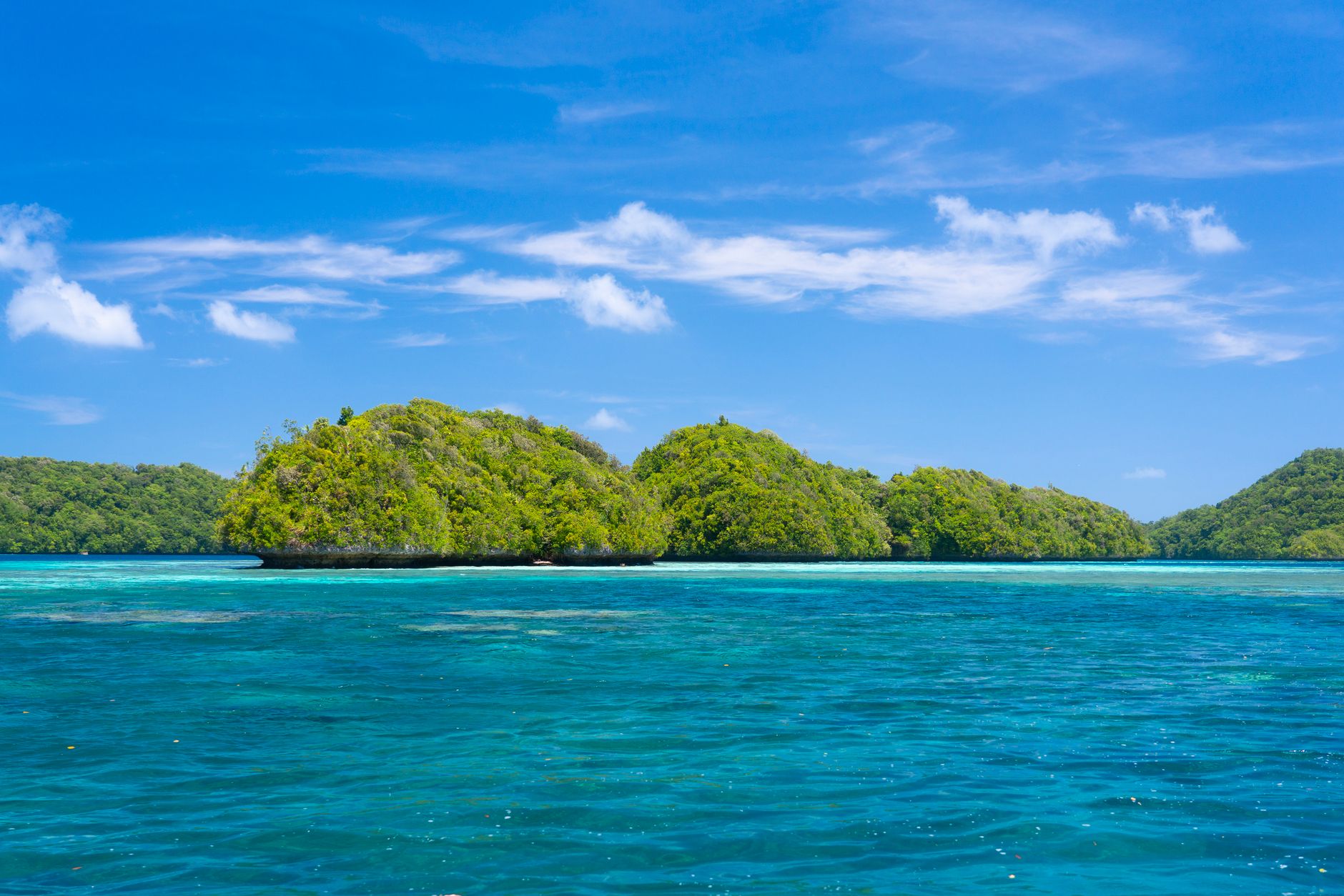
Most travelers pass through Koror, and that is the right place to begin, because Palau works like an archipelago of thresholds. One bridge takes you to Airai and the airport on Babeldaob; another day puts you out among the Rock Islands, where 445 limestone islets rise from water so clear the boats seem suspended in air. The scale keeps changing. In one morning you can move from fuel docks in Malakal to mangrove channels, then into lagoons that hold some of the highest concentrations of marine lakes anywhere on earth. That compressed geography is Palau’s trick. It gives you reef walls, forested hills, taro patches, and coral shelves without wasting your time in transit.
Palau also has a political and historical texture that most tropical islands never show this plainly. Ngerulmud is the national capital, set inland in Melekeok, while Koror remains the commercial center where daily life actually moves. On Peleliu, rusting guns and cave systems still mark one of the Pacific war’s fiercest battles; on Babeldaob, stone monoliths and traditional bai meeting houses point to a much older order built on clans, rank, and matrilineal land. Even the famous water carries history. Eil Malk holds Jellyfish Lake, the Rock Islands preserve old settlement traces, and Yapese stone money once began here as quarried limestone before crossing 450 kilometers of open sea.
People come for diving, and fair enough: Blue Corner, reef drop-offs, German Channel mantas, and boat days through the Southern Lagoon earn the headlines. But Palau is better when you treat it as more than a dive destination. Drive across Babeldaob for waterfalls and village roads, take the boat south to Angaur for beaches and deer, or stay long enough in Koror to notice how Palauan, English, Filipino, Japanese, and American habits share the same streets without blending into sameness. Few countries this small hold so many distinct versions of the Pacific. Fewer still make them feel this immediate.
A History Told Through Its Eras
Before the Empires, a Kingdom of Memory and Reef
Founding Clans and Stone Money, c. 2500 BCE-1783
At dawn in the Rock Islands, the limestone looks almost theatrical: dark green caps, pale cliff faces, water so still it seems to be waiting for a verdict. Long before any European chart named these waters, Palauan communities were building villages, cutting terraces, burying their dead in caves, and tying power to clan descent through mothers rather than fathers. That detail changes everything.
Ce que l'on ignore souvent, c'est que Palau's political order was already highly sophisticated when foreign ships were still absent from the horizon. In Koror, the Ibedul held preeminent authority in the south; in Melekeok, the Reklai answered from the north. Their rivalry was formal, balanced, almost courtly, and the carved bai, the men's meeting house, served as parliament, archive, and stage set all at once.
Women, excluded from the bai, still controlled the deeper engine of society: land, inheritance, and clan wealth. Palau's famous udoud, pieces of glass bead, ceramic, and heirloom valuables, were worth what memory said they were worth. A bead with a great lineage could outweigh a prettier object with no story behind it. Money, here, depended on reputation before metal.
The ceremonies were no less political for being beautiful. During an ngasech, a young woman was bathed, anointed, displayed, and formally brought into the adult economy; coconut oil, turmeric, food, and exchange turned the body itself into public history. That world would soon meet Europe, but not as a blank page. It already knew rank, protocol, rivalry, and the price of prestige. The strangers arrived later.
The Ibedul and the Reklai were not picturesque chiefs for foreign visitors; they were rival sovereigns presiding over a deeply ordered society whose rules still echo across Babeldaob and Koror.
Some of Palau's most valued traditional money pieces were prized less for their material than for the prestige of former owners, rather like a crown jewel whose true weight was gossip remembered correctly.
Lee Boo Crosses the World
Shipwreck, Curiosity, and Imperial Eyes, 1783-1899
On the night of 9 August 1783, the British packet Antelope struck a reef near Ulong Island and broke apart in the dark. Fifty men reached shore alive, frightened, armed with salvage, and entirely at the mercy of a place they did not understand. What followed was not a simple tale of castaways rescued by benevolent islanders. It was diplomacy.
The ruler recorded by Captain Henry Wilson as Abba Thulle, the Ibedul of Koror, chose alliance over slaughter. He provided food, labor, and protection while Wilson's crew and Palauan carpenters built a new schooner from wreckage. Iron tools mattered, certainly. So did calculation. The court in Koror had recognized that these bedraggled sailors might be more useful as guests than as corpses.
Then comes the part that still catches at the heart. When the rebuilt vessel sailed in November, the Ibedul sent his son Lee Boo with Wilson to Britain, a princely gesture full of ambition and trust. In London in 1784, the young Palauan became a sensation: cheerful, observant, fascinated by glass windows, theaters, coaches, all the hard glitter of Georgian life. One can picture him at the pane, hand lifted, astonished by a wall that let the light through.
He died of smallpox on 27 December 1784, barely six months after arriving in England. A diplomatic experiment ended in a grave at St Mary's, Rotherhithe, and Palau's first great encounter with Europe became a family tragedy before it became colonial policy. Yet the story traveled. Books, sketches, and retellings turned Lee Boo into Palau's first ambassador abroad, and Europe, having wept over one prince, soon learned to covet the archipelago itself.
Lee Boo was not a symbol dreamed up later but a real young man, curious and quick, who crossed half the world in hope and died before he could go home.
London society was so captivated by Lee Boo that he moved from curiosity to celebrity in weeks, yet the detail people remembered most was his delight in glass windows.
Flags Changed, the Lagoon Remembered
Spanish Claim, German Sale, Japanese Rule, 1899-1944
In 1899, Spain sold Palau to Germany after the wreckage of its wider Pacific empire had become impossible to ignore. A dynasty of paperwork replaced a dynasty of distant claims, and the islands entered the age of administrators, traders, mission schools, and maps drawn for somebody else's convenience. But empire in Palau was never only European. The next and more transformative chapter came from Japan.
Japanese forces occupied the islands in 1914 during the First World War, and the League of Nations later handed Tokyo the South Seas Mandate. Koror changed fast. Streets, shops, government offices, fisheries, and schools gave the town an unmistakably Japanese profile, while settlers arrived in numbers that dwarfed the local population. By the 1930s, Palau was not a sleepy outpost. It was a working colonial society, stratified and busy, with all the pressures that phrase implies.
Ce que l'on ignore souvent, c'est how intimate empire can become in daily life. Palauans did not experience foreign rule only in proclamations. They met it in language, wages, classrooms, dress, religion, marriage, and the new logic of a port town. Koror became the administrative center; Babeldaob remained the larger landmass and older heart; and the line between adaptation and coercion grew thinner every year.
Then the war swallowed the mandate whole. Airstrips, fortifications, and military supply lines turned the archipelago into a target. What had been a colonial frontier became a battlefield in waiting, especially in the south, on Peleliu and Angaur. The elegant fiction of orderly administration gave way to bunkers, shortages, and the fatal arithmetic of the Pacific War.
Nakai Tsunehiro, one of the early Japanese administrators, embodied the mandate era: efficient, ambitious, and part of the machinery that made Koror a colonial capital rather than merely an island town.
The Yapese had long prized rai stone quarried in Palau, but stones shipped with modern help could be judged less valuable than those won through dangerous traditional voyages; risk itself had prestige.
From Peleliu's Caves to the Constitution of the Reef
Battlefields, Constitution, and a Republic at Sea, 1944-present
September 1944 began with bombardment and ended in one of the Pacific war's bleakest campaigns. On Peleliu, American forces expected a quick victory and instead met a defense organized through caves, ridges, and attrition. Heat, coral dust, shattered limestone, and the smell of decay settled over the island. The battle lasted far longer than planned, and the dead remained in the ground, and in memory, long after communiques moved on.
After Japan's defeat, Palau entered the United Nations Trust Territory under American administration. Here again, the story is less simple than the official labels suggest. Schools, roads, dollars, and strategic oversight arrived together. So did a new constitutional imagination. In 1981, Palau adopted a constitution remarkable for its anti-nuclear clause, a document written by a small nation speaking with unusual moral force in a nuclear Pacific.
The path to independence was anything but smooth. Political violence marked the 1980s; presidents died violently; referendums on the Compact of Free Association with the United States had to be repeated again and again because constitutional principles and geopolitical pressure would not easily reconcile. A tiny republic was arguing, in public, over sovereignty, money, defense, and the right to remain something other than convenient.
Palau became fully independent on 1 October 1994, with Ngerulmud later established as the capital in Melekeok State even as Koror remained the country's practical center of commerce and travel. And then came one of the most striking turns in its history: the nation that had once been fought over for sea lanes and military position began presenting itself as guardian of the sea itself. Marine sanctuaries, conservation law, and the protection of the Rock Islands gave modern Palau a new form of prestige. Power had changed language. It now spoke of reefs, restraint, and survival.
Haruo Remeliik, Palau's first elected president, carried the burden of statehood in its most fragile hour and paid for that public role with his life.
Palau wrote one of the world's strongest anti-nuclear constitutional provisions, then spent years locked in a political struggle over how to reconcile that principle with its future compact with Washington.
The Cultural Soul
A Greeting Carries a Canoe
In Palau, speech does not rush to fill silence. The word you hear first is often "alii," and it lands with more ceremony than its two syllables should be able to hold: greeting, respect, measure, the small bow of the voice before any business begins. English is everywhere in Koror, on receipts, menus, immigration forms, but Palauan keeps the temperature of the room.
A language can reveal what a people refuses to hand over cheaply. Palauan does that with social weight. A joke may sound flat to foreign ears and still rearrange the table; a correction may arrive wrapped in calm and leave no doubt about rank, memory, or kinship. One hears this most clearly away from counters and engines, in Babeldaob villages and in Melekeok, where words seem less spoken than placed.
Then come the terms that English can carry only like a borrowed bowl. Bai is called a men's house, which is like calling a cathedral a roof. Bul becomes "moratorium" in official prose and loses its spine. Mesei means taro patch and also inheritance, labor, female authority, mud, water, patience. A country is a vocabulary of what it cannot afford to forget.
The Art of Not Arriving Empty
Palau has the manners of a place that remembers everyone. That changes everything. In large countries, one can behave badly and vanish into the crowd; in Palau, especially outside Koror, conduct has a longer afterlife, and the body learns this before the mind does: greet first, wait a beat, do not act as though your urgency were a law of nature.
The great sophistication here is restraint. Authority does not shout. An elder can alter the course of a conversation by speaking more softly than everyone else. Laughter has rules too. Teasing exists, and it can be affectionate, but status, kin ties, and age remain present in the room like an extra piece of furniture nobody bumps into because everybody knows exactly where it stands.
Visitors often mistake gentleness for casualness. It is not casual at all. Palauan etiquette is ceremonial in the best way: the ceremony is distributed through ordinary life. You feel it when someone pauses before naming a person, when a host offers food before opinion, when a conversation in Airai seems to move in circles but arrives, with unnerving precision, at the exact point that matters.
This is not coldness. It is style. A society reveals itself by what it considers vulgar, and Palau finds vulgarity less in volume than in impatience.
Houses That Remember Better Than Archives
The bai may be Palau's most intelligent building. Outsiders call it a traditional meeting house, which is tidy and therefore wrong. A bai is government, theater, memory device, warning system, and carved argument about how power should sit in a room.
Look at one long enough and it stops being architecture in the narrow sense. The painted gables, beams, and story panels do not decorate the structure; they instruct it. Myth, rank, punishment, origin, sex, duty: the whole social script climbs the timber and stares back down at whoever enters. In Melekeok, where the Reklai once anchored northern authority, the logic becomes plain. Politics here was never meant to look neutral.
Then the modern state appears, and the contrast is almost comic. Ngerulmud, the capital on Babeldaob, offers the formal grammar of republics: domes, chambers, ministries, distance. The bai offers something older and, in its way, less naive. It admits that power is ritual before it is procedure.
Even the landscape conspires with this lesson. In the Rock Islands, stone turns theatrical, all those limestone forms rising from water like verdicts or sleeping animals, and one understands why a society would build houses that talk back to history. On islands like these, memory would be wasted on plain walls.
Coconut Milk, Reef Fish, Gas-Station Bento
Palauan food does not suffer from purity. Thank heaven. The table in Koror can move from taro and reef fish to Filipino tinola, from a tray of pichi-pichi to Spam musubi bought at a mini-mart, without anyone behaving as though a border had been crossed. That is not confusion. That is island realism.
The old foundation remains vegetal, marine, and exacting. Taro is not garnish; it is history you can chew. Coconut milk appears not as sweetness but as body, as doctrine. Reef fish arrives grilled, baked in banana leaf, cured with citrus, or folded into soups and stews that smell of sea salt, smoke, and leaf steam. Demok, with taro leaves softened into green silk, tastes like patience made edible.
And then the archipelago's wider biography sits down to eat. Japanese influence, Filipino kitchens, American shelf life, Korean fried chicken, Chinese technique: Palau absorbs without surrendering itself. A gas station may sell bento beside imported snacks and local fish. The absurdity is only apparent. Island life has always depended on taking what arrives and making it answer to local appetite.
The meal teaches a severe truth. Identity is not a museum label. Identity is what survives contact with hunger.
The Sea Is Not Public Property
Palau's deepest idea may be bul. Translate it too quickly and you ruin it. Officials will speak of bans, closures, protection measures, and resource management; all of that is correct, and none of it catches the force of the thing. Bul says that desire does not settle the matter. Community judgment does.
For a visitor from a society drunk on access, this can feel almost theological. The fish are there, the lagoon is there, the route is there, and still the answer may be no, or not now, or not for you. One sees the same logic at larger scale in the marine sanctuary ethic that has shaped modern Palau, but its real home is older than policy. It lives in the habit of restraint.
That habit gives the landscape its moral weather. The Rock Islands are beautiful, yes, but beauty is the least interesting fact about them. More instructive is the sense that not everything exists for your hand, your camera, your timetable. Even Jellyfish Lake on Eil Malk, when open, comes with the reminder that wonder is conditional.
This is why Palau feels dignified rather than merely scenic. It does not flatter the visitor's appetite. It teaches proportion. Few luxuries are rarer.
What Makes Palau Unmissable
Legendary Dive Water
Palau’s reefs are the headline for a reason: shark channels, sheer walls, manta-cleaning stations, and visibility that can turn a routine dive into a full-scale spectacle. Base in Koror and the Rock Islands for the fastest access to the country’s best-known sites.
Rock Islands Maze
The Rock Islands are Palau’s defining image, but they reward more than a flyover. Paddle, snorkel, or ride a speedboat through limestone corridors, hidden beaches, and marine lakes that make the whole lagoon feel half geological accident, half myth.
Pacific War Ground
Peleliu is not a decorative history stop. Airstrips, caves, rusting armor, and memorials still sit in the landscape with very little softening, which makes the island one of the most affecting World War II sites in the Pacific.
Chiefs And Bai
Palau’s older political system still helps explain the country better than any brochure language could. In Melekeok and across Babeldaob, traditional bai meeting houses and clan histories point to a society shaped by rank, ritual, and matrilineal power.
Small Country, Big Range
Distances stay short, but the variety does not. In a single trip you can move from Koror’s urban core to Airai’s gateway infrastructure, then out to Eil Malk, Angaur, or the forested interior of Babeldaob without feeling pinned to one kind of holiday.
Cities
Cities in Palau
Koror
"The commercial nerve of Palau, where Korean fried chicken stalls and dive-shop briefings share the same block and every boat trip to the Rock Islands begins."
Ngerulmud
"One of the world's least-populated capitals, a single government complex rising from Babeldaob's forest with almost no town around it."
Melekeok
"The northern seat of the Reklai chieftainship, where the formal rivalry with Koror's Ibedul has structured Palauan politics for centuries."
Airai
"Home to Roman Tmetuchl International Airport and one of the last surviving traditional bai, its painted rafters still narrating founding myths in pigment."
Peleliu
"A flat island where 1944 produced some of the Pacific War's bloodiest fighting; rusted Sherman tanks and coral-choked bunkers sit exactly where the battle left them."
Angaur
"Small enough to walk across in a morning, it holds a feral macaque population descended from Japanese-era imports and a WWII airstrip the jungle is slowly reclaiming."
Kayangel
"Palau's northernmost atoll, a low coral ring so remote that its few hundred residents still fish by methods that predate colonial contact."
Eil Malk
"The Rock Island that contains Jellyfish Lake, a landlocked marine lake where millions of golden jellyfish complete a daily solar migration across water the color of weak tea."
Babeldaob
"Palau's largest island holds 80 percent of the country's land, a forested volcanic interior, Ngardok Lake — Micronesia's largest freshwater lake — and almost none of the tourist infrastructure."
Malakal
"The peninsula attached to Koror where most dive operators dock, and where the live-aboard fleet that services Blue Corner and German Channel ties up each evening."
Arakabesan
"Connected to Koror by causeway, this quieter island is where several of Palau's eco-resorts sit above mangrove edges that saltwater crocodiles still patrol at dusk."
Rock Islands
"445 uninhabited mushroom-shaped limestone islets in a turquoise lagoon — the UNESCO-listed seascape that Yapese men once crossed open ocean to quarry, and that still has no equal in the Pacific."
Regions
Koror
Koror Urban Core
Koror is where Palau functions in plain sight: banks, dive shops, government offices, supermarkets, sashimi counters, and the practical business of getting out to sea. It is less pretty than the postcards and more useful than any postcard admits, which is exactly why most trips work better when you stop fighting that fact.
Rock Islands
Southern Lagoon
The Rock Islands are Palau's signature landscape, but they are not one backdrop repeated 445 times. This region shifts from sheltered kayak water to reef passages, hidden beaches, and marine lakes where geology and tide seem to be negotiating in real time.
Melekeok
Babeldaob Heartland
Babeldaob is the part of Palau that corrects lazy assumptions. You get mangroves, upland forest, broad roads, villages set back from the coast, and a political geography that still carries the old northern-southern balance between Melekeok and Koror.
Ngerulmud
Capital and East Coast
Ngerulmud makes sense only if you stop expecting a capital to behave like a city. The government buildings stand in Melekeok State on Babeldaob, deliberately away from Koror, and the surrounding roads lead into a quieter Palau of civic ambition, forest edges, and long pauses between settlements.
Peleliu
Southern Battle Islands
Peleliu and Angaur hold the hardest pages in Palau's modern history. What remains is not one neat memorial district but a scattered landscape of ridges, rusting relics, overgrown gun positions, old airstrips, and villages that kept going after the cameras left.
Kayangel
Northern Atoll Fringe
Kayangel sits far enough from the main hub to feel like a different argument about island life. The scale shrinks, the logistics get more weather-dependent, and the reward is a cleaner sense of how reef, settlement, and horizon fit together when Koror is no longer setting the tempo.
Suggested Itineraries
3 days
3 Days: Koror and the Rock Islands
This is the short version that still feels like Palau rather than an airport layover with a snorkel mask. Base yourself between Koror and Malakal, then spend your full day on the water in the Rock Islands, where the country makes its case in turquoise, limestone, and absurdly clear channels.
Best for: first-timers, short breaks, divers with limited time
7 days
7 Days: Babeldaob Roads and the Capital
This route stays mostly on land and shows the side of Palau many visitors barely notice: forests, causeways, state houses, taro country, and the strange fact of a national capital built away from the main commercial town. Start in Airai, drive through Babeldaob, and give Melekeok and Ngerulmud time to make sense on their own terms.
Best for: road trippers, returning visitors, travelers more interested in context than checklists
10 days
10 Days: Southern Islands and War History
Peleliu and Angaur ask for more attention than a rushed day trip allows. This route pairs battlefield sites, quiet roads, old phosphate scars, and a pace that suits travelers who want Palau's 20th century as much as its lagoons.
Best for: military history travelers, photographers, slow explorers
14 days
14 Days: Outer Lagoon to Northern Atoll
This is the most varied route in the set: marine lakes, small-island settlements, and the long northern reach to Kayangel. It works best for travelers willing to plan around boats, weather, and permits rather than forcing the country into a rigid timetable.
Best for: repeat visitors, snorkelers, travelers who want quieter islands and looser edges
Notable Figures
Lee Boo
c. 1764-1784 · Prince of KororLee Boo remains the most poignant face in Palau's early encounter with Europe. He left Koror as a diplomatic hopeful, charmed London with his curiosity, and died of smallpox before he could return, turning one family's gamble into one of the Pacific's saddest imperial preludes.
Ibedul Abba Thulle
18th century · High chief of KororAbba Thulle enters British accounts as the chief who spared shipwrecked foreigners, but the gesture was political, not naive. He saw usefulness where others saw danger, and his decision made Koror the stage for one of the Pacific's most extraordinary first-contact dramas.
Captain Henry Wilson
1740-1810 · British sea captainWilson arrived in Palau by disaster and left with a prince aboard. His published account introduced many Europeans to Palau, though it also filtered the islands through imperial eyes, turning a shipwreck into literature and diplomacy into imperial appetite.
Nakai Tsunehiro
1876-1944 · Japanese colonial administratorNakai represents the bureaucratic face of Japan's rule in Palau, when Koror grew into a busy colonial center rather than a remote station. His career belongs to that moment when schools, fisheries, settlement, and military planning all began to crowd the lagoon.
Roman Tmetuchl
1926-1999 · Businessman and political leaderRoman Tmetuchl was one of the men who understood that independence would not run on poetry alone. He built businesses, fought political battles, and left his name at the airport in Airai, where most visitors first set foot in the republic he helped shape.
Haruo Remeliik
1933-1985 · First President of PalauRemeliik carried the ceremonial dignity of a first president and the brutal vulnerability of a leader in a divided young state. His assassination in 1985 shocked Palau and revealed how high the stakes had become in the struggle over the country's future.
Thomas Remengesau Sr.
1929-2019 · President and statesmanThomas Remengesau Sr. belonged to that generation of Palauan leaders forced to negotiate with Washington without surrendering dignity. He worked in the narrow corridor between principle and pragmatism, where small nations often have to live.
Kuniwo Nakamura
1943-2020 · President of PalauWhen Palau finally became independent on 1 October 1994, Kuniwo Nakamura was the man at the center of the ceremony and the paperwork. His presidency gave the new republic a calmer public face after years of constitutional strain and political violence.
Tommy Remengesau Jr.
born 1956 · President and conservation advocateTommy Remengesau Jr. helped recast Palau's international image from battlefield and dive legend to moral voice on ocean protection. Under his leadership, conservation became not a decorative policy but a national argument about identity, survival, and authority at sea.
Photo Gallery
Explore Palau in Pictures
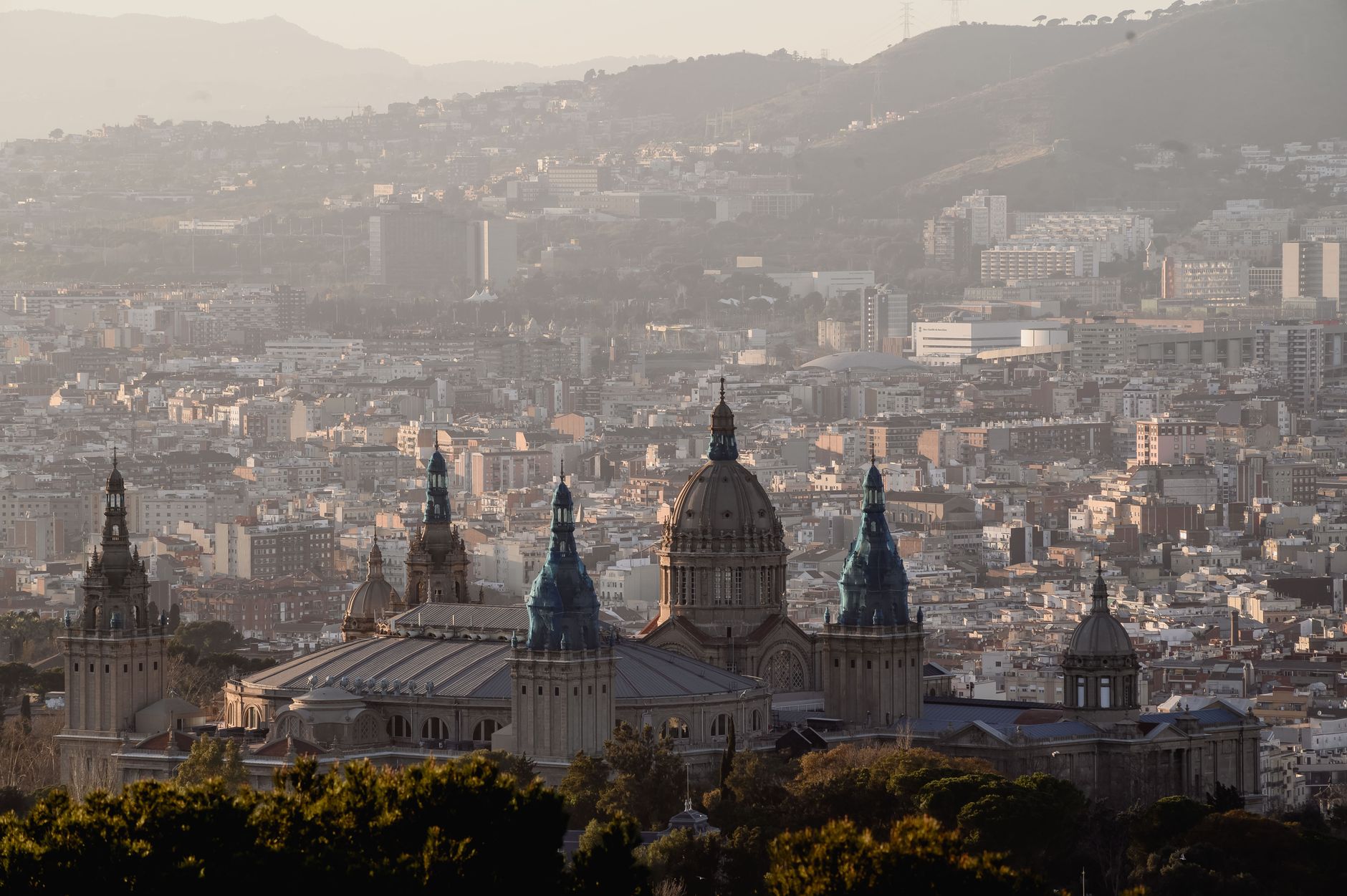
Scenic view of Barcelona with the National Art Museum foreground and cityscape background.
Photo by Kiro Wang on Pexels · Pexels License
Serene island landscape with vivid green foliage and clear blue ocean under a bright sky.
Photo by Timo Volz on Pexels · Pexels License
Captivating view of Sharjah's skyline reflecting on water at dusk, showcasing modern architecture.
Photo by Siarhei Nester on Pexels · Pexels License
Practical Information
Visa
Most travelers from the US, Canada, the UK, Australia, New Zealand, and much of the EU can enter Palau visa-free for 30 days, usually with the option to extend to 60. Your passport should be valid for at least six months, and immigration may ask for an onward ticket and proof you can pay your way.
Currency
Palau uses the U.S. dollar, which keeps prices simple if you are arriving from the United States. Cards work in many hotels, dive shops, and larger restaurants in Koror, but cash still matters for small stores, taxis, and local food stops; hotel stays usually carry a 7 percent room tax.
Getting There
Most visitors land at Roman Tmetuchl International Airport in Airai, on Babeldaob. The usual flight connections run through Guam, Seoul, Taipei, or Manila, with no direct flights from Europe; from Manila the flight is about 2 hours, from Seoul roughly 4.
Getting Around
Palau has no scheduled public bus network, so travel is built around rental cars, arranged transfers, taxis in Koror, and boats. Rent a car for Babeldaob and Airai, then switch to licensed boat operators for the Rock Islands, Eil Malk, Peleliu, or Angaur; fares and departure times are usually fixed by operator rather than by app.
Climate
Palau stays warm all year, with daytime temperatures usually around 27 to 30C and sea temperatures close behind. February to April is the easiest window for calmer seas and clearer water, while June to October is wetter, greener, and more prone to rough crossings and occasional weather-related closures.
Connectivity
Phones are easy: Palau uses U.S.-style plugs and 120V power, and coverage is solid in Koror, Airai, and much of Babeldaob. PNCC sells local SIMs in Koror, eSIMs work well for many recent phones, and service gets weaker once you head offshore to the Rock Islands or farther out to Kayangel.
Safety
Palau is one of the safer destinations in the Pacific, with low violent crime and relatively little petty theft. The real hazards are environmental: strong currents on dive sites, unexploded WWII ordnance on Peleliu, flooded roads in the wet season, and saltwater crocodiles in some mangrove areas where local warnings should be taken literally.
Taste the Country
restaurantDemok
Lunch or supper in a family house or local restaurant in Koror. Spoon, rice, taro leaves, coconut milk, fish or crab. Slow eating, quiet talk.
restaurantUmai
First dish on a hot day. Bowl, fork, raw tuna, lime, onion, chili. Friends share, rice follows.
restaurantTaro root
Table center, not garnish. Fingers or fork, small pieces, stew broth or grilled fish alongside. Women's labor sits in every bite.
restaurantUkaeb
Celebration food, feast table, reunion meal. Spoon scrapes crab from shell, coconut cream coats the mouth, hands finish the work.
restaurantGrilled reef fish
Beach cookout, roadside grill, family lunch. Lime, salt, fingers, fork, rice. Bones teach attention.
restaurantTinola
Rainy evening or tired day in Koror. Spoon and fork, chicken broth, papaya, greens, rice on the side. Comfort arrives without speech.
restaurantSpam musubi
Boat ride, errand run, gas-station stop in Babeldaob or Koror. One hand holds the rice block, the other opens coffee or water. No ceremony, complete satisfaction.
Tips for Visitors
Budget For Boats
Palau gets expensive on the water, not on the roadside. Save money by grouping marine activities on the same operator day rather than booking separate snorkel, transfer, and island outings.
Sleep In Koror
For most first trips, staying in Koror is the practical call because tours, dive departures, ATMs, and restaurants are concentrated there. Resort isolation looks good online and can become expensive once you start paying for every transfer.
Weather Moves Plans
Build slack into any trip that includes Kayangel, Eil Malk, Peleliu, or Angaur. Wind and sea state change boat schedules faster than hotel confirmations suggest.
Rent For Babeldaob
A rental car makes sense for Airai, Babeldaob, Melekeok, and Ngerulmud, where distances are manageable but sights are spread out. Remember that Palau drives on the left and some rural roads can flood in heavy rain.
Book Dive Days Early
Reserve dive boats and specialist excursions before arrival if you are traveling between February and April. The best operators fill first, and last-minute shopping rarely lowers the price.
Reef Rules Matter
Do not stand on coral, pocket shells, or ignore local no-entry notices around marine areas. In Palau, conservation rules are taken more seriously than in many beach destinations, and rightly so.
Download Offline Maps
Mobile data is fine in Koror and decent on much of Babeldaob, but coverage fades offshore and in outer areas. Download maps, booking details, and boat contacts before leaving town.
Carry Small Bills
Bring enough cash in small denominations for taxis, tips, snacks, and places where card machines fail or never existed. Outside Koror, assuming you can tap your way through the day is optimistic.
Explore Palau with a personal guide in your pocket
Your Personal Curator, in Your Pocket.
Audio guides for 1,100+ cities across 96 countries. History, stories, and local insight — offline ready.
Audiala App
Available on iOS & Android
Join 50k+ Curators
Frequently Asked
Do I need a visa for Palau if I have a US or EU passport? add
Usually no for short stays. US citizens and many EU passport holders can enter Palau visa-free for 30 days, but you still need a passport valid for at least six months and an onward ticket.
Is Palau expensive for tourists? add
Yes, especially once you start adding boats and dives. A careful traveler might spend about $100 to $225 a day, while dive-heavy or resort trips can move well beyond $400 a day before flights.
What is the best month to visit Palau for diving and snorkeling? add
February to April is the safest bet for clear water and calmer seas. You can dive year-round, but the wetter months from June to October bring rougher crossings, heavier rain, and more schedule changes.
How many days do you need in Palau? add
Seven days is a strong minimum if you want both lagoon time and at least one land day on Babeldaob. Three days works for Koror and the Rock Islands, but it leaves little room for weather delays or the southern islands.
Can you get around Palau without renting a car? add
Yes, but you will rely on tours, hotel transfers, taxis, and prearranged boats. That is manageable around Koror and the Rock Islands, yet much less flexible if you want to explore Airai, Melekeok, or the wider roads of Babeldaob.
Is Palau safe for solo travelers? add
Generally yes. Crime is low, but solo travelers still need to take marine safety seriously, watch road conditions after heavy rain, and avoid wandering off marked areas on Peleliu where unexploded ordnance can still be present.
What is the main city in Palau if the capital is Ngerulmud? add
Koror is the main base for travelers, even though Ngerulmud is the national capital. Ngerulmud handles the formal business of state; Koror handles hotels, restaurants, tour departures, banks, and most of the everyday logistics visitors actually need.
Does Palau use US dollars and credit cards? add
Yes to both, but not everywhere in equal measure. The country uses U.S. dollars, cards are common in larger businesses in Koror, and cash remains the safer choice for smaller operators, taxis, and out-of-town stops.
Sources
- verified Palau Visitors Authority — Official tourism body for countrywide travel planning, entry basics, and seasonal visitor guidance.
- verified Palau Government Census Tables — Official government source for population and administrative reference data.
- verified UNESCO World Heritage Centre: Rock Islands Southern Lagoon — Authoritative source on the Rock Islands, marine lakes, and World Heritage status.
- verified PNCC — Primary local telecom provider for SIM, mobile coverage, and connectivity details.
- verified U.S. Department of State Travel Advisory: Palau — Useful baseline source for safety, entry, and traveler advisories.
Last reviewed: