Introduction
The Shrine of Mian Mir in Lahore is a profound spiritual sanctuary and a testament to centuries of cultural heritage and interfaith harmony in South Asia. Revered as the final resting place of Hazrat Mian Mir (1531–1635 CE), a distinguished Sufi saint of the Qadiriyya order, the shrine is a beacon of devotion, universal brotherhood, and transcendent spirituality. Its significance is further enhanced by Mian Mir’s historical association with the Sikh faith and the Mughal royal court, making it a unique site of pluralistic heritage (Tawarikh Khwani; Wikipedia; Dawn; SikhNet).
This guide offers comprehensive details on the shrine’s visiting hours, ticketing, architectural features, historical context, interfaith significance, and practical travel tips—ensuring an informed and respectful visit to one of Lahore’s most cherished landmarks.
Origins and Early Life of Hazrat Mian Mir
Hazrat Mian Mir was born in 1531 CE in Sivastan (now Sehwan, Sindh, Pakistan) to a learned family tracing its lineage to Caliph Umar ibn al-Khattab. His father, Qazi Saeen Ditta, was a respected scholar, and his mother, Fatima, the daughter of poet Qazi Qadan. Orphaned at a young age, Mian Mir was raised by his mother, who encouraged his spiritual and contemplative nature.
From an early age, he exhibited a strong inclination toward asceticism. By age 12, he embarked on a spiritual quest that led him to Sheikh Khidr, a Sufi mystic, under whose guidance he was initiated into the Qadiriyya order (Tawarikh Khwani).
Migration to Lahore and Spiritual Influence
At 25, Mian Mir migrated to Lahore, a major Mughal cultural and spiritual hub. He deepened his studies at Mullah Saadullah Lahori’s madrassa and spent time in solitude, meditating at the tombs of Sufi saints and in the city’s gardens. His humility and focus on inner transformation attracted a diverse following. He discouraged the pursuit of worldly power and limited his audience to genuine seekers, maintaining the sanctity of his khanqah (Sufi lodge) (Wikipedia).
Relationship with Mughal Royalty
Mian Mir’s spiritual reputation drew the attention of Mughal elites, especially Emperor Jahangir and Prince Dara Shikoh. Jahangir was once made to wait before being received, a reflection of Mian Mir’s disregard for temporal authority. Dara Shikoh, a patron of Sufism, became his devoted disciple and later oversaw the construction of the shrine’s mausoleum. Materials gathered for a planned royal road to the shrine were eventually used to build the Badshahi Mosque (Tawarikh Khwani).
Interfaith Harmony and Sikh Connections
Mian Mir is celebrated for his association with Guru Arjan Dev, the fifth Sikh Guru. According to tradition, he was invited to lay the foundation stone of the Harmandir Sahib (Golden Temple) in Amritsar—a gesture that epitomizes interfaith respect and unity (Wikipedia; Dawn; SikhNet). This story, whether symbolic or historical, reflects the deep spiritual and cultural ties between Sufi and Sikh traditions, and continues to inspire dialogue and harmony between communities.
Construction and Architectural Legacy of the Shrine
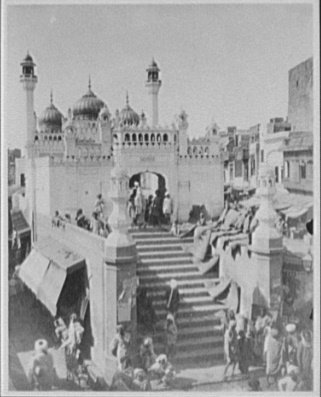
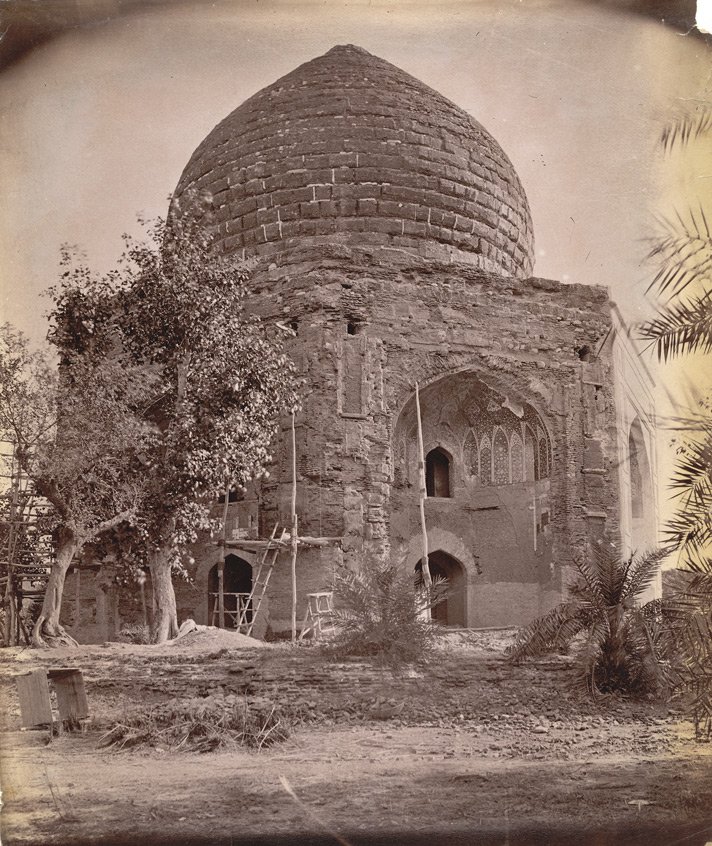
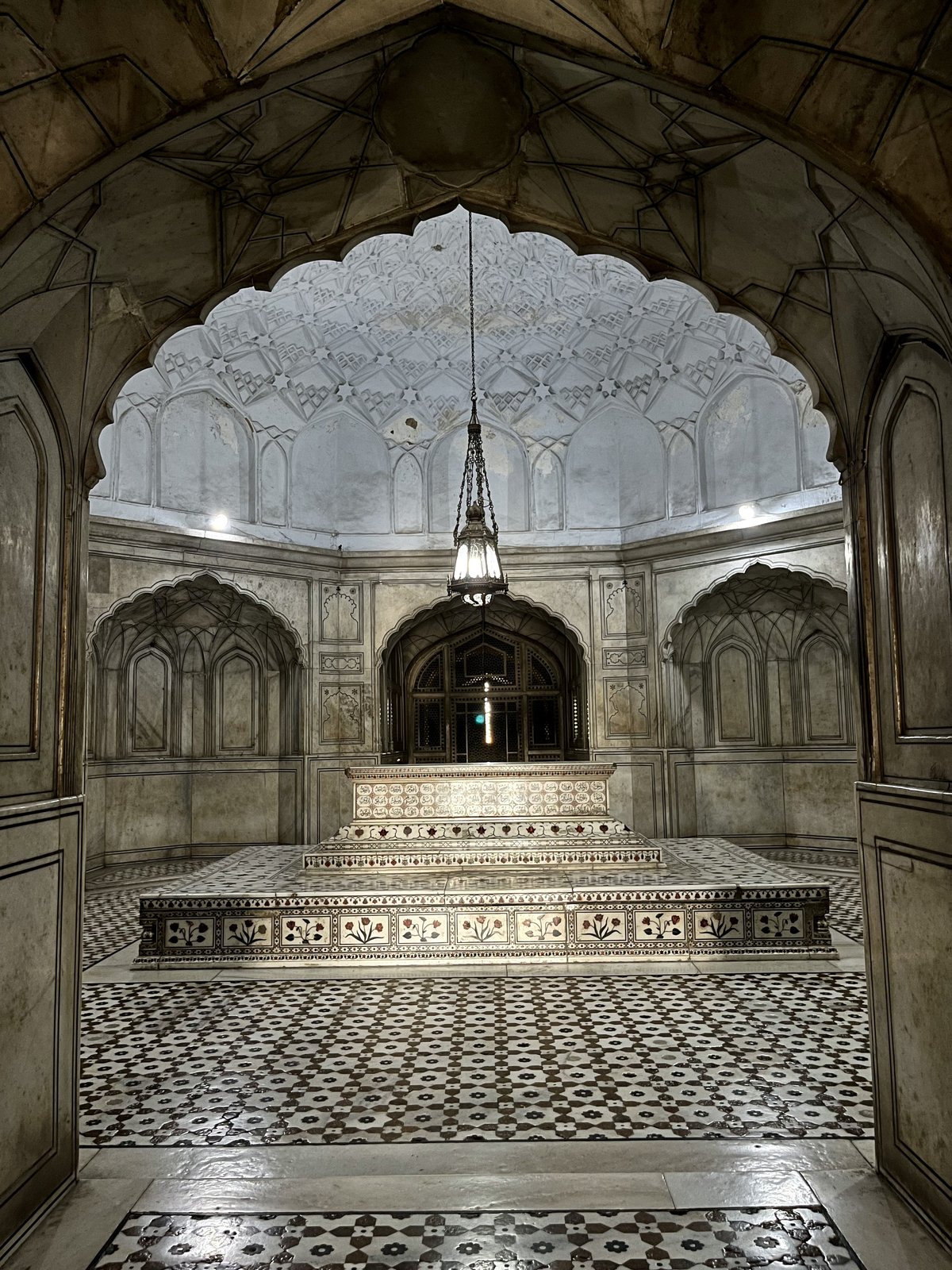
Following Mian Mir’s death in 1635, the Mughal prince Dara Shikoh supervised the construction of the shrine’s mausoleum, which was completed around 1640. The shrine’s architecture combines Mughal and Sufi elements—a central marble mausoleum with a gray granite dome, a white marble plinth, and a Chahar Bagh (four-quartered garden) symbolizing paradise (dvnetwork.org; heritageluxurysuites.com). The site also includes a mosque, public library, and a graveyard, reflecting its role as a spiritual and community hub.
The interior was historically adorned with floral and geometric motifs, some of which were contributed by Maharaja Ranjit Singh during the Sikh period.
Visiting the Shrine: Hours, Tickets, and Accessibility
- Visiting Hours: Open daily from 6:00 AM to 8:00 PM; some sources note 7:00 AM to 7:00 PM as well. Thursdays are especially vibrant due to qawwali performances and langar.
- Entry Fee: Entrance is always free. Donations for maintenance and charity are welcomed but not obligatory.
- Accessibility: The shrine is centrally located in the Alamganj/Dharampura area of Lahore. It is accessible by car, rickshaw, or public transport. Wheelchair ramps are present, though some internal pathways may be uneven.
- Dress Code: Modest attire is required; head coverings for both men and women. Shoes must be removed before entering.
- Facilities: Basic restrooms, drinking water, and shoe racks are available. Parking is limited, so public transport is recommended during busy periods (Secret Attractions).
Rituals, Spiritual Practices, and Community Service
Inside the shrine, visitors encounter an atmosphere of tranquility and reverence. Devotees offer prayers, light candles, and leave rose petals at the tomb. Thursday evenings feature lively qawwali (Sufi music) sessions, attracting large gatherings for spiritual reflection and communal celebration (SikhNet). The daily distribution of free food (langar) to all visitors, especially on Thursdays, embodies the shrine’s ethos of compassion and inclusivity (The Khyber Mail).
Cultural and Culinary Experiences
Surrounding the shrine are vendors selling local delicacies—dahi baray, chaat, samosas, sharbat, and sweets—offering visitors a taste of Lahore’s vibrant street food culture. During festivals and special events, traditional treats like qatlaammay and doodh badam are distributed, reinforcing the shrine’s communal spirit (SikhNet).
Architecture and Grounds
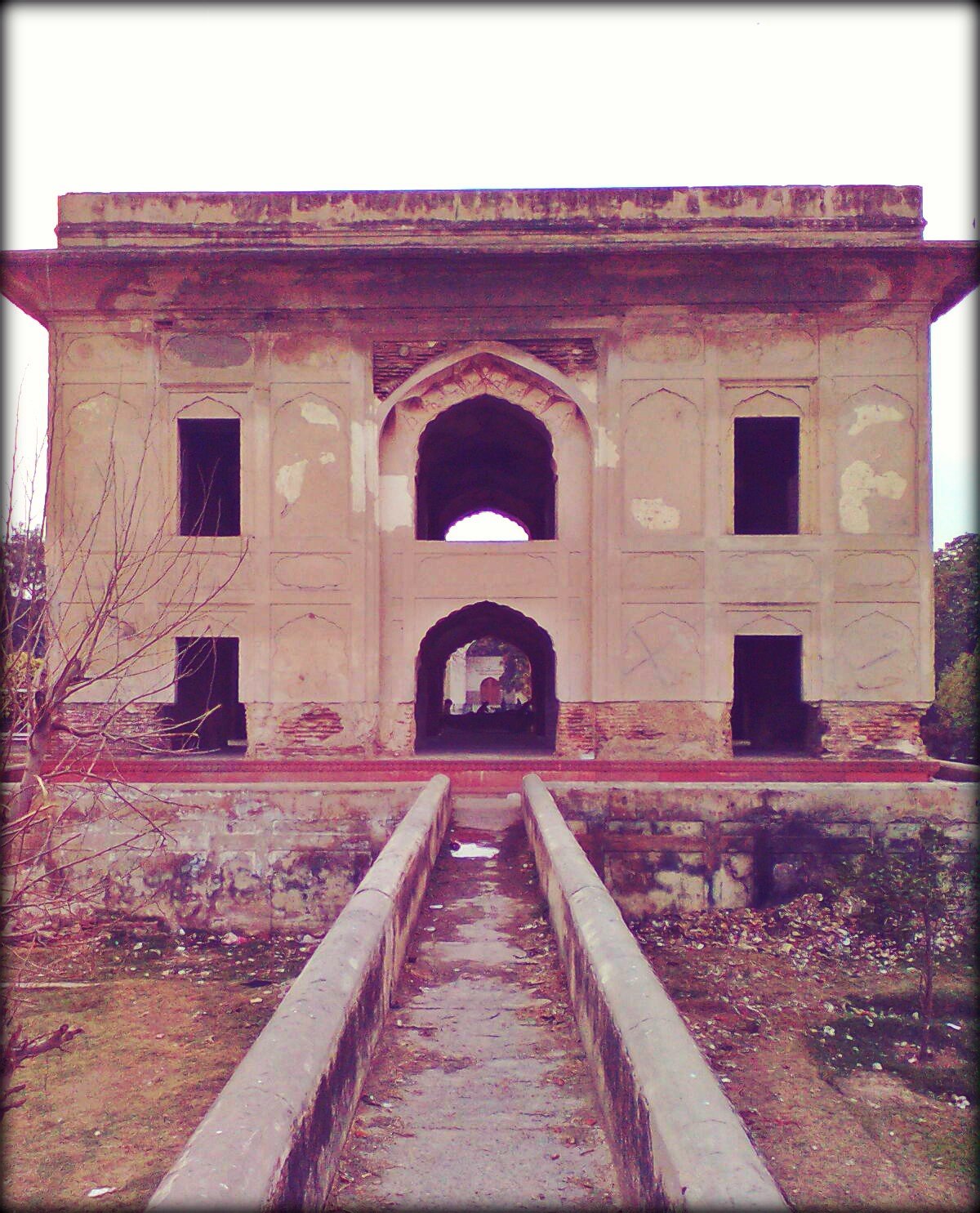
The complex features Mughal-Sufi architecture—arched gateways, a grand dome, and a Chahar Bagh garden. The adjacent graveyard contains intricately designed tombs, providing a quiet space for reflection. The mosque and library within the compound highlight the shrine’s multifaceted role as a center for worship, learning, and community life (heritageluxurysuites.com; Secret Attractions).
Nearby Attractions and Guided Tours
The shrine’s central location allows for easy access to other Lahore historical sites, such as:
- Badshahi Mosque: Among the world’s largest and most iconic mosques.
- Lahore Fort: A UNESCO World Heritage site reflecting Mughal grandeur.
- Shalimar Gardens: Historic Mughal gardens showcasing Persianate landscaping.
- Old City Bazaar: For an immersive cultural experience.
Many local tour operators can arrange guided visits that include the shrine and other nearby landmarks.
Special Events and Festivals
- Annual Urs: Commemorating Mian Mir’s death anniversary, drawing large crowds for prayers, qawwali, and communal meals.
- Thursday Qawwali: Weekly Sufi music gatherings, open to all.
- Sikh Gurpurabs: Especially Guru Nanak’s birthday, attracting Sikh pilgrims from across the region.
During festivals, expect larger crowds and extended hours for rituals and music.
Visitor Tips and Etiquette
- Visit early mornings or weekdays for a quieter experience; Thursdays and festivals are busiest.
- Keep valuables secure and be mindful of crowded areas during major events.
- Always ask permission before photographing people or interior spaces.
- Respect local customs, maintain hushed tones, and avoid disruptive behavior inside the shrine.
Frequently Asked Questions (FAQ)
Q: What are the Shrine of Mian Mir’s visiting hours?
A: Daily from 6:00 AM to 8:00 PM.
Q: Is there an entrance fee?
A: No, entry is free; donations are appreciated.
Q: Is the shrine accessible for people with disabilities?
A: Yes, though some pathways may be uneven.
Q: Is photography allowed?
A: Permitted in exterior and courtyard areas; restricted inside the main tomb.
Q: Are guided tours available?
A: Local guides can provide tours of the shrine and other Lahore historical sites.
Q: What is the best time to visit?
A: October to March for pleasant weather; Thursdays for cultural vibrancy.
Visuals and Interactive Elements
- Include images with alt tags like "Shrine of Mian Mir Lahore courtyard," "Mian Mir shrine tile work," "Entrance to Shrine of Mian Mir."
- Embed an interactive map pinpointing the shrine’s location.
- Provide a link to a virtual tour when available.
Listen to the full story in the app
Your Personal Curator, in Your Pocket.
Audio guides for 1,100+ cities across 96 countries. History, stories, and local insight — offline ready.
Audiala App
Available on iOS & Android
Join 50k+ Curators
Sources
- verified
- verified
- verified
-
verified
Shrine of Mian Mir Visiting Hours, Tickets, and Architectural Highlights in Lahore, 2025, Unnamed Source
- verified
- verified
- verified
- verified
- verified
- verified
Last reviewed: