An introduction.
Researched by the Audiala editorial team from historical records, architectural archives, and local expertise.
AA Muslim family's treasure house for a Sikh empire sounds like a contradiction, which is exactly why Fakir Khana pulls you in. In Lahore, Pakistan, this privately run museum lets you step inside a haveli where diplomacy, manuscript culture, and courtly ambition once shared the same rooms. Visit for the objects, yes, but stay for the stranger truth: some of the sharpest political minds in 19th-century Punjab passed through a house that still feels half home, half vault.
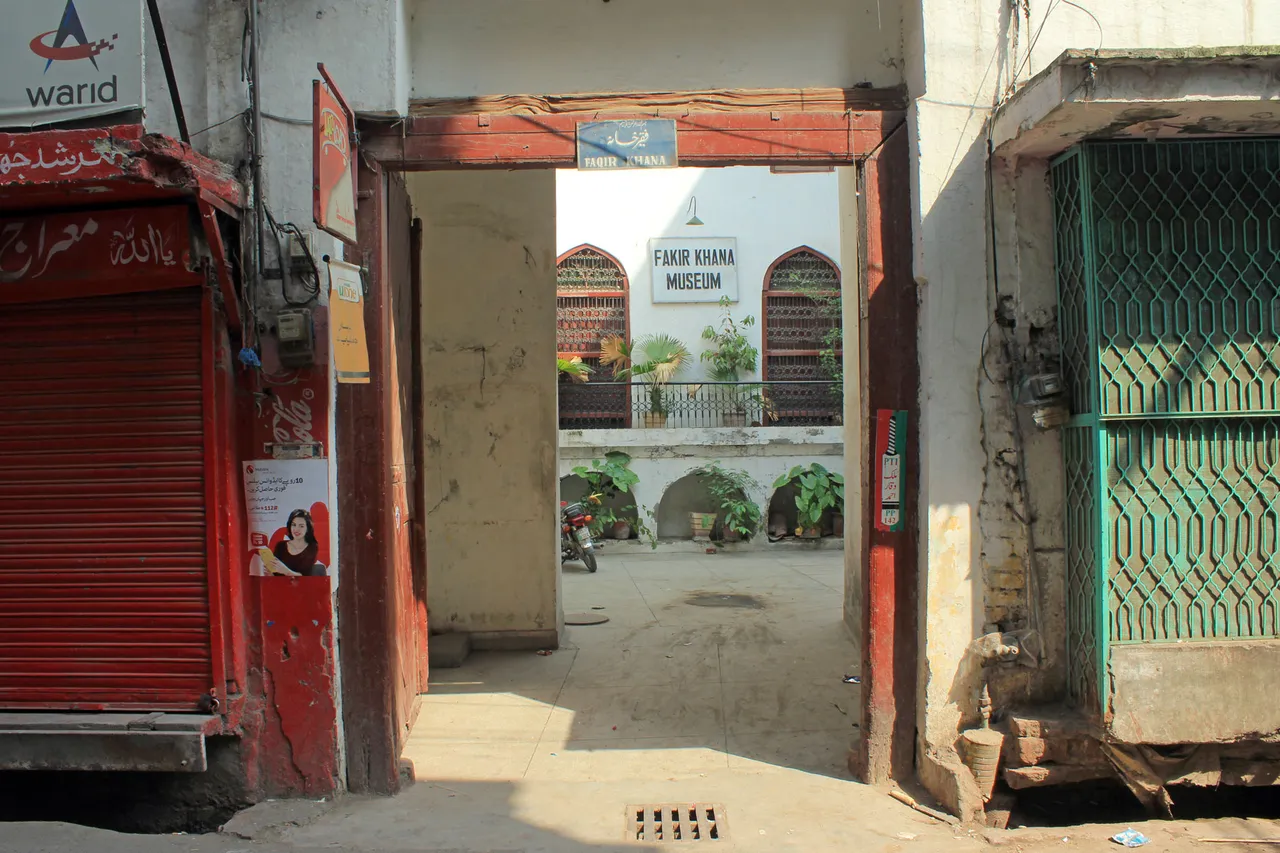
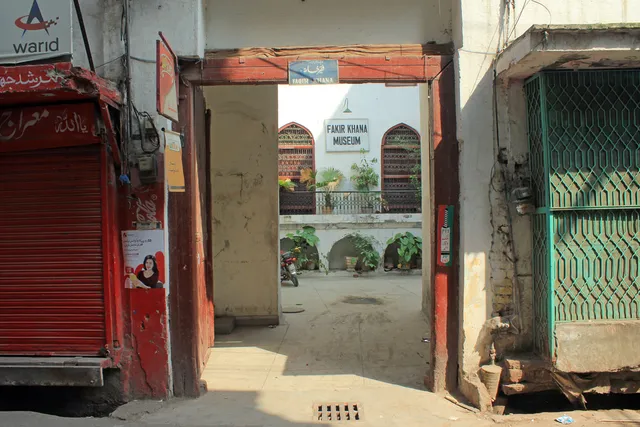
About 500 meters inside Bhatti Gate, roughly the length of five cricket pitches laid end to end, Fakir Khana hides in the old city with very little interest in self-promotion. The light falls softly across woodwork and carpets, dust hangs in the air, and the whole place feels closer to a family memory than a state museum.
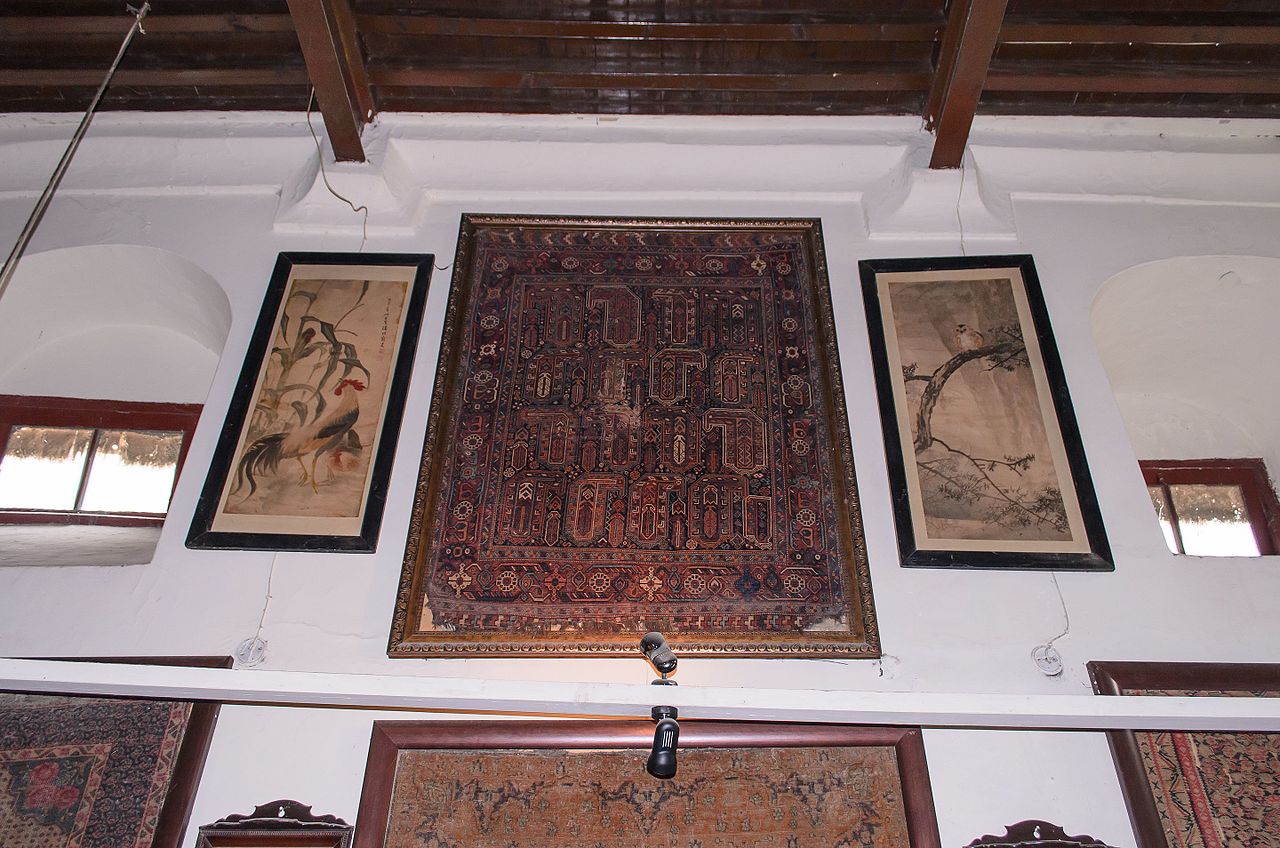
Records and family accounts agree that the museum opened to the public in 1901, making it the only privately owned museum formally recognized by the Government of Pakistan. The collection grew from a household tied to Maharajah Ranjit Singh's court, so what you see is not random grandeur but the afterlife of power: manuscripts, paintings, carpets, and gifts that once moved through Lahore when the city rivaled any court in the region.
Some claims here come with clean dates. Others do not. The building is widely attributed to Raja Todar Mal, Akbar's finance minister, but the ownership trail between the late 16th century and the Fakir family's arrival around 1730 remains frustratingly thin, which gives the house an extra charge: even its walls keep a few things to themselves.
01 What to see.
Bhai Ram Singh Gate and the First Courtyard
The Hall of Miniatures and the General's Carpet
The House Turned Inside Out
02 In pictures.






Plan and listen to Fakir Khana with Audiala.
Audio guide in your pocket, itinerary in your browser. Built for the way you actually visit.
03 Visitor logistics.
The practical scaffolding for a good visit — kept short.
Getting There
Fakir Khana sits in Bazar Hakiman near Kucha Pehalwanan, about 500 meters inside Bhatti Gate, a walk roughly as long as five football fields laid end to end. Cars won't help much once you reach the Walled City, so take a rickshaw to Bhatti Gate or Taxali Gate, then walk in; if you're coming from Lahore Fort, the western side of Hazoori Bagh gives you a natural Old City route.
Opening Hours
As of 2026, the most consistent recent listings give 10:00 AM to 5:00 PM, but Fakir Khana still works more like a family house than a standard museum. Days vary across sources, so treat the appointment as the real opening rule and confirm before you go; older official notes mention closures on the first Wednesday of each month and on major Islamic holidays.
Time Needed
Give it 1.5 to 3 hours. An hour covers the objects, barely; two or three lets the family stories unfold, and those are the part you'll still be thinking about when you step back into the racket of Bhatti Gate.
Accessibility
This is a historic haveli with narrow staircases, uneven floors, and tight Old City lanes, so wheelchair access is effectively absent. Anyone with mobility concerns should call ahead and ask what can be shown on the ground floor, because the route inside is more domestic than institutional.
Cost & Tickets
As of 2026, entry is free, with donations accepted at the end of the visit rather than a fixed ticket desk. Bring cash in small notes and budget for a donation; the place runs on hospitality, not turnstiles.
04 Tips for visitors.
Small things that change the day.
Book First
Don't trust map hours and just turn up. Fakir Khana has a long history of keeping irregular public access, and recent sources agree that an advance appointment is expected, ideally a few days ahead.
Ask Before Photos
Photography policy has tightened over time, so ask the curator before raising your phone. What seems clear across sources: no flash, no video, no commercial use, and some rooms may be entirely off limits to cameras.
Eat Outside
The museum itself has no cafe, but the lanes around Bhatti Gate do the feeding. Go for nihari or Phajja-style paye in the Old City if you want breakfast with local authority, and grab a lassi near the gate for something cold and restorative.
Ignore Fixers
Anyone outside the gate offering to arrange instant entry is selling confidence, not access. Since real visits depend on a confirmed appointment, the safest move is to arrive with the family expecting you.
Go Earlier
Aim for late morning, before the Old City heat and traffic thicken into a wall of engines, dust, and frying oil. You'll get a calmer walk through Bhatti Gate and a better chance of lingering without rushing.
Pair The Day
Fakir Khana works beautifully with a Walled City day: start at Lahore Fort, then cross into the older, tighter grain of Lahore where this house sits half-hidden behind ordinary lanes. That contrast matters; one place shows imperial spectacle, the other shows what history looks like when a family keeps it alive room by room.
Where to Eat
Don't Leave Without Trying
Al Hadi Food Corner
local favoriteOrder: Order the karahi and fresh naan — cooked to order with the intensity and simplicity that defines Old City eating. Pair with a cooling lassi.
Tucked directly in Jogi Mohalla, this is where locals eat after sunset prayers. No tourist menu, no pretense — just honest wok-cooked curry in the heart of the Walled City.
Yousaf Pathura & Food Suppliers
quick biteOrder: Pathura (fried puri) with chickpeas or meat — a Lahori street staple that locals grab for breakfast or a quick snack. Crispy, warm, and dangerously addictive.
A supplier shop that also serves walk-in customers, this is authentic Old City eating at its most stripped-down. You're eating what Walled City residents actually eat, not what's on a tourist menu.
Kashmeri Hotal
local favoriteOrder: Come for breakfast and order the halwa puri with chickpeas — a classic Lahori morning ritual. For lunch or dinner, the mutton karahi is reliable and warming.
Open from dawn to late night, this is a neighborhood anchor where families, traders, and shoppers converge. The long hours and consistent quality make it a dependable Old City refuge.
Waheed Cold Corner
cafeOrder: Lassi (sweet or salty) and falooda — traditional Lahori cooling drinks that taste best on a hot afternoon. Perfect refuel after museum-hopping.
Positioned right inside Bhati Gate, this is a true Old City institution for refreshment. Late-night hours make it ideal for post-dinner drinks or midnight snacks when exploring the Walled City.
Dining Tips
- check The Walled City is a living market — eat where locals eat, not where signs say 'tourist restaurant.' All four recommendations above are neighborhood staples.
- check Meal times matter: breakfast (7–9 AM) and dinner (8–10 PM) are peak times. Lunch (1–3 PM) is quieter.
- check Carry small cash — most Old City eateries don't take cards. A meal for two typically costs Rs 800–1,500 (roughly $3–5).
- check Street food is safe if busy — high turnover means fresh ingredients. Avoid empty stalls.
- check Don't miss Food Street Fort Road (5–10 min walk south) for rooftop dining with Badshahi Mosque views, or Anarkali Bazaar for market snacking while shopping.
- check Water is safe at established restaurants, but stick to bottled or boiled chai if unsure.
Restaurant data powered by Google
05 The Diplomat Who Kept Lahore Talking
Fakir Khana makes the most sense when you see it through the life of Fakir Syed Azizuddin, the family's most consequential figure. He was a Muslim scholar and physician who rose to become the chief diplomat of Maharajah Ranjit Singh's Sikh Empire, a role that put him in the narrow space between loyalty and survival.
That matters in Lahore because the city was not merely a backdrop. It was the capital, the bargaining table, and the prize. Family tradition places the Fakirs among the Muslim households who backed Ranjit Singh's entry into the city in 1799; documented history shows that Azizuddin later became one of the men who helped the state hold its shape under British pressure, not from Lahore Fort alone but from houses like this one, where information, gifts, and influence accumulated quietly.
Azizuddin's Thin Line
By 1809, Fakir Syed Azizuddin was no longer only a court physician. Contemporary accounts and later histories describe him as Ranjit Singh's principal diplomatic voice, the man sent to meet British power without surrendering Sikh sovereignty. His position was personal before it was institutional: admired by British officers, trusted by a Sikh ruler, and judged by everyone.
The turning point came with the Treaty of Amritsar in 1809, which historical accounts credit Azizuddin with helping negotiate. What was at stake for him was not abstract policy. If he failed, the Sikh Empire risked being boxed in or broken early, and Azizuddin himself could have ended as a useful intermediary to the British rather than a loyal servant of Lahore's court.
He did not cross that line. He stayed with Ranjit Singh until the Maharajah's death on June 27, 1839, and the family's house became part archive, part witness box, preserving the objects that flowed from a world he had helped hold together.
Early Life & Vision
Legacy & Influence
Listen to the full story in the app
The whole Fakir Khana,
told well.
Audio guides for 1,100+ cities across 96 countries. History, stories, and local insight — offline ready.
06 Frequently asked.
The questions travellers send us most about Fakir Khana.
Is Fakir Khana worth visiting?
Yes, if you care more about stories than polished display cases. This is a private family museum inside Lahore's Walled City, where the guide is often a family member and the collection runs from Mughal miniatures to Gandhara sculpture. Go for the conversation as much as the objects.
How long do you need at Fakir Khana?
Give it 2 to 3 hours if you want the place to make sense. A quick pass takes about 1 hour, but the real visit includes tea, family history, and time to stand still long enough to spot details like the face hidden in the Shah Jahan-era carpet. Rushing would miss the point.
How do I get to Fakir Khana from Lahore?
Head to Bhatti Gate in the Walled City of Lahore, then continue about 500 meters into Bazar Hakiman near Kucha Pehalwanan. A rickshaw is the smart choice because the lanes are too tight for comfortable car access, and most drivers will drop you near the gate rather than at the door. If you are already visiting Lahore Fort, Fakir Khana fits naturally into the same Old City outing.
What is the best time to visit Fakir Khana?
Morning, around 10:00 to 11:30 AM, is your best bet. Lahore is cooler then, and the haveli's natural light is kinder to miniatures, glazed frames, and old textiles. But timing matters less than booking, because this is appointment-only.
Can you visit Fakir Khana for free?
Yes, entry is generally free. The museum works on donations rather than fixed tickets, which suits the feeling of being received in a family home rather than processed through a ticket counter. Bring cash and give respectfully.
What should I not miss at Fakir Khana?
Don't leave without seeing the Hall of Miniatures, the Kufic Quran, the Gandhara heads, and the Shah Jahan-era carpet with a face woven into its floral pattern. That last one is the sly masterpiece here: at first you see flowers and birds, then a human face appears if you keep looking. Ask the curator to point out the Bhai Ram Singh gate and wooden framework too.
Verified, and shown.
Researched and written by the Audiala editorial team from historical records, architectural archives, and local expertise.
Provided core history, 1901 public opening date, collection highlights, Bhai Ram Singh gate, Hall of Miniatures, carpets, calligraphy, and family background.
Provided museum history, visitor framing, collection notes, generational claim, and practical context for the site in Lahore.
Provided approach from Bhatti Gate, family background, and notes on religious relic display during Muharram.
Provided recent visitor experience details, hours snippets, donation practice, appointment advice, curator descriptions, and anecdotal object claims.
Provided family oral history, the 18-family invitation story, local legend, manuscript count questions, and sixth-generation reference.
Provided background on Fakir Azizuddin, his diplomatic role, the 1809 Treaty of Amritsar, and the political importance of the Fakir brothers.
Used as a secondary summary source for general facts such as collection scale and museum identity.
Background reference for the wider Sikh-era setting and Muslim roles under Ranjit Singh.
Provided official but older visitor information, appointment requirements, closures, photography rules, and nearby food notes.
Provided recent practical visitor guidance including opening pattern, modest dress advice, accessibility notes, and appointment-based visiting.
Provided address format and recent listing-style practical details such as hours.
Provided secondary practical information on opening patterns and visitor planning.
Confirmed recent activity, including International Museum Day 2025 participation and continued public presence.
Used for local travel context and the point that visiting Fakir Khana takes planning.
Used to confirm that Lahore Metrobus does not directly serve the inner Walled City lanes.
Used as a museum-related reference for collection and identity details.
Provided supporting reference for the entrance gate style and public cultural framing.
Provided evidence of local language and social-media phrasing around Fakir Khana as part of inner Lahore culture.
Provided local opinion that the Fakir brothers are underrecognized in Lahore's wider historical memory.
Mentioned in broad research as one of the repeating secondary sources for the Todar Mal ownership claim.
Mentioned in broad research as secondary repetition of common claims about the site's history and reputation.
Used only for broad Lahore dining price context in the practical neighborhood notes.
Researched from Wikidata, Wikipedia & official sources · fact-checked · How we make our guides →

