An introduction.
Researched by the Audiala editorial team from historical records, architectural archives, and local expertise.
AA colonial memorial in Karachi, Pakistan now asks you to look up at an unfinished modern masterpiece. Visit Frere Hall for that collision alone: Venetian-Gothic stone on the outside, Syed Sadequain Ahmed Naqvi's celestial ceiling inside, and the uneasy feeling that this building has spent 160 years changing its mind about what it wants to be. Frere Hall matters because few places in the city hold empire, public reading culture, civic memory, and artistic loss in the same set of rooms.
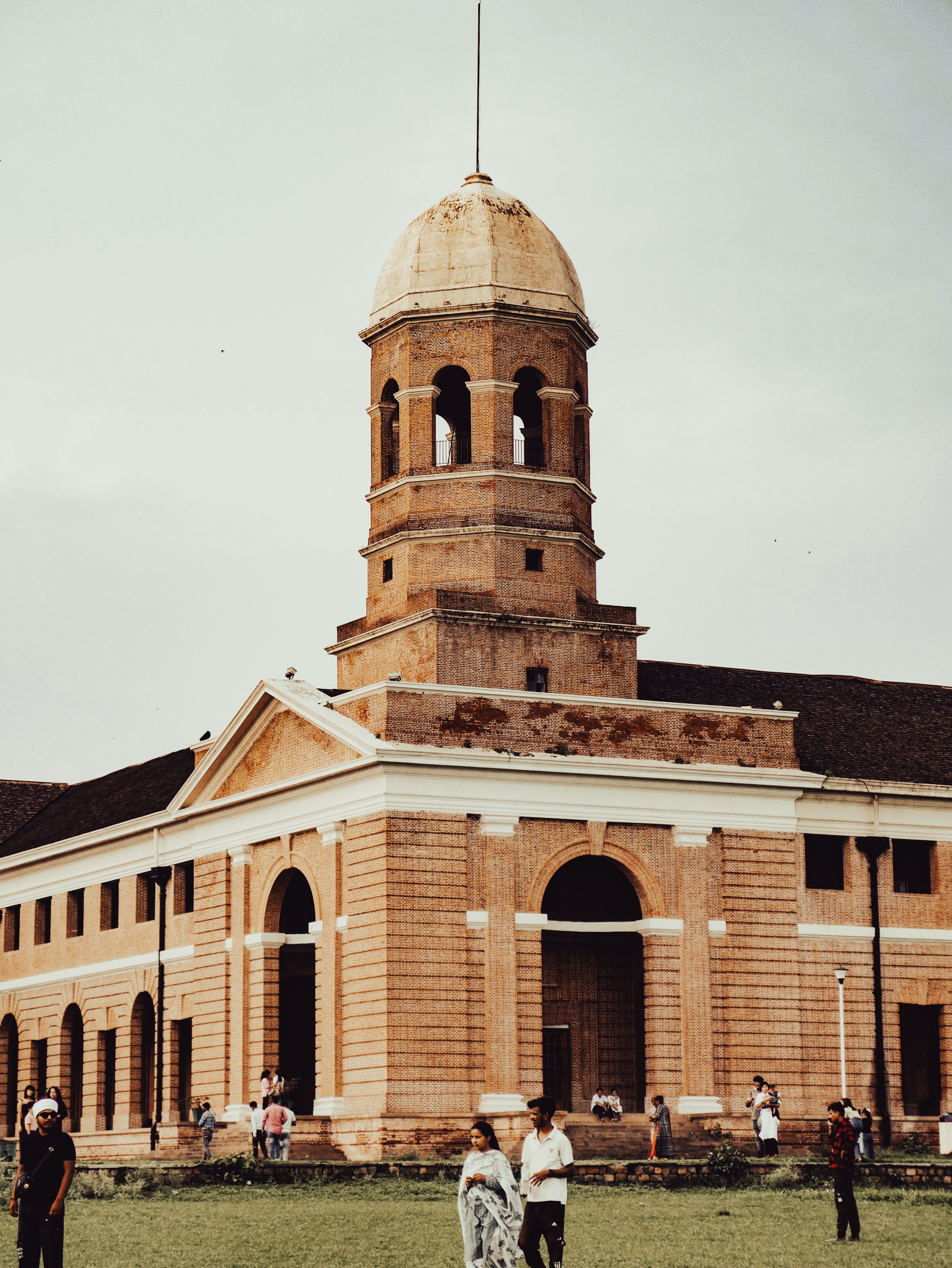
Frere Hall rises from what is now Bagh-e-Jinnah with pointed arches, pale limestone, and a tower that still catches Karachi's hard afternoon light. The air shifts as you step in. Garden noise drops, footsteps start to echo, and the hall feels less like a relic than a place that has absorbed one argument after another about who the city belongs to.
Records show the idea took shape in 1859 as a memorial to Sir Henry Bartle Edward Frere, yet the building quickly became more than a thank-you gift to empire. Its ground floor housed Karachi's first museum and municipal library, then later the Liaquat National Library, which gives the place a civic afterlife far more interesting than the usual colonial-stone postcard.
Come here before or after the National Museum Of Pakistan if you want the city's official story in one building and its messier, more human story in another. Frere Hall wins on atmosphere. A museum labels its history; this place still wears the damage.
Frere Hall Mai Majood Billion dollar Khazana | Karachi Hidden Park Drone View
Babar Dar01 What to see.
The Garden Approach and Gothic Facade
Frere Hall works best as an approach, not a glance from a car window. You cross the lawns of Bagh-e-Jinnah under old trees, hear traffic thinning behind the leaves, and then the building lifts out of the shade in yellow Karachi limestone, striped with white Bholari oolite and red-grey Jungshahi sandstone, a three-stone palette that reads like someone layered butter, chalk, and brick into one facade.
Construction began in August 1863 and the hall opened on October 10, 1865, so this elaborate Venetian Gothic pile went up in barely 26 months, fast for a building with pointed arches, carved details, and that octagonal tower watching the garden like a sentry box in lace. Best angle? Stand back on the lawn in late afternoon, when the stone warms from pale gold to burnt apricot and Karachi suddenly looks less like a city built in haste than one that once had time for ornament.
Galerie Sadequain and the Ceiling Above You
Upstairs, Frere Hall stops being a colonial civic building and turns into a room that changes your posture. The double staircase on the eastern side leads you through the verandah and into the upper hall, where Sadequain's "Arz-o-Samawat," begun in 1986 and left unfinished when he died on February 10, 1987, spreads across the ceiling in dense calligraphy and figures until your neck aches a little from looking up.
That incompletion matters. You are not seeing a polished memorial piece but a final work interrupted mid-thought, which gives the room an odd tension: lofty arches below, restless paint above, and a wooden floor that older visitors described as slightly trembling under quick footsteps. If you want Karachi's wider story after that, continue to the nearby National Museum Of Pakistan; the museum gives you the artifacts, while this ceiling gives you the city's nerve.
Sunday Books, Quiet Verandahs, and the Back-Garden Detour
Come on a Sunday if you want Frere Hall as Karachi uses it. Second-hand books spill across the lawns, families drift between stalls, hawkers call out prices, and the whole place feels less like a preserved monument than a public argument about what a city should keep: trees, books, shade, and enough room to loiter without paying for the privilege.
Come on a weekday if you want the building itself. The better move is to circle slowly under the verandahs, notice the construction plaque many people miss, then slip around to the rear where the memorial to the 126th Balochistan Infantry sits in a quieter patch of garden; from there, Frere Hall reads as one of the keys to Karachi, a city where colonial stone, public reading, and modern art keep colliding in the same square of shade.
02 In pictures.


Watch & Explore Frere Hall.
Plan and listen to Frere Hall with Audiala.
Audio guide in your pocket, itinerary in your browser. Built for the way you actually visit.
03 Visitor logistics.
The practical scaffolding for a good visit — kept short.
Getting There
Frere Hall stands in Civil Lines between Abdullah Haroon Road and Fatima Jinnah Road, beside Sind Club and across from the Karachi Marriott. By public transit, Peoples Bus Service Route R10 has a Frere Hall stop; from Karachi Cantonment Station, expect a 15-20 minute walk or a very short rickshaw ride, and from the Metropole area about 5-10 minutes on foot.
Opening Hours
As of 2026, the most repeated current pattern is Monday-Saturday, 9:00 AM-5:00 PM, with Sunday often listed as closed. Treat that as provisional: the grounds are usually easier to access than the hall itself, and same-day interior closures, event restrictions, or Sunday inconsistencies still show up in recent visitor reports.
Time Needed
Give it 20-40 minutes for the exterior and Bagh-e-Jinnah lawns, where the stone tower and the park do most of the work. If the gallery or library is open, 60-90 minutes feels right; on a Sunday book-bazaar morning or during a flower show, 90 minutes to 2 hours is more realistic.
Accessibility
The gardens are broad and mostly flat, so a grounds-only visit is the easier option. Step-free access inside the building is not confirmed, no elevator information is published, and older staircases mean you should not assume wheelchair access to galleries or upper areas without checking locally that day.
Cost & Tickets
As of 2026, general entry is widely reported as free, and no official online booking or skip-the-line system appears to exist. Evening parking may carry a fee, and one recent user report mentioned separate charges for organized photo shoots, so casual visits and commercial use should be treated very differently.
04 Tips for visitors.
Small things that change the day.
Ask Before Shoots
Casual outdoor photography appears normal, especially in the gardens where the yellow limestone catches the late light nicely. For wedding, commercial, tripod-heavy, or indoor shoots, ask on site first; recent reporting shows the venue does issue permissions for organized filming and events.
Daylight Works Best
This part of Karachi is central and public, but it is also security-conscious and not the place to wave your phone around after dark. Go by day or early evening, use app-based transport or a trusted driver, and keep valuables out of sight when you are not using them.
Eat Nearby Smartly
For the easiest polished meal, use the hotel cluster around the site: Nadia Cafe and The Pakistani at Karachi Marriott are the low-friction options, with Avari Towers close behind. If you want Karachi with more grease and more character, take a short ride toward Saddar or Burns Road after your visit rather than hunting for a grand food scene inside the park itself.
Go For Activity
Frere Hall makes more sense when something is happening: the Sunday book bazaar, a flower show, an art event, a public gathering. On a quiet afternoon you get handsome stone, old trees, and Sadequain if the interior is open; on an active day you understand why this place still matters to Karachi.
Pair It Nearby
Combine Frere Hall with the National Museum Of Pakistan if you want the city's memory in two registers: imperial civic stone here, state-curated history there. Keep the plan tight, though, because Saddar traffic can turn a short hop into a slow crawl.
Pack Light
No reliable luggage storage or locker service is published for Frere Hall. Bring only what you want to carry through a public park and heritage building, especially if you are arriving from the station or moving on to another stop afterward.
Where to Eat
Don't Leave Without Trying
Kolachi Indian Taste
local favoriteOrder: The butter chicken and naan are must-tries—rich, creamy, and perfectly spiced.
A hidden gem for authentic Indian flavors with a homestyle touch. The small, cozy setting makes it feel like dining at a friend's place.
Kavita Didi's Speciality (Food Cart)
quick biteOrder: The crispy samosas and tangy chaat are crowd favorites—fresh, flavorful, and made with love.
A beloved local spot inside Frere Hall Park, perfect for a quick, delicious bite while exploring. The vibrant atmosphere adds to the charm.
Chaai express
cafeOrder: The masala chai and fresh pakoras are a match made in heaven—warm, spicy, and comforting.
A cozy 24-hour spot inside Frere Hall, ideal for a late-night snack or a morning pick-me-up. The relaxed vibe is perfect for people-watching.
Dining Tips
- check Many smaller eateries close earlier in the evening—plan accordingly.
Restaurant data powered by Google
05 The Hall That Refused One Identity
Frere Hall began as political gratitude cast in stone. Records quoted in the 1919 Karachi gazetteer show money came from public subscription, a government contribution of Rs10,000, and municipal funds that brought the total to about Rs180,000 — the price of a serious civic statement, not a decorative afterthought.
And then the building kept changing jobs. Opened on October 10, 1865, before work was fully complete, it served as town hall, museum, library, park landmark, security-zone casualty, and finally the shell for Sadequain's last public vision. That restlessness is the point.
Sadequain's Last Ceiling
In 1986, Syed Sadequain Ahmed Naqvi climbed into Frere Hall to paint what he called "Arz-o-Samawat" — "Earth and the Heavens" — across the ceiling. For him, the stakes were personal. He was not decorating a room; he was trying to leave Karachi a public work big enough to outlive him, a painted cosmos spread above visitors like an opened manuscript.
Then the turning point came on February 10, 1987. Records and later press accounts show Sadequain died before he could finish the mural, which is why parts of the ceiling still break off into blankness instead of image. Those gaps hit hard. They are death, left visible.
The unfinished work changed Frere Hall from a handsome 19th-century building into something stranger and sadder: a place where interruption became part of the art. Later reports also describe paintings disappearing from storage after his death, which gives the room an aftertaste of neglect as well as awe. You look up, and the city looks guilty back.
A Memorial With Civic Ambition
When Security Beat Culture
Listen to the full story in the app
The whole Frere Hall,
told well.
Audio guides for 1,100+ cities across 96 countries. History, stories, and local insight — offline ready.
06 Frequently asked.
The questions travellers send us most about Frere Hall.
Is Frere Hall worth visiting?
Yes, especially if you want a place that feels like Karachi rather than a monument sealed off from the city. The building opened on October 10, 1865, its upper hall carries Sadequain's unfinished ceiling mural "Arz-o-Samawat," and the gardens still pull in readers, families, and event crowds instead of just architecture fans.
How long do you need at Frere Hall?
Give it 20 to 40 minutes for the exterior and gardens, or 60 to 90 minutes if the gallery or library is open. Sundays can stretch closer to 2 hours because the old-book bazaar changes the whole mood of the place.
How do I get to Frere Hall from Karachi?
Frere Hall is already in central Karachi, in Civil Lines/Saddar between Abdullah Haroon Road and Fatima Jinnah Road, so the real question is which part of the city you are coming from. App-based rides are the easiest option, and Peoples Bus Service Route R10 also stops at Frere Hall; from Karachi Marriott it is basically across the road, while Karachi Cantonment Station is a short ride or roughly a 15 to 20 minute walk away.
What is the best time to visit Frere Hall?
Late afternoon in the cooler months, roughly November to early March, is the best bet. The yellow Karachi limestone warms toward orange in low light, the gardens are easier to enjoy when the heat drops, and Sunday is best only if you want the book bazaar rather than a quieter architectural visit.
Can you visit Frere Hall for free?
Yes, entry is generally free. Recent visitor sources agree on that point, though evening parking may carry a fee and formal shoots or special access inside the gallery can be treated differently.
What should I not miss at Frere Hall?
Do not miss Sadequain's ceiling mural upstairs, and do not treat the unfinished sections as damage or bad lighting. They are the visible break left by the artist's death in February 1987, which gives the room its force; after that, look for the construction plaque and spend time on the verandahs before heading into the gardens.
Is Frere Hall open on Sunday?
Sometimes the grounds are, but do not count on the building being open. The most repeated current pattern is around Monday to Saturday, 9 AM to 5 PM, while Sunday closure and same-day interior restrictions show up often enough in recent visitor reports that you should confirm locally before planning around it.
Is Frere Hall a UNESCO World Heritage Site?
No, Frere Hall is not a UNESCO World Heritage Site. UNESCO's Pakistan pages list the Chaukhandi Tombs on Karachi's Tentative List, not Frere Hall.
Verified, and shown.
Researched and written by the Audiala editorial team from historical records, architectural archives, and local expertise.
Used to confirm that Frere Hall is not on Pakistan's UNESCO World Heritage or Tentative List pages.
Used to verify that Karachi's UNESCO Tentative List entry is Chaukhandi Tombs, not Frere Hall.
Used for official heritage context, location, architectural features, materials, and the building's internal layout.
Used to confirm Bagh-e-Jinnah/Frere Hall Gardens as part of the civic park setting.
Used to support current civic context for the gardens around Frere Hall.
Used for the construction start in August 1863, opening date of October 10, 1865, early civic uses, plaque details, and 2002 blast damage.
Used for opening date, style, materials, tower details, and the broad building history.
Used for Sadequain beginning the mural in 1986 and dying before finishing it on February 10, 1987.
Used for current practical visitor details including likely hours, free entry, and nearby location guidance.
Used to support the commonly repeated Mon-Sat 9 AM-5 PM opening pattern.
Used as a secondary source for current visitor logistics, including a conflicting daily-hours listing and free entry.
Used for recent traveler evidence that interior access can be inconsistent and that visits commonly last about an hour or more.
Used for recent visitor reports about closures, interior restrictions, free entry, and occasional event-related access limits.
Used to identify Peoples Bus Service Route R10 as a public transport option serving Frere Hall.
Used to support the inference that Frere Hall is effectively across Abdullah Haroon Road from Karachi Marriott.
Used to place Karachi Cantonment Station as a nearby rail landmark for access planning.
Used to support the description of the upper hall as the Sadequain gallery and the mural as the key interior draw.
Used for the continuing local identity of Frere Hall as a Sunday book-bazaar site.
Researched from Wikidata, Wikipedia & official sources · fact-checked · How we make our guides →