Plan and listen to Faisal Mosque with Audiala.
Audio guide in your pocket, itinerary in your browser. Built for the way you actually visit.
Introduction
The Faisal Mosque, set against the stunning Margalla Hills in Islamabad, stands as a testament to Pakistan’s Islamic heritage and architectural ambition. As one of the largest mosques in the world, it is not only a spiritual center but also a major cultural and tourist landmark. Commissioned through the support of King Faisal bin Abdul-Aziz of Saudi Arabia and designed by Turkish architect Vedat Dalokay, the mosque’s bold, modernist design reflects both tradition and innovation. This guide provides a detailed overview of the mosque’s history, architectural highlights, visiting hours, ticketing policies, accessibility, visitor etiquette, and nearby attractions, ensuring you have all the information needed for an enriching visit (zameen.com; subhanedu.com; travelsetu.com).
Historical Background
Origins and Conception
The idea for Faisal Mosque originated in 1966 during King Faisal bin Abdul-Aziz’s visit to Pakistan. Islamabad, then a young capital, lacked a defining religious and cultural monument. The vision was to create a grand mosque symbolizing the nation’s Islamic foundation and aspirations (zameen.com; bahaaristan.com).
A global architectural competition in 1969 attracted entries from 17 countries. Vedat Dalokay’s design, inspired by Bedouin tents, was selected for its bold departure from traditional domes and arches, instead emphasizing geometry and modernist lines (chakorventures.com; facts.net).
Funding and Political Significance
King Faisal’s financial grant of roughly $28 million USD enabled the mosque’s construction, a symbol of close Pakistan–Saudi Arabia relations and shared Islamic values (awaywiththesteiners.com; medium.com). After King Faisal’s assassination in 1975, the mosque and its main avenue were named in his honor. Construction began in 1976, under the oversight of National Construction Limited and Azim Khan (zameen.com).
Construction Timeline
Building on a 46-acre site at the foot of the Margalla Hills, the mosque’s construction spanned a decade, finishing in 1986. The inaugural congregational prayer was held in June 1988. Since then, ongoing preservation ensures its status as a national cultural icon (bahaaristan.com; historyofpak.com).
Architectural Innovation and Symbolism
Vedat Dalokay’s design for Faisal Mosque revolutionized mosque architecture in South Asia. Eschewing domes, the mosque’s tent-like structure is a nod to the nomadic roots of early Islamic society. Four towering, pencil-shaped minarets—each nearly 90 meters tall—frame the eight-sided prayer hall with its sloping, shell-like marble roof (chakorventures.com; worldbestmosques.com).
The interior is marked by minimalist elegance, with Quranic calligraphy and geometric patterns. Natural light floods the hall through numerous windows and skylights, creating a tranquil atmosphere. The minarets and prayer hall glow at night, visible from across the city (subhanedu.com; thetouristchecklist.com).
Scale, Capacity, and Recognition
At completion, Faisal Mosque was the world’s largest mosque, accommodating over 100,000 worshippers: 10,000 inside, 24,000 in the courtyard, and thousands more on the grounds (facts.net; medium.com). The mosque covers approximately 130,000 square meters and is a prominent Islamabad skyline feature (en.wikipedia.org). Internationally, the mosque has received prestigious awards, including the Aga Khan Award for Architecture and the International Association of Bridges and Structural Engineering Award (medium.com).
Visiting the Faisal Mosque: Practical Information
Visiting Hours
- Open Daily: 8:00 AM – 10:00 PM (some sources note 9:00 AM – 6:00 PM; during Ramadan, hours may be extended for night prayers)
- Best Times: Early morning or late afternoon for fewer crowds and ideal photography lighting
Tickets and Entry
- Entry Fee: Free for all visitors; no tickets required (DiscoverPak)
- Donations: Welcome to support upkeep
Accessibility
- Wheelchair Accessible: Ramps and designated parking areas are available
- Parking: Ample space and easy access from Shah Faisal Avenue
Guided Tours and Events
- Guided Tours: Available upon request via the mosque administration or local tour operators
- Special Events: Major religious holidays (Ramadan, Eid) attract large gatherings and may affect visitor flow
Photographic Spots
- Best Views: Courtyard, gardens, and exterior with Margalla Hills backdrop
- Lighting: Sunset and evening illumination make for dramatic photos
- Photography Policy: Permitted in the courtyard; restricted inside the main prayer hall
Nearby Attractions
- Daman-e-Koh: Panoramic city and mosque views
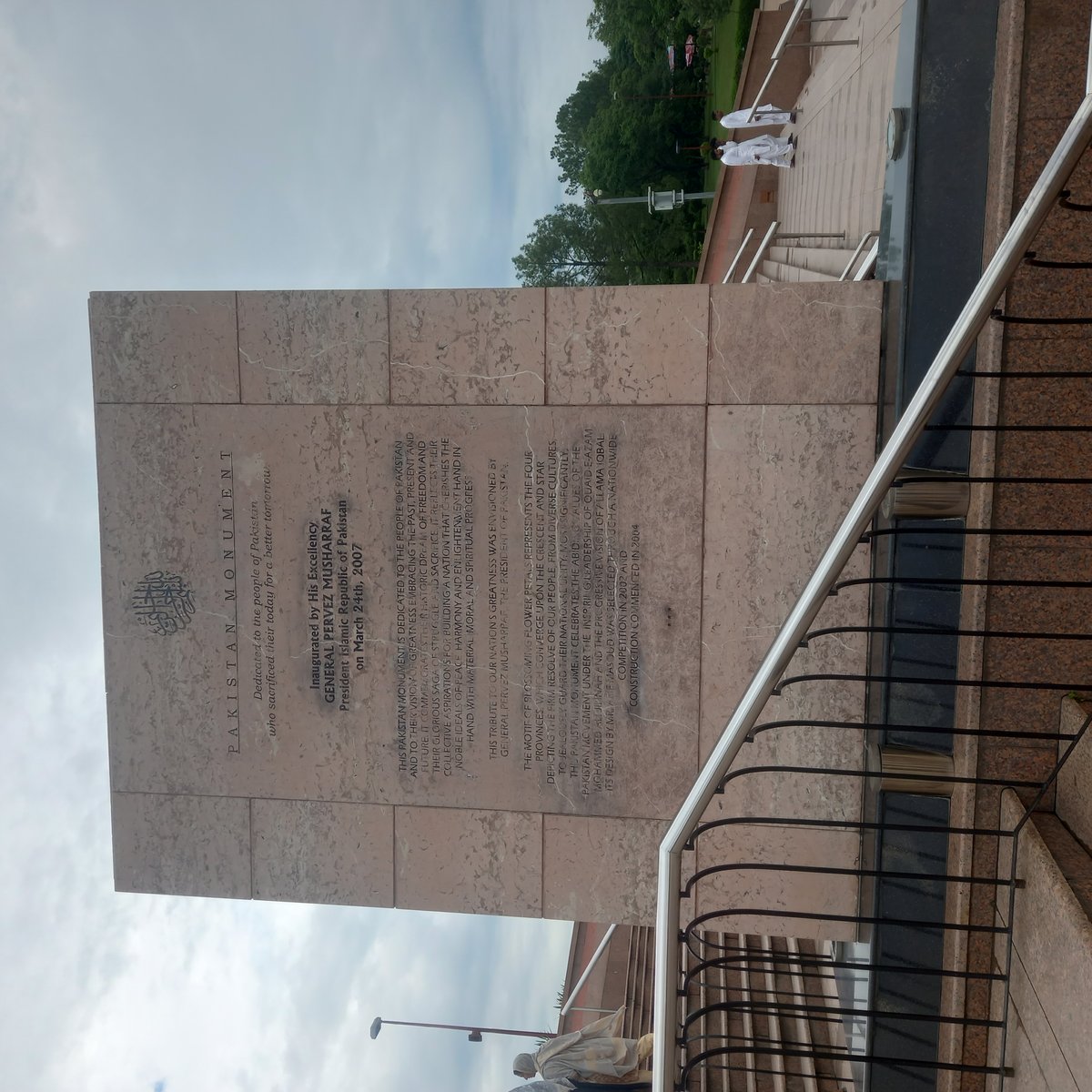
- Pakistan Monument: National heritage symbol
- Lok Virsa Museum: Cultural exhibits
- Margalla Hills National Park: Nature walks and hiking (GuideToPakistan)
Visitor Etiquette and Travel Tips
- Dress Code: Modest clothing covering legs, arms, and shoulders; women should wear headscarves
- Shoes: Remove before entering the prayer hall; shoe counters provided
- Silence and Behavior: Maintain decorum; avoid loud conversations
- Photography: Respect worshippers and avoid flash photography inside
- Peak Times: Fridays and religious festivals are busiest—plan accordingly
- Children: Welcome, but must remain quiet and respectful
Frequently Asked Questions (FAQ)
Q: What are the Faisal Mosque visiting hours?
A: Open daily 8:00 AM–10:00 PM; hours may extend during Ramadan.
Q: Is there an entry fee or ticket required?
A: No, entry is free for all.
Q: Can non-Muslims visit the mosque?
A: Yes, non-Muslims are welcome outside prayer times, provided mosque etiquette is observed.
Q: Is Faisal Mosque wheelchair accessible?
A: Yes, ramps and accessible parking are available.
Q: Are guided tours available?
A: Yes, arrange through mosque administration or local operators.
Q: Is photography allowed?
A: Allowed in the courtyard and gardens; restricted inside the prayer hall.
Q: How do I reach Faisal Mosque?
A: By car, taxi, ride-hailing apps, or public transport. Located at Shah Faisal Avenue, E-8 sector, Islamabad.
Listen to the full story in the app
The whole Faisal Mosque,
told well.
Audio guides for 1,100+ cities across 96 countries. History, stories, and local insight — offline ready.

Verified, and shown.
Researched and written by the Audiala editorial team from historical records, architectural archives, and local expertise.
Researched from Wikidata, Wikipedia & official sources · fact-checked · How we make our guides →