Place
Hyderabad
Pakistan Updated Apr 2026
The air in Hyderabad, Pakistan smells of cardamom tea and molten glass at 2 a.m. — the bangle kilns never cool, and neither does the Irani chai café across the lane. Most travelers have never heard of this Hyderabad, the one on the Indus, where Talpur tombs tilt like tired chess pieces and fish from the river arrives at breakfast still tasting of glacier silt. It is quieter than its Indian namesake, stranger, and far more willing to let you in on the secret.
- Attractions
- 12
- Audio
- 52 min
- Trip length
- 2–3 days
- Best season
- Nov–Feb (mild 10–25 °C)
Why Hyderabad
Built from cited sources · see the method · How we make our guides →
Inside Pakka Qila the stone is warm even in December; kids play cricket between the 1789 ramparts while their mothers dry red chilies on unfolded newspapers. Walk fifteen minutes south and you’re in Shahi Bazaar, where the lanes narrow until your shoulders scrape brick on both sides and every third shop sells Ajrak cloth the color of midnight and rust. The bangle district starts at Choori Bazaar Road: hear the glass rods snap into neon rings, watch the kilns glow like small suns, breathe the hot-metal scent that drifts over the old city walls.
Hyderabad doesn’t announce itself. It leaks into your senses — through the sour-sweet punch of Sindhi biryani at a cart with no name, through the soft rot of Indus reeds along the Kotri Barrage at dusk, through the qawwali that spills from the Talpur tombs every Thursday until the guards lock the iron gates and the singers keep going anyway, sitting on the curb outside. Stay long enough and someone will invite you home for koki fresh off the tawa; refuse once out of politeness, accept twice out of wisdom.
Fort & Tombs That Outlasted Empires
Pakka Qila’s 18 m baked-brick walls still guard the tomb of Ghulam Shah Kalhoro who made Hyderabad Sindh’s capital in 1768. A ten-minute walk south, the Talpur Mirs’ blue-tiled domes (1812-43) float above century-old banyans—bring a wide lens; the reflections are unreal at dusk.Bangle Symphony in Choori Bazaar
Inside the old-city lanes, 300 family workshops melt glass into 1 000 °C rainbows, hammering out South Asia’s loudest fashion accessory. The sound is half orchestra, half hailstorm; you’ll hear it before you see the neon stalls on Fojdari Road.A Hindu Merchant’s Time Capsule
Mukhi House (1920) reopened as a museum in 2021—teak staircases, swing-set courtyards, and ledgers recording pre-Partition trade with Singapore. It’s the only place in Pakistan that tells the city’s Hindu Sindhi story without footnotes.
Places to Visit
Not every monument, just the ones we'd walk you past ourselves.
-
Hyderabad Junction Railway Station Hyderabad Junction Railway Station, located in the historic city of Hyderabad in Sindh, Pakistan, stands as a pivotal transportation and cultural landmark.
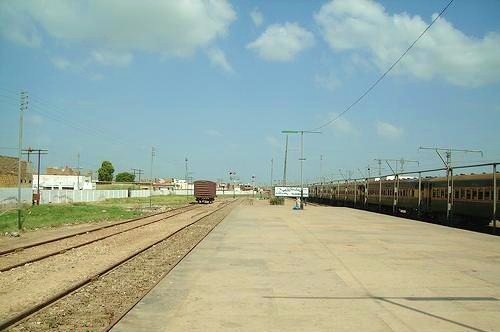
- Sindh Museum Nestled in the historic city of Hyderabad, Pakistan, the Sindh Museum stands as a vibrant cultural landmark dedicated to preserving and showcasing the rich…
- Hyderabad City Taluka Mukhi House Museum in Hyderabad, Pakistan, is more than just a building; it is a window into the rich historical and cultural tapestry of the region.
- Phuleli Phuleli Canal, located in Hyderabad, Sindh, Pakistan, stands as a historic and vital waterway that has profoundly influenced the region's agricultural…
Neighborhoods
Where to wander, by quarter — each with its own rhythm.
Pacca Qila & Hirabad Core
The 18th-century fort anchors a lattice of pre-Partition mansions, onion-domed mosques and the newly-restored Mukhi House Museum. Dawn is best: rose-pink light on ochre battlements, tea glasses clinking at the khokha outside Besant Hall, schoolkids cutting across the dry moat like it’s always been a playground.Shahi Bazaar & Choori Bazaar
A single umbrella-wide lane splits into arteries dedicated to glass bangles, block-printed Ajrak, spice pyramids and goat-brain fryers. The scent arc moves from saffron to diesel to molten silica in ten metres. Weekends are shoulder-to-shoulder; go mid-morning on a weekday to watch artisans twist glass into neon bracelets without elbowing a stranger.Resham Gali
A silk-thread souk tucked inside the bazaar maze. Rolls of scarlet, indigo and acid-green fabric lean like drunken library books; shopkeepers unbolt them with the same flourish sommeliers give corks. Bring small bills and a willingness to haggle over a cup of cardamom tea that appears whether you asked or not.Latifabad
A 1950s Muhajir township laid out in numbered sectors so neat they feel almost Soviet after the old-city tangle. Here you’ll find Hyderabad’s best saji joints, late-night bun-kabab stalls and the only bookshop that stocks Sindhi poetry next to medical textbooks. The wide avenues make evening walks bearable when the Indus breeze finally lifts.Qasimabad
Leafier and newer, stretching toward Jamshoro and the university. Family parks fill with cricket matches after maghrib; chai cafés stay open past midnight because students exist on time borrowed from tomorrow. Good base if you want hot water and Wi-Fi yet still hear the call to echo from Pakka Qila’s 230-year-old mosque.Kotri Barrage Strip
Technically outside city limits but inseparable from its rhythm. Trucks crawl across the 1955 bridge, fishermen cast nets for palla hilsa, and teenagers pose for selfies where the Indus is corralled into irrigation canals. Sunset turns the water the color of burnt sugar; chai vendors materialise with plastic stools as if summoned by the disappearing sun.
Plan your trip
Before you go
- Getting There
- Fly into Jinnah International Airport (KHI), Karachi; 150 km south-west. Daewoo Express runs hourly coaches (PKR 700, 2 h 30 min) from Karachi’s Suhrab Goth terminal to Latifabad, Hyderabad. By rail, Karachi City to Hyderabad Junction takes 2 h 45 min on the Pakistan Express.
- Getting Around
- No metro or tram. Peoples Bus Service (PKR 50) links Latifabad to Hyder Chowk via Jail and Qasim Chowk. Pink women-only buses run from Qasimabad terminal. Auto-rickshaws quote PKR 150–250 for old-city hops; Uber covers the urban core but not the barrage.
- Climate & Best Time
- Desert climate: 25 °C days in January, 41 °C peaks in May. Rain is negligible except July–August (57 mm). Visit October–February for 28 °C afternoons and 13 °C nights; May–June heat is punishing and dust storms common.
- Language & Currency
- Sindhi is mother tongue for 60 %, Urdu for 22 %. English works in hotels and bigger shops. Carry Pakistani rupees (PKR 1 000 notes max for rickshaws); ATMs accept Visa/Mastercard on Bank Al-Habib and HBL machines every 500 m on Station Road.
Where the Indus Writes History in Brick and Blood
From flood-proof citadel to glass-bangle metropolis
- c. 322 BCE
Mauryan Fishing Village
On the bald Ganji hillock above the Indus, a fishing village hauled nets of river carp. Traders from the Gangetic plain bartered here, leaving pottery shards that archaeologists still argue over. The settlement’s name is lost, but its bones lie beneath every brick of modern Hyderabad.
- 711 CE
Arabs Plant the Crescent
Seventeen-year-old Muhammad bin Qasim’s cavalry splashed across the Indus, making Sindh the first province of the Caliphate on the subcontinent. The villagers on Ganji hill watched foreign soldiers pray toward Mecca and learned new words for tax and tribute. The river that had always been a highway now became a border.
- 1768
Kalhoro Builds a Flood-Proof Capital
Mian Ghulam Shah Kalhoro rowed two boatloads of silver to Ganji hill and ordered Pakka Qila raised from burnt bricks. After watching floodwaters swallow his previous capital at Khudabad, he wanted walls thick enough to laugh at the Indus. Within a year, 1,800 houses sheltered inside the oval fort, and the city was christened Hyderabad—‘Lion City’ in Persian.
- 1783
Talpur Mir Rides into the Fort
Mir Fateh Ali Khan Talpur entered Pakka Qila through gates still smelling of fresh mortar. The Kalhora banners had been torn down after the Battle of Halani; Baloch cavalry now patrolled the ramparts. Fateh Ali added a palace of glazed tiles and planted date palms whose descendants still lean over the battlements.
- c. 1812
Blue Tombs Rise for the Mirs
Coral-blue Persian tiles arrived by river and were cut to fit the domes of Meeran Ja Qubba. Each Talpur prince chose his own shade—turquoise for warriors, lapis for poets. The tombs rose on a sandy ridge outside the walls, a skyline of swollen domes that caught the dawn light like bubbles on the Indus.
- 17 Feb 1843
British Guns at the Battle of Miani
Sir Charles Napier’s 3,000 red-coats formed square and fired by platoons into 20,000 Baloch swordsmen. The river mist lifted to reveal Hoshu Sheedi, the Talpur general, still shouting ‘Marsoon marsoon Sindh na desoon!’—‘We will die but never give up Sindh!’—before a bullet found his throat. By sunset, Hyderabad’s gates stood open to the East India Company.
Show the full timeline (18 moments)
- 1853
Mirza Kalich Beg, Boy Prodigy
Born in the narrow lane behind the fort’s water gate, Mirza Kalich Beg spoke Persian before Sindhi and read Gulistan at seven. He would grow up to write forty books, invent the Sindhi novel, and still find time to map every ruined mosque in the district. The city’s first modern intellectual carried Hyderabad’s stories to Bombay and London.
- 1861
Steam Whistles on the Indus
The first locomotive in Sindh hissed across the Kotri bridge, connecting Hyderabad to Karachi in six hours instead of six days by boat. Cotton bales, glass bangles, and sacks of red chilis rolled through the new station while camels watched, bewildered, from the riverbank. The railway embankment became the city’s new eastern wall.
- 1920
Mukhi Mansion Raises the Roof
Timber barges brought Burmese teak downriver for the richest Hindu merchant in town. The Mukhi House rose three stories above Shahi Bazaar—electric chandeliers, Belgian mirrors, and a roof terrace where the family watched monsoon clouds pile up like black cotton. Its carved balconies overhung the lane so far that neighbors could shake hands across the gap.
- 1927
L.K. Advani Learns His Alphabets
In a classroom at the Sindh University branch, eight-year-old L.K. Advani recited the Sindhi alphabet under a ceiling fan turned by a punkah-wallah. The boy who would help reshape Indian politics carried the city’s bilingual accent—soft Sindhi consonants, clipped Urdu vowels—for life. Partition would scatter his classmates across Bombay and Delhi, but the cadence of Hyderabad stayed in his speeches.
- Aug 1947
Partition Tears the Bazaar in Two
Overnight, the Hindu cloth merchants of Resham Gali packed ledger books and left their shops unlocked. Trainloads of Urdu-speaking refugees arrived from Delhi and Lucknow, stepping into abandoned havelis where dinner plates still sat on tables. Pakka Qila’s empty barracks became a refugee camp; the fort that once held kings now held families cooking on charcoal in the old zenana.
- 1955
One-Unit Plan Erases Sindh
Lahore bureaucrats merged Sindh into the giant West Pakistan province, and Hyderabad’s signboards lost their provincial capital status. Students marched chanting ‘Sindhi jaey Sindh’—Sindh for the Sindhis—while police lathi-charged outside the old Radio Pakistan studios. The city’s identity went underground, spoken only in lullabies and café poetry.
- 1972
Language Riots Ignite Saddar
When the Sindh Assembly declared Sindhi co-official, Urdu-speaking students torched buses outside City College. For three July days, gunfire echoed through the narrow lanes where Hindu merchants once sold gold thread; 47 bodies lay in the civil hospital courtyard. After the curfew lifted, shopkeepers swept broken glass and discovered that language could cut deeper than any border.
- 1984
Altaf Hussain Launches MQM
From a café near the old railway goods yard, Altaf Hussain addressed a crowd of Urdu-speaking graduates with no jobs and no land. His microphone crackled with the same frequency once used by Radio Pakistan to announce Partition refugee trains. The Muhajir Qaumi Movement turned Hyderabad’s mohajir anxiety into street power overnight—green-and-white flags appeared on rooftops like second-hand kites.
- 30 Sep 1988
Hyderabad Massacre
Gunmen in police uniforms opened fire at dawn in Latifabad Unit 4, leaving 70 bullet casings glittering on the wet concrete. By evening, retaliatory fires consumed Sindhi-owned shops in the old city; the Indus breeze carried the smell of burning timber across both banks. That night, mothers in both communities sang lullabies louder than the sirens, trying to drown out memory.
- 2001
Glass Bangles Outshine Cotton
Hyderabad’s 600 furnaces produced 90% of Pakistan’s glass bangles—thin as eggshell, bright as parrot wings. In workshops off Shahi Bazaar, teenage boys spin molten glass around iron rods, their forearms mapped with tiny burn scars. The clatter of bangles on women’s wrists at weddings from Karachi to Peshawar is the city’s heartbeat exported.
- 2021
Mukhi House Opens Its Doors
After 20 years of court battles and restoration crews, the 1920 mansion finally let the public climb its teak staircase. Visitors found family photographs still on the dressing table, as if the Mukhis had stepped out for a movie. The museum quietly insists that Hindu Sindhis were once citizens, not refugees—an argument made with wallpaper and piano keys instead of slogans.
- 2026
Heritage Walkers vs. Concrete Mixers
Every Sunday morning, volunteers guide 40 people along the crumbling ramparts where 3,000 families now live in makeshift brick rooms. They point out a Talpur-era cannon half-buried under a clothesline, then stop cranes from pouring another slab inside the 250-year-old walls. The battle is quiet but constant: memory versus mortgage, brick versus bulldozer.
Who lived here
-
Playback singer · 1934–1983
Ahmed Rushdi
Born here
His silky baritone gave Pakistan its first pop hit, ‘Ko Ko Korina’, in 1966. Locals claim you still hear it leaking from radios along Resham Gali—he’d probably grin at the tinny nostalgia, then order another khada-chammach chai.
-
Indian Deputy Prime Minister · born 1927
L.K. Advani
Born here
He fled Sindh at 20 during Partition; the lane where he played cricket now hosts Friday speeches about cross-border peace. If he returned, the sweet bread-and-lentil breakfast would taste unchanged—only the passports would differ.
-
Civil servant, Sindhi prose pioneer · 1853–1929
Mirza Kalich Beg
Born here
He wrote the first novel in Sindhi while clerking for the British—on evenings he’d pace Pakka Qila’s ramparts rehearsing dialogue. Today’s kids recite his lines in school, unaware the fort’s crumbling walls once echoed his footsteps.
-
Spiritual teacher · 1879–1966
Sadhu T.L. Vaswani
Born here
He preached non-violence and vegetarianism before Gandhi made it fashionable; his childhood home is now a printing press churning out recipe booklets. He’d approve that Hyderabad still serves dal pakwan to strangers without asking their faith.
Where to Eat
Where locals actually book dinner — not the tourist menus.
Insider tips
Small things that change how the city treats you.
Use Karachi Gateway
Hyderabad's own airport is essentially closed; land at Karachi (KHI) and ride the Daewoo Express straight to Latifabad terminal—150 km, 2.5 h, PKR 600-700.Breakfast Like a Local
Accept any invitation for Dal Pakwan at dawn; refusing is rude and you’ll miss the crunchiest bread in Sindh. Pair with khada-chammach Irani chai—so sweet the spoon stands upright.Shoot Tombs at Dusk
Talpur Mir tombs glow ochre after 5 pm; guards leave at sunset so you can climb the lower ledges for unobstructed angles—bring a wide lens.Walk the Heritage Loop
Start at Pakka Qila gate, zig-zag through Besant Hall, Radio Pakistan building and bangle lanes—4 km, zero entrance fees, best before 10 am when traffic suffocates Shahi Bazaar.Dry City Rules
Alcohol is absent from restaurants; don’t ask. Non-Muslims can technically apply for a permit, but in practice you’ll drink tea or pomegranate soda.Visit Nov–Feb
Days hover around 25 °C, nights drop to 10 °C—perfect for rooftop qawwali at the Talpur tombs without melting into the sandstone.
Gallery
The city, as it actually looks.


Frequently asked
Is Hyderabad, Pakistan worth visiting?
Yes—if you want Sindhi culture without Karachi’s chaos. You’ll stand inside an 18th-century fort at breakfast, buy glass bangles straight from the kiln at lunch, and hear Sufi poetry echo off 200-year-old tiles by dinner. It’s scruffy, lived-in history rather than polished tourism.
How many days do I need in Hyderabad?
Two full days covers the fort, tombs, bangle bazaar and a fish lunch. Add a third if you’re day-tripping to Bhit Shah shrine or Hala’s tile workshops. Four is plenty unless you’re tracing every crumbling Kalhora mosque.
Is Hyderabad safe for solo travellers?
Generally yes—street crime is lower than Karachi but petty theft happens in packed bazaars. Dress conservatively, avoid night wandering alone, and accept invitations only from families or shopkeepers inside their stores. Police posts dot the old city; carry a photocopy of your passport, not the original.
Can I get from Karachi airport to Hyderabad at night?
Daewoo’s last coach leaves Karachi Suhrab Goth terminal at 23:30; if your flight lands later, stay near the airport—pre-dawn buses resume at 05:30. Private taxis will do the run for PKR 5,000-6,000 but negotiate before you load bags.
What does a meal cost?
Street bun kebab: PKR 120. A saji quarter-plate at Hyderabad Darbar: PKR 600. Upscale hotel buffet: PKR 1,800. Tea and Osmania biscuit set: PKR 60. Budget PKR 800 a day eating like a prince.
Where do I buy real Ajrak, not tourist tat?
Walk past Resham Gali’s front stalls into the covered lanes behind Memon Mosque—look for wooden block-print tables splashed indigo. A two-meter genuine Ajrak costs PKR 1,200-1,500; if they won’t show you the printing, keep walking.
All Places to Visit.
4 places to discover
Pick up where you left off
Saved and recently read places — kept on this device only.
Photo credits (12)
- , khawaja-e-khawajgan Hazrat Shah Muhammad Ruknuddin Alwari — Shareef786 — CC BY-SA 3.0 (https://creativecommons.org/licenses/by-sa/3.0/) — Source: https://commons.wikimedia.org/wiki/File:,_khawaja-e-khawajgan_Hazrat_Shah_Muhammad_Ruknuddin_Alwari.jpg
- Hyder Chowk, Hyd — Jogi don — CC BY-SA 4.0 (https://creativecommons.org/licenses/by-sa/4.0/) — Source: https://commons.wikimedia.org/wiki/File:Hyder_Chowk,_Hyd.jpg
- Citizen colony hyderabad — Rawal khan khuhawar — CC BY-SA 4.0 (https://creativecommons.org/licenses/by-sa/4.0/) — Source: https://commons.wikimedia.org/wiki/File:Citizen_colony_hyderabad.jpg
- Hyderabad (Pakistan) City Flag — Aml-401 — CC BY-SA 4.0 (https://creativecommons.org/licenses/by-sa/4.0/) — Source: https://commons.wikimedia.org/wiki/File:Hyderabad_(Pakistan)_City_Flag.png
- Gul centre Hyderabad chowk — Jogi don — CC BY-SA 4.0 (https://creativecommons.org/licenses/by-sa/4.0/) — Source: https://commons.wikimedia.org/wiki/File:Gul_centre_Hyderabad_chowk.jpg
- Farm on the outskirts of Hyderabad — Farhan from Karachi, Pakistan — CC BY 2.0 (https://creativecommons.org/licenses/by/2.0/) — Source: https://commons.wikimedia.org/wiki/File:Farm_on_the_outskirts_of_Hyderabad.jpg
- Hyderabad (International Food Market Under Construction) — Farhan from Karachi, Pakistan — CC BY 2.0 (https://creativecommons.org/licenses/by/2.0/) — Source: https://commons.wikimedia.org/wiki/File:Hyderabad_(International_Food_Market_Under_Construction).jpg
- Hyderabad, Sindh (8091067705) — Mike — CC BY-SA 2.0 (https://creativecommons.org/licenses/by-sa/2.0/) — Source: https://commons.wikimedia.org/wiki/File:Hyderabad,_Sindh_(8091067705).jpg
- Hyderabad, Sindh (8091056351) — Mike — CC BY-SA 2.0 (https://creativecommons.org/licenses/by-sa/2.0/) — Source: https://commons.wikimedia.org/wiki/File:Hyderabad,_Sindh_(8091056351).jpg
- Hyderabad (Wheat Farms) — Farhan from Karachi, Pakistan — CC BY 2.0 (https://creativecommons.org/licenses/by/2.0/) — Source: https://commons.wikimedia.org/wiki/File:Hyderabad_(Wheat_Farms).jpg
- Hyderabad, Sindh (8091058973) — Mike — CC BY-SA 2.0 (https://creativecommons.org/licenses/by-sa/2.0/) — Source: https://commons.wikimedia.org/wiki/File:Hyderabad,_Sindh_(8091058973).jpg
- Hyderabad, Sindh (8091061309) — Mike — CC BY-SA 2.0 (https://creativecommons.org/licenses/by-sa/2.0/) — Source: https://commons.wikimedia.org/wiki/File:Hyderabad,_Sindh_(8091061309).jpg
Photos may have been resized or cropped.